Other Mommy Arrives on VOD Following a Lucrative Theatrical Run Despite Polarizing Critical Reception

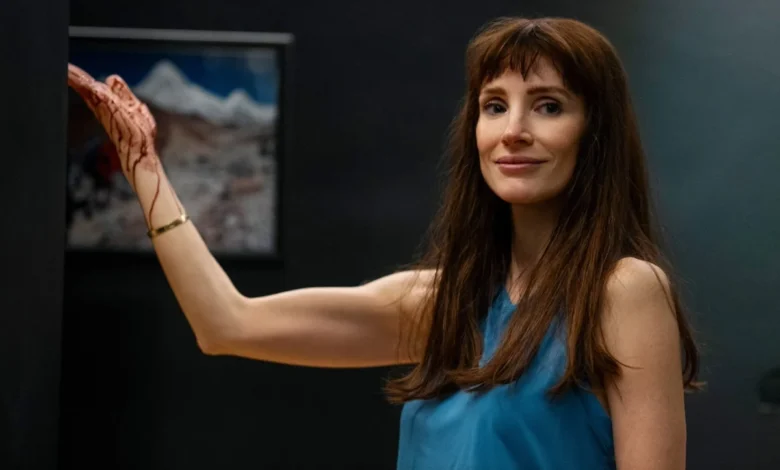
The newly released supernatural horror feature Other Mommy has officially transitioned to video-on-demand platforms, including Prime Video, following a surprisingly robust box office performance. Directed by filmmaker Rob Savage, the Universal Pictures release managed to pull in an impressive $115 million worldwide during its theatrical run. Despite its commercial success, the film has sparked intense debate among critics and audiences alike, largely due to its chaotic narrative structure, heavy reliance on computer-generated imagery, and transparent thematic symbolism.
Starring Academy Award winner Jessica Chastain alongside Jay Duplass and young newcomer Arabella Olivia Clark, the film explores dark domestic anxieties, maternal ambivalence, and psychological trauma. However, its heavy-handed execution and narrative inconsistencies have left many film reviewers questioning whether box office triumphs truly reflect cinematic quality.
Main Facts and Plot Overview
Other Mommy centers on the Martin family, consisting of distant, career-driven mother Ursula (Jessica Chastain), stay-at-home father Russ (Jay Duplass), and their young daughter Bela (Arabella Olivia Clark). The domestic dynamic is established early through a contrast between Ursula’s stern, humorless demeanor and Russ’s gentle, perpetual-bathrobe-wearing parenting style. The core conflict erupts when Bela discovers a malevolent doppelgänger living in her bedroom closet.
This entity, referred to as the "Other Mommy," features a distorted, Joker-like facial structure and stringy hair, frequently mutating into grotesque forms. Unlike traditional horror narratives that slowly build suspense through denial and hidden terrors, Savage’s film bypasses subtlety entirely. The monster emerges from the shadows without preamble, openly declaring its desire to consume Bela’s heart.
Rather than adopting the familiar trope where adults dismiss a child’s terrifying claims, Other Mommy immediately wreaks havoc in plain sight. The creature terrorizes the family across various high-concept locations, including a seventh-anniversary party, the home of Ursula’s eccentric mother (played by Karen Allen), and a chaotic indoor children’s play center. The inclusion of paranormal investigators and mediums does little to slow the onslaught, as the characters are quickly overwhelmed by the relentless paranormal activity.
Background Context and Cinematic Lineage
The film’s title itself acknowledges a direct thematic and linguistic debt to previous cinematic works, serving as a substitute for the phrase "Other Mother," which was famously utilized in Henry Selick’s acclaimed 2009 stop-motion adaptation of Neil Gaiman’s Coraline. Industry analysts note that Other Mommy fits squarely into a broader cultural and cinematic wave exploring the psychological burdens of parenthood.
In recent years, the horror and drama genres have seen an influx of projects interrogating the unspoken dread, resentment, and ambivalence associated with raising children. Notable precursors in this thematic subgenre include Marielle Heller’s Nightbitch and Jason Reitman’s Tully, both of which examined the psychological fracture points of modern motherhood. Additionally, stylistic and narrative elements of Other Mommy draw frequent comparisons to Ari Aster’s Hereditary and Tobe Hooper’s Poltergeist, blending domestic tragedy with supernatural manifestations.
Director Rob Savage is no stranger to high-concept horror or divisive critical responses. He previously directed The Boogeyman, another genre release known for its rapid pace and reliance on jump scares. In promotional interviews leading up to the release of Other Mommy, Savage reportedly boasted that the film features approximately 50 distinct jump scares, a staggering metric designed to maximize theatrical jolts.
Chronology and Production Timeline
The path of Other Mommy from concept to home video spans a tightly managed production and distribution schedule typical of mid-budget studio horror releases:
- Development and Casting: Universal Pictures greenlit the project, securing Jessica Chastain to anchor the cast alongside Jay Duplass, bringing high-profile dramatic weight to a genre film.
- Principal Photography: Filming took place under the direction of Rob Savage, utilizing extensive practical gore effects alongside heavy CGI set pieces to construct the creature’s various manifestations.
- Theatrical Release: The film debuted in theaters, defying expectations by quietly accumulating $115 million globally, proving the enduring commercial viability of high-concept horror in the theatrical marketplace.
- VOD Transition: Universal transitioned the film to digital video-on-demand platforms, including Prime Video, making the feature accessible to home audiences seeking streaming options.
Critical Analysis and Official Responses
Critical reception to Other Mommy has been sharply divided, highlighting a growing disconnect between mainstream commercial returns and critical evaluation. While general audiences appeared willing to embrace the film’s relentless pacing and visceral set pieces—resulting in the aforementioned $115 million box office haul—professional critics have pointed out substantial flaws in its internal logic and narrative consistency.
Reviewers have targeted the film’s lack of established internal rules regarding the antagonist. The entity’s ability to change form and manifest physically appears dictated entirely by the immediate needs of the plot rather than any coherent mythological framework. Furthermore, the film’s heavy-handed symbolism—ranging from a mysterious scar on Bela’s back to explicit psychological commentary on Ursula’s emotional unavailability—has been criticized for leaving nothing to the imagination.
Despite the widespread narrative criticisms, certain technical and performance elements have received praise. Karen Allen’s brief supporting performance as Ursula’s mother provides a grounded, earnest interlude amidst the surrounding cinematic noise. Additionally, Savage’s direction of specific set pieces demonstrates technical creativity in staging chaos, satisfying horror enthusiasts who prioritize gore and visual kineticism over narrative cohesion.
Broader Impact and Implications
The financial success and critical backlash surrounding Other Mommy offer significant insight into the current landscape of the horror genre. Studio horror remains one of the most reliable box office commodities, capable of turning healthy profits even when critics express dissatisfaction with a film’s script or logical consistency.
However, the reliance on high-frequency jump scares and heavy CGI has intensified industry debates regarding the balance between cinematic art and commercial calculation. As studios continue to greenlight projects that prioritize immediate visceral reactions over substantive world-building, films like Other Mommy serve as a lightning rod for discussions about the artistic trajectory of modern mainstream horror. Whether this formula will maintain its box office dominance in future releases remains to be seen, but the film’s smooth transition to VOD ensures that its polarizing legacy will continue to spark debate among home viewers.