Adobe Premiere mobile integrates major label music libraries to empower short-form video creators

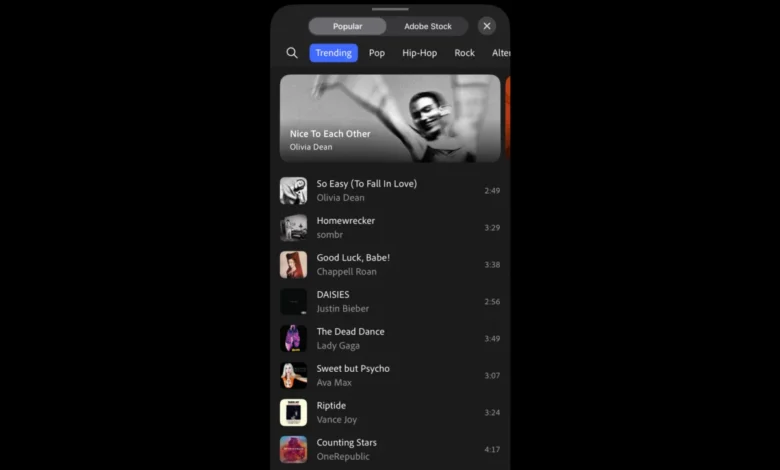
Adobe has officially revolutionized the creative workflow for short-form video producers by integrating hundreds of thousands of licensed songs from Universal Music Group (UMG) and Warner Music Group (WMG) directly into its Premiere mobile application. Announced during the Adobe MAX 2026 conference in Miami Beach, this strategic move aims to eliminate the friction creators often face when navigating complex copyright landscapes. By embedding high-quality, commercially recognized tracks into the editing suite, Adobe is positioning its mobile app as the premier destination for creators focused on platforms like TikTok, Instagram Reels, and YouTube Shorts.
The feature launch, currently rolling out to users in the United States, Canada, Australia, and New Zealand, provides a seamless interface where creators can browse, search, and preview trending music by genre, duration, or artist. Once a selection is made, users can incorporate up to 60 seconds of a track into their projects, supplemented by customizable templates that align with rhythmic beats and visual transitions.
The Evolution of Creator Workflow and the Licensing Gap
The integration marks a significant pivot for Adobe, which has historically focused on professional-grade editing tools rather than the distribution or social-integrated music libraries found in consumer-facing apps. Jay LeBoeuf, Adobe’s head of AI audio for creators, highlighted during a press briefing at Adobe MAX 2026 that the company had not previously focused on building this specific "music muscle."
The decision to partner with major labels was driven by persistent pain points within the creator economy. According to a June survey commissioned by Adobe and conducted by the Berklee College of Music, approximately 83.7% of creators explicitly build their video projects around a pre-selected song. Despite this creative reliance on audio, the process of clearing rights remains a significant hurdle. Many creators have reported instances of having their content muted, demonetized, or entirely removed due to copyright infringement, forcing them to rely on generic royalty-free tracks that often lack the cultural resonance of chart-topping hits.
By securing these licensing deals, Adobe is providing a legitimate pathway for creators to utilize music from globally recognized artists, including Chappell Roan, Lady Gaga, Justin Bieber, and Teddy Swims. This shift essentially bridges the gap between the professional editing process and the final social media delivery, allowing for a more cohesive creative cycle.
Chronology of Adobe’s Creative Expansion
Adobe’s trajectory toward this moment has been characterized by a steady increase in AI-driven features and mobile-first accessibility. The company’s journey into this space can be summarized through the following milestones:
- 2022-2023: Adobe significantly overhauled its mobile video strategy, shifting toward a more streamlined, user-friendly interface for the Premiere mobile application, moving away from complex desktop-like workflows to accommodate the demands of the "creator economy."
- Early 2024: The introduction of Adobe Firefly-powered generative AI tools began to appear across the Creative Cloud suite, allowing for automated color grading, text-based editing, and generative fill.
- June 2025: Adobe commissioned the Berklee College of Music study to quantify the role of music in modern short-form video, providing the data-driven justification for the upcoming licensing deals.
- October 2026 (Adobe MAX): The official announcement of the partnership with Universal Music Group and Warner Music Group, marking the first time a non-social creative application has secured such broad rights for personal, non-commercial use.
Data-Driven Insights and Industry Implications
The reliance on music for short-form engagement is not merely anecdotal; it is a core pillar of modern digital marketing and entertainment. Industry data consistently shows that videos featuring trending audio tracks see significantly higher engagement rates, longer watch times, and increased algorithmic visibility on platforms like TikTok and Instagram.
The Berklee study underscores the "creative-first" mentality, where the music often acts as the foundational structure—or "the heartbeat"—of a video. When creators are forced to settle for low-quality or royalty-free audio, the emotional impact of the content frequently diminishes. Adobe’s move to include high-fidelity tracks like Vance Joy’s "Riptide" or OneRepublic’s "Counting Stars" allows creators to leverage established sonic brand recognition to boost their own content performance.
Furthermore, the implementation of "studio-quality" audio tools, such as the Enhance Audio feature, ensures that even when users are filming on mobile devices, the final output meets a standard that aligns with the professional-grade music they are now able to overlay. This creates a vertical integration of audio quality, from the raw file to the licensed soundtrack.
Official Responses from Industry Partners
The partnership has been met with enthusiasm from both the music industry and the tech sector, as it represents a new revenue and exposure model for labels.
Bryan Stone, senior VP of business development at Universal Music Group, noted that this collaboration is unique because it occurs outside the traditional social media ecosystem. "Adobe Premiere on mobile is the only creative application we have a licensing deal with in this capacity," Stone stated. "It allows our artists and songwriters to reach new audiences by being part of the creative process from the ground up, rather than just being added as an afterthought on a social platform."
Similarly, Rachel Scarpati, VP of digital strategy and business development at Warner Music Group, emphasized the importance of integration. "The way people experience and engage with music extends far beyond traditional listening platforms. By integrating our catalog directly into the editing workflow, we are opening up new possibilities for creative expression and deeper fan engagement, acknowledging that music is where the creator’s journey begins."
Strategic Analysis: The Future of Creative SaaS
Adobe’s strategy here is a classic example of "feature parity meeting ecosystem expansion." By providing a free, watermark-free editor that includes top-tier music, Adobe is aggressively courting the next generation of content creators—a demographic that has traditionally favored apps like CapCut or InShot.
However, Adobe maintains a clear distinction in its business model. While the app is free to use, the platform continues to push its ecosystem value. Users who require commercial licenses for music—such as brands, agencies, or independent creators monetizing their content professionally—can continue to utilize Adobe Stock Audio. This hybrid model allows Adobe to capture the mass market of hobbyists and aspiring influencers while maintaining a lucrative gate for professional enterprise clients.
The limitation of these new licenses to "personal, non-commercial use" is a strategic safeguard. It prevents the app from cannibalizing the professional stock music market while still providing the average TikTok or YouTube creator with enough tools to build high-quality content. Adobe has indicated that it is actively seeking additional licensing deals with other rightsholders, suggesting that the library will continue to grow as the company monitors user feedback and platform trends.
Challenges and Future Outlook
While the move is a massive win for users, it is not without challenges. The geographic limitations—restricting the feature to the U.S., Canada, Australia, and New Zealand—highlight the complexities of global music licensing. Navigating international copyright law remains a daunting task, and the rollout speed will likely depend on Adobe’s ability to secure similar agreements in European and Asian markets.
Moreover, the reliance on AI-powered tools such as Adobe Firefly indicates that the company is betting heavily on automation to keep its software relevant. As the distinction between professional editing and social content creation continues to blur, Adobe’s ability to remain the "standard" will depend on its capacity to integrate these high-end assets into a mobile-first environment without bloating the software.
Ultimately, by formalizing the relationship between major labels and video editors, Adobe is acknowledging that the future of content creation is intrinsically tied to music. As creators become more sophisticated in their editing techniques, the demand for accessible, high-quality, and legally cleared audio will only increase. With this update, Adobe is not just providing an editing tool; it is providing the infrastructure for a more professional and creatively vibrant creator economy. As the industry watches, the success of this integration will likely dictate the next wave of feature updates for video editing software across the entire digital landscape.