Nopia Smashes Crowdfunding Goals as the Viral Harmony Generator Finally Enters Production

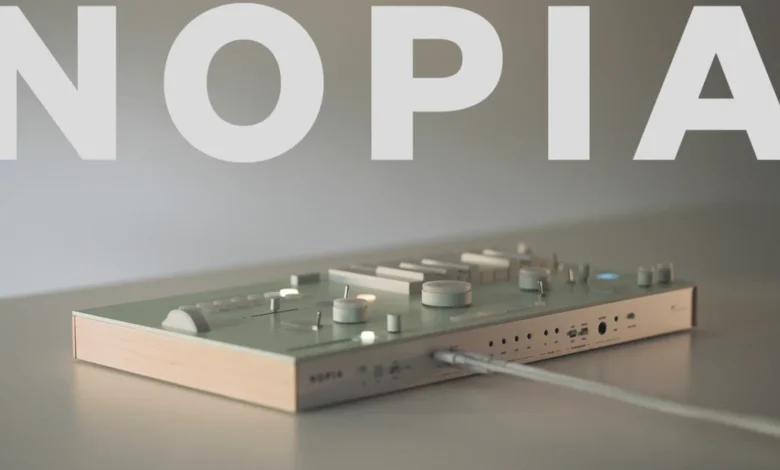
Three years after capturing the attention of the global music technology community with a viral prototype, the developers of Nopia have officially launched a commercial crowdfunding campaign that has dramatically exceeded initial financial expectations. Created by Argentine musicians and industrial designers Martin Grieco and Rocío Gal, the Nopia MK1—marketed as a semi-modular harmony generator—has officially transitioned from a proof-of-concept internet phenomenon into a heavily backed hardware reality.
Within the first 24 hours of its debut on Kickstarter, the production campaign for the Nopia MK1 surpassed its modest initial $50,000 funding objective. Momentum quickly escalated, propelling total pledges past the $1.4 million threshold backed by over 2,000 individual financial contributors, with several weeks remaining in the campaign window. This extraordinary fiscal response cements the instrument’s place as one of the most successful independent music technology product launches in recent memory.
Main Facts and Crowdfunding Milestones
The rapid influx of capital has fundamentally altered the commercial trajectory of the independent development team. Premium tier allocations, including the Super Early Bird and Early Bird pricing tiers, sold out almost immediately following the campaign go-live. Standard production units are currently priced at $699, with manufacturing operations underway and international freight fulfillment scheduled to begin in early 2027.
Unlike traditional corporate instrument rollouts supported by dedicated advertising budgets and high-capital PR agencies, the Nopia campaign relied entirely on organic community traction. The creators expressed profound astonishment at the speed of the financial backing, noting that the community of musicians, bedroom producers, and gear enthusiasts mobilized through direct channels, email updates, and the initial viral video asset. The overwhelming validation has provided the independent duo with the structural green light required to finalize tooling, custom hardware components, and proprietary firmware optimization.
Chronology: From Childhood Observation to Viral Sensation
The genesis of Nopia traces back to the formative experiences of co-creator Martin Grieco, who spent his childhood identifying recurring chord progressions across diverse musical genres long before receiving formal music theory training. Recognizing that standard chord-generating MIDI software historically functioned like rigid spreadsheets rather than intuitive extensions of human auditory perception, Grieco sought to bridge the gap between complex harmonic theory and live physical performance.
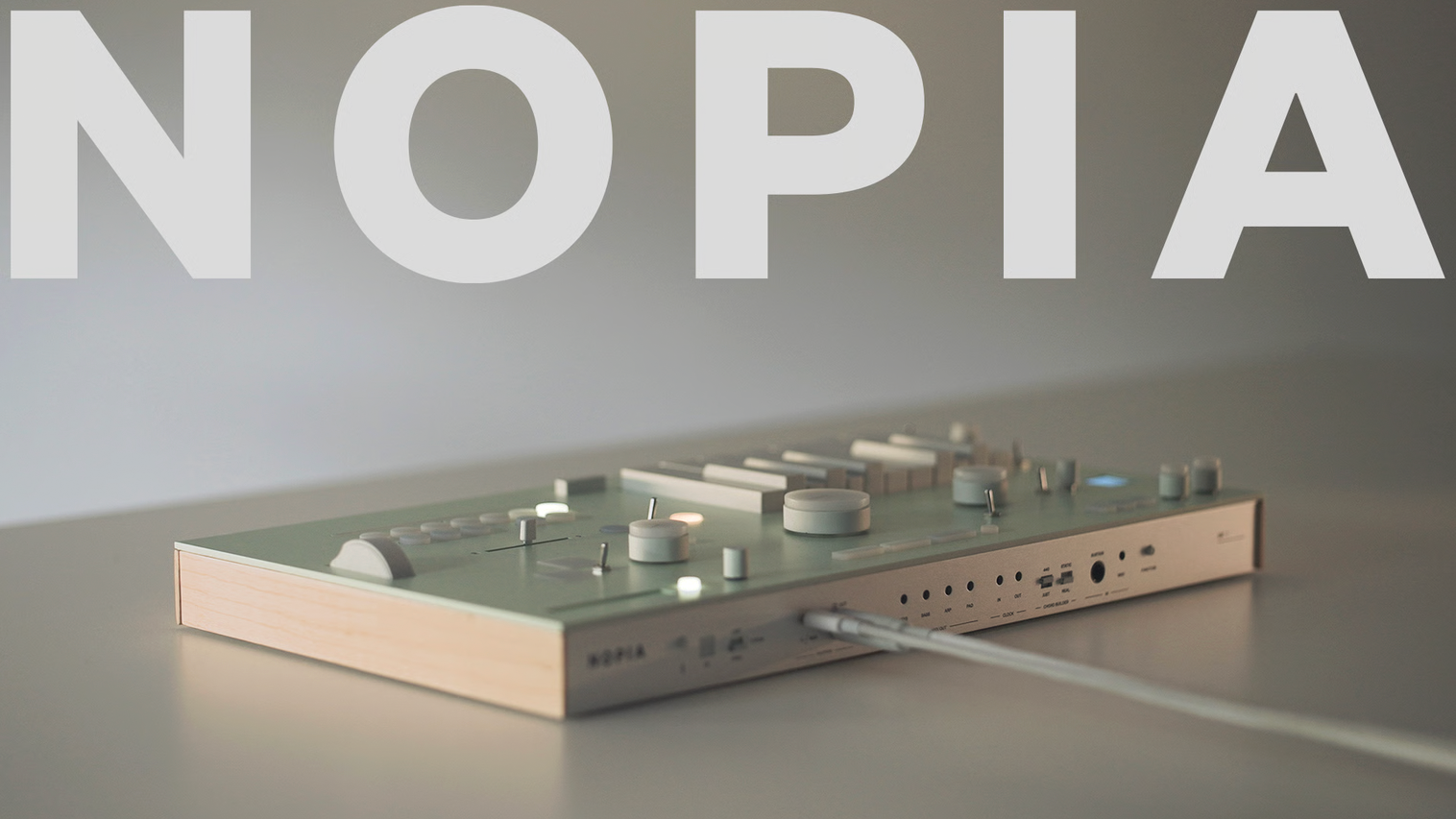
The project evolved significantly during Grieco’s postgraduate studies in Expanded Music, where he crossed paths with co-creator Rocío Gal, who brought an industrial design and graphic design background to the partnership. Initially conceptualized as an Ableton Live software rack and subsequently considered as a VST plugin, Gal convinced Grieco that the unique workflow demanded a dedicated physical hardware interface. The first functional prototype was assembled as a summer entry for an instrument design competition.
The turning point occurred when the team recorded a demonstration video to explain the idiosyncratic mechanics of chromatic tonal harmony to friends and peers who struggled to grasp the theoretical underpinnings of the device. Uploaded to the internet with modest expectations, the demonstration video achieved rapid virality, accumulating 20,000 views within 24 hours and surpassing one million views within three days. The comment sections of the video provided validation far beyond simple viewing metrics, as experienced musicians eloquently articulated the exact problem the instrument aimed to solve. This public validation transformed a private design exercise into an international commercial imperative, forcing the creators to navigate a demanding three-year engineering and hardware development cycle.
Technical Architecture and Workflow Mechanics
At its structural core, Nopia is designed to bypass the steep learning curve traditionally associated with polyphonic chord generation and keyboard proficiency. The device relies on a tactile workflow split into two primary operational zones: the Chord Builder, a one-octave physical keyboard positioned on the left-hand side, and the Tonal Selector, comprised of 12 distinct buttons arranged in a keyboard-style layout on the right. Combined with a primary major/minor switch, the Tonal Selector establishes the root tonal center, while the Chord Builder triggers full polyphonic structures.
The instrument operates via two distinct software modes designed to accommodate varying degrees of user familiarity with music theory:
- Real Mode: Geared toward users with a functional understanding of harmonic theory, Real Mode builds each chord around the literal note depressed on the Chord Builder. Selecting a home key on the Tonal Selector while playing a chromatic note prompts the instrument to treat it as a major third interval, effectively generating a secondary dominant chord capable of resolving smoothly within the established key structure.
- Static Mode: Engineered for non-keyboardists and producers without formal theory training, Static Mode maps the Chord Builder keys directly to specific scale degrees of the selected root key. This methodology functions analogously to utilizing a capo on a guitar fretboard, allowing performers to master a single physical layout and execute complex chord progressions across any key without altering their physical hand positions.
Beyond its core chord-generation logic, Nopia integrates a robust set of expressive performance controls. An Extensions Knob introduces harmonic coloring via ninth and tenth intervals, a Shift button accesses suspensions and sixth chords, and a dedicated fader manipulates voicing configurations and octave registers. Physical expressivity is further heightened through touchplates positioned beneath the Tonal Selector for real-time pitch-bending, alongside a top-right touchplate designed to emulate manual string plucking or strumming gestures.
Internal Synthesis, Audio Engine, and Connectivity
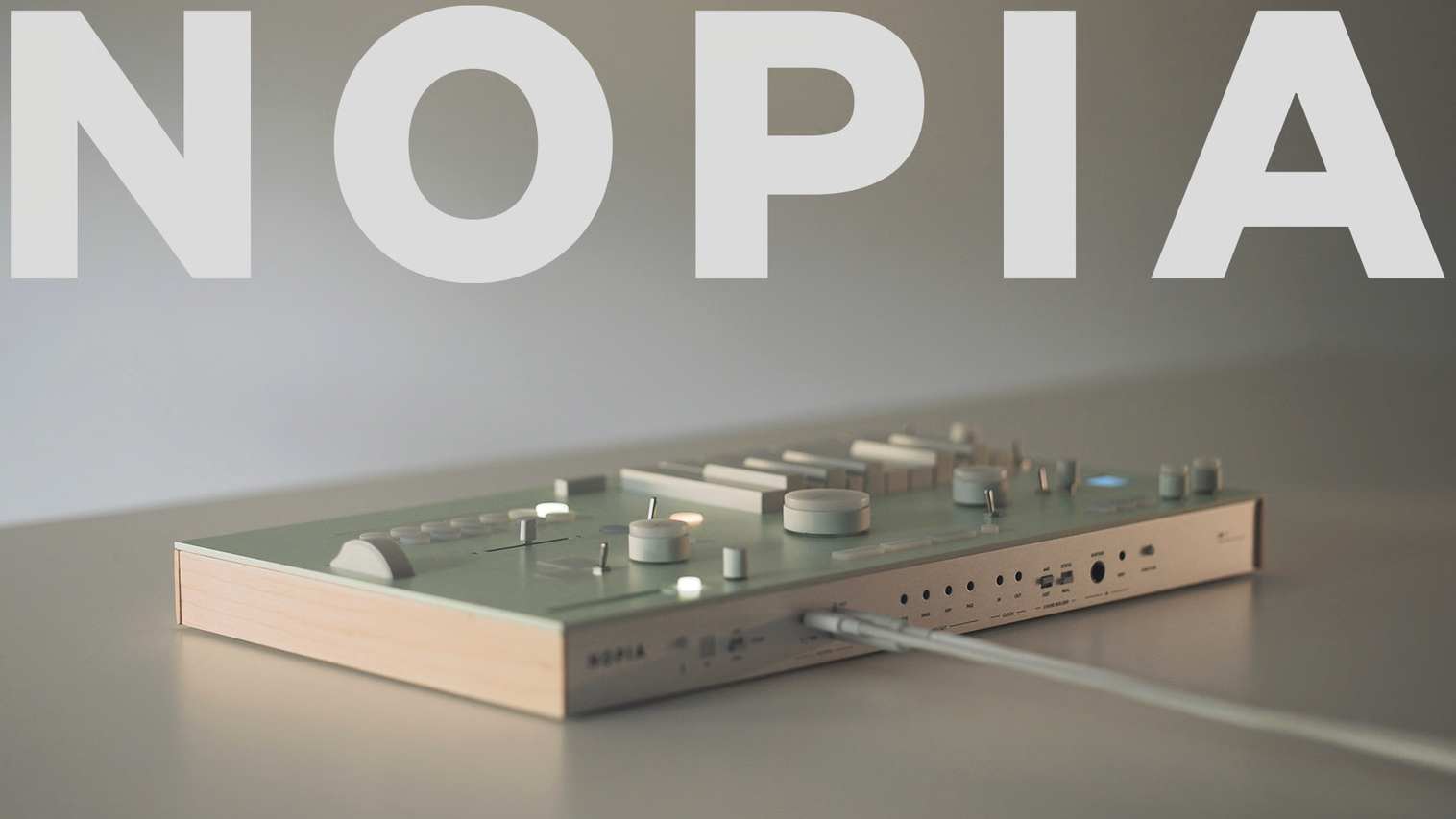
The complex polyphonic output generated by Nopia’s harmony engine feeds directly into a multitimbral internal architecture. The sound engine combines virtual analog synthesis models and user-loadable samples distributed across four independent modules: Keys, Bass, Arp, and Pad. Each module is assigned an independent MIDI output channel, enabling flexible signal routing to external hardware synthesizers or direct integration into a Digital Audio Workstation (DAW) via USB-C connectivity.
Users can import custom audio samples into the internal memory banks via USB-C, while deep parameter adjustments and patch editing are managed through a streamlined browser-based interface. The onboard effects suite includes variable filtering, delay, reverb, saturation, tape emulation, and a Beat Repeat-style glitch processor. Furthermore, the unit features a three-slot hardware looper equipped with real-time parameter automation and overdubbing capabilities for constructing layered live performances.
Aesthetic Philosophy and Industrial Design Challenges
The physical presentation of the Nopia MK1 has been widely cited as a primary driver of its public appeal. Constructed from solid wood and anodised aluminum, the hardware embraces a minimalist, pastel-green aesthetic inspired by vintage electric guitars. In a deliberate departure from contemporary electronic music equipment, the top panel is entirely devoid of permanent text labels, featuring only a small informational display screen.
This design choice was born out of functional necessity for live performance environments characterized by smoke machines and dim stage lighting, where tactile muscle memory supersedes visual reading. According to the development team, public exhibitions confirmed that users preferred an unmarked, clean interface that encourages intuitive interaction over cluttered typographical layouts.
Broader Industry Implications and Future Outlook
The extraordinary financial success of the Nopia MK1 Kickstarter campaign highlights a shifting consumer appetite within the music technology sector. Modern producers and live performers increasingly gravitate toward hardware instruments that offer tactile alternatives to screen-based music production, while simultaneously lowering technical barriers to sophisticated harmonic composition.
By successfully transitioning from an internet novelty to a funded commercial hardware project, Grieco and Gal have validated the viability of independent, design-first instrument manufacturing. As the Nopia team finalizes pre-production engineering and moves toward full-scale manufacturing, early backers and observers alike are already looking past the initial release toward potential future iterations and hardware ecosystem expansions. For now, the focus remains firmly on delivering the Nopia MK1 to its global community of backers by early 2027, marking the beginning of a new chapter for accessible harmonic expression.
Related posts: