Inside the Berlin Studio of Calcou: How Electronic Producer Stefan and Songwriter Thea Formed a Duo and Harnessed Native Instruments for Now, What?


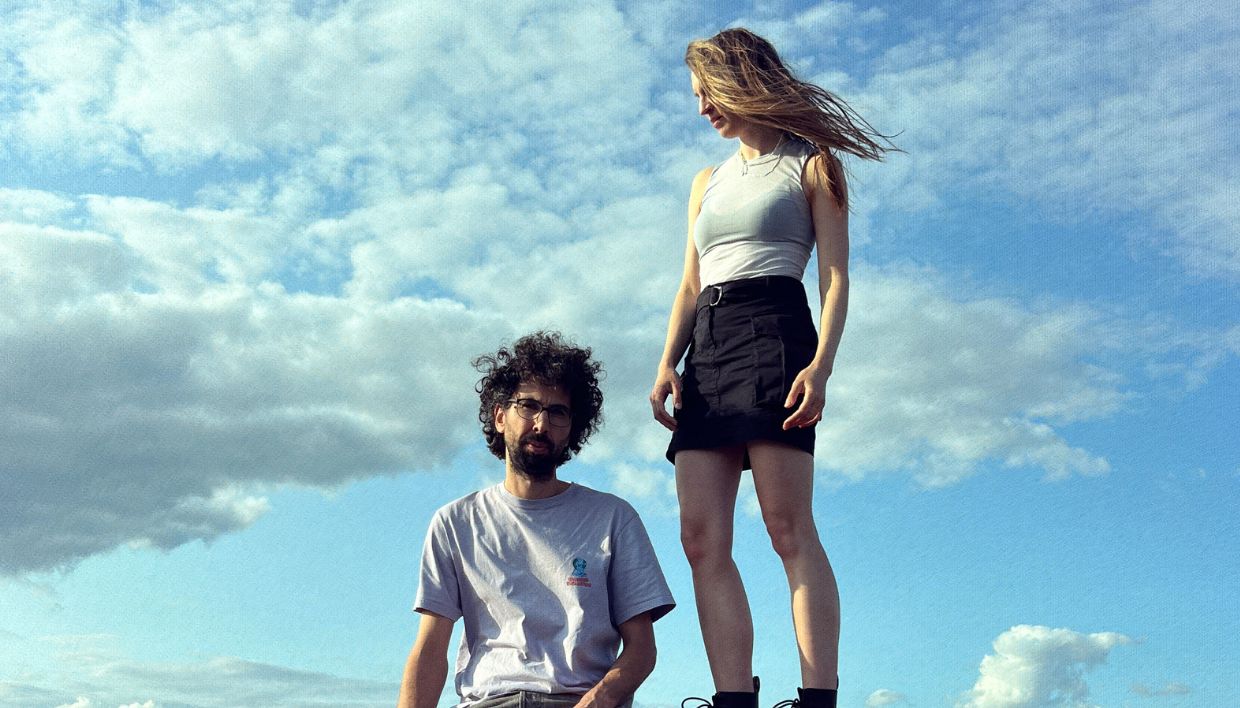
Collaboration often serves as a crucible for electronic music artists, forcing a reexamination of established workflows, sonic identities, and creative boundaries. For Berlin-based producer Stefan, operating under the moniker Calcou, this evolutionary leap materializes on the newly released record Now, What? Rather than continuing as a solo electronic act, Calcou has officially expanded into a full-fledged collaborative duo with the addition of vocalist and songwriter Thea. This partnership represents a deliberate convergence of perspectives, successfully bridging the intricate demands of live performance, tactile electronic production, and traditional songwriting with striking clarity and artistic purpose.
The journey leading up to the release of Now, What? is rooted in years of informal creative exchange. Long before formalizing their status as a duo, Stefan and Thea worked side by side in the vibrant, highly competitive music ecosystem of Berlin. This prolonged period of shared experimentation allowed them to naturally delineate their respective roles without the friction that frequently plagues newly formed musical partnerships. In their current operational model, Stefan functions primarily as the composer and producer, steering the rhythmic framework and modular foundation, while Thea acts as the lead vocalist and primary songwriter, shaping the narrative core and melodic direction of each track.
This division of labor does not operate in isolation; rather, it thrives on an iterative loop of contribution and refinement. When Thea undertakes independent production tasks within her own digital audio workstation (DAW), she exports modular stems to Stefan. This back-and-forth framework eliminates counterproductive stylistic clashes, replacing them with a structured dialogue where both artists continuously audit, critique, and elevate each other’s contributions until a unified sonic atmosphere is achieved.
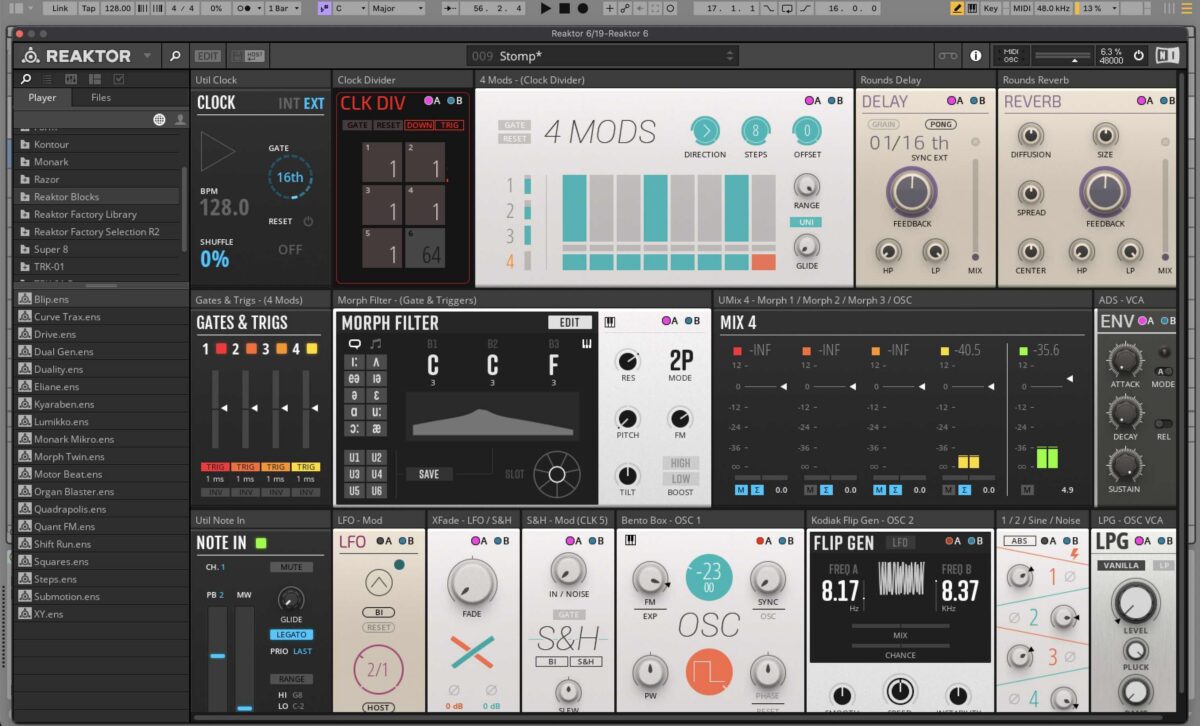
The sonic landscape of Now, What? is characterized by an intentional friction between organic, human textures and precise modular energy. Tracks such as Closer and Green Hills exemplify this balance, showcasing a collaborative workflow designed to build palpable tension without descending into overproduced clutter. Central to achieving this distinct aesthetic is their reliance on software instrumentation from Native Instruments, specifically Reaktor, Monark, and Super 8.
According to Stefan, the decision to anchor their production in Reaktor stems from a desire for transparency and compositional honesty in the early demo phase. Many modern virtual studio technology (VST) plugins rely on massive, pre-rendered reverbs, heavy delays, and glossy atmospheres that artificially inflate a musical sketch, making it sound deceptively finished. This sonic masking often leads producers astray, as stripping away the heavy effects later in the mixing stage frequently reveals a lack of core compositional substance.

Reaktor offers a starkly different philosophy. Built on solid, effect-light foundations, its presets provide immediate structural clarity. When Stefan and Thea sketch out a progression using a simple Super 8 or Reaktor patch, they are forced to confront the naked reality of their arrangement. This ensures that every musical idea is validated by its intrinsic merit rather than the acoustic tricks applied to it.
The duo’s masterclass in minimalist composition emphasizes testing ideas with restricted parameters. They advocate loading a clean, simple patch—such as a basic sawtooth wave—and limiting harmonies to two or three notes maximum. By focusing exclusively on chord progressions and voice leading before introducing complex sound design, producers can ensure that the underlying composition has emotional resonance. If a loop can evoke a genuine reaction using only a bare-bones patch, the foundational architecture of the track is deemed solid.
Beyond standard instrument patches, Calcou utilizes Reaktor Blocks as an engine for unscripted creative discovery. Described by the duo as their primary wild card, Reaktor Blocks introduces an element of controlled chaos into the studio. By intentionally manipulating modular routings—often without fully mapping out every predictable outcome—Stefan and Thea embrace moments where patches break in unexpected ways, using those sonic anomalies as fertile ground for new tracks.

This philosophy of resourcefulness extends to internal asset management within a project. Calcou frequently employs a recycling methodology for successful patches, utilizing a single foundational sound across multiple elements within the same composition. For instance, a resonant pad sound might be pitched down, converted to mono, and repurposed as the low-end anchor for a bassline, or pitched up to serve as a melodic lead. This technique preserves the overarching sonic vision of the track, ensuring that disparate elements feel inextricably linked through a shared timbral DNA.
Translating a studio production with more than 100 individual tracks per song into a stable, high-energy live performance required an equally methodical approach. Calcou’s live setup integrates a customized Ableton performance pack with real-time hardware manipulation, triggering pre-programmed Reaktor patches and targeted effect chains simultaneously.
However, the duo maintains strict parameters regarding what is performed live versus what is pre-sequenced. Guided by the principle that audience engagement relies on authentic physical effort, Calcou avoids superficial knob-twisting that merely simulates complex studio automations inaudible to the crowd. Real-time manipulation is reserved exclusively for moments where direct tactile control delivers an undeniable auditory impact. Elements that lack immediate live resonance are bounced down to audio stems prior to the show, ensuring technical stability and preventing MIDI routing errors on stage.
This emphasis on intentionality and efficiency is a recurring theme in Calcou’s advice to emerging producers and creative partnerships. Both Stefan and Thea stress the importance of protecting the initial spark of inspiration against the paralysis of endless perfectionism. By establishing rigid project milestones—such as finalizing a sound palette on day one, locking down an arrangement by the end of the week, and deferring mix decisions until stems are printed—artists can maintain momentum and prevent second-guessing.
Furthermore, the duo advocates for leaving raw human fingerprints intact within the final master. Imperfect vocal takes, unquantized rhythmic anomalies, and unexpected acoustic quirks are often what separate a genuinely moving piece of music from a sterile, over-quantized product. For creators struggling with writer’s block, Calcou recommends initiating a session with a simple drone patch featuring built-in movement or heavy reverb, providing an immediate acoustic bed to hum, sing, or improvise over without the intimidation of a blank canvas.
Ultimately, Now, What? stands as a testament to the power of structured collaboration, mutual trust, and disciplined workflow management. By pairing the deep modular flexibility of Native Instruments Reaktor, Monark, and Super 8 with a rigorous division of labor and a steadfast commitment to emotional clarity, Calcou has successfully navigated the transition from solo project to dynamic duo. The resulting record captures the delicate equilibrium between technical precision and raw human instinct, setting a high benchmark for contemporary electronic music production.