Nielsen Report Confirms Anime Fandom as a Global Commercial Powerhouse and Mainstream Cultural Identity

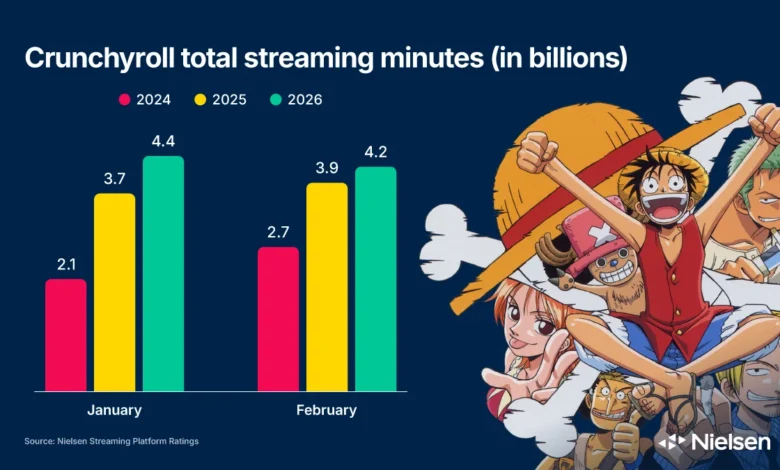
The global media landscape is witnessing a fundamental shift in audience behavior as anime transcends its historical designation as a niche subculture to become one of the most influential commercial drivers in modern entertainment. According to a comprehensive report released by Nielsen in April 2026, the anime audience has evolved into a highly engaged, affluent, and technologically savvy demographic that traditional media companies and advertisers can no longer afford to overlook. The data suggests that anime is no longer merely a category of content but a "behavioral identity" that dictates consumer spending across multiple sectors, including streaming, gaming, fashion, and live events.
The Transformation from Niche to Mainstream
For decades, anime was categorized by Western media executives as a specialized interest, often relegated to late-night programming blocks or specialized physical media markets. However, the Nielsen report argues that this "niche" framing is now obsolete. The rapid expansion of high-speed internet and the aggressive global strategies of streaming giants have dismantled the barriers to entry that once limited anime’s reach.
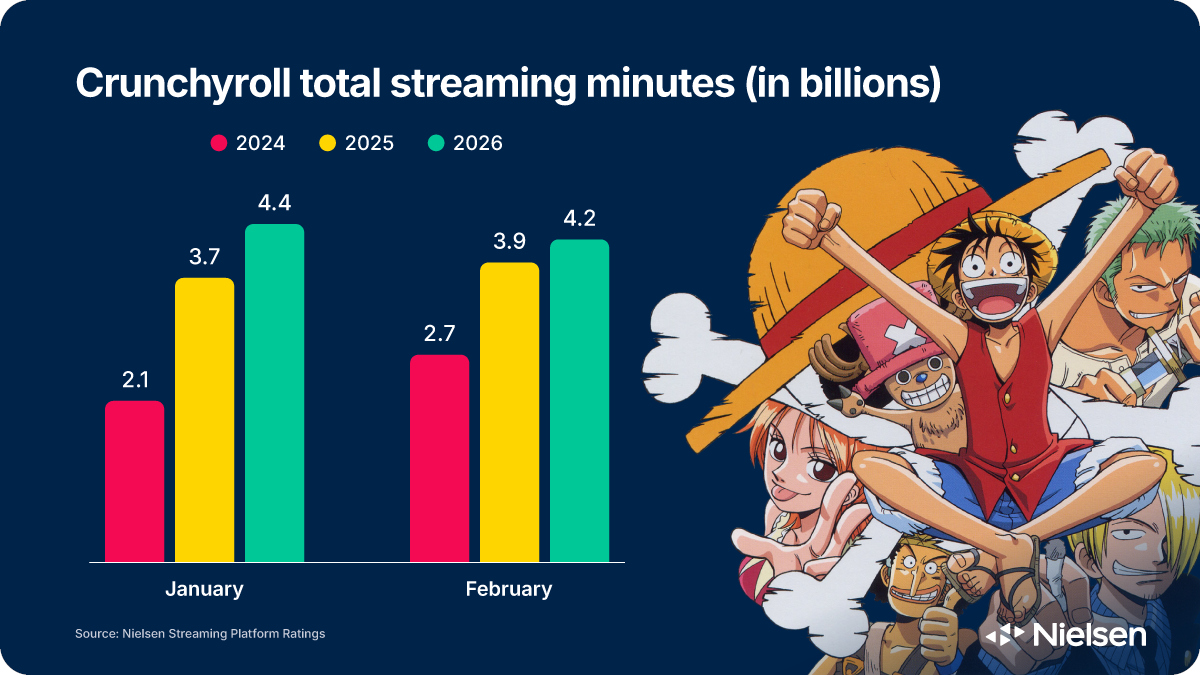
The surge in popularity is intrinsically linked to the digital infrastructure provided by platforms such as Netflix, Crunchyroll, and Disney+. These services have not only made vast libraries of Japanese animation accessible to a global audience but have also normalized the consumption of non-English language content. The report highlights that breakout live-action hits like Alice in Borderland and Squid Game paved the way for a broader acceptance of Asian storytelling, which in turn created a "halo effect" for anime. High-profile adaptations, most notably the success of the live-action One Piece series, have demonstrated that anime intellectual property (IP) possesses a universal appeal capable of generating massive viewership numbers across diverse geographical regions.

A Profile of the Modern Anime Enthusiast
One of the most significant revelations in the Nielsen study is the economic profile of the anime fan. Contrary to the outdated stereotype of the "starving artist" or the adolescent viewer with limited purchasing power, the report identifies anime fans as "multi-faceted enthusiasts" who represent a high-value target for brands.
The data indicates that a substantial portion of the anime-watching population falls within the 18–34 age demographic—a group highly coveted by advertisers for their long-term brand loyalty and adoption of new technologies. Furthermore, the report finds that anime fans are more likely to live in high-income households compared to the general population. This affluence translates into significant discretionary spending. These consumers are not just paying for streaming subscriptions; they are investing in high-end merchandise, attending international conventions, and participating in the "gacha" mechanics of mobile gaming, which has become a multi-billion dollar industry in its own right.
Nielsen’s findings suggest that anime fandom functions more like a lifestyle than a simple preference for a specific type of animation. This audience is "sticky," meaning they demonstrate higher-than-average retention rates for platforms that host their favorite content. They are also more likely to engage with brands that show an authentic understanding of anime culture, leading to successful collaborations between anime IPs and luxury fashion houses, athletic wear brands, and automotive manufacturers.
The Evolution of the Global Anime Market: A Chronology
The journey of anime from a Japanese domestic product to a global cultural pillar has occurred in several distinct phases:
.png)
- The Broadcast Era (1990s–Early 2000s): The initial wave of global interest was driven by terrestrial and cable television. Series such as Dragon Ball Z, Sailor Moon, and Pokémon introduced a generation of Western children to the aesthetic of Japanese animation. However, availability was limited, and content was often heavily edited for local sensibilities.
- The Digital Frontier and Piracy (Mid-2000s–2010s): As fans sought out unedited content and series not available on television, a massive underground network of "fansubs" and pirate sites emerged. This era proved the existence of a massive, underserved global demand.
- The Streaming Revolution (2015–2022): The entry of Sony (via its acquisition of Crunchyroll and Funimation) and Netflix into the space professionalized the market. Simultaneous releases—where an episode airs in the West just hours after its Japanese broadcast—became the industry standard, effectively killing the necessity of piracy for most viewers.
- The Mainstream Integration (2023–Present): Anime has become a staple of pop culture. Major athletes celebrate victories with anime-inspired poses, and luxury brands like Loewe and Gucci launch collections themed around Studio Ghibli or Doraemon. The 2026 Nielsen report marks the formal recognition of this era, where anime is treated as a core growth driver for the global entertainment economy.
Cross-Platform Engagement and the "Ecosystem" Effect
The report emphasizes that anime fans are engaged across a broader digital ecosystem than the average media consumer. This "cross-platform intensity" is characterized by a high degree of participation in social media discourse, fan-created content (such as fan art and "AMVs"), and interactive gaming.
Gaming, in particular, has become inseparable from the anime experience. Titles like Genshin Impact and Honkai: Star Rail, while developed in China, utilize an "anime-style" aesthetic that has captured the hearts and wallets of global anime fans. Nielsen notes that the synergy between anime viewership and gaming habits creates a feedback loop: fans of a show are likely to play the tie-in game, and players of a game are likely to watch the accompanying animated series. This interconnectedness provides a roadmap for traditional media companies struggling to build multi-platform engagement in other genres.
Industry Resistance and the "Japanese Challenge"
Despite the overwhelming data, the Nielsen report points out a lingering hesitation among some Western media executives and advertisers. Anime is often still "pigeonholed" as a niche vertical rather than a primary demographic. The report identifies several reasons for this cautious approach.
First, the production ecosystem in Japan is notoriously complex. Rights structures are often fragmented among production committees involving publishers, record labels, and ad agencies. For Western companies, navigating these relationships to secure licensing or co-production deals requires a steep learning curve and significant time investment.
Second, there is a historical tendency in Hollywood to prioritize in-house IP. Executives are often more comfortable investing in established domestic formats than in foreign-produced animation that follows different narrative structures and cultural norms. However, Nielsen warns that this caution comes at a high opportunity cost. By keeping anime at arm’s length, brands are leaving high-value, highly loyal consumers on the table.
The Production Crisis: A Risk to Future Growth
While the demand for anime is at an all-time high, the Nielsen report touches upon a critical vulnerability: the sustainability of the Japanese production pipeline. The surge in global demand has placed immense pressure on Japanese studios, leading to a "quality crisis" characterized by delayed releases and inconsistent animation quality.
Labor shortages and the demanding nature of the industry have led to mounting concerns regarding the welfare of animators. As schedules tighten to meet the "day-and-date" requirements of global streaming platforms, the traditional hand-drawn techniques that give anime its distinct appeal are being pushed to their limits. The report suggests that for anime to maintain its upward trajectory, there must be a shift toward more sustainable production models, potentially involving greater international collaboration and investment in digital production technologies.
Implications for the Advertising and Media Landscape
The implications of the Nielsen report are clear: the "anime fan" is no longer a subsegment of the "animation fan." They are a distinct, powerful consumer class that demands authentic representation and engagement.
For advertisers, this means moving beyond simple pre-roll ads on streaming services. Successful brands are those that integrate themselves into the anime community through sponsorships of esports events, collaborations with popular "VTubers" (virtual YouTubers who use anime avatars), and the creation of limited-edition physical goods.
For media companies, the report serves as a call to action to treat anime as a cornerstone of their content strategy. The "identity-driven" nature of the audience means that they are less likely to "churn" or cancel subscriptions if a platform consistently provides high-quality anime content. In an era of "streaming wars" where subscriber retention is the primary metric of success, anime provides a level of audience loyalty that is rare in other genres.
Conclusion
The Nielsen report of April 2026 provides a definitive data-backed confirmation of what many in the industry have sensed for years: anime has won the culture war. It is a dominant force that influences how people dress, how they spend their leisure time, and how they define their identities. As the line between "Eastern" and "Western" entertainment continues to blur, anime stands as the most successful example of a regional art form achieving true global ubiquity. The challenge for the rest of the entertainment industry is no longer whether to acknowledge anime, but how quickly they can adapt to a world where anime fans are the new mainstream.