Reallusion 2026 Roadmap Unleashing the Future of 3D Animation and Character Creation Through Generative AI Integration

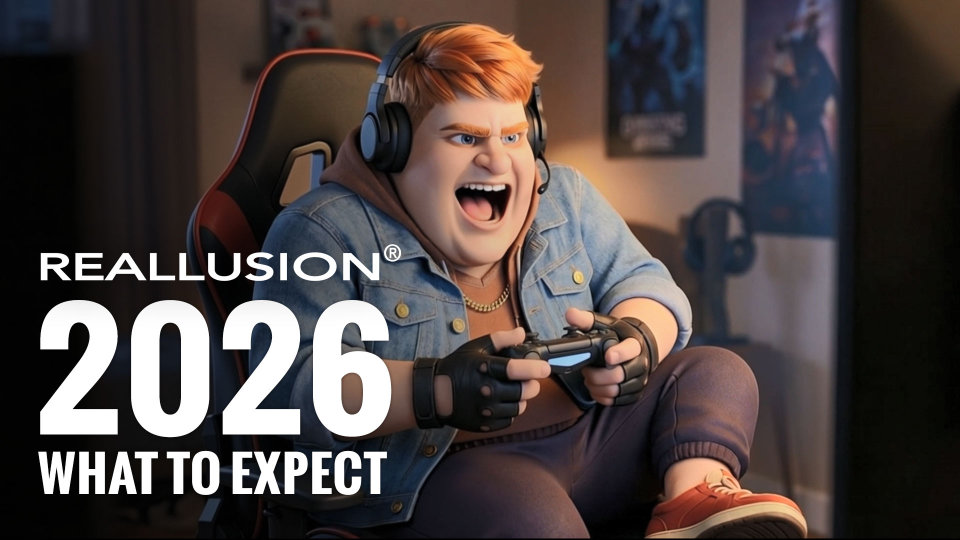
On April 16, 2026, Reallusion, a global leader in 3D character creation and animation software, unveiled its highly anticipated technology roadmap for the remainder of the 2026 fiscal year. This strategic blueprint marks a pivotal shift for the company, as it seeks to harmonize traditional professional 3D pipelines with the burgeoning power of generative artificial intelligence. By embedding sophisticated AI tools into the foundational stages of digital asset creation while simultaneously advancing the fidelity of its core rendering and rigging engines, Reallusion aims to provide a comprehensive ecosystem for the next generation of hybrid media production.
The 2026 roadmap focuses on two primary software pillars: Character Creator, the industry standard for digital human generation, and iClone, the real-time animation suite used extensively in pre-visualization, film, and game development. The upcoming updates represent a significant technological leap, introducing features such as cinematic RTX path-traced rendering, a proprietary AI model for 3D head reconstruction, and universal rigging capabilities that extend beyond humanoid characters.
The Integration of Cinematic RTX Rendering
One of the most significant announcements in the roadmap is the introduction of RTX rendering as a standard, free update for both Character Creator and iClone. Developed in a multi-year collaboration with NVIDIA, this integration brings the quality of cinematic path-traced rendering into a near-real-time environment. Traditionally, achieving photorealistic lighting, particularly for complex materials like human skin and hair, required lengthy offline rendering processes. By leveraging NVIDIA’s RTX hardware and Deep Learning Super Sampling (DLSS) technology, Reallusion is effectively removing this bottleneck.
The new RTX renderer is highly optimized for Reallusion’s proprietary digital human shaders. It provides artists with granular control over subsurface scattering (SSS), micro-skin textures, and individual hair strand illumination. Beyond character work, the RTX update enhances commercial and industrial visualization by allowing for dynamic time-of-day transitions and realistic atmospheric effects, such as volumetric clouds and light scattering, within the iClone viewport. This move aligns with broader industry trends where real-time engines are increasingly replacing traditional ray-tracers for final-frame output in episodic television and advertising.
Advancements in Digital Identity: Headshot 3
The evolution of digital identity remains a core focus for Reallusion. The upcoming Headshot 3 plugin for Character Creator introduces a proprietary AI model specifically designed for image-to-3D head reconstruction. Unlike generic AI models that often struggle with anatomical accuracy, Reallusion’s model has been trained on a massive, curated dataset of high-resolution facial scans. This specialization allows the software to better interpret depth cues, facial landmarks, and subtle identity markers from a single 2D photograph.
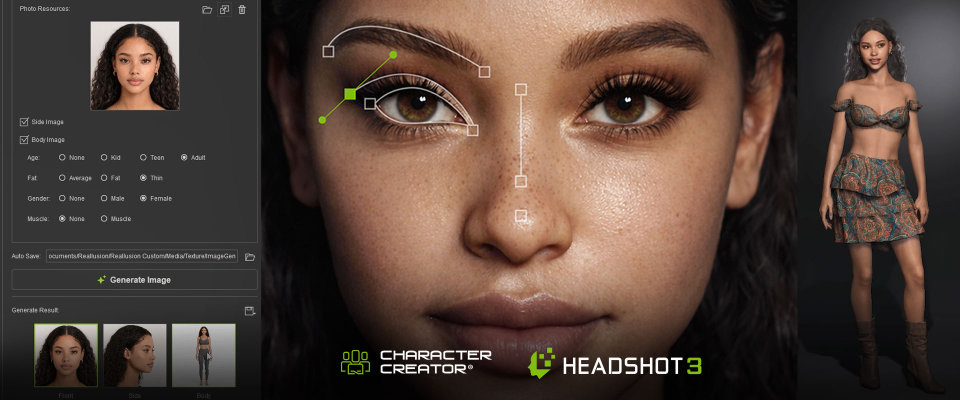
Key features of Headshot 3 include:
- 4K AI Generation: The ability to generate high-fidelity facial textures from text prompts or low-resolution images.
- Spline-Based Refinement: A new system of Bézier-based adjustments that allows artists to fine-tune the profile and silhouette of a head mesh with surgical precision.
- Lens Correction and Shadow Removal: Built-in tools to neutralize the distortion caused by camera lenses and the lighting inconsistencies often found in amateur photography.
- Body-Matching Technology: For the first time, the plugin will support full-body measurements derived from images, ensuring that the proportions of the digital double match the real-world subject accurately.
Industry analysts suggest that the precision offered by Headshot 3 will be particularly valuable in the "metaverse" and enterprise sectors, where the demand for accurate digital twins is growing at an estimated compound annual growth rate (CAGR) of 25% through 2030.
AccuFace 2 and the Character Creator 5 Ecosystem
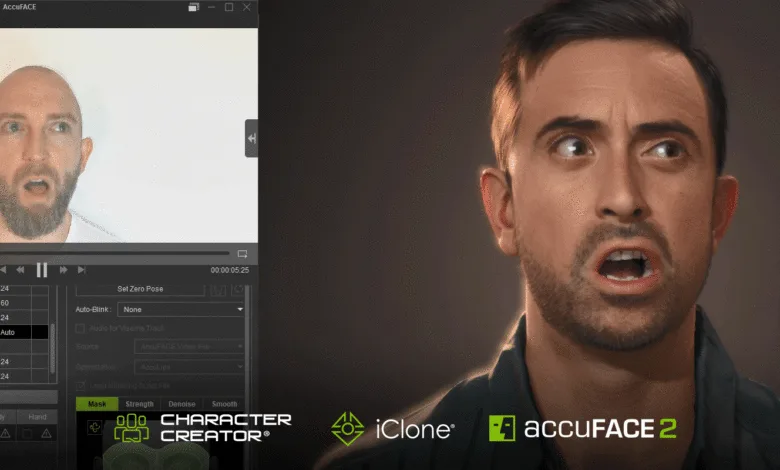
The roadmap also provides a glimpse into Character Creator 5 (CC5), which introduces a new "HD Facial Profile." This architectural upgrade allows for a higher density of facial blendshapes and bones, enabling more nuanced expressions. To support this, Reallusion is launching AccuFace 2, the next generation of its AI-driven facial motion capture plugin for iClone.
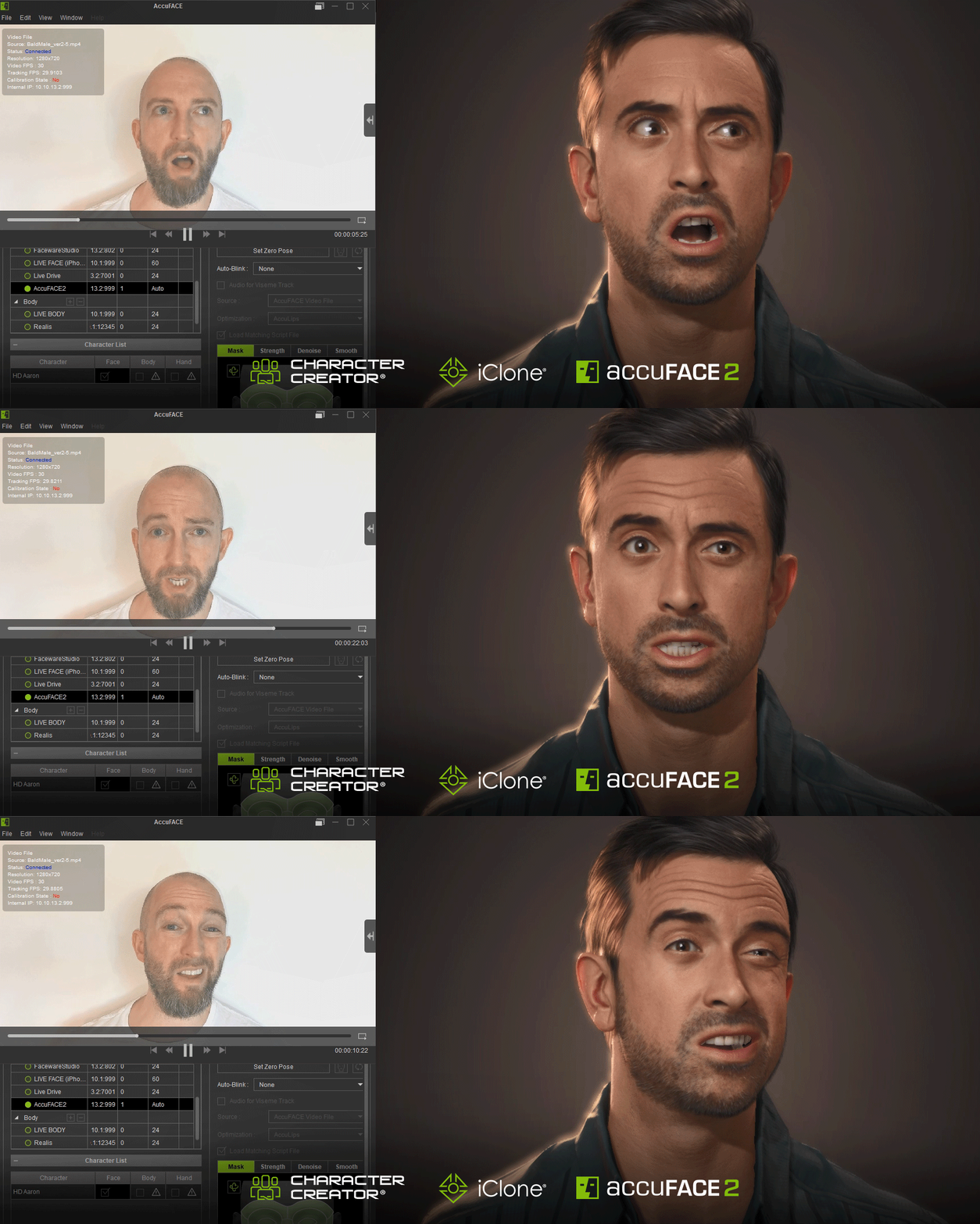
AccuFace 2 utilizes a newly trained tracking system optimized for the CC5 topology. It is designed to capture high-frequency lip-sync details and subtle micro-expressions that were previously lost in standard webcam-based capture. The system supports both live input and video file processing, allowing for a flexible workflow that ranges from quick prototyping to high-end production. When paired with Reallusion’s existing body motion capture tools, AccuFace 2 creates a unified pipeline for performance-driven animation.
CC Wrap: Bridging the Gap Between Static Assets and Animation
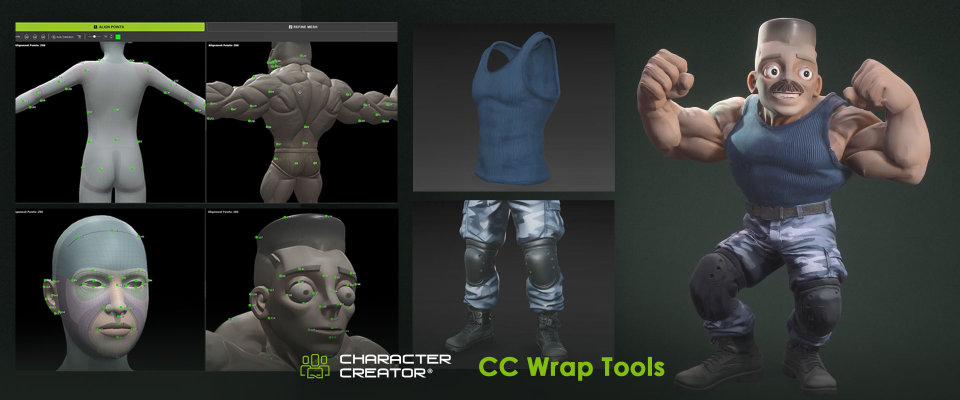
As generative AI tools for 3D modeling become more common, a significant challenge has emerged: these AI-generated models are often "static" meshes with poor topology and no rigging, making them difficult to use in animation. Reallusion’s solution is "CC Wrap," a tool designed to conform any arbitrary 3D model—whether generated by AI or sculpted in external software—to the standard Character Creator topology.
By wrapping these assets into the CC ecosystem, users can instantly gain access to Reallusion’s library of motions, facial expressions, and clothing. This tool also includes an "Image-to-Clothing" feature, which uses AI to interpret 2D references and create 3D garments with automatic skin weighting. This effectively democratizes high-end character setup, allowing artists who lack deep technical rigging knowledge to produce professional-grade results.
Anatomical Realism and Joint Corrective Morphs (JCM)
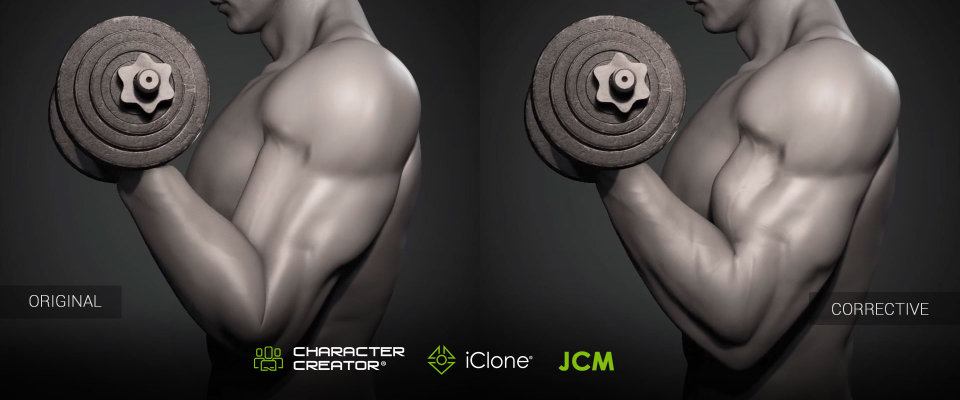
To further the goal of visual realism, Reallusion is introducing Joint Corrective Morphs (JCM) as a free update. In traditional 3D animation, joints like elbows and knees often suffer from "volume loss" or unnatural deformation when bent to extreme angles. The JCM system uses a joint-based deformation engine to trigger specific shape corrections based on the character’s pose. This ensures that muscles bulge and skin folds realistically, maintaining the anatomical integrity of the character regardless of the complexity of the animation.
AI Studio: Transforming Previs into Final Production
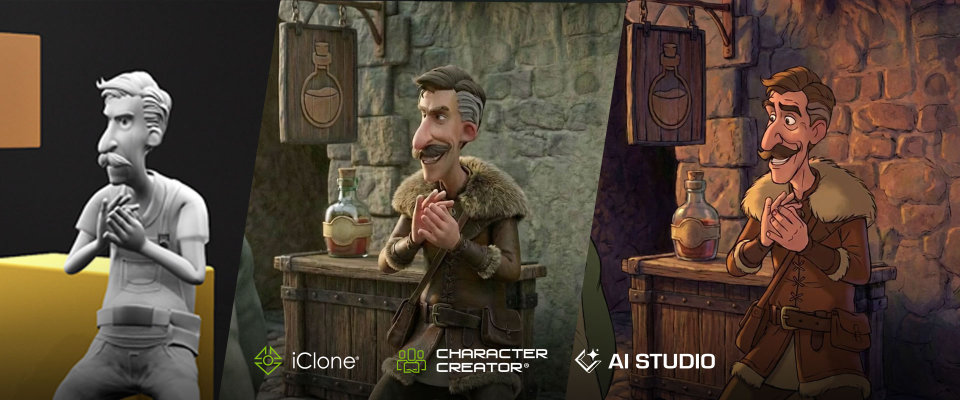
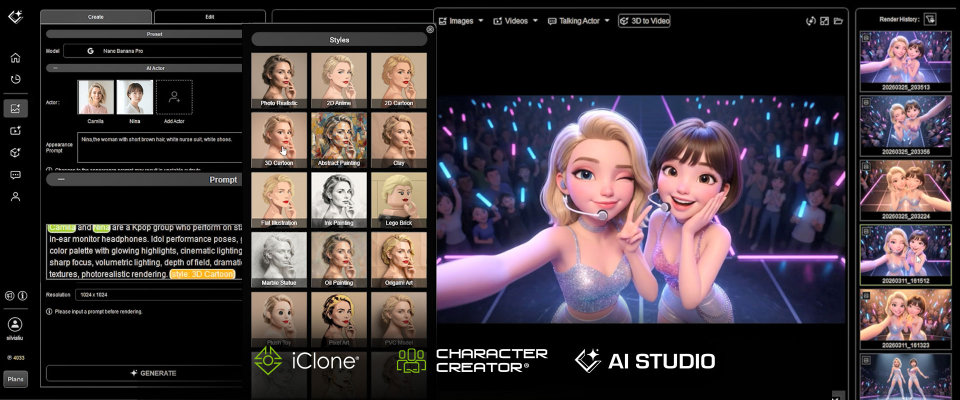
Perhaps the most disruptive element of the 2026 roadmap is the introduction of "AI Studio." This tool is designed to transform 3D pre-visualization (previs) into photorealistic or stylized video content. Using iClone’s motion data and camera coordinates as a foundation, AI Studio applies generative AI layers to render final frames that would otherwise require massive render farms.
AI Studio includes an "AI Actor Creator" to maintain character consistency across different shots—a common hurdle in AI-generated video. By utilizing Reallusion’s AI Cloud services, the software offloads the heavy computational requirements of generative rendering, allowing users with modest hardware to produce high-end cinematic content. This reflects a broader shift in the industry toward "AI-assisted rendering," where the 3D engine provides the structural "truth" (lighting, depth, and motion) and the AI provides the aesthetic "finish."
iClone 9: Universal Rigging and Creative Freedom
Looking further into the year, Reallusion teased the release of iClone 9. The cornerstone of this update is the "Rig Anything" initiative. While previous versions of iClone were primarily optimized for bipedal humans, iClone 9 will allow users to add skeletal structures and control rigs to any object or creature.
Key technical improvements in iClone 9 include:
- Motion Retargeting: Advanced algorithms to transfer animation between characters with different proportions or skeletal hierarchies.
- Secondary Motion and Spring Dynamics: Automated physics for hair, cloth, and soft tissues.
- Squash and Stretch: Traditional animation principles integrated into the 3D rig for more expressive, stylized movement.
- Collision-Aware Simulation: Improved interaction between characters and their environments to prevent mesh clipping.
Market Implications and Analysis
The Reallusion 2026 roadmap arrives at a time when the digital content creation (DCC) market is undergoing a fundamental transformation. According to data from various market research firms, the global 3D animation market is expected to reach nearly $40 billion by 2028. However, the cost and complexity of traditional animation remain significant barriers to entry for independent creators and small studios.
Reallusion’s strategy appears to be twofold: first, to maintain its standing with professional studios by upgrading its core technical capabilities (RTX, JCM, and CC5); and second, to capture the growing "prosumer" market by simplifying the most difficult aspects of 3D production through AI (Headshot 3, CC Wrap, and AI Studio).
Professional reactions to the roadmap have been largely positive, particularly regarding the RTX update. "The ability to see path-traced quality directly in the iClone viewport is a game-changer for lighting artists," noted one lead technical director from a mid-sized animation studio. "It closes the gap between what we see during the creative process and what the final audience sees."
However, some industry veterans remain cautious about the rapid integration of generative AI. Issues regarding copyright for AI-trained models and the potential for "uncanny valley" results in automated head reconstruction are topics of ongoing debate within the CG community. Reallusion has addressed some of these concerns by emphasizing that their AI models are "proprietary" and trained on specific, high-quality datasets rather than scraped from the public internet.
Access and Availability
To facilitate the rollout of these new technologies, Reallusion has updated its access models. Users can choose between a subscription plan, which provides immediate access to all updates and cloud-based AI services, or perpetual licenses for those who prefer to own their software outright. In a pre-launch promotion, Reallusion is offering Headshot 3 for free to users who purchase the current version of Headshot 2, providing an incentive for artists to integrate the software into their current projects ahead of the official 2026 release cycle.
As the boundary between reality and digital representation continues to blur, Reallusion’s 2026 roadmap positions the company as a critical infrastructure provider for the future of visual storytelling. By focusing on the "bridge" between human creativity and machine intelligence, Reallusion is not just updating software; it is redefining the workflow of the modern digital artist.