NASA Moon Orbiter Spots New Once-in-a-Century Crater That Provides Unprecedented Insights into Lunar Impact Dynamics

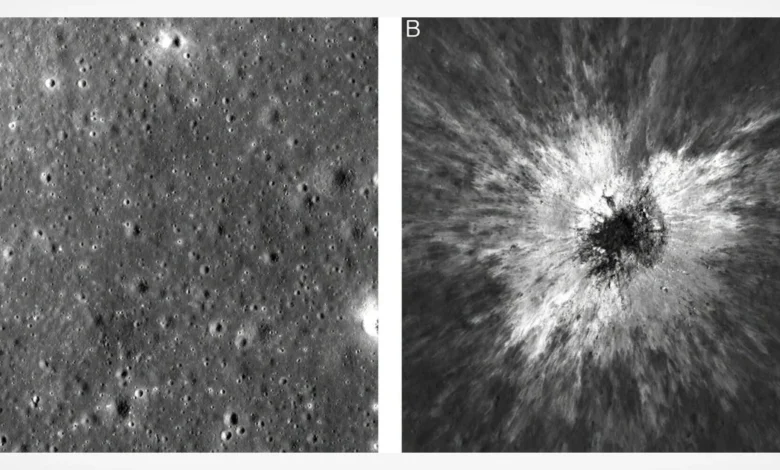
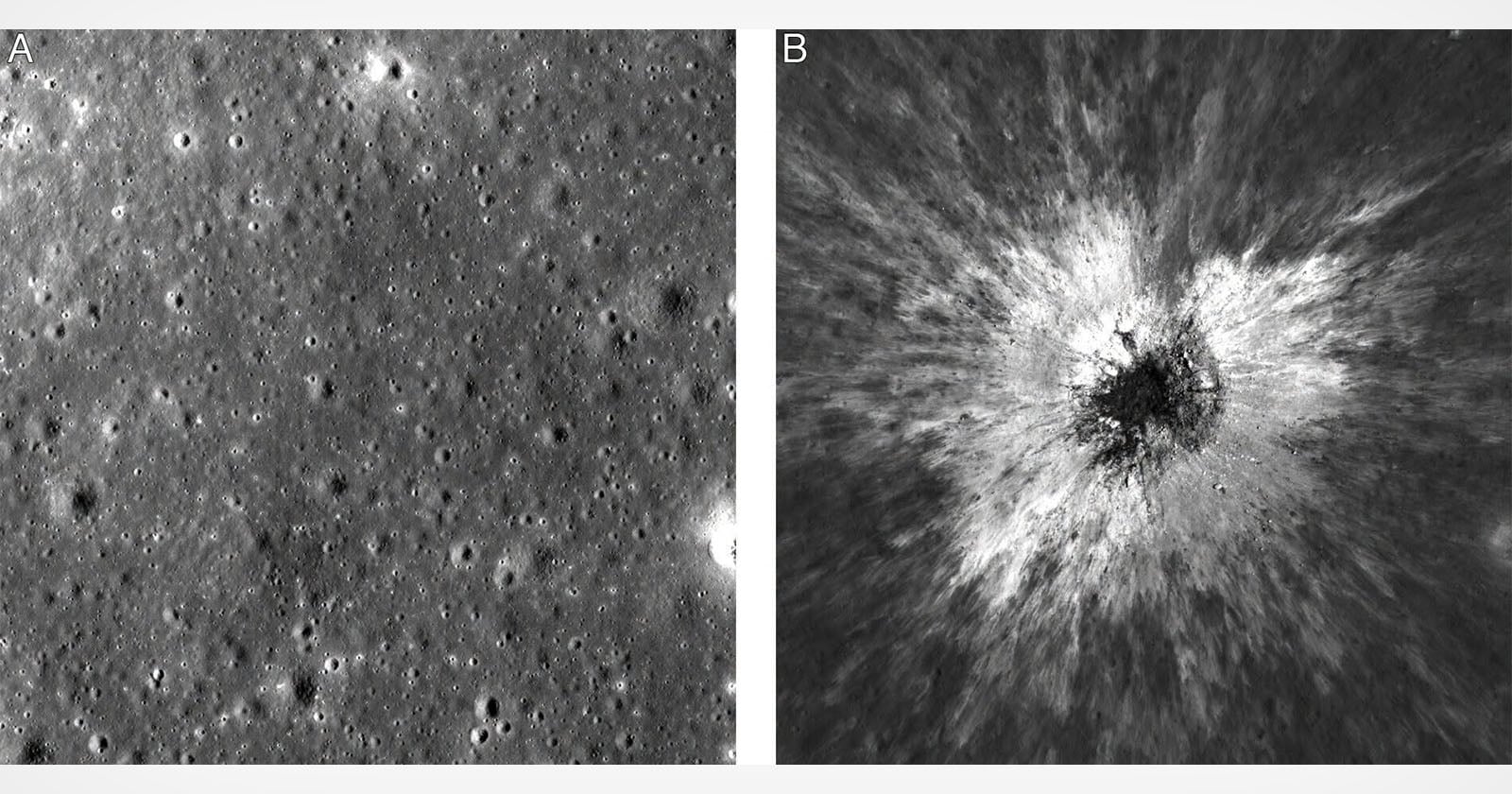
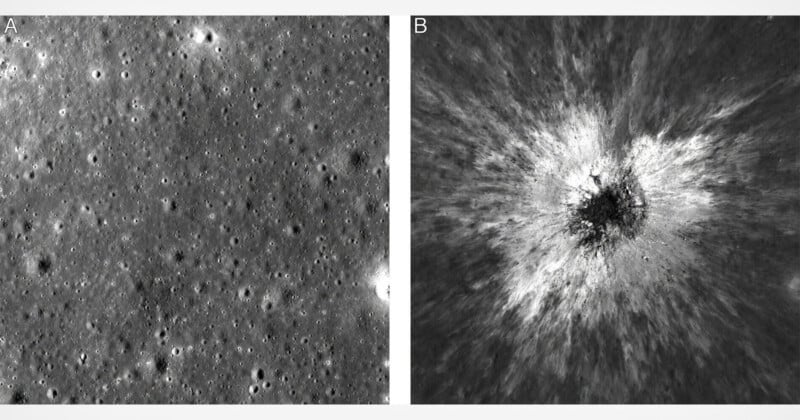
NASA scientists have published before-and-after photographs of a newly formed crater on the lunar surface, offering researchers an exceptionally detailed view of what occurs when a large cosmic object violently strikes a celestial body devoid of a substantial atmosphere. Formed sometime between April and May 2024, the newly documented indentation has been officially named the McGetchin crater in honor of Thomas McGetchin, a former director of the Lunar and Planetary Institute located in Houston, Texas.
Measuring approximately 728 feet (222 meters) across and plunging to a depth of roughly 141 feet (43 meters), the McGetchin crater stands as the largest newly formed impact structure ever identified by NASA’s Lunar Reconnaissance Orbiter (LRO) since the spacecraft began its mission in 2009. According to planetary scientists, impact events capable of generating geological modifications of this sheer magnitude occur on the Moon roughly once every century. This rare temporal alignment has transformed an astronomical collision into a once-in-a-lifetime observational opportunity for the global scientific community, with findings detailed across two separate studies recently published in the journal Science Advances.
Anatomy of a Once-in-a-Century Lunar Cataclysm
The event responsible for carving out the McGetchin crater involved an incoming asteroid fragment or cometary debris estimated to be several stories tall. Striking the near side of the Moon at high velocity, the projectile unleashed a tremendous amount of kinetic energy, pulverizing bedrock and ejecting pulverized material across a massive expanse. While the cataclysm occurred on the hemisphere of the Moon facing Earth, the impact transpired entirely undetected in real time by ground-based observatories or space telescopes, slipping past continuous sky-monitoring networks designed to track near-Earth objects.
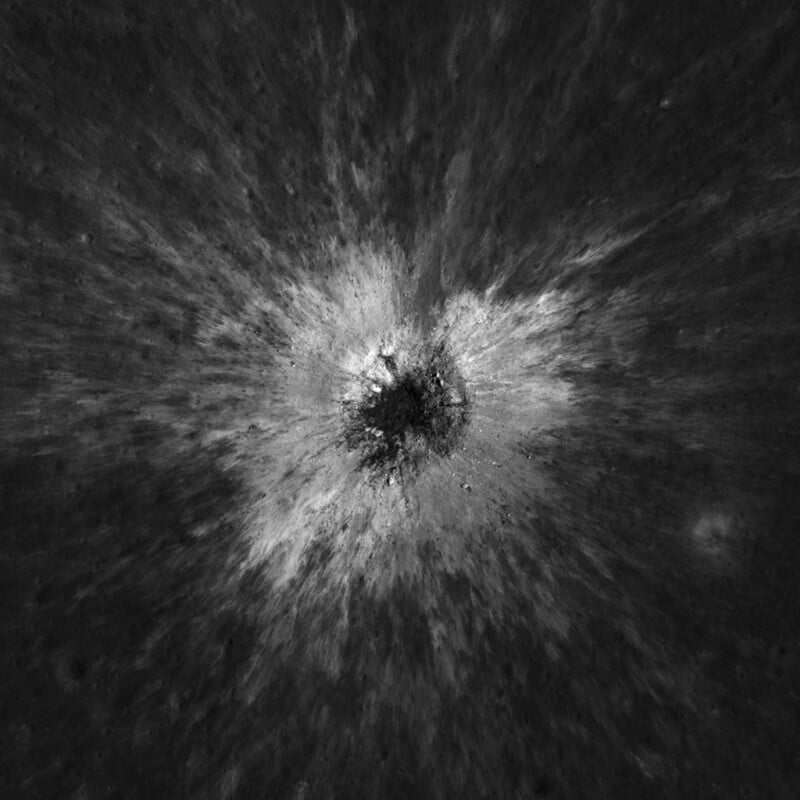
The aftermath of the collision, however, could not remain hidden indefinitely. The discovery of the crater is a testament to the meticulous vigilance required in modern planetary science. During a routine data-quality assessment conducted in May 2024, LRO researcher Robert Wagner was examining orbital mapping strips when an anomalous visual feature caught his attention. A distinct, unusually bright patch of ground, encircled by a dark, contrasting halo, suggested that the local lunar regolith had undergone recent, violent disruption.
"I just stopped, dropped everything, and started looking into what that spot was," Wagner recounted in a public statement released by NASA.
Despite this early identification of surface disturbance, the wide-angle LRO imagery was not immediately recognized as a newly formed impact crater. It was not until August 2025—following an exhaustive review of the staggering volume of telemetry and imaging data continuously beamed back by the spacecraft—that researchers definitively cataloged the anomaly. Subsequent targeted observations utilizing the LRO’s narrow-angle cameras captured high-resolution, multi-angle views of the site, officially confirming the discovery earlier this year.
A Chronological Timeline of Discovery
To understand the scale of the McGetchin crater, researchers had to reconstruct a precise timeline of the events leading from the initial impact to its eventual scientific classification:
- April 11 to May 22, 2024: The window during which an asteroid or comet fragment strikes the lunar surface, generating the McGetchin crater entirely unobserved by terrestrial or space-based telescopes.
- Late May 2024: LRO researcher Robert Wagner notices a high-contrast bright spot with a dark halo during a routine data-quality check of orbital mapping strips.
- August 2025: Scientists analyzing deep archives of LRO data officially flag the anomaly as a potential large-scale impact site, prompting prioritized follow-up imaging requests.
- March 2026: High-resolution targeted observations from the Lunar Reconnaissance Orbiter confirm the structural boundaries, depth, and ejecta patterns of the 728-foot-wide crater.
- September 2026: Findings detailing the formation and geological implications of the McGetchin crater are formally published in Science Advances.
Breaking Records and Exceeding Expectations
The McGetchin crater fundamentally dwarfs previously documented recent impacts. It is approximately three times wider than the previous record-holder for a newly formed crater identified by the LRO mission. Beyond the primary bowl-shaped depression, the energy of the impact dispersed a vast blanket of secondary ejecta—comprising fine dust, shattered rocks, and molten droplets—across a radius spanning more than 60 miles of the lunar landscape.
The vast majority of lunar craters examined by scientists over the decades are millions or billions of years old. These ancient scars have been systematically degraded, softened, and modified by subsequent hypervelocity impacts, seismic shaking (moonquakes), and continuous weathering caused by solar wind and cosmic ray bombardment. What makes the McGetchin crater unique is the existence of pristine, high-resolution orbital photographs of the exact location taken prior to the impact, paired with immediate post-impact documentation. This rare before-and-after imagery enables geologists to conduct direct, empirical comparisons of surface evolution, isolating the precise morphological changes caused by a single impact event without relying on theoretical models.
Furthermore, the crater occupies a geologically complex transitional zone. The site sits near the boundary separating the Moon’s darker, basalt-rich volcanic plains (maria) from its brighter, aluminum-rich highland regions (terrae). This unique positioning offers researchers an exceptional natural laboratory to examine how identical impact mechanics interact with distinctly different types of lunar crust and subsurface materials.
The Case for Future In-Situ Exploration
While orbital assets like the Lunar Reconnaissance Orbiter provide critical global context and high-resolution overhead mapping, planetary scientists emphasize that understanding the full physics of large-scale impacts ultimately requires ground-truth data collected directly from the lunar surface.
Tyler Powell, the lead author of one of the companion studies, highlighted the irreplaceable value of future crewed missions or robotic rover investigations at the site. "Observations from the surface would be really valuable because they would allow us to correlate what we see and map from orbit with small-scale changes to surface texture, the distribution of ejected material, and other properties that can only be studied in detail from the surface," Powell explained in an interview with space journalists. "This would improve our understanding of many aspects of the impact cratering process."
An on-site analysis could reveal the vertical stratification of the target material, the exact mineralogical composition of the projectile fragments embedded within the regolith, and the micro-fracturing patterns of surrounding rocks. Such data is vital not only for lunar geology but also for assessing planetary defense protocols on Earth, as scientists refine their models of how hypervelocity kinetic energy transfers through solid planetary bodies.
Broader Implications for Space Exploration and Planetary Defense
The discovery of the McGetchin crater arrives at a time of renewed international focus on the lunar environment, driven by ambitions for sustainable human habitation and resource utilization under programs like NASA’s Artemis. The realization that a massive, multi-story projectile can strike the Moon with zero advance warning underscores the dynamic and hazardous nature of the cis-lunar environment.
While the Moon lacks an atmosphere to burn up incoming space debris—acting instead as an unshielded sponge for cosmic impacts—human infrastructure on or around the Moon, including habitats, communication arrays, and power grids, will face persistent risks from micrometeoroids and occasional large-scale strikes. Understanding the frequency, energy distribution, and geological footprint of events like the McGetchin impact is therefore a critical engineering parameter for mission planners designing long-term lunar architecture.
Interestingly, natural cosmic impacts are not the only phenomena reshaping the Moon’s surface under the watchful lenses of modern orbiters. Earlier this year, LRO imagery successfully confirmed and cataloged a distinct artificial crater produced on the lunar far side by a discarded SpaceX rocket booster—a stark reminder of humanity’s growing technological footprint in deep space.
As researchers continue to parse the petabyte-scale archives generated by orbital spacecraft, discoveries like the McGetchin crater demonstrate that the solar system remains an active, evolving domain. By capturing a once-in-a-century geologic event in high definition, NASA’s Lunar Reconnaissance Orbiter has provided science with a foundational baseline that will shape our understanding of impact cratering—the most pervasive geological process in the solar system—for decades to come.
Related posts: