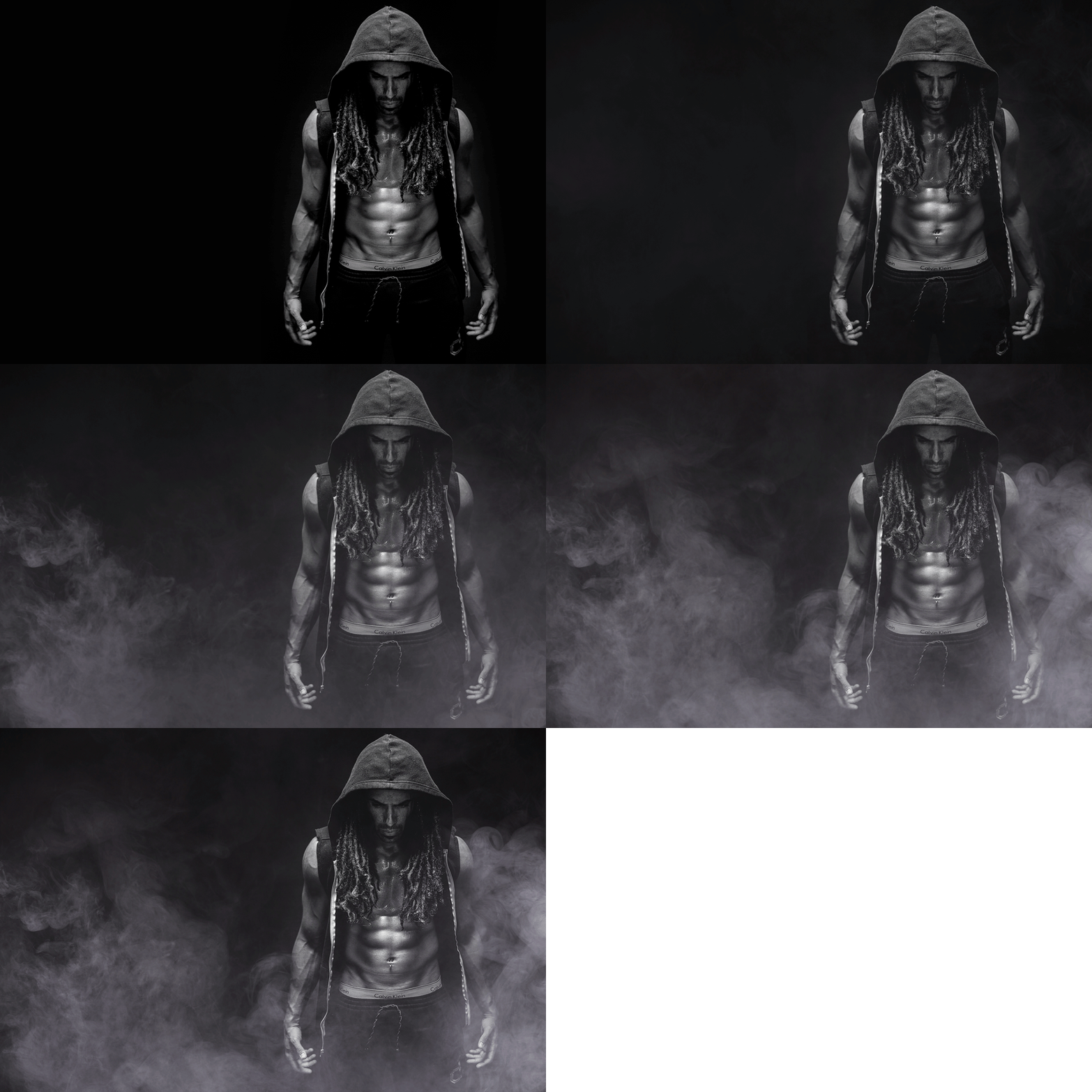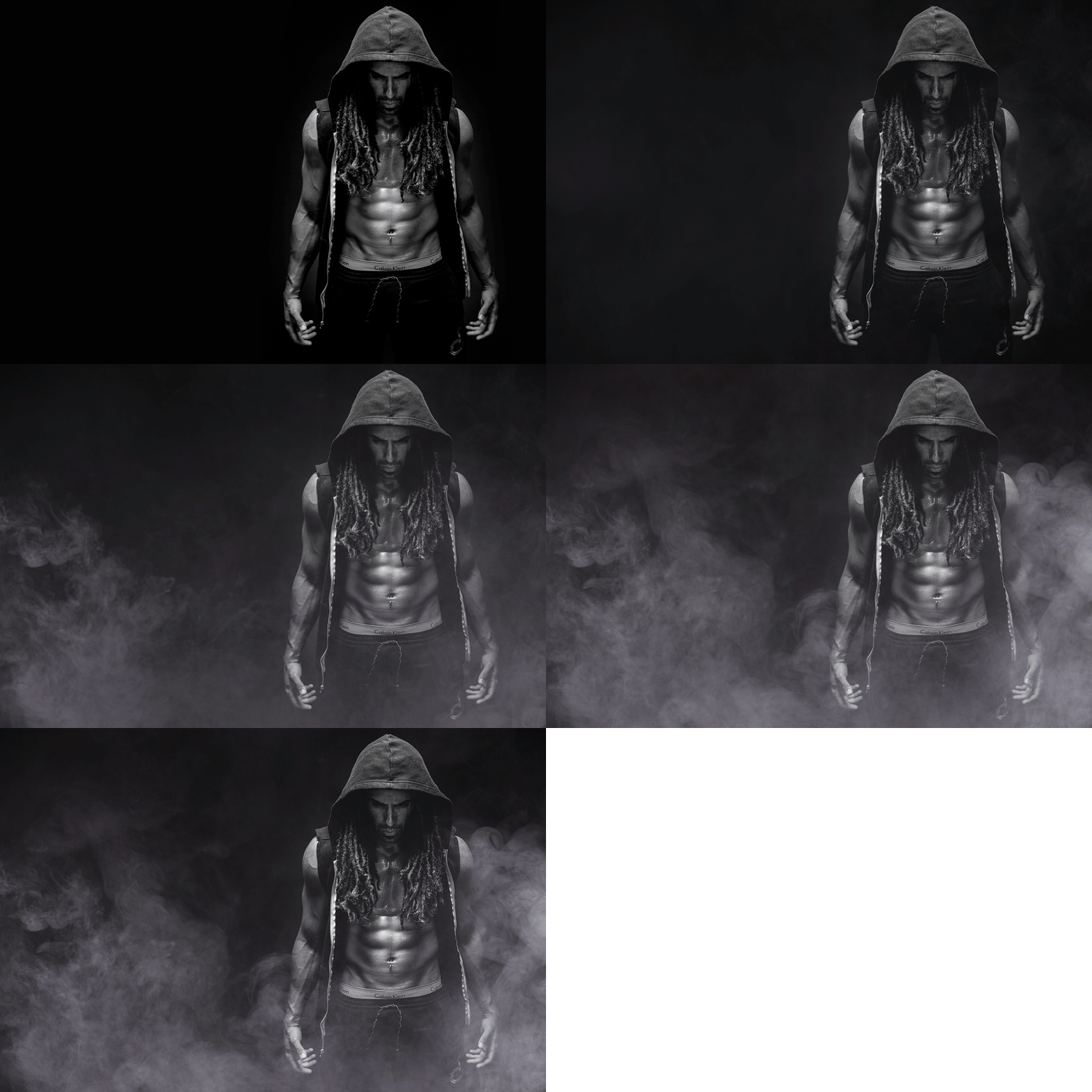
Capturing the ethereal and volatile nature of smoke and fog represents a unique challenge for photographers, requiring a sophisticated blend of precise lighting, high-speed equipment, and meticulous post-production workflows. While smoke is inherently unpredictable, its structural complexity offers a compelling aesthetic that can elevate fine art, commercial, and editorial photography. By implementing standardized studio techniques and advanced digital manipulation, photographers can transform simple wisps of vapor into dynamic, high-resolution visual assets.

The Technical Evolution of Smoke Imaging
Historically, capturing smoke required long exposures and complex chemical development. Today, the digital era has shifted the focus toward high-speed flash duration and post-processing capabilities. Smoke photography has evolved from a niche experimentation into a standard practice for commercial compositing, where artists use smoke and fog overlays to add texture, atmosphere, and narrative depth to otherwise static compositions.
The primary hurdle in this discipline is the velocity of the subject. Smoke particles move rapidly, often creating chaotic shapes that dissipate in milliseconds. To freeze these intricate structures, professional photographers prioritize short flash durations over high camera shutter speeds. A flash duration—the time interval between the initial ignition and the total decay of the light output—is critical. At full power, a flash duration may be as long as 1/500th of a second, which is often insufficient to freeze the finer details of rising smoke. Reducing power to 1/16th or lower significantly shortens the duration, effectively "freezing" the movement and ensuring crisp, high-definition captures.

Essential Equipment and Environmental Control
Achieving consistent results in smoke photography is contingent upon the environment and the gear deployed. Professionals generally operate in controlled indoor studios to eliminate ambient variables such as air currents, which can distort the smoke path. Conversely, for large-scale environmental fog effects, outdoor settings are preferred to allow for natural dissipation, provided the photographer can manage wind interference.
The selection of a telephoto lens, such as a 70-200mm f/2.8, is considered industry standard. The compression effect provided by a telephoto lens allows the photographer to remain at a comfortable distance while maintaining tight control over the frame. This focal length allows the user to zoom in on specific, detailed sections of the smoke plume without having to physically reposition the camera or the light source constantly.

Lighting strategy remains the most significant variable. Front-lighting is universally discouraged, as it renders the smoke flat and obscures its three-dimensional volume. Instead, professional setups utilize side-lighting—specifically using studio strobes equipped with strip boxes and grids. The grid is a vital component; it restricts the spread of light, preventing "spill" that would otherwise illuminate the background or cause lens flare. By directing the light precisely at the edges of the smoke plume, the photographer highlights the texture and depth of the vapor, creating a high-contrast image against a pure black backdrop.
Establishing a Standardized Workflow
The workflow for creating usable smoke assets is divided into three distinct phases: capture, cleanup, and color grading.

During the capture phase, the objective is to maintain a high resolution. Because smoke patterns are unpredictable, photographers often frame their shots wider than necessary to ensure they do not crop out the most interesting, complex formations. This necessity, however, mandates the use of high-megapixel sensors—typically 24MP or higher—to ensure that even after an 80% crop, the resulting image retains sufficient detail for high-quality printing or large-scale digital display.
In the cleanup phase, usually conducted in software like Adobe Lightroom, the focus shifts to ensuring a "pure" black background. Any stray gray pixels or artifacts can interfere with the blending process when these textures are eventually composited into other images. Photographers utilize clipping masks and aggressive contrast adjustments to force the background into total black, while simultaneously using noise reduction and clarity adjustments to ensure the smoke retains a silky, smooth texture without digital grain.

The Impact of Digital Compositing
The rise of the "texture pack" market has democratized access to high-quality smoke and fog assets. Platforms like SLR Lounge have pioneered the categorization of these images, providing artists with libraries of hundreds of pre-shot, high-resolution textures. The implications for the industry are profound: photographers no longer need to spend days in a studio to achieve a specific atmospheric effect. Instead, they can access a curated database of smoke shapes, forms, and densities, allowing for a more streamlined production process.
This shift has enabled a broader range of creative professionals to incorporate complex atmospheric effects into their work. From fashion photography requiring subtle mist to fantasy art demanding dense, theatrical fog, the ability to "drop in" these elements has become a standard feature of modern post-production. The process of colorizing these textures—often using split-toning or custom curve adjustments—allows the smoke to match the color temperature and mood of the primary image, providing a seamless visual integration that was once the exclusive domain of highly skilled photo-retouchers.

Analysis of Future Trends
As sensor resolution continues to increase, the demand for high-fidelity smoke textures will likely grow. Future developments in AI-assisted masking may further simplify the extraction of these volatile shapes from their backgrounds, potentially eliminating the manual brush-work currently required to refine the edges of the smoke plumes.
However, despite these technological advancements, the fundamental principles of physics and lighting remain constant. The success of a smoke image is still dictated by the photographer’s ability to manipulate light to reveal form. Whether using a modern strobe system or a simple desk lamp, the core challenge of smoke photography—the transformation of transient, chaotic vapor into a permanent, structured, and beautiful asset—remains a rigorous test of a photographer’s technical discipline.

Conclusion and Best Practices
For those looking to master this craft, the consensus among professionals is clear: start with the basics. Invest in a stable studio environment, prioritize flash duration over shutter speed, and never underestimate the importance of a pure black background. By consistently capturing high-resolution source material and utilizing a systematic approach to editing—specifically through the use of virtual copies to experiment with color and contrast—photographers can build a personal library of textures that will serve them for years to come.
As the industry continues to value "in-camera" quality, the ability to create bespoke, authentic smoke and fog assets rather than relying on generic stock footage will distinguish high-end professional work from amateur efforts. By treating smoke not just as a background element but as a primary subject, photographers can unlock new levels of creative expression and production value.