Instagram Enhances Creator Collaboration with New Profile Grid Feature for Tagged Posts

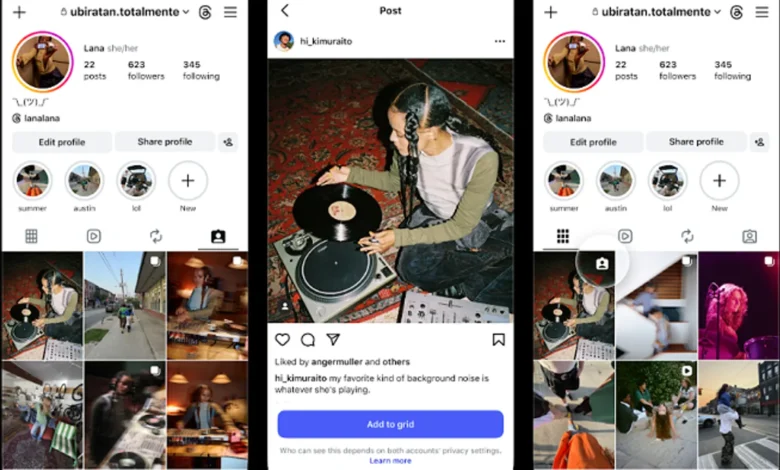
Instagram has officially rolled out a highly anticipated feature designed to deepen community engagement and streamline digital partnerships across its platform. The update empowers users to natively display posts in which they have been tagged directly onto their main profile grid, moving beyond the traditional, sequestered "tagged photos" tab. This structural shift provides creators, brands, and everyday users with unprecedented flexibility in curating their personal aesthetics, highlighting collaborative projects, and amplifying shared content directly to their core audience.
The rollout marks another milestone in Instagram’s ongoing effort to fortify its social foundations at a time when the broader social media landscape is increasingly dominated by passive video consumption and algorithmic recommendation feeds. By bridging the gap between individual profiles and cooperative content, Instagram aims to reinforce the interpersonal connections that historically fueled its meteoric rise.
Mechanics of the New Tag-to-Grid Feature
Under the updated interface, when a user is tagged in a published feed post or video, they are no longer restricted to having that content live solely in the dedicated tagged tab—a section of the profile that often sees significantly lower visibility. Instead, the feature introduces an intuitive in-stream action prompt.
When viewing a tagged post, eligible creators will immediately notice a new Add to Grid command. Upon selection, the post is integrated into the user’s primary profile grid, distinguished by a subtle tag icon positioned neatly in the top-right corner of the thumbnail. This visual indicator ensures transparency for followers, clearly signaling that the content is a collaborative or featured submission rather than a natively uploaded piece of media.
For digital creators, influencers, and brand partnerships, this mechanism removes historical friction. Previously, executing a joint grid feature required utilizing the native "Collabs" tool at the exact moment of publication, which demanded synchronized scheduling and mutual permissions prior to posting. If a brand forgot to add a creator as an official co-author during upload, rectifying the omission was cumbersome. The new tag-to-grid capability introduces retroactive flexibility, allowing users to curate their profiles dynamically long after a campaign or joint photo session has concluded.
Background Context: The Evolution of Instagram Collaborations
To understand the strategic significance of this update, one must examine Instagram’s systematic expansion of collaborative tools over recent years. As competition among social networks intensifies, Meta has consistently prioritized feature sets that encourage co-creation rather than isolated content generation.
In 2021 and 2022, Instagram introduced the native Collabs feature, allowing two accounts to co-author a single feed post or Reel. This meant the content would simultaneously appear on both profiles, sharing view counts, likes, and comment threads. This tool quickly became a cornerstone for influencer marketing, cross-promotional campaigns, and community building among creators.
Simultaneously, the platform experimented with interactive and group-oriented formats, including collaborative Stories, shared collection spaces, and the ubiquitous remix culture adapted from TikTok. Users gained the ability to remix publicly shared photos and videos, merging their creative output with original source material. Although Meta briefly tested and subsequently removed artificial intelligence-driven tools designed to automatically remix public posts, the underlying intent remained crystal clear: Instagram wanted to position itself as a collaborative digital canvas.

Despite these additions, a distinct structural barrier remained. Creators frequently collaborated on shoots, events, or brand campaigns, yet their profile grids could only showcase content where they were listed as primary co-authors at launch. If they were merely tagged in the caption or photo, their grid presentation remained fractured, forcing them to rely on temporary Story shares or manual re-uploads—the latter of which often degrades video and image quality while fragmenting engagement metrics.
The Timeline of Feature Testing and Public Deployment
The journey toward this seamless tag-to-grid integration began well before its official widespread release. Industry analysts and reverse-engineers first spotted early code and prototype interfaces pointing toward profile-grid tag management as early as late 2022.
During the initial testing phases, select global creators were granted access to the backend toggle, allowing Instagram’s product team to monitor user behavior, interface friction points, and potential privacy concerns. A primary challenge during development involved user control and digital safety. Social media platforms must navigate the delicate balance between public visibility and personal curation. To mitigate risks associated with unwanted or spam-heavy content appearing on a user’s primary feed, Instagram ensured that the addition of tagged posts to a grid remains entirely opt-in. A user must actively authorize the action; tagged content will never automatically populate a main profile grid without explicit consent.
Following successful localized trials, Meta gradually expanded the rollout throughout early and mid-2024, culminating in the current comprehensive release that brings the feature to the global user base.
Broader Platform Dynamics: The Battle for User Attention
To contextualize why Instagram continues to invest heavily in community-centric features, industry observers must look at the macro-economic and consumption trends shaping the platform. According to internal data and public statements shared by Meta executives, roughly 50 percent of overall user time spent on Instagram is now dedicated exclusively to the consumption of Reels—the platform’s short-form video format. Furthermore, virtually all recent engagement gains across both Facebook and Instagram have been directly attributed to the growth of Reels viewership.
While this pivot toward algorithmic video discovery has successfully defended Meta’s market share against formidable rivals like TikTok, it introduces a profound strategic dilemma. By optimizing heavily for video and algorithmic recommendations, Instagram increasingly finds itself competing not merely with short-form video apps, but with the entire digital entertainment ecosystem—including YouTube, major streaming services like Netflix, and global gaming platforms.
When a social network competes purely on entertainment value and passive video consumption, it risks commoditizing its user base. If users treat Instagram merely as a video player rather than an interactive communication network, the platform loses its primary moat of differentiation.
Community Interaction as a Strategic Differentiator
User engagement, peer-to-peer interaction, and personal identity curation are the vital elements that distinguish social media platforms from traditional broadcasting networks. People return to Instagram daily not just to consume high-production media from strangers, but to maintain social visibility, interact with friends, follow micro-communities, and present curated versions of their lives to their peers.

By introducing features like the tag-to-grid update, Instagram directly reinforces this foundational social utility. It acknowledges that digital identity on the platform is inherently collaborative. People attend events together, launch businesses in pairs, model clothing lines as teams, and document shared experiences. Allowing these partnerships to be visibly mapped onto profile grids honors the collaborative nature of modern digital culture.
Furthermore, this update provides a vital psychological incentive for micro-creators and everyday users. When a smaller creator is featured in a larger brand’s post, the ability to display that piece of content directly on their own profile elevates their professional presentation. It transforms a passive tag into an active portfolio piece. For brands, this increases the perceived value of collaborating with creators, as the co-marketing effort becomes more visually integrated and mutually beneficial across both audiences.
Implications for Marketers and Digital Creators
For digital marketing professionals, social media managers, and independent creators, the operational implications of this update are immediate and actionable.
First, influencer marketing strategies must adapt to account for retroactive grid integration. Brands can now partner with creators on shared campaign shoots without needing to stress over complex co-author setup workflows at the exact second of posting. A brand can publish a campaign asset, tag the participating creators, and subsequently invite them to integrate the post into their respective grids. This decentralizes the campaign rollout, allowing organic timing while maintaining unified profile aesthetics.
Second, content curation strategies will shift. Creators can now build curated portfolios directly within their Instagram feeds by leveraging collaborations with peers. Photographers, makeup artists, models, and stylists who frequently work on joint projects can populate their grids with work hosted on partner accounts, effectively doubling their visible portfolio output without cluttering their camera rolls with duplicate uploads.
Finally, community managers must monitor how audiences respond to tagged grid posts. Because these posts carry a subtle tag icon, followers are accustomed to contextualizing them as collaborative efforts. Brands utilizing user-generated content (UGC) can encourage their brand advocates to pull tagged review posts directly onto their grids, thereby creating an authentic network of social proof that radiates outward from individual consumer profiles rather than resting solely on a corporate brand page.
Looking Ahead: The Future of Instagram Profile Architecture
As Instagram continues to mature, profile grids have transformed from simple photo albums into sophisticated digital resumes and storefronts. Features like pinned posts, specialized grid ordering experiments, and now the integration of tagged content highlight Meta’s commitment to giving users granular control over their digital presentation.
The success of this feature will ultimately depend on how intuitively users adopt it and whether it genuinely fosters deeper collaborative behavior. Early indicators suggest high enthusiasm among the creator community, who have long advocated for tools that recognize multi-party contributions without technical hurdles.
Ultimately, by prioritizing features that celebrate community interaction over pure algorithmic isolation, Instagram is reaffirming its identity as a social network. In an era where automated recommendation engines dictate much of the digital experience, giving users the autonomy to manually construct shared narratives on their profiles represents a vital return to the core tenets of social media: connection, collaboration, and shared human expression.