Ilija Brunck and the Evolution of Immersive Storytelling: From Experimental Shorts to the Las Vegas Sphere

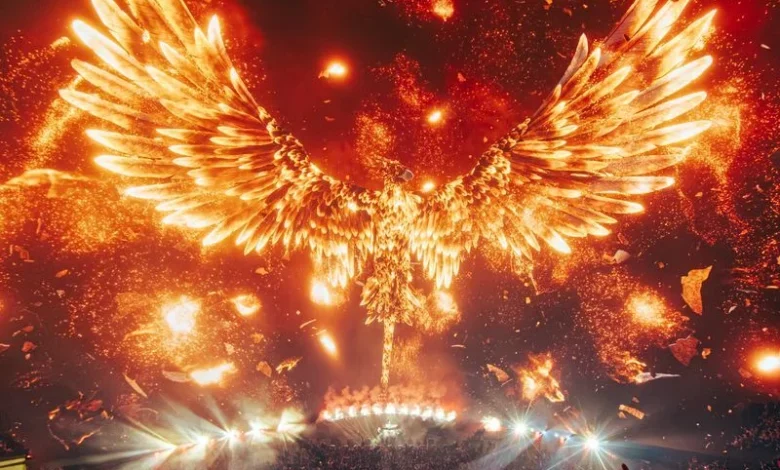
The trajectory of Ilija Brunck’s career serves as a masterclass in the transition from traditional motion graphics to the frontier of large-scale, immersive cinematic experiences. As the co-founder and CEO of Woodblock, a studio born from the prestigious Filmakademie Baden-Wuerttemberg, Brunck has navigated the shifting landscape of digital media by maintaining a core philosophy: technical prowess must always serve the narrative. Today, that philosophy is being tested—and validated—at the scale of the Las Vegas Sphere, where Brunck’s team is pushing the boundaries of what is possible in 12K, high-fidelity, spatial storytelling.
The Foundation: Crafting a Language of Visual Precision
Ilija Brunck’s rise within the creative industry began in the late 2000s, a period defined by a rapid evolution in CG (computer graphics) accessibility. Alongside visual artist Uli Staiger, Brunck founded Woodblock, positioning the studio as a hybrid entity that could toggle seamlessly between commercial advertising and high-concept short films.
The studio’s early output, including seminal shorts such as 458nm, Loom, and Bye Bear, established a signature aesthetic. These projects were not merely technical demonstrations; they were thematic explorations of life, mortality, and human fragility. By stripping away unnecessary complexity and focusing on "controlled visual design," Brunck ensured that the work resonated on an emotional level. This approach garnered significant industry accolades, including a Golden Nica at the Ars Electronica Festival and a Best in Show nod at SIGGRAPH. These early milestones were critical in establishing Woodblock’s reputation as a "director-led" studio, where the vision of the filmmaker takes precedence over the sheer spectacle of the software being used.
Chronology of Expansion: From Broadcast to Immersive
The growth of Woodblock can be categorized into three distinct phases of production. The first phase (2010–2015) focused on establishing the studio’s voice through short-form storytelling and experimental animation. During this period, the studio built a portfolio that drew the attention of global brands, including Nike, Microsoft, and Netflix, as well as advocacy organizations like Greenpeace.
The second phase (2016–2021) saw a shift toward high-end broadcast and digital campaigns. Here, Brunck championed a lean, agile workflow. In an industry often prone to "bloat"—the practice of over-allocating resources and personnel—Brunck pushed for smaller, cross-disciplinary teams. This strategy allowed Woodblock to remain nimble, adapting to the increasingly fast-paced demands of global marketing campaigns while maintaining high aesthetic standards.
The third and current phase (2022–present) represents a departure from traditional screen-based media toward spatial, dome-based environments. This is most notably represented by the studio’s involvement with the Las Vegas Sphere. The transition to the Sphere was not a sudden pivot but a calculated expansion into high-resolution, 360-degree, and 180-degree environments. The sheer technical hurdle of delivering content in 12K resolution—a format that requires an exponential increase in processing power and artistic detail—marked a significant turning point for Woodblock.
The Sphere and the Future of Large-Format Cinema
The recent collaboration on Odyssey by Illenium stands as the pinnacle of Woodblock’s recent output. This 90-minute cinematic experience, which occupied the interior of the Sphere, required a year of intense production. The project was not an isolated effort; it was a massive collaborative undertaking involving the Sphere Entertainment Co., The Third Floor (known for its work in previsualization and virtual production), and Silent House.
The technical implications of such a project are profound. Producing content for a 160,000-square-foot LED display requires a fundamental shift in how artists approach composition. Traditional rule-of-thirds framing, long a staple of cinematic language, is rendered obsolete in a dome environment where the viewer’s gaze is not fixed to a single rectangle. Instead, the team at Woodblock had to master "character-driven, immersive cinematography," ensuring that the narrative arc remained coherent even when the visual information was distributed across a vast, curved canvas.
Economic and Industry Implications: The Shift Toward Agile Production
Brunck’s advocacy for sustainable production practices provides a blueprint for the future of the digital arts. As the industry faces pressure to produce increasingly complex content with tighter deadlines, the temptation to utilize brute-force scaling—adding more artists, more hardware, and more layers of management—often leads to project burnout and diminishing creative returns.
Brunck’s model, conversely, relies on a "clarity over bloat" approach. By keeping the core creative teams focused and utilizing highly optimized, streamlined workflows, Woodblock has managed to maintain consistent quality across diverse platforms. Data from recent industry reports suggests that smaller, highly integrated teams are often more capable of executing complex, experimental projects than large, decentralized studios. This has profound implications for the cost-benefit analysis of major studio productions, suggesting that the future of high-end animation may lie in the hands of boutique studios that prioritize artistic agency.
Mentorship and Educational Stewardship
Despite his success at the helm of a major studio, Brunck has maintained a consistent presence in academia. His ongoing relationship with the Filmakademie Baden-Wuerttemberg is not merely a nostalgic nod to his origins; it is a strategic investment in the next generation of creative talent.
By serving on international panels and participating in educational forums, Brunck has been able to influence the curriculum of emerging artists, emphasizing that the mastery of tools is only the first step. The true challenge, he often posits, lies in developing the critical thinking skills necessary to decide why a certain visual technique should be used, rather than simply how. This dedication to pedagogy ensures that the "Woodblock philosophy"—the marriage of craft and culture—is passed down, potentially tempering the industry’s reliance on automated, AI-driven content generation.
Analysis of the Modern Media Landscape
The broader impact of Brunck’s work can be analyzed through the lens of the "experience economy." As digital content becomes more ubiquitous, the value of traditional media continues to fluctuate. In response, audiences are gravitating toward environments that offer a singular, shared experience—the antithesis of the isolated, algorithm-fed scrolling that defines modern social media consumption.
The Las Vegas Sphere, and the work produced by studios like Woodblock, represents a push toward "eventized" media. This is content that cannot be replicated on a smartphone or a standard home television. It requires physical presence and collective engagement. By moving into this space, Brunck is not just keeping up with technological trends; he is helping to define a new medium of live, immersive storytelling that blends the rigor of film with the atmosphere of an art installation.
Conclusion: A Legacy in Motion
Ilija Brunck’s career trajectory is a testament to the idea that sustained success in a volatile industry is rarely the result of chance. It is the product of a clear, disciplined vision. Whether through a four-minute short film exploring the nature of human grief or a 90-minute immersive spectacle viewed by thousands, Brunck’s work remains anchored in a profound respect for the medium.
As the lines between virtual and physical reality continue to blur, the demand for artists who can synthesize complex technical requirements with deep, resonant narratives will only increase. With Woodblock’s continued work on high-profile, spatial-format projects, Brunck is poised to remain at the center of this conversation. His influence is felt not just in the projects he produces, but in the standards he sets for the industry—proving that even in an era of unprecedented technological capability, the most important element of any production remains the story itself.
Looking forward, the integration of real-time rendering, spatial audio, and interactive elements into the standard production pipeline will likely be the next frontier for Woodblock. Given the studio’s history of adapting to and mastering new formats, it is reasonable to expect that Brunck will continue to advocate for the same principles that defined his early work: precision, emotional depth, and an unwavering commitment to the craft of visual storytelling.
Related posts: