The recent security breach involving DebugBear, a prominent Real User Monitoring (RUM) tool, has sent shockwaves through the digital marketing and SEO communities, highlighting the inherent risks of third-party script dependencies. On October 29, 2026, DebugBear confirmed that its infrastructure had been compromised, specifically through a DNS hijacking attack directed at its domain registrar. This incident enabled unauthorized actors to inject malicious JavaScript into the monitoring scripts loaded by client websites, turning a tool designed for performance optimization into a vehicle for potential data theft and account exploitation.
The incident was first identified when unusual activity was detected on the platform of Polymarket, a decentralized prediction market. Cybersecurity researchers from Hudson Rock discovered that the malicious payload was being served via a DebugBear script URL. The attack exploited the trust browsers place in third-party scripts, allowing the injected code to execute actions on behalf of users who were already authenticated on the affected websites.
Chronology of the Breach
The timeline of the event illustrates the speed at which modern supply-chain attacks can unfold and the critical importance of rapid incident response.
- October 29, 2026: DebugBear publicly disclosed a security incident involving its infrastructure and issued an urgent directive to all customers to remove its RUM scripts immediately. The company reported that the attack was executed via its domain registrar, which allowed hackers to manipulate DNS records.
- October 29, 2026: Cybersecurity firm Hudson Rock publicly identified that the malicious script was being leveraged to target Polymarket. The injected code was specifically engineered to interact with the trading client of logged-in users.
- October 30, 2026: Polymarket issued an official incident report confirming that the breach resulted in unauthorized trading activity, including the forced sale of positions and the unauthorized transfer of funds from user wallets.
- Ongoing: DebugBear continues its investigation into the extent of the compromise. As of the most recent updates, the company maintains that its internal systems were not breached, focusing the scope of the attack on the external DNS management layer.
Mechanics of the Attack: The Supply Chain Vulnerability
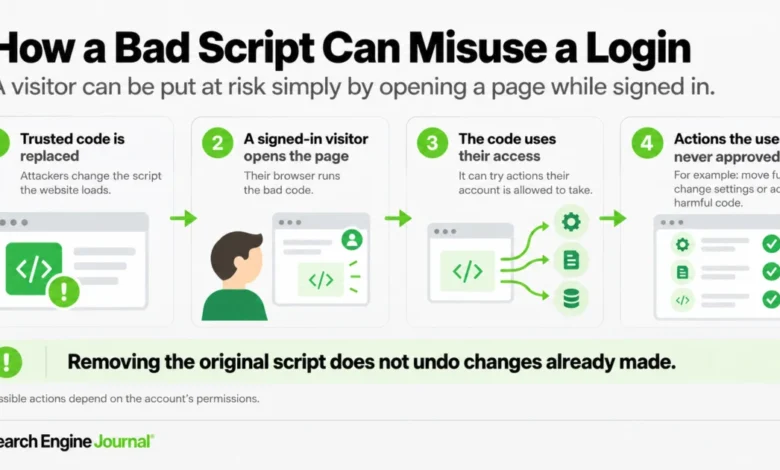
This incident serves as a textbook example of a software supply-chain attack. By gaining control over DebugBear’s DNS settings, the attackers did not need to compromise the individual websites of DebugBear’s clients. Instead, they compromised the "delivery vehicle"—the script that thousands of websites were automatically loading.
When a browser loads a third-party script, it typically executes the code with the same permissions as the first-party content on the page. In the case of the Polymarket attack, the malicious script did not require the user’s password or two-factor authentication (2FA) credentials. Because the victim was already logged into their account, the browser session was active. The malicious JavaScript simply piggybacked on this existing session to execute trades and drain wallets.
This method of exploitation is particularly dangerous because it bypasses traditional security measures like password-protected logins. It essentially turns the user’s own browser against them, utilizing their legitimate, authenticated session to perform unauthorized actions. For site owners, this creates a significant challenge: how do you secure your platform when a trusted, "performance-enhancing" tool becomes the primary attack vector?
Implications for SEO and Website Security
The primary function of DebugBear is to track Core Web Vitals, a set of metrics used by Google to measure user experience, which is a significant factor in search engine rankings. Because SEO teams are often the ones who mandate the inclusion of these monitoring scripts to ensure high performance scores, the impact of this breach is uniquely felt within the search engine optimization industry.
The technical community is now facing a reckoning regarding the "trust-by-default" model of third-party scripts. For years, the industry has prioritized site speed and performance data, often ignoring the security risks associated with embedding dozens of external scripts in the <head> or <body> of a webpage.
Security experts suggest that this incident will likely force a change in how organizations manage their "digital footprint." This includes moving away from dynamic script loading—where a script is fetched from an external server every time a page loads—toward more controlled, sub-resource integrity (SRI) verified loading or internal hosting of critical dependencies.

Mitigation Strategies for Website Administrators
For organizations that were using DebugBear, the immediate priority was the removal of the script. However, the security implications extend beyond simple deletion. Site owners are advised to follow a rigorous post-incident protocol:
- Immediate Script Removal: Any reference to
cdn.debugbear.commust be purged from the source code of the website. - Audit Unauthorized Activity: Security teams should examine server-side logs and client-side transaction history for the period during which the script was active. Because the malicious code could perform actions on behalf of users, identifying "silent" unauthorized changes is paramount.
- Review Third-Party Script Policies: Establish a strict policy for vetting third-party dependencies. If a script does not strictly require real-time updates from an external server, organizations should consider hosting the script locally.
- Implement Content Security Policies (CSP): A robust CSP can prevent browsers from executing scripts from unauthorized domains, acting as a secondary line of defense if a primary script provider is compromised.
- Incident Response and Communication: As seen with the DebugBear situation, clear communication is essential. The company utilized its X (formerly Twitter) account to disseminate updates when its primary email infrastructure became compromised, highlighting the need for redundant communication channels during a crisis.
The Broader Landscape of Third-Party Risk
The DebugBear incident is part of a larger, worrying trend of attacks targeting the infrastructure of the web itself. From compromised npm packages to hijacked DNS providers, the "interconnectedness" that powers the modern internet is increasingly being used as a weapon.
Data from recent cybersecurity reports indicates that supply-chain attacks are on the rise, with a 300% increase in such incidents observed over the last three years. These attacks are attractive to hackers because they provide a high "return on investment." A single breach of a vendor—like a DNS registrar or a SaaS provider—can grant access to hundreds or thousands of high-value downstream targets simultaneously.
The Polymarket case is particularly illustrative of the financial stakes. By targeting a platform where users hold digital assets, the attackers were able to monetize their access immediately. However, the risk is not limited to financial platforms. Any website that allows user accounts, stores personal information, or manages sensitive content is vulnerable to similar script-based attacks that can scrape data, redirect users, or deface websites.
Official Responses and Industry Outlook
DebugBear has been transparent about the technical limitations it faced during the immediate aftermath of the breach, including the inability to send or receive emails due to the DNS disruption. Their prompt, albeit forced, disclosure helped mitigate the damage by providing clear instructions to users.
However, the event has triggered a broader conversation about the accountability of service providers. When a RUM tool is compromised, the burden of remediation falls on the customers, not the vendor. This creates a difficult dynamic where SEOs and developers are left to clean up messes caused by third-party failures.
In the wake of this incident, we are likely to see a shift toward:
- Greater scrutiny of vendor security certifications: Companies will likely require their third-party vendors to provide evidence of DNSSEC implementation and more rigorous access controls.
- The rise of "Performance-Security" monitoring: A new niche in the security market may emerge, focused on monitoring the behavior of third-party performance scripts to ensure they are not deviating from their expected functional profiles.
- Decoupling of Performance and Security: While speed is critical for SEO, the industry may move toward tools that provide asynchronous, non-intrusive performance monitoring that does not require the same high-level permissions as current RUM scripts.
Conclusion
The DebugBear incident serves as a stark reminder that the digital supply chain is a fragile ecosystem. For SEOs, marketers, and web developers, the lesson is clear: convenience and performance should never be pursued at the expense of security. While tools like DebugBear are invaluable for maintaining a competitive edge in search rankings, they are also potential entry points for sophisticated attackers.
As the industry moves forward, the focus must shift from merely "getting the metrics" to "securing the telemetry." By implementing more restrictive security headers, conducting thorough audits of third-party scripts, and maintaining a proactive incident response plan, organizations can better protect their users and their reputations in an increasingly hostile digital environment. The era of blind trust in third-party scripts is effectively over; the era of "verify, then trust" must now take its place.