Dustin Kuhns Redefines Social Media Management for Arts and Culture with Buffer’s Precision and Taste-Driven Analytics.


Dustin Kuhns, a consultant operating out of Quakertown, Pennsylvania, has carved a distinctive niche in the digital marketing landscape, specializing not merely in social media management, but in what he terms "arts and culture supply chain management." Since 2023, Kuhns has leveraged Buffer as a cornerstone of his operations, overseeing more than 10 social media channels for a diverse portfolio of arts and culture organizations. His enduring commitment to Buffer, even as his consultancy expanded, underscores a deliberate strategy rooted in efficiency, adaptability, and a nuanced understanding of the unique demands of the cultural sector.
Kuhns’ approach challenges conventional wisdom in social media marketing. Rather than viewing himself as a content creator, he likens his role to logistics, meticulously orchestrating the flow of content from initial leadership vision through creative development, to its final distribution across various digital touchpoints – social media, email campaigns, website integration, and advertising. This holistic perspective is particularly vital for his clientele, which spans small two-person teams to established institutions, including religious nonprofits, dynamic film festivals, venerable historic theaters, and grassroots arts organizations. This diverse range highlights the universal challenge these entities face in maintaining a consistent, impactful digital presence.
The Evolution of a Specialized Consultancy
Kuhns’ journey into this specialized field is deeply rooted in his personal and professional background. Growing up immersed in music and the arts, from playing in church to producing shows for bands, he developed an innate understanding of creative processes and audience engagement. This artistic foundation was later complemented by several years in design and construction, a period that likely honed his appreciation for structured workflows, project management, and attention to detail – skills directly transferable to his current "supply chain" metaphor. His eventual transition into communications and his ongoing curation of fine art exhibitions further solidify his credentials, imbuing his consultancy with a refined sense of aesthetic judgment that he considers a significant competitive advantage. "Clients come to me to feel confident about what they produce," Kuhns explains, "They trust my taste."
Early in his career, Kuhns identified a critical, often overlooked impediment to growth for many arts and culture organizations. It wasn’t a lack of creative talent or a weak brand identity that held them back. Instead, it was a pervasive struggle with consistency. "It wasn’t a stellar brand or better creative content that most of these organizations were missing," he observes, "It was consistency. And the thing they needed to be consistent was a tool that would grow with them, not dictate their workflows for them." This realization profoundly shaped his operational philosophy and his choice of digital tools. In a market saturated with "all-in-one" solutions promising every feature imaginable, Kuhns consciously opted for a platform that excelled at a focused set of tasks, prioritizing depth and adaptability over breadth and potential bloat. His guiding principle is clear: "I’ll choose a tool that has 75% of what I need and find workarounds for the other 25% before I’ll use one that has 200% of what I need, and then let all that extra capacity get in the way." This philosophy underscores a broader trend among experienced digital professionals who seek elegant, efficient tools that integrate seamlessly into their existing workflows rather than imposing rigid, predefined structures.

Buffer’s Role in Streamlining Complex Workflows
Buffer, as a social media management platform, aligns perfectly with Kuhns’ preference for streamlined functionality. Its core strength lies in efficient scheduling and multi-channel publishing, allowing Kuhns to manage a multitude of client accounts without being bogged down by unnecessary features. This focused utility is particularly beneficial when juggling diverse clients, each with distinct brand voices, content calendars, and strategic objectives. By relying on a tool that competently handles its primary function, Kuhns can dedicate his intellectual and creative energy to the specific priorities and nuanced needs of each client, rather than battling with complex software interfaces.
The social media management landscape has evolved significantly in recent years. What began as simple scheduling tools has matured into sophisticated platforms offering a spectrum of features, from content creation assistance to advanced analytics. Buffer, which launched in 2010, established itself early on as a reliable scheduler, gradually expanding its capabilities while largely retaining its user-friendly interface. Its commitment to a focused feature set, while often praised by users like Kuhns, also meant that for a time, some advanced functionalities, particularly in analytics, required external solutions or "workarounds."
Transformative Insights: Elevating Data-Driven Strategy
A significant turning point for Kuhns and his workflow arrived with the introduction of Buffer’s "Insights" feature. Previously, deeper social media analytics represented one of the "workarounds" Kuhns sought externally. Insights, Buffer’s comprehensive solution for tracking, analytics, and reporting, proved to be a game-changer, and Kuhns was among its early adopters. This new capability directly addressed a critical need for robust, integrated performance data.
Two particular features within Insights have dramatically enhanced Kuhns’ ability to provide strategic value to his clients. The first is the ability to view performance data from all connected social media channels within a single, unified dashboard. For a consultant managing a dozen or more accounts across various platforms, this consolidated view is invaluable, drastically reducing the time and effort required to compile comprehensive reports. Instead of toggling between multiple native analytics dashboards or manually aggregating data, Kuhns can quickly grasp the overall performance landscape.
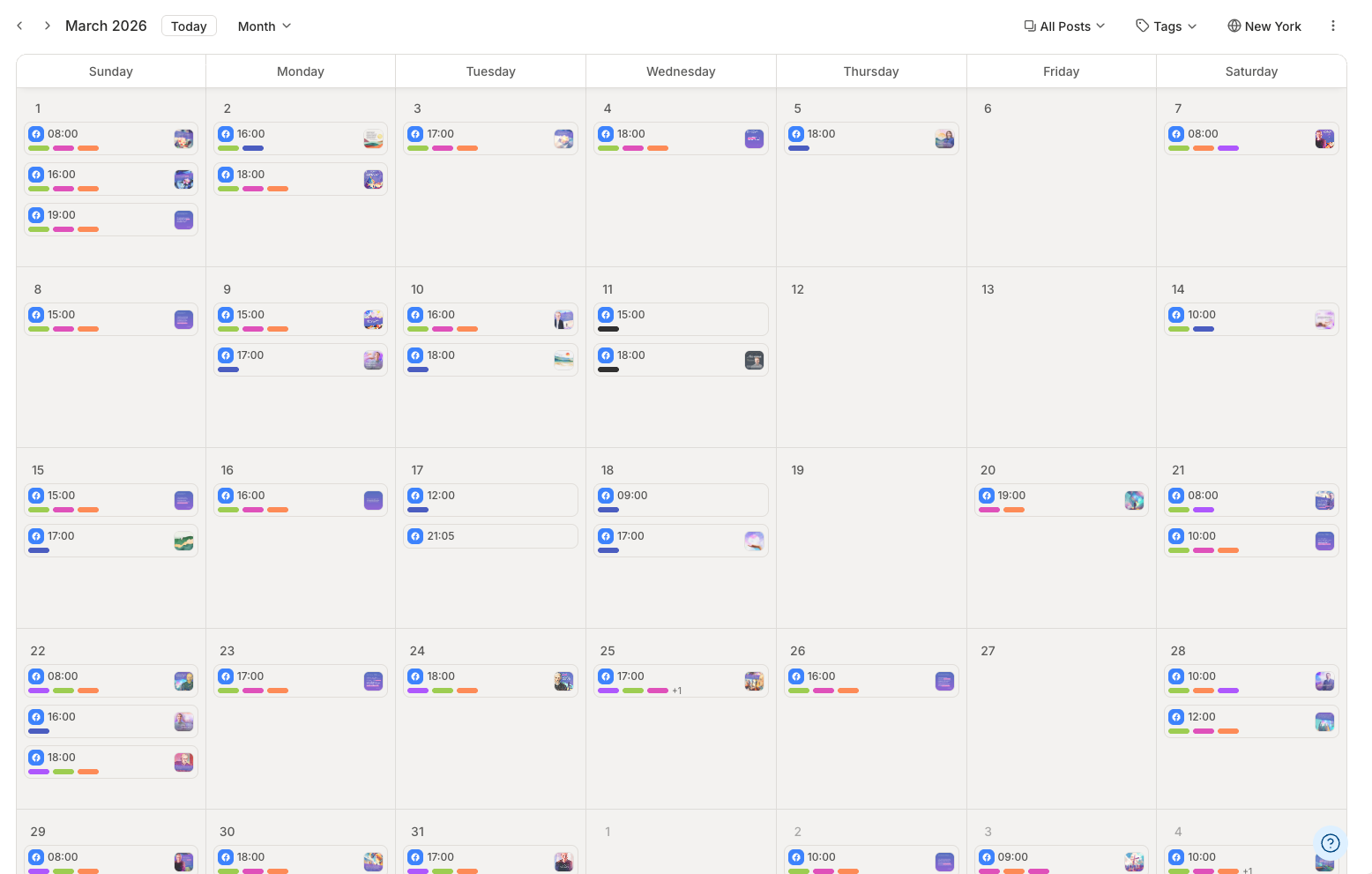
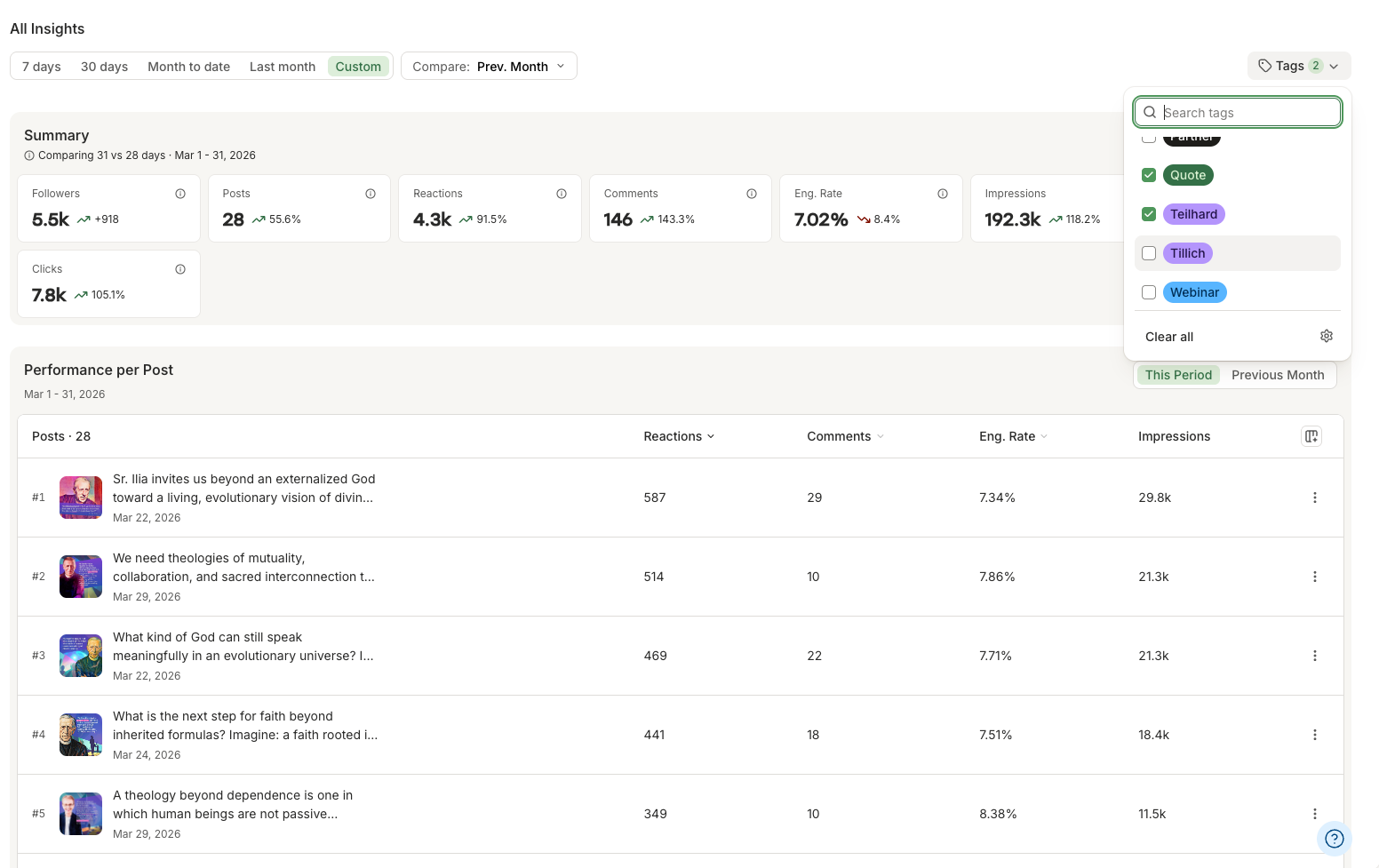
The second, and arguably most impactful, feature for Kuhns is Buffer’s tagging system, which integrates directly with Insights. This functionality allows him to categorize posts using color-coded tags based on campaigns, themes, subjects, or any other relevant metric. The true power emerges when these tags feed directly into the analytics engine. Kuhns can then review the performance of specific groups of posts over time, gaining granular insights into what resonates with different audiences.
He illustrates this with a compelling example involving a nonprofit client whose content strategy heavily relied on influential ideas and quotes from experts. Kuhns designed a series of quote graphics, each featuring different writers and subjects. By applying distinct tags to these posts within Buffer, he could then quickly compare their performance. "In a matter of minutes, across a bunch of campaigns over a year, I can see how content from specific thinkers, on specific subjects, resonates with an audience and how that engagement changes," he explains.
The value of this capability extends far beyond mere social media reporting. The insights gleaned from tag analysis become actionable recommendations for his clients’ broader programming and strategic direction. "These insights don’t just inform the social media," Kuhns emphasizes. "I can go back and say, people really resonate with this, and that can shape the client’s programming. Maybe the client runs a webinar on a particular subject, or writes a newsletter or blog focused on a particular thinker driving engagement on social media." In essence, a simple tag transforms into a powerful diagnostic tool, providing a direct read on audience interests that can subsequently influence core organizational activities and future content creation. This demonstrates a sophisticated application of data, moving beyond surface-level metrics to inform substantive strategic decisions.
The Crucial Interplay of Taste and Data
While embracing the analytical power of Buffer Insights, Kuhns maintains a critical perspective on the role of data. He firmly believes that analytics, while essential for identifying what works, are not sufficient on their own. "We need to see which things work best so we know what to focus on," he states, but then quickly adds the crucial caveat: "But the element he believes most people overlook is taste."
This distinction highlights a pervasive challenge in the modern digital age, where algorithms often prioritize engagement at any cost. Kuhns argues that "Everyone’s critique of social media these days boils down to a central problem: taste never entered the conversation when we started using data to drive engagement at any cost." He provides a poignant example of a religious nonprofit client. Such an organization could, theoretically, generate a significant volume of engagement by deliberately chasing controversial topics. While the data might reflect high views and interactions, much of this engagement could be hostile or misaligned with the organization’s core mission. "It’s engagement. It’s getting me the views. But does it further my client’s mission? Probably not." Here, data reveals what is performing, but Kuhns’ professional judgment, informed by his cultivated "taste" and understanding of the client’s mission, determines which of those results are actually worth pursuing. For Kuhns, Insights serves as a mechanism to understand audience response, enabling him to make informed, mission-aligned decisions, rather than passively chasing transient performance metrics.
This philosophy extends to his view on artificial intelligence in social media tools. In an industry increasingly integrating generative AI features, Kuhns appreciates Buffer’s measured approach. "The one thing I love about Buffer right now is that it’s the only platform I work with that isn’t shoving generative AI in my face," he says. This aligns with his client base, where authenticity and a human touch are often paramount. "The communities my clients work with wouldn’t respond well to that anyway." Buffer’s Insights, in this context, operates with a similar principle: its intelligence works in the background, identifying patterns and surfacing valuable insights without attempting to automate or replace the human voice or strategic judgment. This balanced perspective—leveraging data for insight while anchoring decisions in taste and mission—represents a mature and ethical approach to digital communication.
Implications for the Social Media Management Landscape
Dustin Kuhns’ model offers significant implications for the broader social media management industry and for organizations seeking to navigate the complexities of digital engagement. His specialization in "arts and culture supply chain management" exemplifies the growing trend towards niche expertise. As the digital landscape becomes more fragmented and sophisticated, generic social media management is giving way to consultants who understand the unique cultural, financial, and ethical considerations of specific sectors. This specialization allows for deeper strategic partnerships and more tailored, effective outcomes.
Furthermore, Kuhns’ emphasis on consistency over fleeting viral content underscores a fundamental truth often lost in the pursuit of immediate engagement. Sustainable growth and genuine connection, particularly for mission-driven organizations, depend on a steady, authentic presence. Tools that facilitate this consistency, rather than distracting with an overload of features, are becoming increasingly valuable. Buffer’s evolution, particularly with Insights, demonstrates a responsiveness to these professional needs – providing powerful analytics without sacrificing its core commitment to streamlined functionality.
The integration of robust analytics, such as Buffer’s Insights, into the daily workflow of consultants like Kuhns also highlights the critical role of data in strategic decision-making. No longer just for large corporations, sophisticated analytics are now accessible and essential for even small-to-medium sized cultural organizations. The ability to quickly identify which themes resonate, which content formats perform best, and how audience engagement evolves over time empowers these organizations to optimize their limited resources and craft more impactful programming. This shifts social media from a mere broadcasting channel to a dynamic feedback loop that informs broader organizational strategy.
Finally, Kuhns’ principled stance on balancing data with "taste" and mission alignment offers a vital lesson for the entire digital marketing ecosystem. In an era often characterized by the pursuit of engagement at all costs, his approach serves as a reminder that true success is measured not just by metrics, but by the alignment of digital efforts with an organization’s core values and objectives. This ethical framework ensures that technology serves the mission, rather than dictating it. For creators, social media managers, and agency owners who share this belief—trusting their gut as much as they trust the metrics—tools like Buffer Insights offer the ideal platform to zoom out and view the comprehensive performance of all channels side-by-side, or to dive deep into channel-specific and tag-level data, ensuring that every digital interaction is both effective and authentic. Most of Insights’ features are available on Buffer’s free plan, making this powerful analytical capability accessible to a wide range of users eager to implement a taste-driven, data-informed strategy.