BRAINROT: A Solo-Animated Retro Sci-Fi Satire on Doomscrolling and Digital Culture Released by Alex Semenov

The modern digital landscape has given rise to a ubiquitous psychological phenomenon known as doomscrolling—the compulsive consumption of negative online news and social media feeds. Addressing this cultural fixation head-on, animator and multimedia artist Alex Semenov, operating under the professional moniker Lazy Square, has released a retro sci-fi animated short film titled BRAINROT. Narrated by comedian and actor Thomas Middleditch, the project serves as a sweeping, satirical critique of hyper-connectivity, internet subcultures, and the paradoxical nature of human technological progress. Notably, the entire production was executed as a one-person endeavor by Semenov, who deliberately eschewed the use of artificial intelligence tools in favor of traditional, human-led animation techniques.
As global screen time statistics continue to climb and algorithmic curation dictates the daily flow of information for billions of people, BRAINROT arrives as a timely artistic commentary. The short film explores a provocative premise: that humanity’s greatest technological achievement—the global internet and the vast repository of human knowledge it provides—may paradoxically be eroding the very cognitive faculties that enabled civilization to advance. Through a blend of nostalgic retro-futuristic aesthetics and sharp, contemporary wit, the short film examines how endless digital stimulation reshapes human attention spans, historical memory, and social behavior.
Background Context and the Rise of Doomscrolling
To understand the cultural resonance of BRAINROT, one must examine the socio-technical environment from which it emerged. Over the past decade, the proliferation of smartphones and high-speed mobile internet has fundamentally transformed human interaction. Platforms engineered around endless feeds, infinite scroll mechanics, and algorithmic engagement loops have systematically altered how individuals consume information.
Psychologists and sociologists have increasingly turned their attention to the phenomenon of doomscrolling, identifying it as a behavioral loop driven by anxiety, curiosity, and the human evolutionary predisposition to monitor threats. Concurrently, internet culture has accelerated at a dizzying pace, giving rise to ephemeral slang, hyper-ironic memes, and a relentless cycle of digital discourse that often leaves users mentally exhausted.

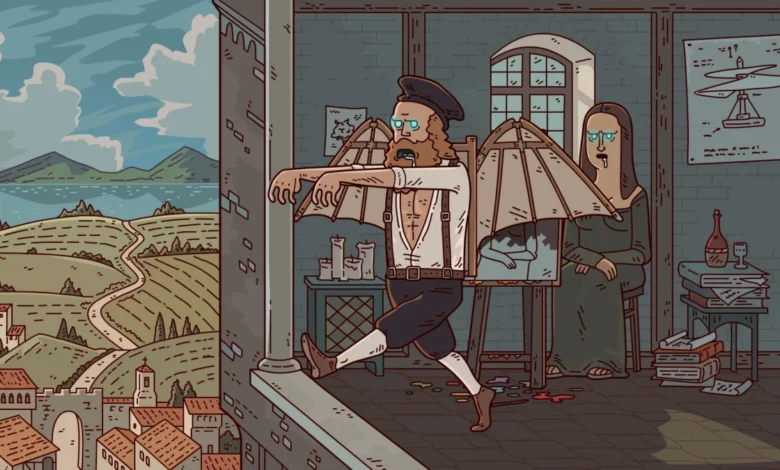
Alex Semenov’s artistic response to this environment draws upon historical motifs, blending them with science fiction tropes. By juxtaposing ancient human achievements—ranging from the architectural feats of Ancient Egypt to the Renaissance artistry of Leonardo da Vinci—with the mundane modern reality of glowing smartphone screens and sterile space-age command modules, BRAINROT constructs a visual lineage of human inquiry and contrasts it with contemporary digital stagnation.
The Production Process: A Solo Artistic Feat in the Age of AI
In an era increasingly dominated by generative artificial intelligence models capable of churning out images, text, and video at unprecedented speeds, the production methodology behind BRAINROT stands as a deliberate counter-statement. Every facet of the animated short—encompassing writing, direction, animation, editing, and sound design—was handled exclusively by Alex Semenov.
Operating under the Lazy Square banner, Semenov dedicated countless hours to the painstaking craft of frame-by-frame animation, storyboarding, and sonic architecture. The decision to forgo AI-generated imagery was not merely a stylistic preference, but an artistic and philosophical stance regarding the value of human labor, intent, and emotional resonance in art. While commercial animation studios increasingly look toward automated pipelines to reduce overhead and accelerate production times, Semenov’s solo workflow demonstrates the irreplaceable depth of individual artistic vision.
The visual style of the short film leans heavily into retro sci-fi aesthetics, reminiscent of mid-century speculative fiction, educational films, and classic analog animation. This stylistic choice acts as a temporal bridge, connecting the optimistic, forward-looking space-age aspirations of the 20th century with the dystopian, inward-looking reality of 21st-century screen addiction.
Voice Talent and Narrative Delivery
Complementing Semenov’s visual and auditory design is the voice performance of Thomas Middleditch. Best known for his work in television comedy, including starring roles in critically acclaimed series that lampoon the tech industry, Middleditch brings a distinct vocal cadence and comedic timing to the project.

His narration guides the viewer through a dense tapestry of historical allusions, satirical observations, and existential commentary. The interplay between Middleditch’s expressive vocal delivery and Semenov’s meticulous animation anchors the surreal narrative, providing an emotional and intellectual guidepost for the audience as the short navigates through various historical and futuristic tableaus. The collaboration bridges independent animation with recognized comedic talent, expanding the reach of Lazy Square’s satirical vision to broader audiences accustomed to premium digital entertainment.
Chronology of Production and Release
The path from concept to public release for an independent animated short film of this scale requires a rigorous, multi-stage development timeline. While precise internal dates for the inception of BRAINROT remain closely tied to Semenov’s ongoing creative output as Lazy Square, the public rollout followed a deliberate trajectory:
- Conception and Storyboarding: Semenov developed the foundational narrative framework, exploring the thematic intersection of historical human evolution and modern digital consumption. Comprehensive storyboards were drafted to map out the visual pacing and scene transitions.
- Production and Animation: Working entirely solo, Semenov executed the labor-intensive phases of character design, background illustration, frame-by-frame animation, and digital compositing, ensuring total stylistic cohesion without relying on automated generation tools.
- Sound Design and Voice Recording: Soundscapes, musical cues, and audio mixing were meticulously engineered to match the retro sci-fi aesthetic. Concurrently, Thomas Middleditch recorded the vocal narration, which was subsequently integrated into the timing of the animation cuts.
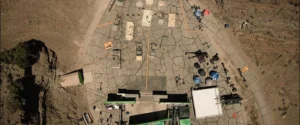
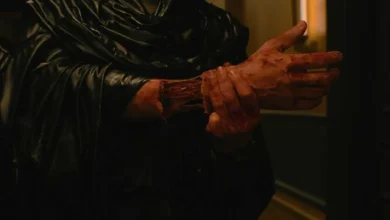
- Premiere and Public Distribution: The finished short film was published across major digital platforms, accompanied by official promotional stills showcasing scenes from Ancient Egypt, Renaissance Italy, and retro-futuristic NASA environments, alongside the complete storyboard archives.
Supporting Data on Digital Consumption and Mental Health
The themes explored in BRAINROT are grounded in mounting empirical research regarding human-computer interaction and mental health. Public health organizations and academic researchers have extensively documented the quantifiable impacts of excessive screen time and algorithmic content delivery:
- Average Daily Screen Time: Global studies indicate that the average individual spends upwards of six to seven hours per day interacting with digital screens, with a significant portion of that time dedicated to social media and content feeds.
- Attention Span Fragmentation: Neurological studies suggest that the frequency of context-switching encouraged by short-form video platforms and endless feeds correlates with reduced sustained attention spans, particularly among younger demographics.
- The Dopamine Loop: Behavioral psychologists note that variable reward schedules—the fundamental mechanism behind modern social media algorithms—trigger dopamine releases similar to those observed in gambling behaviors, fueling compulsive checking and doomscrolling habits.
- Economic Shifts in Animation: Industry analyses highlight a growing tension within the creative arts sector, as the proliferation of generative AI tools pressures studios to cut labor costs, contrasting sharply with the consumer and critical appreciation for authentic, human-made artistry exemplified by independent creators like Lazy Square.
Broader Impact and Implications for the Animation Industry
The release of BRAINROT holds significant implications both for independent animation and for cultural discourse surrounding digital dependency. As audiences grow increasingly fatigued by algorithmic homogeneity and content churn, works that reflect deep human craftsmanship and critical self-awareness find a receptive and vocal audience.
From an industry perspective, Semenov’s project proves that a single creator, utilizing modern digital workstations combined with traditional artistic discipline, can produce high-concept, commercially viable, and critically engaging animation that rivals studio-produced shorts. It challenges the fatalistic narrative that independent creators must adopt automated tools to remain competitive in a saturated digital marketplace.

Culturally, the film functions as a mirror held up to contemporary society. By framing modern doomscrolling not merely as a bad habit, but as a historical anomaly that threatens to reverse human intellectual development, BRAINROT elevates the conversation around digital hygiene. It prompts viewers to question the utility of the hyper-connected ecosystems they inhabit daily, encouraging a re-evaluation of how technology serves—or diminishes—the human experience.
Through its synthesis of striking retro visuals, sharp comedic narration, and uncompromising solo production values, BRAINROT establishes itself as a defining artistic statement on the digital age, cementing Lazy Square’s position as a distinctive voice in contemporary independent animation.