Behind the Fur and the Gags: How VFX and Cutting-Edge Machine Learning Built the Second Season of Ted

The evolution of visual effects in television has long crossed the threshold from supplementary tool to primary narrative driver, yet few productions navigate this intersection with the technical complexity of Peacock’s streaming hit Ted. For its eight-episode sophomore season, creator, writer, and director Seth MacFarlane pushed his production team to dismantle conventional boundaries of comedy production. Tasked with realizing an entirely computer-generated protagonist alongside elaborate fantasy sequences, period-accurate political satire, and massive environmental set extensions, Co-Visual Effects Supervisors Blair Clark and Hoyt Yeatman orchestrated a sprawling technical campaign. Utilizing a multidisciplinary coalition of top-tier visual effects studios—including Framestore, Deep Voodoo, Studio Blackbird, Rising Sun Pictures, and Pitch Black—the production successfully delivered nearly 3,000 visual effects shots. This achievement underscores a broader industry shift: the increasing viability of artificial intelligence and advanced real-time tools within traditional, high-pressure television pipelines.
Main Facts and Collaborative Architecture
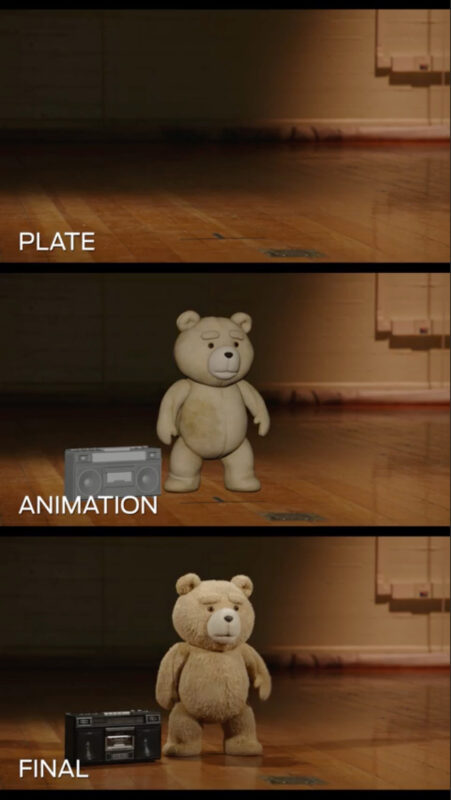
The production of Ted Season 2 required an unprecedented level of synchronization across global studios, physical production departments, and real-time visualization software. At the core of the visual effects strategy was Framestore’s Melbourne facility, which has handled the animation of the titular foul-mouthed teddy bear since the inception of the cinematic franchise. Maintaining a consistent creative lineage allowed the team to preserve Ted’s established weight, movement vocabulary, and behavioral nuances without suffering the degradation of character fidelity often associated with shifting production houses.
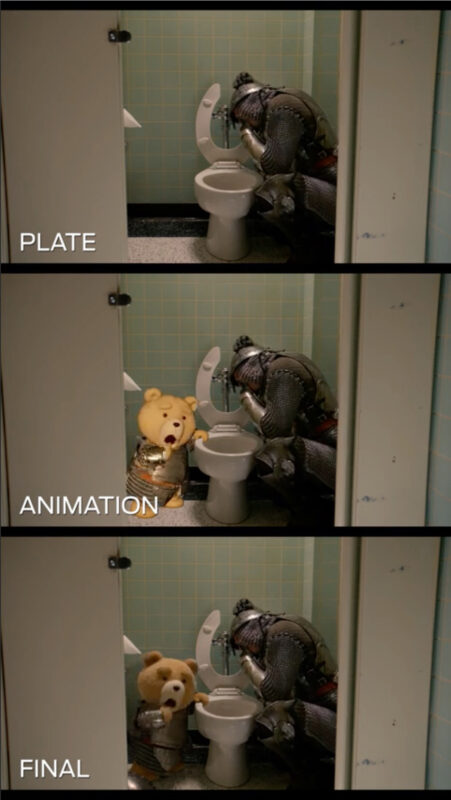
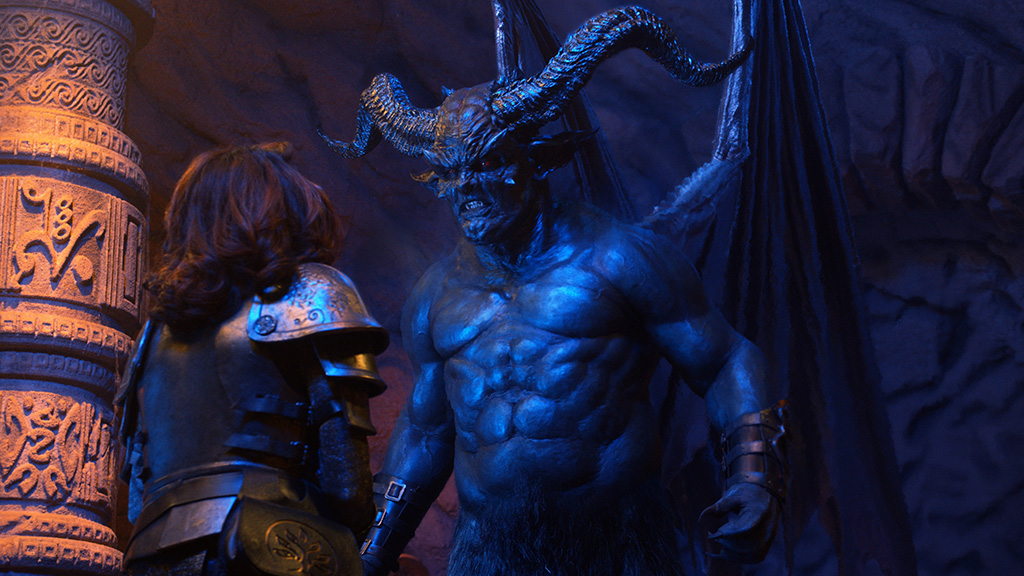
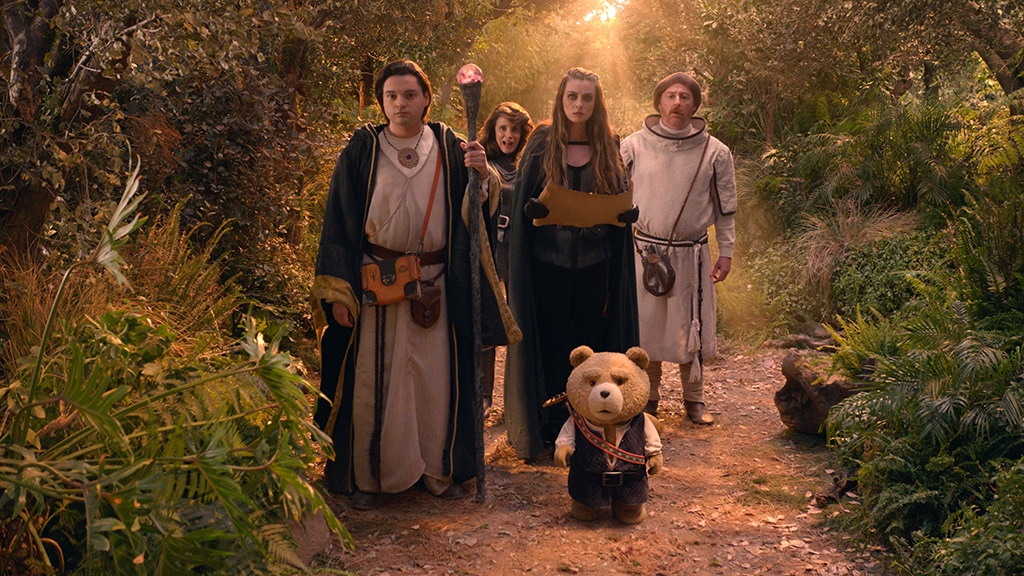
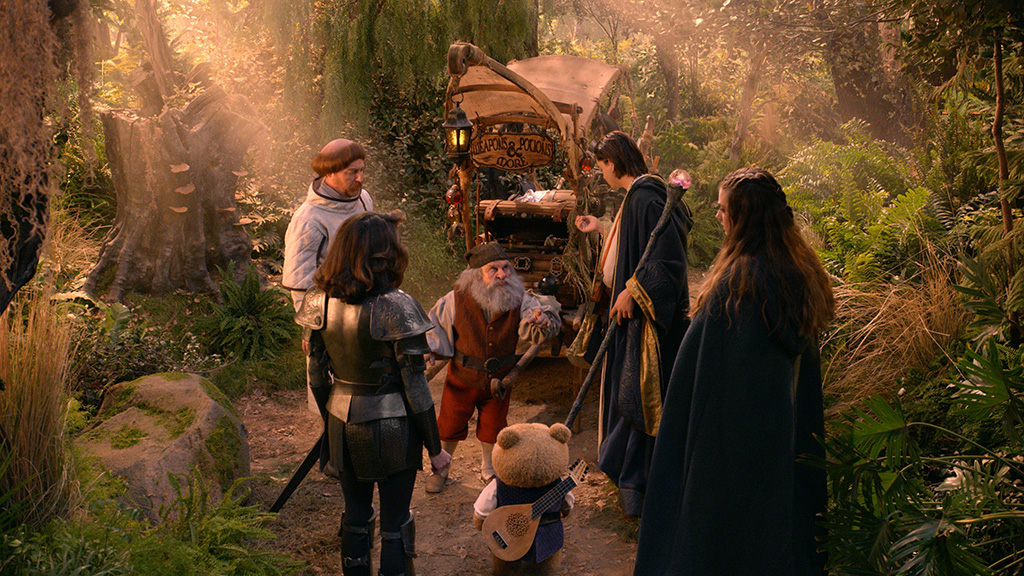
However, the ambitions for the second season extended far beyond standard comedy tropes. The production slate included a sprawling Dungeons & Dragons-themed fantasy sequence in Episode 203, complex multi-camera driving plates replicating 1990s Boston on the backlots of Universal Studios Hollywood, and an astonishingly intricate machine learning integration to recreate a period-accurate President Bill Clinton. Balancing these demands required a hybrid workflow incorporating physical props, LiDAR scanning, Unreal Engine pre-visualization, and deep learning neural networks.
Chronology and Production Methodology
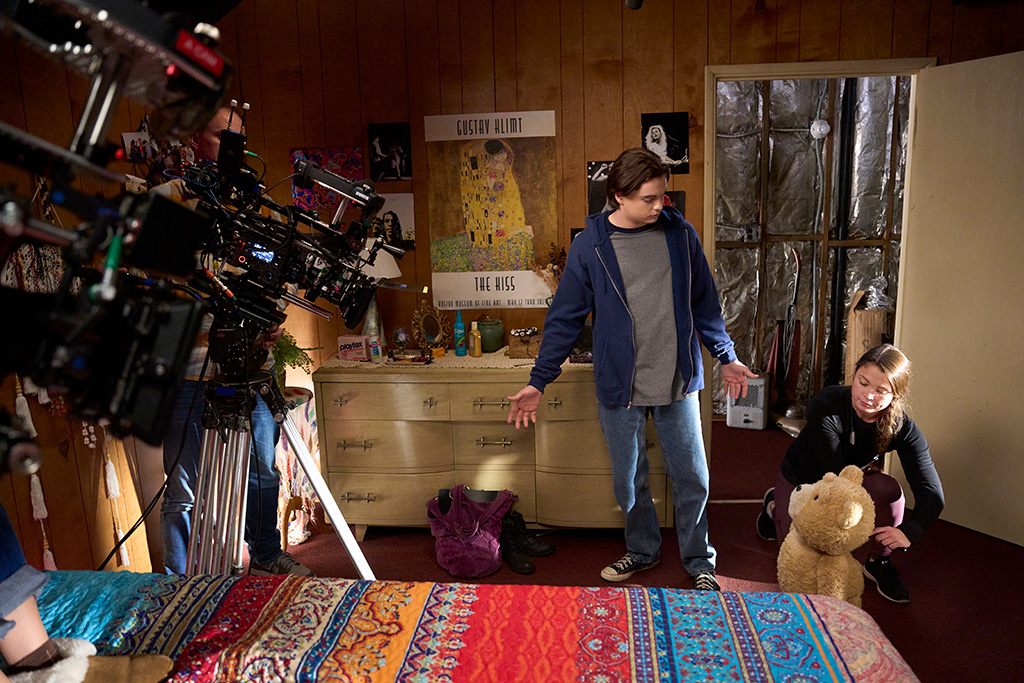
The methodology behind bringing Ted to life on set is a blend of structured choreography and improvisational jazz. During principal photography, Co-VFX Supervisor Blair Clark routinely stood in for Ted during rehearsals, interacting directly with human cast members while MacFarlane directed pacing and blocking. This physical proxy work provided actors with accurate eyelines and spatial awareness, supported by a variety of custom-built "stuffies"—including a specialized stunt torso nicknamed "the egg"—which enabled physical interactions such as being tossed by actor Scott Grimes.
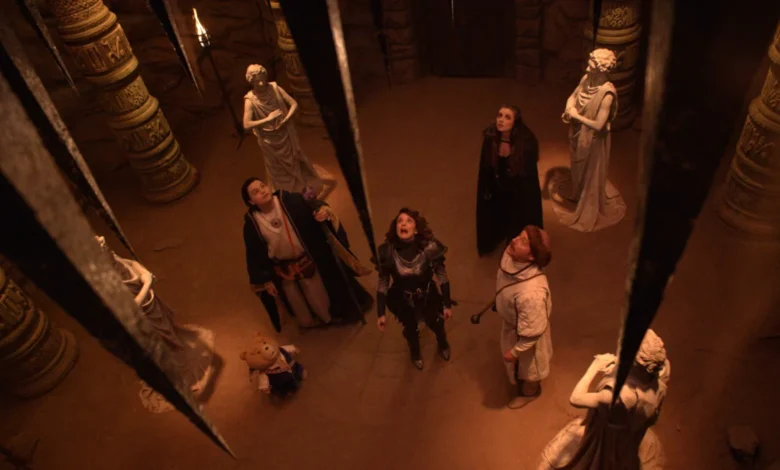
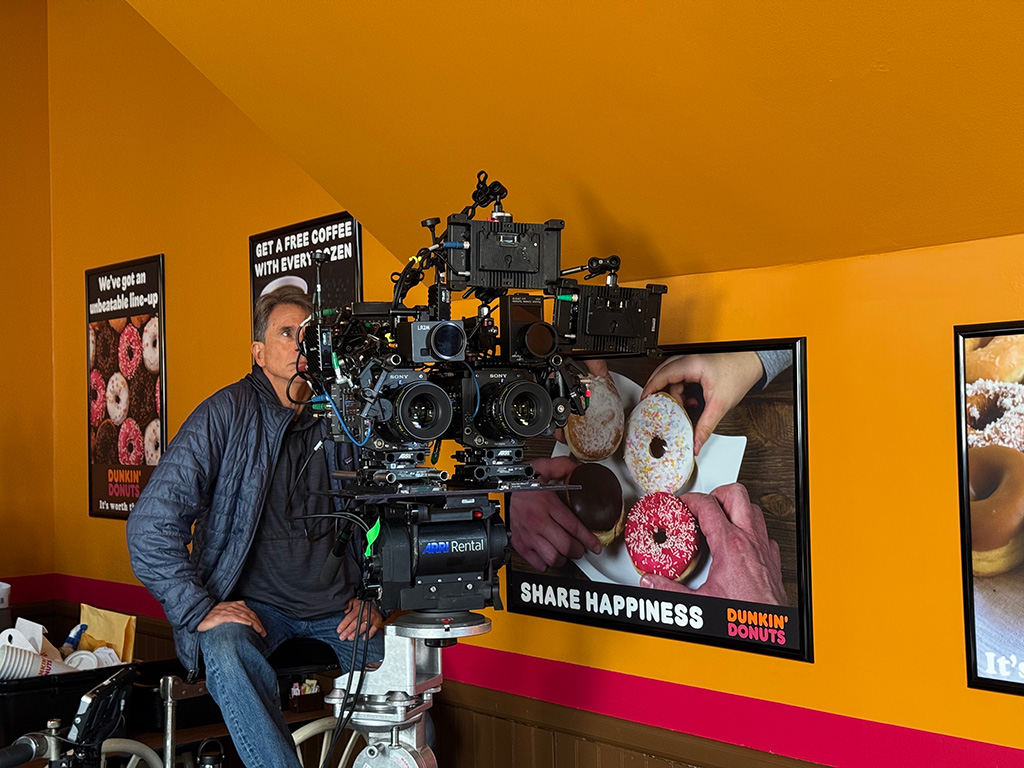
To manage the dense shooting schedule, the production relied on a three-camera system integrated with ViewScreen Studio. This setup fed rough real-time composites of Ted into the viewfinder for camera operators, facilitating dynamic framing on the fly. For complex environmental sequences, such as the temple trap in Episode 203 where mechanical spikes descend from the ceiling, Unreal Engine animatics established the precise spatial parameters and velocities required for seamless integration during post-production.
Supporting Data and Technical Breakdown
The sheer scale of the production is quantified by the massive infrastructure deployed across the Universal backlot. For the Dungeons & Dragons forest sequence, the art department constructed a physical forest set featuring over 3,000 linear feet of bluescreen reaching 40 feet into the air. Because physical studio lights could not be positioned far enough back to generate natural, columnated God rays, the visual effects team employed LiDAR scanners to map the physical set. This volumetric data allowed digital artists to construct a 3D digital arena where artificial key lighting, atmospheric particulates, and volumetric light rays could be layered realistically between the foreground action and digital set extensions.
The technical hurdles surrounding the Bill Clinton sequence presented an entirely different set of obstacles. MacFarlane’s desire to portray a mid-1990s version of the former U.S. president collided with studio restrictions against traditional generative AI text prompts. To achieve the likeness legally and photorealistically, the production acquired reference materials and portrait photographs from the William J. Clinton Presidential Library. Initial ZBrush sculpts revealed that MacFarlane and Clinton possessed fundamentally incompatible head shapes, necessitating a CG head replacement.
Gradient Effects initially applied their proprietary Shapeshifter software to map a 3D mesh of MacFarlane’s head onto a Clinton rig. While effective, avoiding the uncanny valley required partnering with Deep Voodoo—a visual effects studio founded by South Park creators Trey Parker and Matt Stone specializing in machine learning-driven facial replacement. Deep Voodoo trained a neural network model to analyze physical lighting, camera lensing, performance plates, and speech mechanics. By rendering a targeted 1024×1024 pixel window over the top of MacFarlane’s head, the AI successfully handled microscopic human facial nuances—such as tongue movement during speech and subtle muscle squints around the eyes—that traditionally frustrate CG animators. Far from being a push-button shortcut, this AI-generated element was subjected to standard compositing pipelines, color grading, and directorial approvals.
Official Responses and Industry Implications
The integration of advanced machine learning alongside classical animation techniques has sparked widespread debate across the entertainment industry, but supervisors Yeatman and Clark view these developments pragmatically. Reflecting on the philosophy that guided the season, Yeatman noted that machine learning served primarily to shoulder the invisible burdens of performance capture. "The advantage of using AI over CG is that it understands human speech well," Yeatman explained. "This means you can look into the mouth and see the tongue moving. In animation, you can’t capture that… AI does all the heavy lifting that is not seen by the viewer but is felt by them."
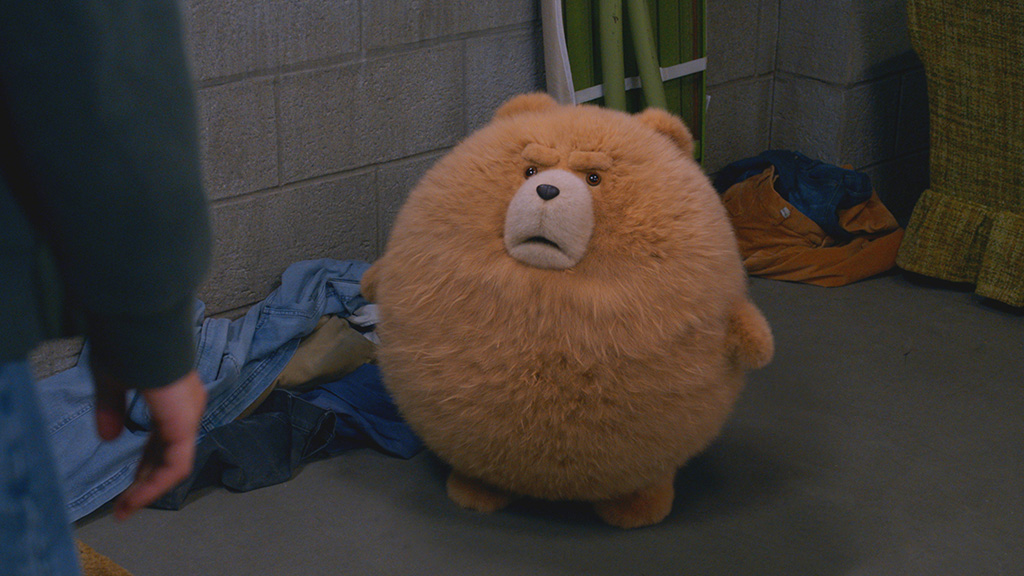
Clark echoed this sentiment regarding the character work handled by Framestore, emphasizing that technical innovations must ultimately serve the narrative suspension of disbelief. Whether pushing artistic license to make Ted emerge from a laundry dryer as a complete sphere of fur or digitally altering human actors to portray petrified stone statues, the objective remained grounded in emotional authenticity.
Broader Impact and Future Outlook
The technical achievements realized during the production of Ted Season 2 signal a maturation point for television visual effects. As streaming budgets face increasing scrutiny and production timelines compress, the ability to seamlessly blend practical builds, real-time Unreal Engine pre-visualization, and vetted machine learning workflows defines the future of high-end episodic content. By granting directors maximum creative freedom on set while leveraging sophisticated computational tools in post-production, the creative team behind Ted has established a blueprint for how complex, effects-heavy comedies can be executed efficiently without compromising narrative integrity or visual polish.
Related posts: