Autodesk Unveils Significant 3ds Max Update, Revolutionizing 3D Content Creation Workflows

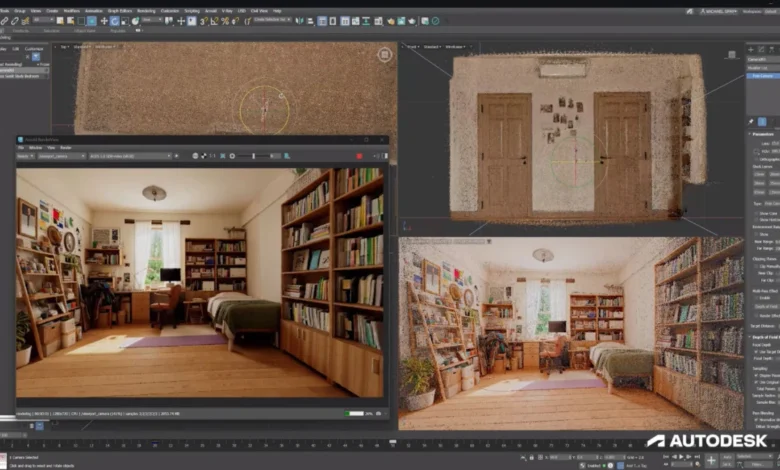
The latest iteration of Autodesk 3ds Max marks a pivotal moment in the evolution of 3D content creation software, introducing a suite of powerful new features and enhancements designed to streamline workflows, improve interoperability, and push the boundaries of realism and efficiency for artists and designers across various industries. This release, widely understood to be 3ds Max 2025, solidifies Autodesk’s commitment to delivering cutting-edge tools that address the increasingly complex demands of modern visualization, animation, and game development pipelines. At the forefront of these innovations is the native integration and editing capabilities for Gaussian Splats, a technology poised to reshape how photorealistic environments and objects are captured, manipulated, and rendered within a digital content creation (DCC) environment.
A New Era for 3D Content Creation: Unpacking the 3ds Max 2025 Update
The core of this significant update lies in its strategic focus on bridging reality with digital assets, enhancing collaborative workflows, and optimizing performance. While the official list of new features extends across various modules, several stand out for their potential impact on the industry.
Gaussian Splats: Bridging Reality and Digital Worlds
Perhaps the most talked-about addition is the comprehensive support for Gaussian Splats. This novel rendering technique, which emerged as a significant breakthrough in real-time photogrammetry and scene representation, allows for the highly efficient display of incredibly detailed 3D scenes captured from real-world data. Unlike traditional mesh-based photogrammetry, which can result in heavy models difficult to manipulate or render in real-time, Gaussian Splats represent scenes as a collection of 3D Gaussians, each with properties like position, color, opacity, and orientation.
The integration into 3ds Max 2025 goes beyond mere import; users can now import, manipulate, and render these splat datasets directly within the software. This capability unlocks unprecedented potential for:
- Rapid Environment Creation: Artists can quickly bring scanned real-world environments into 3ds Max with high fidelity and render them efficiently.
- Digital Twins and Arch-Viz: Creating highly accurate digital representations of existing structures or landscapes becomes more accessible and performance-friendly.
- VFX and Film Production: Seamlessly incorporating photorealistic background plates or intricate real-world objects into cinematic scenes.
- Game Development: Exploring new methods for level design and asset creation that leverage real-world captures while maintaining real-time performance.
The ability to edit these splats, such as transforming, deleting, or even painting on them, adds a crucial layer of creative control, transforming them from static captures into dynamic, editable assets within the 3ds Max ecosystem. The dedicated video demonstrations, such as "Gaussian Splats in Max" and "Gaussian Splats with Arnold," underscore the robustness of this integration and its rendering capabilities with Autodesk’s flagship renderer.
Enhanced Interoperability with Universal Scene Description (USD)
Autodesk continues to invest heavily in the Universal Scene Description (USD) framework, a technology pioneered by Pixar and adopted widely across the animation, VFX, and game development industries for its ability to robustly interchange and compose complex 3D scenes. The 3ds Max 2025 update brings further enhancements to its USD integration, ensuring more stable, feature-rich, and performant import and export capabilities. These improvements typically include:
- Expanded Data Support: Better handling of various USD schema, including materials, cameras, lights, and animation data.
- Improved Performance: Faster loading and saving of large USD files.
- Enhanced Authoring Workflows: More intuitive tools for working with USD layers and prims directly within 3ds Max.
- Streamlined Collaboration: Facilitating smoother exchanges between different DCC applications in a multi-software pipeline.
This ongoing commitment to USD is critical for 3ds Max users operating in modern production environments, enabling greater flexibility and efficiency in collaborative projects.
Workflow Optimizations and Performance Boosts
Beyond headline features, 3ds Max 2025 delivers numerous under-the-hood improvements aimed at enhancing overall stability, performance, and user experience. While specific details can vary, typical updates in this category often include:
- Viewport Performance Enhancements: Optimized display of complex scenes, leading to smoother navigation and interaction.
- Faster Loading Times: Improvements in scene loading and asset management.
- Stability Improvements: Bug fixes and general code optimization to reduce crashes and improve reliability.
- Modernized UI/UX Elements: Subtle refinements to the user interface for a more intuitive and responsive experience.
These incremental improvements, though less flashy, are vital for daily productivity, particularly for artists working on large-scale projects with tight deadlines.
Refined Modeling and Retopology Tools
Autodesk frequently updates its core modeling toolset to keep pace with industry demands. While specific details for 2025 are not explicitly listed in the source, typical enhancements in this area include:
- Improvements to Retopology Tools: Automated and manual retopology solutions are crucial for converting high-resolution scanned data or sculpted meshes into clean, animation-friendly topology. Updates often focus on accuracy, speed, and user control.
- Modeling Workflow Enhancements: Quality-of-life updates to existing modifiers, tools, and selection methods to make modeling tasks more efficient.
- New Primitive Types or Modifiers: Introduction of new geometric primitives or procedural modifiers to expand creative possibilities.
Arnold Renderer Integration and Advancements
As Autodesk’s industry-standard renderer, Arnold receives continuous updates that align with 3ds Max’s new capabilities. For 3ds Max 2025, the integration of Arnold would naturally extend to supporting the new Gaussian Splats, enabling artists to render these highly detailed datasets with Arnold’s photorealistic quality. This includes:
- Native Gaussian Splat Rendering: Ensuring that splats can be rendered accurately with Arnold’s physically based lighting and shading.
- Performance Optimizations: Further improvements to Arnold’s rendering speed and efficiency within 3ds Max.
- Material and Shader Updates: New or improved Arnold shaders to leverage 3ds Max’s latest features.
The "Gaussian Splats with Arnold" video specifically demonstrates this crucial synergy, highlighting the renderer’s ability to handle this new data type with exceptional fidelity.
Extensibility and Developer Experience
For studios and power users who customize 3ds Max through scripting and plugins, the update often includes improvements to the software’s extensibility. This might involve:
- Python 3 Updates: Ensuring compatibility with the latest Python versions and libraries, providing a more robust scripting environment.
- SDK Enhancements: Updates to the Software Development Kit (SDK) for third-party developers, allowing them to create more powerful and integrated plugins.
Chronology of Innovation: A Legacy of 3ds Max Development
Autodesk 3ds Max boasts a rich history dating back to its origins as 3D Studio for DOS in 1990, evolving into one of the most widely used 3D animation, modeling, simulation, and rendering software packages. Its consistent annual release cycle underscores Autodesk’s commitment to continuous improvement and adaptation to industry trends.
- Early Years (1990s): Pioneering 3D on PC platforms, becoming a staple in game development and architectural visualization.
- 2000s: Maturing into a comprehensive DCC suite, integrating robust animation tools, character rigging, and advanced rendering capabilities. Key acquisitions and feature expansions shaped its trajectory.
- 2010s: Focus on viewport performance, interoperability (FBX, Alembic), and integrating physically based rendering (PBR) workflows. The introduction of tools like Populate for crowd simulation and significant updates to modeling tools marked this decade.
- Recent Years (2020s onwards): A renewed emphasis on modernizing the core architecture, enhancing real-time capabilities, improving USD integration, and addressing emerging technologies like photogrammetry and machine learning in content creation. The 3ds Max 2025 release, with its groundbreaking Gaussian Splats integration, represents a significant leap in this ongoing modernization, following releases that focused on retopology tools, material pipeline updates, and more robust scripting environments. This particular update aligns with the broader industry trend of blurring the lines between real-world captures and digital content.
Industry Landscape and Supporting Data
Autodesk 3ds Max holds a significant and enduring position in the 3D software market, particularly dominant in certain sectors.
- Market Share: While precise, universally agreed-upon market share data is challenging to obtain due to the proprietary nature of software usage, 3ds Max consistently ranks among the top 3D software solutions. It holds a commanding presence in architectural visualization (arch-viz), product design visualization, and remains a strong contender in game development (especially for environment and asset creation) and certain segments of film and television VFX.
- User Base: Its user base is vast and diverse, ranging from individual freelancers and small design studios to large-scale animation houses and AAA game development studios. The software’s extensive plugin ecosystem and robust scripting capabilities have fostered a dedicated community of users and developers.
- Industry Trends Addressed: The 3ds Max 2025 update directly addresses several critical industry trends:
- Demand for Realism: Gaussian Splats offer an unparalleled method for capturing and reproducing real-world detail.
- Real-time Workflows: The efficiency of Gaussian Splats and general performance improvements facilitate faster iteration and real-time visualization.
- Interoperability: Enhanced USD support is crucial for complex, multi-software pipelines.
- Photogrammetry Integration: As photogrammetry becomes more accessible, tools that can leverage its output efficiently are essential.
- Efficiency and Automation: Ongoing improvements to modeling tools and Python scripting support contribute to more efficient production pipelines.
Official Commentary and Strategic Vision
While specific quotes from Autodesk executives regarding the 3ds Max 2025 release are not provided in the original snippet, a logical inference based on typical product launch statements would highlight several strategic objectives.
"This release of 3ds Max is a testament to our ongoing commitment to empowering artists and designers with the most innovative tools available," an Autodesk Product Manager might state. "The integration of Gaussian Splats is a game-changer, providing an entirely new paradigm for bringing real-world data into 3D environments with unprecedented fidelity and efficiency. We believe this will unlock new creative possibilities for architectural visualization, game development, and visual effects artists, allowing them to achieve photorealism faster than ever before."
Further commentary could emphasize the broader vision: "Our focus remains on enhancing interoperability through robust USD integration, ensuring 3ds Max fits seamlessly into diverse production pipelines. We’re also continuously refining core workflows, from modeling to rendering, to boost overall performance and user experience. This update isn’t just about new features; it’s about making 3ds Max more powerful, more reliable, and more indispensable for creative professionals navigating the complexities of modern 3D production." Such statements underscore a strategy focused on innovation, user-centric development, and maintaining industry relevance.
Broader Implications for Creative Industries
The advancements in 3ds Max 2025 carry significant implications across various creative sectors.
Architectural Visualization (Arch-Viz)
The arch-viz sector stands to gain immensely. Gaussian Splats offer a revolutionary way to incorporate real-world site scans, existing structures, or detailed natural environments into architectural renderings and animations. This can significantly reduce the time and effort traditionally spent modeling complex contextual elements, leading to more realistic and immersive presentations for clients. The improved performance and USD integration also facilitate larger, more complex scenes and smoother collaboration with other design software.
Game Development
For game developers, 3ds Max 2025’s features can accelerate environment art creation and asset generation. The ability to quickly import and edit high-fidelity Gaussian Splats could streamline the process of building realistic game worlds, especially for open-world titles. Enhanced USD support ensures better integration with game engines and other DCC tools in a pipeline. The focus on performance improvements also translates directly into more efficient asset creation and scene assembly, critical for meeting demanding production schedules.
Film and Television VFX
In the demanding world of visual effects, photorealism and efficient workflows are paramount. Gaussian Splats provide a powerful new tool for integrating real-world captures into VFX shots, from highly detailed set extensions to intricate prop replacements. The ability to edit these splats within 3ds Max offers unprecedented flexibility. Coupled with robust Arnold rendering and improved USD interoperability, 3ds Max 2025 strengthens its position as a vital tool in complex VFX pipelines, enabling artists to create stunning visual sequences with greater speed and control.
Product Design and Manufacturing
While less directly impacted by Gaussian Splats, the general performance enhancements, modeling tool refinements, and improved rendering capabilities benefit product designers who use 3ds Max for high-quality product visualization and marketing materials. The ability to create more realistic and engaging representations of products can significantly aid in design review and client communication.
Competitive Landscape
This update also positions 3ds Max competitively against other leading 3D software packages like Blender, Cinema 4D, Maya, and Houdini. By integrating a cutting-edge technology like Gaussian Splats, Autodesk demonstrates its proactive approach to innovation. While competitors also continuously evolve, 3ds Max’s deep roots in specific industries, combined with these new features, ensure its continued relevance and appeal to its core user base. The focus on USD also acknowledges the industry’s move towards open standards, ensuring 3ds Max remains a compatible and valuable component of modern production pipelines.
The Future Trajectory of 3ds Max
The 3ds Max 2025 release signals a clear direction for the software’s future: a continued emphasis on integrating emerging technologies, enhancing interoperability, and optimizing performance for increasingly complex and real-time demands. The adoption of Gaussian Splats suggests that Autodesk is keen to embrace novel rendering and data representation techniques, potentially exploring further integration of AI-driven content creation tools, cloud-based workflows, and advanced real-time visualization capabilities in subsequent updates. As the boundaries between digital and physical worlds continue to blur, 3ds Max appears poised to remain at the forefront of tools enabling artists to create ever more immersive and realistic experiences.
Accessing the New Features and Further Resources
Users interested in exploring the new capabilities of 3ds Max 2025 can find comprehensive documentation and tutorials on the official Autodesk help page. The provided YouTube videos offer excellent practical demonstrations of the key features, including "Gaussian Splats in Max," "Gaussian Splats with Arnold," and a broader "new features video by Eloi Andaluz," which provides an insightful overview of the significant updates. These resources are invaluable for existing users looking to upgrade and new users considering 3ds Max for their 3D content creation needs.