Elizabeth Unique Venice Brings Contemporary Design and Unpretentious Flair to the Cannaregio Canal

Venice’s hospitality landscape has long been defined by opulent, centuries-old palazzos that lean heavily into the city’s grand, gilded past. However, a new addition to the lagoon city is shifting the paradigm toward vibrant informality and localized residential charm. Elizabeth Unique Venice, the newest member of the Design Hotels portfolio and the first property under the brand to open in Venice, officially welcomed its first guests along the historic Cannaregio Canal. Housed within a meticulously restored 17th-century palazzo, the boutique hotel offers an intentional departure from the tourist-heavy epicenters of San Marco and the Rialto, anchoring itself instead in the authentic, everyday rhythms of one of Venice’s most lived-in residential districts.
Architectural Preservation Meets Contemporary Vision
The realization of Elizabeth Unique Venice is the result of an extensive, multi-year restoration and interior architecture project orchestrated by renowned Milan-based architect and designer Cristina Celestino. Tasked with breathing new life into a neglected architectural landmark, Celestino chose a path of respectful juxtaposition rather than strict historical replication.
The 17th-century palazzo’s original bones—including hand-carved timber ceiling beams and ornate decorative plasterwork—have been carefully conserved. Rather than competing with these historical traces, Celestino utilizes them as a textural backdrop for a bold, contemporary design language. The intervention introduces a vibrant palette of materials, colors, and bespoke furnishings that speak directly to contemporary Italian design sensibilities while respecting the building’s heritage.

Spatial Typology and Interior Materiality
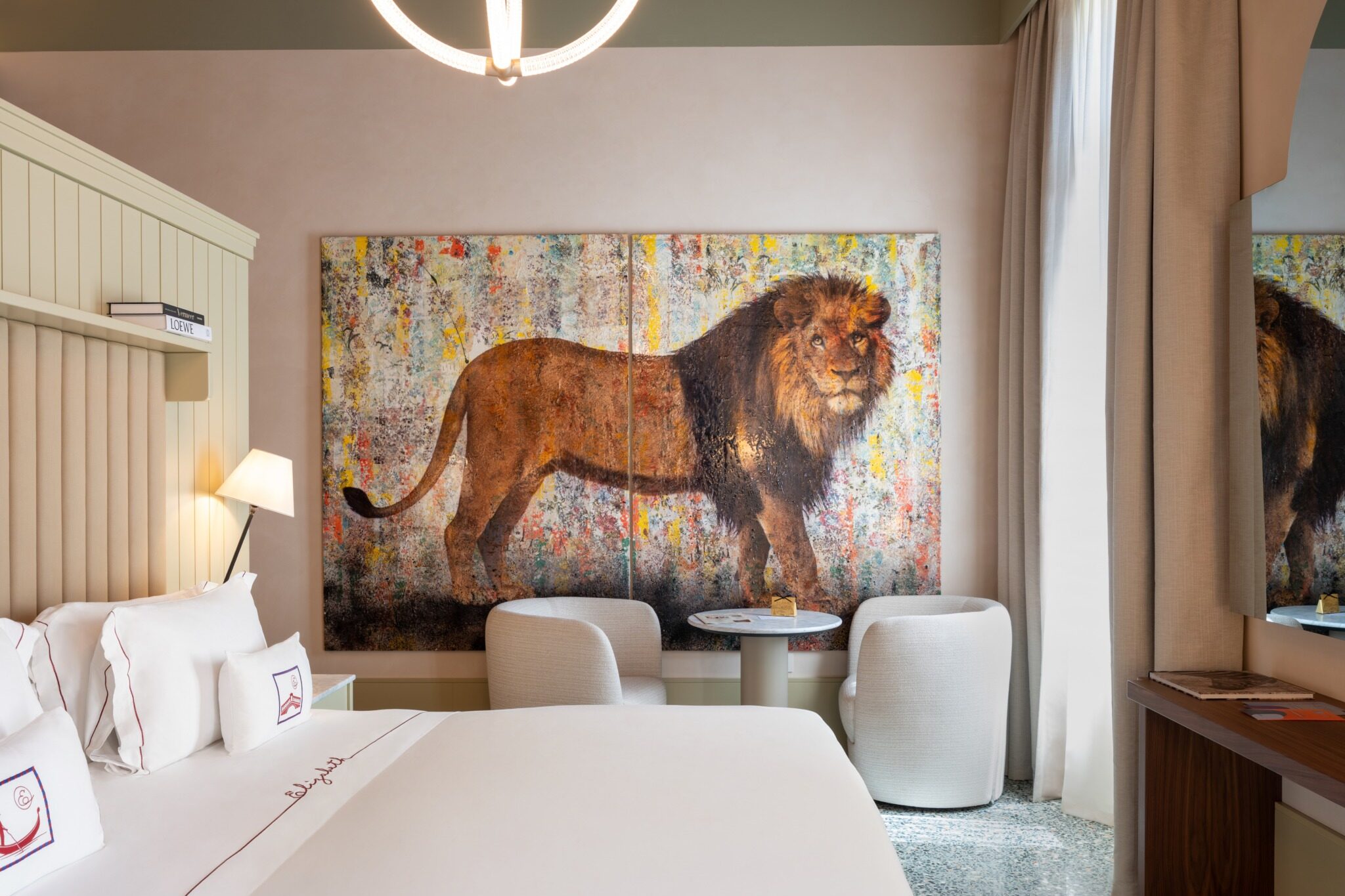
Spanning 14 distinct rooms and suites—ranging from the intimate Initiale rooms to expansive Spa Suites—the property showcases a masterclass in localized material application. Venetian terrazzo flooring features prominently across the accommodations, custom-crafted in three distinct colorways: lagoon green, rich crimson, and soft sandy tones. These chromatic choices echo the natural shifts of the Venetian lagoon and are carried upward onto marmorino-finished walls, warm walnut boiserie, and state-of-the-art Policroma wallcoverings provided by CEDIT.
The tactile layering continues with full-wall wainscoting seamlessly integrated with upholstered, padded headboards. Attention to detail is evident in the selection of Carrara and Fior di Pesco marble accents, sumptuous textiles sourced from heritage Venetian fabric houses Rubelli and Dedar, and custom-designed rugs conceptualized by Celestino herself.

To achieve an eclectic yet cohesive aesthetic, bespoke elements—such as sculptural, locally inspired mirrors and custom bedside tables—are paired with iconic contemporary statement pieces. Guests encounter Pianca’s sculptural Calatea armchairs, low glass coffee tables curated by Pulpo, and striking lighting fixtures including Moooi chandeliers, Fontana Arte floor lamps, and Oluce suspension pieces. Bathrooms and wet rooms offer a pared-back sanctuary, outfitted with Kaldewei bathtubs, Zucchetti architectural fittings, and, in select accommodations, private saunas.
Curated Art and Public Spaces
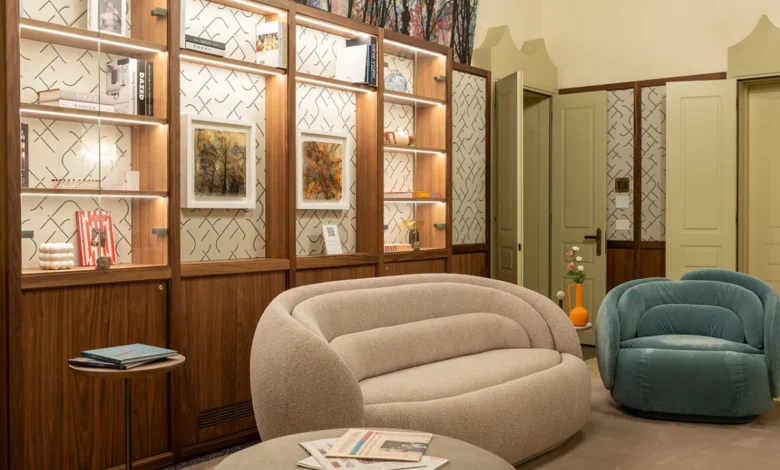
The dialogue between past and present extends seamlessly into the hotel’s public areas. The ground-floor reception and lounge spaces pair warm wooden paneling with classic Venetian terrazzo flooring, anchored by a contemporary check-in desk featuring sleek metallic slats.

Rather than overwhelming the spaces with excessive ornamentation, neutral stretches of wall have been purposefully left uncluttered to showcase an expressive collection of contemporary Italian artworks. Curated in collaboration with the historic Galleria Russo, the rotating and permanent art program infuses the palazzo with dynamic, modern creative energy.
Beyond the indoor public zones, the property features a rare urban amenity in Venice: an expansive, oasis-like secret garden. Complete with a dedicated restaurant patio and a private lawn designed for leisurely afternoon aperitivos, the green space offers guests a tranquil retreat from the bustling walkways of the city.

Culinary Program Rooted in Family Heritage
The culinary identity of Elizabeth Unique Venice is anchored by the da GrandMa Restaurant, a dining concept deeply rooted in personal history. Named in honor of Elisabetta, the grandmother of property owner Vittorio Curatella—and the inspiration behind the hotel’s moniker—the restaurant translates familial warmth into a refined gastronomic experience.
Under the culinary direction of Chef Riccardo Pepe, the restaurant’s menu pays homage to classic Italian cuisine, regional Venetian specialties, and cherished recipes passed down through generations. The dining room itself mirrors this comforting ethos, featuring traditional low ceilings enriched with antique glass panels and soft palettes of lagoon blue and yellow. In line with the hotel’s overarching philosophy of unhurried travel, the restaurant offers an all-day breakfast service, encouraging guests to embrace slow mornings without rigid scheduling constraints.

Context, Chronology, and Urban Integration
The opening of Elizabeth Unique Venice arrives at a critical juncture for Italy’s tourism sector, as municipal authorities and hospitality leaders increasingly seek sustainable ways to disperse tourist foot traffic away from congested central landmarks. Cannaregio, known for its deep-rooted neighborhood culture, historic wine bars, rustic trattorias, and close proximity to the historic Venetian Ghetto, provides an ideal setting for traveler integration.
The development timeline, spanning several years of architectural planning, historic conservation approvals, and interior outfitting, culminated in the property’s debut as a flagship urban retreat. By partnering with Design Hotels, the ownership has positioned the property within an elite global network of independent, design-forward hotels that prioritize local culture over homogenized luxury standards.

Broader Industry Implications and Analysis
From an industry perspective, Elizabeth Unique Venice exemplifies a broader shift in luxury hospitality toward experiential localization and adaptive reuse. Modern affluent travelers increasingly reject cookie-cutter luxury in favor of accommodations that reflect the authentic architectural and cultural DNA of their destinations.
By successfully marrying 17th-century Venetian heritage with cutting-edge contemporary Italian design, the property demonstrates how historic buildings can be preserved not as static museums, but as dynamic, living spaces. The integration of local artisans, historical galleries, and regional culinary traditions ensures that the hotel contributes positively to the local economy while offering guests a deeply contextualized stay. Ultimately, Elizabeth Unique Venice redefines the urban resort experience in the lagoon, establishing a new benchmark for how contemporary hospitality can converse harmoniously with centuries of history.
Related posts: