Charles & Julia at Hotel Perle: A New Standard for Sophisticated Hospitality and Residential-Inspired Design in New Orleans

The opening of Charles & Julia within the historic Hotel Perle marks a significant shift in the interior design landscape of New Orleans, moving away from the city’s traditional reliance on high-contrast, thematic aesthetics toward a more nuanced, residential-inspired approach. Developed by Anna Nicole Interiors, the cocktail lounge and rooftop bar are situated at 757 St. Charles Avenue, housed within a structure originally built in 1916 as a Stutz motorcar dealership. By prioritizing a "collected" rather than "decorated" feel, the project challenges the standard tropes of hospitality design in the American South, opting instead for a narrative rooted in European travel and local craftsmanship.
The Architectural Heritage of the Stutz Motorcar Dealership
The foundation of Charles & Julia’s design is the historic building itself. In 1916, the Stutz Motor Company was at the height of its prestige, known for producing the legendary Bearcat. The dealership at 757 St. Charles Avenue was part of an era where automotive showrooms were designed with the same grandeur as civic institutions. These buildings were characterized by massive floor-to-ceiling windows, soaring heights, and industrial-strength brickwork intended to showcase the weight and beauty of early 20th-century machinery.
For the design team at Anna Nicole Interiors, the challenge lay in reconciling the building’s industrial 3,000-square-foot ground floor with the need for an intimate cocktail environment. The original architectural features—exposed brick and expansive ceiling heights—provided a sense of place but risked feeling cold or cavernous. Rather than installing permanent partitions that would disrupt the historic floor plan, the designers employed residential strategies to define zones of intimacy. This approach respects the integrity of the 1916 structure while adapting it for a modern, high-end hospitality use.
Design Philosophy: The Shift Toward Residential Hospitality
The concept of "residential hospitality" has gained significant traction in the post-pandemic design era, as travelers and locals alike seek environments that offer the comfort of a home with the service of a luxury establishment. At Charles & Julia, this is executed through the layering of textures and the use of furniture that appears to have been acquired over decades.
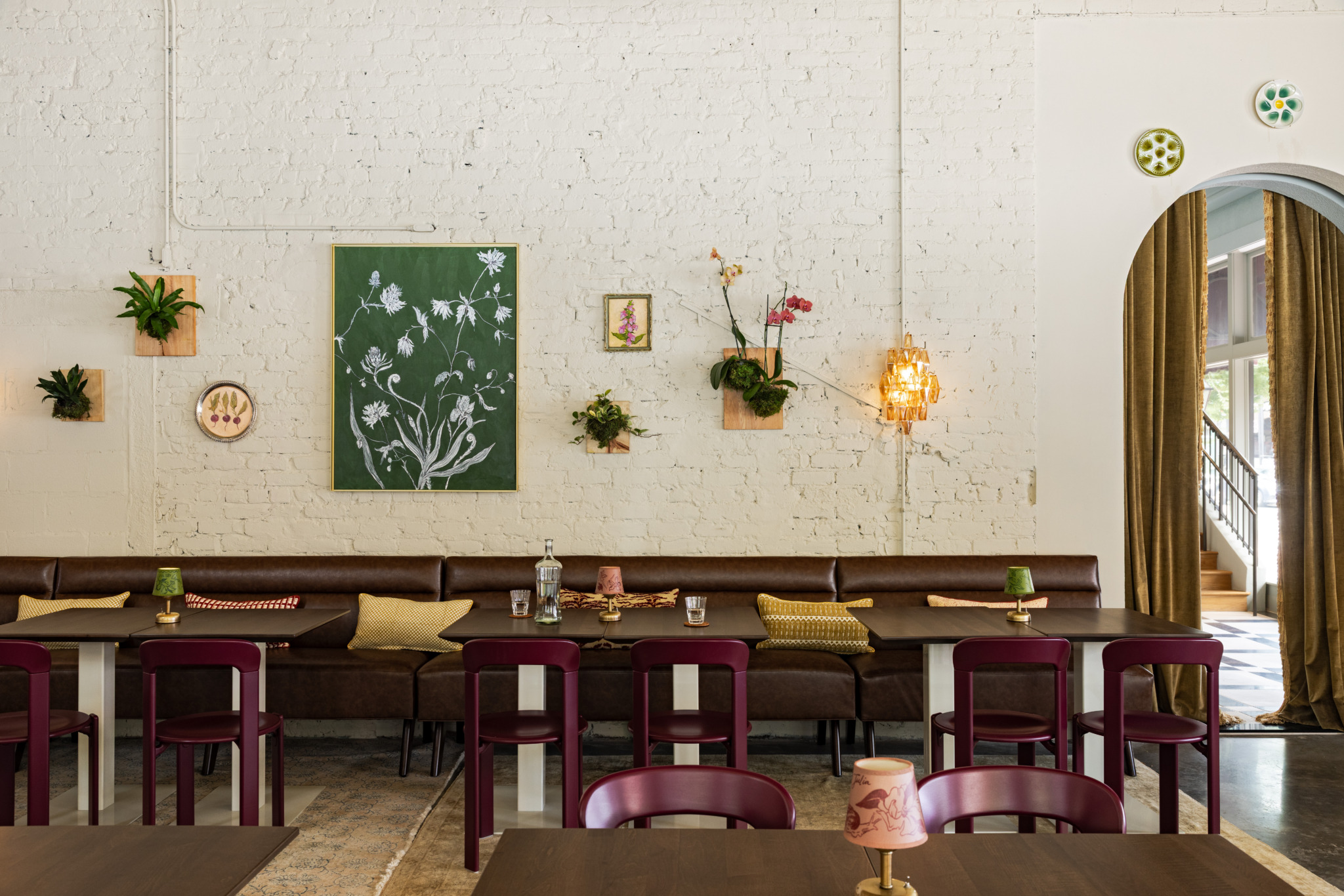
The 3,000-square-foot lounge utilizes vintage rugs and heavy oxblood velvet drapery to dampen the acoustics of the brick-and-glass shell. Lighting is kept low and focused, utilizing softened sources rather than harsh overhead fixtures. One of the most notable furniture choices is the inclusion of grape-toned Bruno Rey chairs. Designed originally in 1971, the Rey chair is celebrated for its screwless wood-to-metal connection, representing a blend of mid-century industrial innovation and organic form. By pairing these with vintage European furnishings, the design avoids the "catalog" look prevalent in many new hotel developments.
Central to the room is a custom-stained oak back bar, which serves as a visual anchor. This is paired with a Calacatta Viola marble bar, a material known for its dramatic purple veining. The choice of marble is not merely aesthetic; it was fabricated locally, reinforcing the project’s commitment to New Orleans’ existing network of artisans and stone-workers.
The Narrative of Charles and Julia: A Fictional Framework
The design is loosely guided by the imagined romance and travels of the venue’s namesakes, Charles and Julia. This fictional narrative serves as a creative compass for the aesthetic choices, particularly the European influences that permeate the space. Instead of a literal retelling of a story through signage or artifacts, the narrative is felt through materiality.
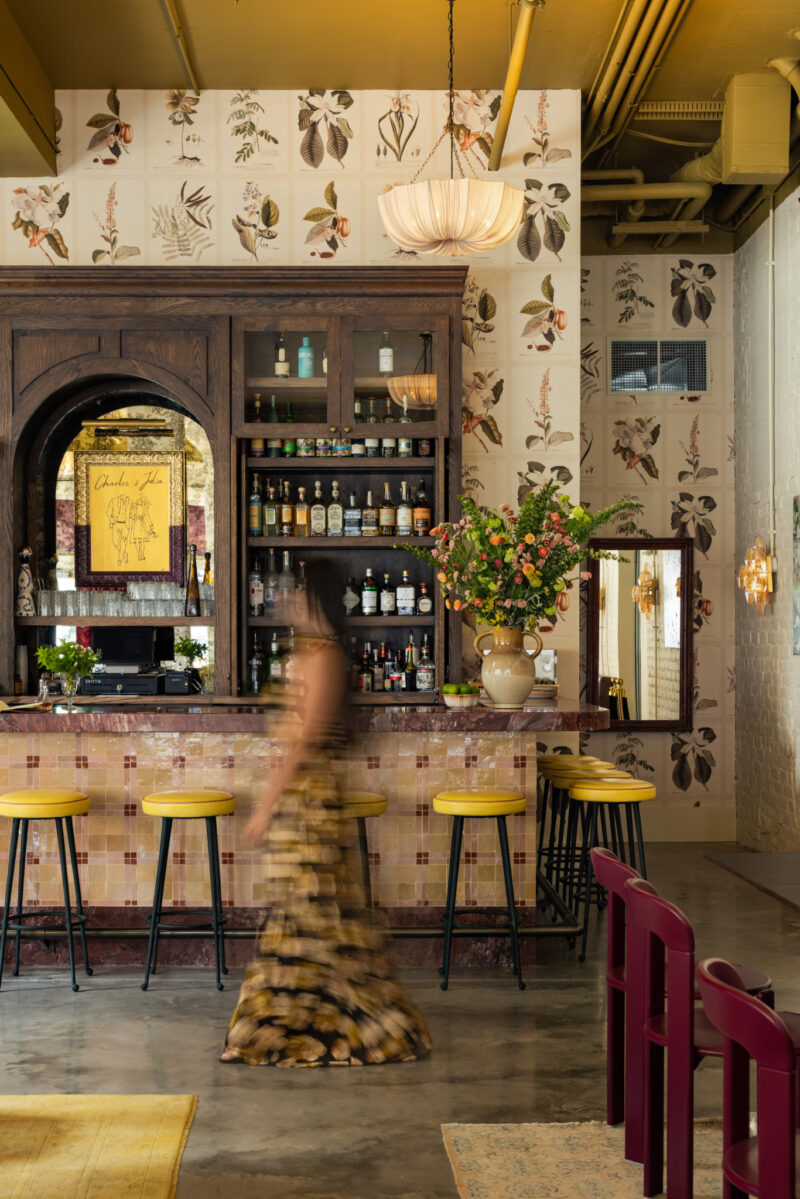
This "traveler’s aesthetic" is most evident in the wallpaper selections. The lounge features botanical patterns inspired by George Ehret’s Plantae Selectae, a landmark of 18th-century botanical illustration published in 1773. Ehret was one of the most influential botanical artists of all time, and his work represents a period of European history defined by scientific discovery and global exploration. By integrating these specific historical references, the design team creates a layer of intellectual depth that transcends standard floral motifs.
A Subversive Approach to New Orleans Color Palettes
New Orleans is a city defined by its vibrant and often loud color schemes, frequently influenced by the purple, green, and gold of Mardi Gras. Charles & Julia acknowledges this heritage but interprets it through a more restrained lens. The palette consists of muted chartreuse, deep aubergine, oxblood, and warm gold.
By desaturating these iconic colors, the designers have created a space that feels quintessentially "New Orleans" to a local resident but avoids the clichéd "Big Easy" imagery that often caters to tourists. This strategy aligns with a broader trend in boutique hospitality where "local" is defined by mood and craftsmanship rather than overt iconography.
The Rooftop Terrace: A Mediterranean Counterpoint
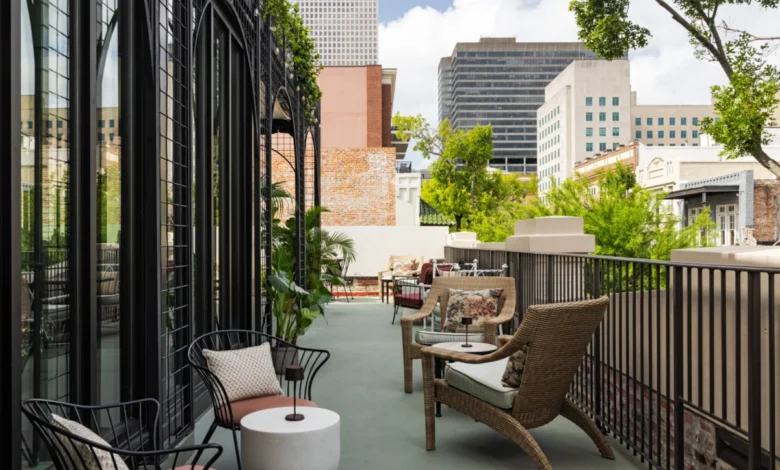
While the ground-floor lounge is designed to be enveloping and atmospheric, the rooftop terrace offers a complete shift in tone. Inspired by the landscapes of Sicily and Southern Europe, the upper level focuses on lightness and air.
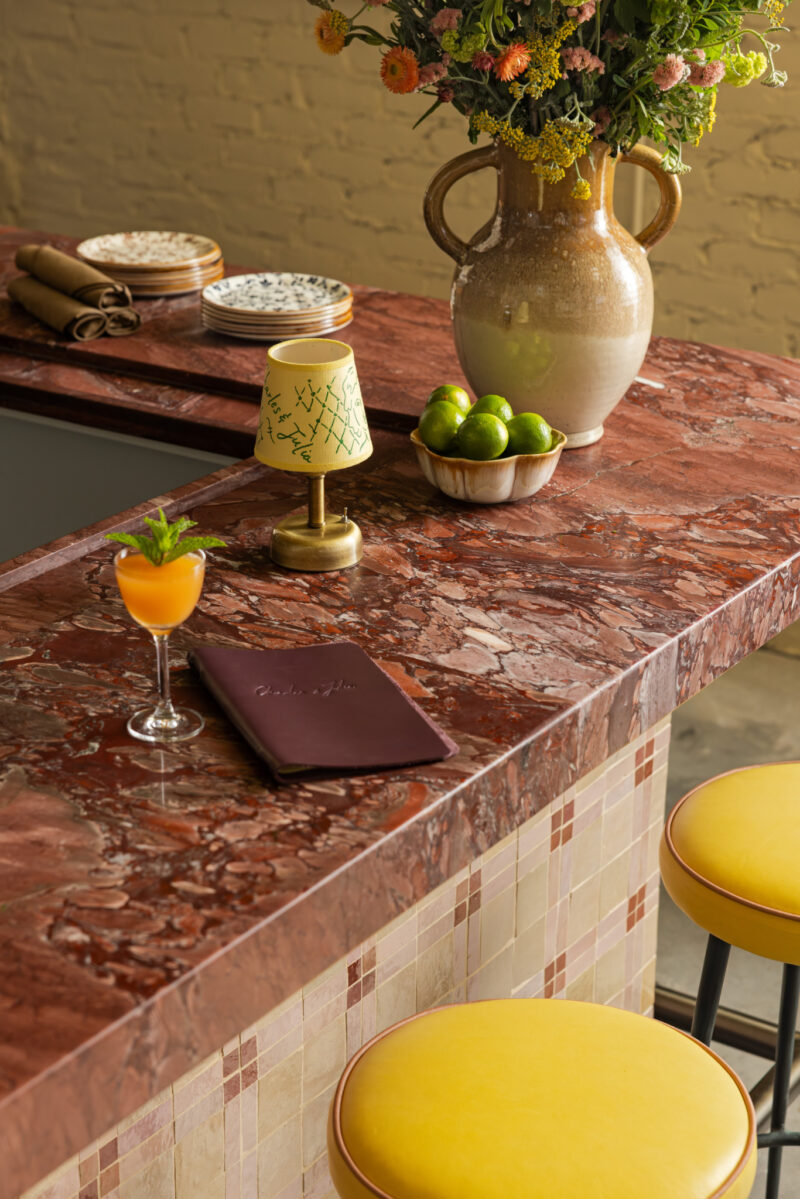
The rooftop design includes:
- Sculptural Iron Furnishings: Referencing the historic wrought-iron work of the French Quarter but with a modern, streamlined silhouette.
- Woven Textures: Utilizing rattan and wicker to introduce a relaxed, coastal sensibility.
- Lush Greenery: Curated by Luna Botanicals to create the feeling of an elevated garden.
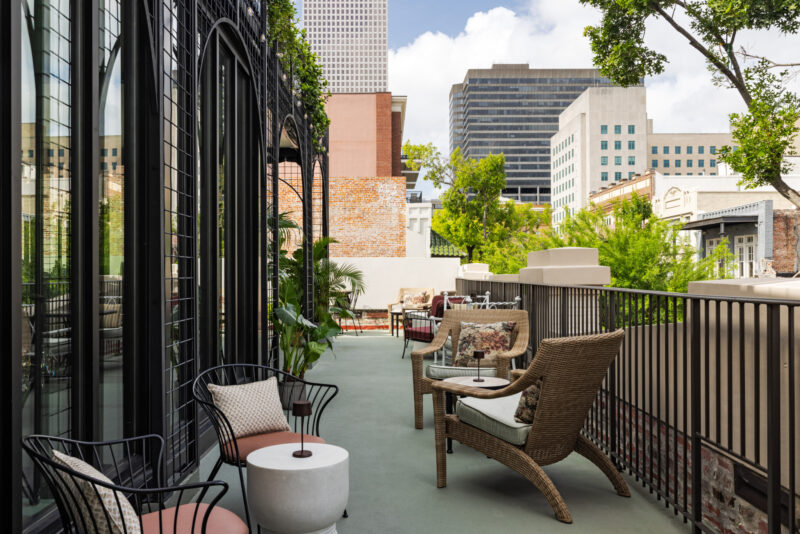
- Skyline Integration: The layout is oriented to maximize views of downtown New Orleans, positioning the terrace as a bridge between the historic building and the modern city.
This duality—intimate and dark on the ground floor, open and bright on the roof—allows Charles & Julia to function as a versatile destination suitable for different times of day and varying social contexts.
Collaboration with Local Artisans and Economic Impact
A critical component of the project’s success is its integration of New Orleans-based talent. In an era where many hotel interiors are outfitted with mass-produced items sourced globally, Charles & Julia stands out for its hyper-local collaborations. This not only supports the local creative economy but also ensures that the space has a unique "fingerprint" that cannot be replicated.
The project features contributions from several prominent local figures:
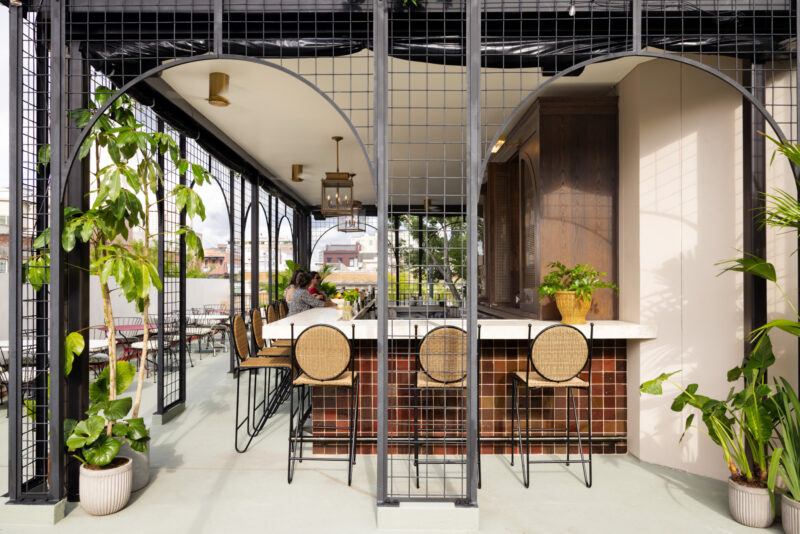
- Rachel Loyacono: Provided hand-painted lampshades that add a bespoke, artisanal touch to the lighting design.
- Original Artwork: The walls feature pieces by Tracy Mose, Jenn Leverett, and Casey Langteau, ensuring the visual art reflects the contemporary New Orleans art scene.
- Luna Botanicals: Responsible for the botanical installations that bridge the gap between the indoor and outdoor spaces.
- Local Fabricators: The custom upholstery and marble work were handled by local shops, maintaining a high standard of craftsmanship while reducing the carbon footprint associated with long-distance shipping.
This collaborative model is increasingly seen as a best practice in hospitality, as it creates a sense of community ownership and authenticity that resonates with modern consumers who value ethical and local sourcing.
Analysis of Hospitality Trends and Broader Implications
The development of Charles & Julia within Hotel Perle reflects several broader trends in the global hospitality industry. First is the continued popularity of adaptive reuse. Converting a 1916 car dealership into a luxury hotel bar preserves the city’s architectural history while revitalizing a commercial corridor. This is particularly relevant in New Orleans, where the preservation of the historic fabric is a central tenant of urban planning.
Second, the project highlights the "anti-trend" movement. By avoiding the minimalist "Instagrammable" aesthetic that dominated the 2010s—characterized by neon signs and white marble—Anna Nicole Interiors has created a space that is likely to age well. The use of high-quality, natural materials like oak, velvet, and stone ensures that the interior will develop a patina over time, further enhancing the "lived-in" feel.
Finally, the project signifies the evolution of New Orleans as a destination for sophisticated travelers. While the city will always be known for its festivals and nightlife, there is a growing market for quiet, high-concept spaces that offer a different pace of life. Charles & Julia caters to this demographic, providing a sanctuary that feels removed from the bustle of St. Charles Avenue while remaining deeply connected to the city’s soul.
Conclusion and Operational Information
Charles & Julia represents a successful intersection of historical preservation, narrative-driven design, and local artistic collaboration. By leveraging the industrial bones of the 1916 Stutz dealership and softening them with European residential sensibilities, the design team has created a venue that offers a sophisticated alternative to the traditional New Orleans bar experience.
The venue is now open daily to the public and guests of Hotel Perle. Located at 757 St. Charles Avenue, it serves as a cornerstone of the neighborhood’s ongoing cultural and architectural renaissance. As the hospitality industry continues to evolve, Charles & Julia stands as a case study in how restraint, quality materials, and a commitment to local craftsmanship can create a timeless and compelling destination.