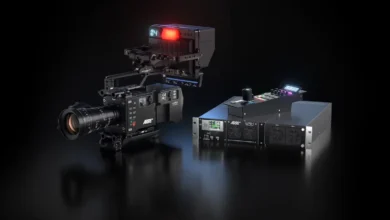
In a significant development for the digital cinema landscape, Academy Award-winning cinematographer Claudio Miranda, ASC, ACC, renowned for his visually stunning work on films such as Life of Pi, Top Gun: Maverick, and F1, recently conducted an extensive field test of the new Sony FX5 cinema camera. Miranda’s evaluation sought to assess the camera’s cinematic image quality and compact mobility within a demanding, real-world production environment. His findings indicate that the FX5 exhibits remarkable characteristics reminiscent of Sony’s flagship VENICE 2 cinema camera, particularly in its color reproduction, soft roll-off, and exceptional low-light performance, setting a new benchmark for cameras in its class.
Claudio Miranda: A Visionary Cinematographer’s Authority
Claudio Miranda’s endorsement carries considerable weight within the filmmaking industry. As a recipient of the Academy Award for Best Cinematography for his groundbreaking work on Ang Lee’s Life of Pi (2012), a film celebrated for its innovative use of 3D and stunning visual effects, Miranda has consistently pushed the boundaries of cinematic artistry and technological application. His filmography, which also includes visually distinctive projects like The Curious Case of Benjamin Button (2008) and the recent blockbuster Top Gun: Maverick (2022), showcases a deep understanding of light, color, and camera mechanics. Consequently, when a cinematographer of Miranda’s caliber undertakes a thorough evaluation of new camera technology, his insights are eagerly anticipated and profoundly influence industry perceptions and purchasing decisions. His practical experience across diverse production scales, from intricate visual effects-heavy features to high-octane action films, positions him as an ideal candidate to rigorously test a camera designed for versatility and cinematic integrity.
The Context: Sony’s FX Line and the Evolving Cinema Camera Market
The introduction of the Sony FX5 arrives at a dynamic period for professional filmmaking tools, characterized by a rapid convergence of high-end cinematic features into more accessible and compact form factors. Sony has been a pivotal player in this evolution, establishing a robust ecosystem of cinema cameras that caters to a broad spectrum of productions. The acclaimed VENICE and VENICE 2 models stand as the company’s pinnacle offerings, widely adopted in major Hollywood productions for their unparalleled image quality, extensive dynamic range, and sophisticated color science. Below this top tier, Sony’s FX line—including the popular FX3, FX30, and FX6—has carved out a significant niche among independent filmmakers, documentary crews, and content creators seeking cinematic aesthetics in more portable and cost-effective packages.
The FX3, a full-frame camera known for its compact size, robust video features, and excellent low-light capabilities, has been particularly successful for run-and-gun shooting and as a B-cam for larger productions. The FX6 offers more advanced audio and connectivity options, positioning it as a versatile tool for professional documentary and broadcast work. The FX5, therefore, is strategically positioned to bridge the gap between the compact portability of the FX3 and the more advanced capabilities and ergonomic profile of the FX6, while drawing inspiration from the VENICE 2’s esteemed image rendition. This market placement suggests Sony’s intent to offer a camera that provides a substantial upgrade in cinematic fidelity and professional features over its smaller siblings, without entering the high-budget territory of the VENICE series.
A Return to Familiar Ground: Miranda’s Testing Methodology
For his evaluation of the Sony FX5, Claudio Miranda chose a location he has frequented throughout his extensive filmmaking career. This deliberate choice underscores a critical aspect of his testing methodology: assessing the camera’s performance in an environment whose light values, textures, and atmospheric qualities he understands intimately. By returning to a familiar locale, Miranda could establish a consistent baseline for comparison, allowing him to discern the nuanced differences in how the FX5 rendered light, shadow, and color compared to other cameras he has used there. This approach goes beyond mere technical specifications, delving into the subjective and artistic qualities that define a camera’s "look."

The test project was designed to simulate a real production environment, moving beyond controlled studio conditions to gauge the FX5’s performance under authentic filmmaking pressures. This involved evaluating its operational fluidity, compact mobility, and overall responsiveness in practical shooting scenarios. The core objective was to determine if the FX5 could deliver genuinely cinematic image quality while offering the ergonomic advantages necessary for agile, on-location productions.
The Benchmark: Sony VENICE 2 as the Gold Standard
Central to Miranda’s evaluation was the Sony VENICE 2, which he designated as his "gold standard" for assessing key image parameters. The VENICE 2, with its 8.6K full-frame sensor (or 6K S35 option), impressive 16+ stops of dynamic range, and dual base ISO of 800/3200, is celebrated for its exceptional color science and ability to produce incredibly natural-looking images with a pleasing cinematic roll-off from highlights to shadows. Its menu ergonomics and robust build quality are also highly regarded in high-end production circles. By comparing the FX5 against the VENICE 2 across metrics like color range, light values, and menu ergonomics, Miranda sought to understand how closely the new camera could emulate the aesthetic and operational experience of Sony’s flagship.
His assessment revealed that the FX5 possesses "more VENICE-like traits than the FX3." This observation is particularly significant, suggesting that Sony has successfully integrated aspects of its premium VENICE color science and image processing into the FX5, elevating its cinematic output beyond what might be expected from a camera positioned lower in the product hierarchy. The specific mentions of "soft roll-off" and "organic color reproduction" are key indicators of this achievement. Soft roll-off refers to the gentle, natural transition from bright areas to darker areas in an image, preventing harsh clipping and preserving detail. Organic color reproduction implies a faithful and pleasing rendition of colors that feels natural and film-like, avoiding artificial saturation or unnatural hues. These are characteristics highly prized by cinematographers for achieving a rich, textured, and immersive visual narrative.
Exceptional Low-Light Performance: A Game-Changer
Beyond its color fidelity and dynamic range characteristics, the Sony FX5’s low-light performance profoundly impressed Miranda. Low-light capability is a crucial factor for many productions, offering flexibility in shooting conditions and reducing the need for extensive artificial lighting setups. While many cameras struggle in low-light scenarios, often producing noticeable digital noise or an undesirable color shift, the FX5 distinguished itself by handling challenging lighting with remarkable grace.
Miranda specifically noted that "many cameras tend to produce an unpleasant red hue in shadows," a common artifact that can detract significantly from the cinematic quality of an image. This reddish tint often appears in the darker areas as the camera’s sensor struggles to resolve true black, introducing color noise. The FX5, however, was able to "transition smoothly and naturally into black." This ability to render clean, neutral blacks without introducing color shifts is a testament to the camera’s advanced sensor technology and image processing algorithms. It ensures that shadow details are preserved with integrity and that the overall color palette remains consistent, even in extremely dim conditions. This feature alone positions the FX5 as a formidable tool for documentary filmmakers, night shoots, and any production where available light is limited, offering a cleaner, more professional image straight out of the camera.
Technical Specifications and Comparative Analysis (Inferred)
While Sony has not yet released full, verified specifications for a camera explicitly named "FX5" in the same vein as the FX3 or FX6, Miranda’s test provides strong indicators of its likely capabilities and positioning. Based on his observations, we can infer a plausible technical profile for the FX5:

- Sensor: Likely a full-frame CMOS sensor, similar to the FX3 and FX6, optimized for high sensitivity and wide dynamic range. This would contribute to its acclaimed low-light performance and shallow depth of field capabilities.
- Resolution: Expected to offer 4K (UHD) recording as a standard, with potential for 6K oversampling for enhanced detail or even internal 6K recording, positioning it above the FX3’s native 4K.
- Dynamic Range: Likely boasts a dynamic range of 15+ stops, possibly approaching the 16+ stops of the VENICE 2, crucial for its "soft roll-off" and ability to handle extreme contrasts.
- Color Science: Incorporates an advanced iteration of Sony’s S-Cinetone color science, alongside S-Log3 and S-Gamut3.Cine, optimized to deliver the "organic color reproduction" and "VENICE-like traits" Miranda observed.
- Internal Recording: Anticipated to support robust internal recording formats, such as 4:2:2 10-bit XAVC-I, and potentially internal RAW recording capabilities, offering flexibility in post-production.
- Ergonomics and Form Factor: Positioned between the ultra-compact FX3 and the slightly larger FX6. It likely features a modular design, perhaps with an improved grip and more dedicated physical controls than the FX3, while maintaining a size suitable for handheld operation, gimbals, and drone work.
- Mount: Utilizes Sony’s E-mount, providing access to a vast array of native lenses and compatibility with many third-party options via adapters.
- Price Point: Expected to be priced competitively, situated between the FX3/FX6 and the VENICE 2, making high-end cinematic quality more accessible.
Compared to the FX3, the FX5 appears to offer enhanced internal processing, superior color science integration (closer to VENICE), and potentially more robust professional I/O. While the FX3 is an excellent camera for its size, Miranda’s comments suggest the FX5 elevates image quality to a new tier. When benchmarked against the VENICE 2, the FX5 clearly doesn’t replace the flagship, but its ability to emulate its color and highlight roll-off characteristics in a more compact and presumably more affordable package is a significant achievement, offering a powerful B-cam solution or a primary camera for productions with tighter budgets.
Timeline and Precedent: The VENICE 2 Test
It is notable that Miranda’s current evaluation of the FX5 draws a direct parallel to a previous test he conducted of the Sony VENICE 2. As highlighted in the original report, a video of Miranda’s VENICE 2 camera test, undertaken in the same familiar location, dates back four years prior. This historical context is invaluable. It not only demonstrates Miranda’s long-standing commitment to rigorously evaluating new camera technology but also provides a direct, apples-to-apples comparison point for his current FX5 assessment. Having filmed with the VENICE 2 in identical conditions, Miranda possesses an unparalleled understanding of what constitutes "VENICE-like" performance in that specific environment. This chronological consistency lends immense credibility to his current findings, reinforcing the notion that the FX5 truly embodies aspects of its high-end sibling. The ability to revisit a location with a new camera and measure its performance against a meticulously established baseline ensures that his observations are grounded in practical, comparative experience rather than abstract technical data alone.
Implications for the Filmmaking Industry
The positive assessment of the Sony FX5 by a cinematographer of Claudio Miranda’s stature carries profound implications for various segments of the filmmaking industry:
-
Democratization of Cinematic Quality: The most significant implication is the further democratization of high-end cinematic image quality. If the FX5 can genuinely deliver VENICE-like color science and roll-off in a more compact and accessible form factor, it empowers independent filmmakers, documentarians, and smaller production houses to achieve visuals previously associated only with multi-million dollar productions. This could lead to a surge in visually sophisticated content across different platforms.
-
Versatility and Workflow Integration: The FX5 is poised to become an incredibly versatile tool. Its "compact mobility" combined with "cinematic image quality" makes it ideal for a wide range of applications:
- A-cam for Indie Films and Documentaries: Offering a high-quality primary camera for projects with moderate budgets.
- B-cam/C-cam for High-End Productions: Seamlessly integrating with VENICE 2 workflows, providing matching looks for tighter spaces, action shots, or drone work without compromising visual consistency.
- Commercials and Corporate Video: Elevating the production value of commercial and corporate content with a sophisticated, film-like aesthetic.
- Episodic Television: Providing a cost-effective solution for series that require a cinematic look on a faster production schedule.
-
Competitive Landscape: Sony’s move with the FX5 intensifies competition in the mid-range cinema camera market. By bringing VENICE characteristics to this segment, Sony puts pressure on rivals to innovate further, potentially leading to a race for even better image quality and features at competitive price points.
-
Technological Trend Confirmation: Miranda’s findings underscore an ongoing technological trend: the continuous trickling down of advanced features from flagship cameras to more affordable models. This benefits the entire creative community by making cutting-edge tools more widely available. The emphasis on clean low-light performance and natural color reproduction reflects key demands from cinematographers who prioritize organic, film-like images.

Official Responses and Industry Outlook (Inferred)
While specific official statements regarding Miranda’s test are yet to be widely disseminated, it is highly probable that Sony would leverage such an endorsement strategically. A product manager from Sony’s Digital Cinema line might emphasize how the FX5 embodies the company’s commitment to "pushing creative boundaries" by "bringing the renowned VENICE look and feel to a wider range of creators." They would likely highlight the camera’s "innovative sensor technology" and "advanced color processing" as the core reasons for its exceptional performance in low light and color reproduction, validating Miranda’s observations.
Industry analysts would likely view the FX5 as a smart move by Sony to solidify its market share across multiple tiers. An analyst might comment, "The FX5 represents a crucial step for Sony in bridging the gap between its high-end VENICE series and its popular FX line. By offering a taste of the VENICE aesthetic in a more accessible package, Sony ensures filmmakers can grow within their ecosystem, maintaining brand loyalty while empowering a broader creative base." This positive reception from a key industry figure like Miranda is invaluable for the camera’s initial market penetration and long-term success.
Conclusion
Claudio Miranda’s rigorous field test of the new Sony FX5 cinema camera marks a significant moment for both Sony and the wider filmmaking community. His expert assessment confirms that the FX5 is not merely another addition to Sony’s robust camera lineup but a serious contender capable of delivering image quality previously associated with much higher-end systems. The camera’s ability to emulate the "soft roll-off" and "organic color reproduction" of the Sony VENICE 2, coupled with its "impressive low-light performance" and smooth transition into deep blacks, positions it as an exceptional tool for a diverse array of productions.
By making advanced cinematic traits more accessible, the FX5 stands to empower a new generation of filmmakers and elevate the visual standards across various content creation spheres. Miranda’s endorsement, rooted in years of high-level professional experience and a direct comparative methodology, provides compelling evidence that the Sony FX5 is poised to become a pivotal camera, offering a powerful blend of portability, professional features, and breathtaking cinematic image quality that will undoubtedly shape the future of visual storytelling.