The Genesis of the Super*Saw Project
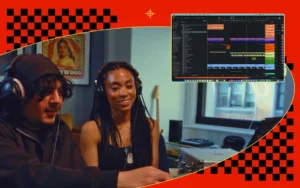
The development of Super*Saw was not an overnight endeavor; rather, it was the culmination of a rigorous two-year collaboration between A. G. Cook and the Native Instruments design team. The project began with an extensive analysis of Cook’s existing production sessions and custom-built patches. Historically, the "supersaw" sound—a thick, detuned wall of sawtooth waves—has been a staple of electronic music since the mid-1990s. However, achieving the specific, modern sheen found in Cook’s work often required producers to use multiple instances of various synthesizers, intricate automation lanes, and complex signal routing within a Digital Audio Workstation (DAW).

The primary objective of this collaboration was to consolidate these disparate elements into a single, cohesive interface. By studying how Cook layers sounds and manipulates pitch and phase, the engineering team at Native Instruments sought to create an engine that could replicate these results with significantly less friction. This "workflow-first" approach is intended to cater to both professional sound designers looking for efficiency and bedroom producers seeking to emulate the polished, maximalist aesthetic of the "hyperpop" movement.
Technical Architecture: Dual Oscillator Banks and Beyond
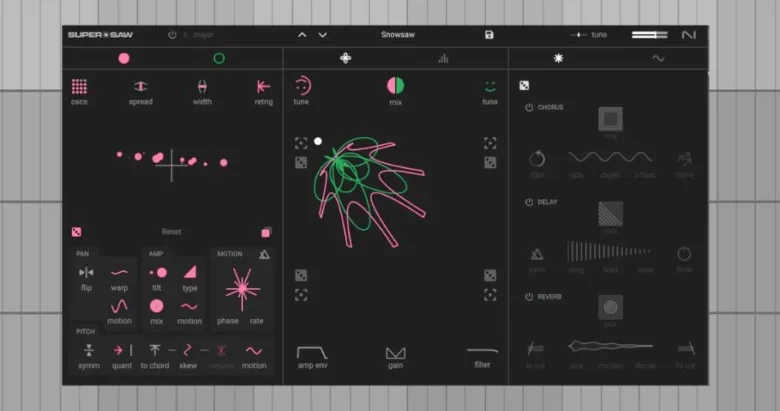
At its core, Super*Saw is built upon a sophisticated dual-oscillator architecture. Each of the two independent oscillator banks is capable of generating up to 16 sawtooth waves simultaneously. In total, a single instance of the plugin can output 32 saw waves, providing the massive, "super" sound that gives the instrument its name.

The science behind the supersaw sound involves the layering of these waves while introducing minute variations in tuning, phase, level, and stereo positioning. When multiple saw waves are slightly detuned against one another, they create a thick, beating effect that translates to a sense of sonic power and width. Super*Saw automates much of this complexity, allowing users to control the "spread" and "detune" of these waves through intuitive macro controls. While the supersaw sound has its roots in the 1990s trance and rave scenes—most famously associated with the Roland JP-8000 hardware synthesizer—Cook’s implementation focuses on its application within contemporary electronic pop, where it is often used for bright, aggressive leads and shimmering harmonic pads.
Innovation in Performance: The X/Y Morpher
One of the standout features of Super*Saw is the four-corner X/Y Morpher. This performance-oriented control allows users to store four distinct patch states within a single preset. By moving a cursor across the X/Y grid, the user can transition continuously between these four states, effectively morphing dozens of parameters at once.

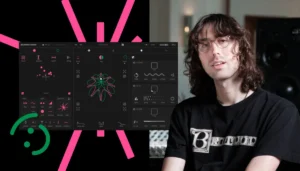
This design is a departure from traditional synthesizer workflows that rely heavily on static presets or individual automation of filter cutoffs and envelope times. In a live performance or a dynamic studio session, the Morpher allows for the creation of evolving textures that feel organic and reactive. The visual identity of this interface, along with the specific mechanics of the Morpher, was developed in collaboration with Simon Whybray, a long-term visual collaborator of A. G. Cook. This ensures that the plugin’s aesthetic matches the "digital-first" and often surrealist visual language associated with the PC Music label.
Harmonic Tools and Sound Shaping
Beyond its oscillator engine, Super*Saw includes a suite of harmonic tools designed to keep the user’s output musically coherent. These include:

- Chord and Scale Functions: Users can select a specific scale or chord structure, ensuring that any note played on a MIDI controller is automatically corrected to fit the chosen harmonic framework. This is particularly useful for producers who may not have extensive formal training in music theory but wish to create complex, polyphonic arrangements.
- Quantization and Controlled Dissonance: While the plugin offers tools for perfect harmony, it also allows for controlled deviations. Users can introduce "dissonance" parameters to create the slightly unstable, "glitchy" textures that are a hallmark of experimental pop.
- Per-Voice Controls: The instrument provides deep adjustment options for per-voice glide and offset. This allows for precise control over how pitch moves between notes and how the sound is distributed across the stereo field, preventing the dense layers of saw waves from becoming a muddy or mono-centered mess.
The interface is strategically divided into three main areas: oscillator settings, morphing/modulation, and effects. This layout is designed to prevent "menu diving," keeping the most critical controls on the front panel for immediate access.
Presets and Internal Processing
To demonstrate the versatility of the engine, Super*Saw ships with a diverse library of factory presets. These sounds cover a broad spectrum of electronic music needs, including:

- Sustained Harmonies and Pads: Large, atmospheric sounds that fill the frequency spectrum.
- Metallic and Industrial Textures: Harsh, biting sounds that utilize the inherent aggression of the sawtooth wave.
- Lead Sounds and Pitch Glides: Optimized for monophonic melodies that need to cut through a dense mix.
- Stacked Chords: Pre-configured polyphonic settings that allow for the creation of "walls of sound" with a single key press.
The internal effects chain further enhances these sounds. It includes classic modulation effects like chorus, as well as spatial effects like delay and reverb. The filter section is equally robust, offering low-pass, band-pass, and high-pass options with selectable two-pole or four-pole slopes. This filtering is essential for shaping the raw energy of the oscillators into usable musical elements.
Hardware Integration and Ecosystem
Native Instruments has ensured that Super*Saw is fully integrated into its broader ecosystem. The plugin features NKS (Native Kontrol Standard) support, meaning it is pre-mapped for use with Komplete Kontrol keyboards and Maschine hardware. This integration allows producers to control the synth’s parameters directly from physical knobs and encoders, further bridging the gap between software flexibility and hardware tactility.

This move is part of a larger trend within the company to provide "plug-and-play" experiences for its users. By ensuring that the X/Y Morpher and primary oscillator controls are automatically mapped to hardware, Native Instruments encourages a more performative approach to sound design.
Market Analysis and Broader Implications
The release of SuperSaw at a price point of $99 (€99) positions it as a competitive entry in the high-end soft synth market. While there are many multi-purpose synthesizers available, the industry is seeing a shift toward "specialized" or "signature" tools. SuperSaw does not attempt to be an all-in-one workstation; instead, it focuses on doing one specific thing—the supersaw—better and more efficiently than general-purpose plugins.

This release also highlights the growing influence of "producer-celebrities" in the software development space. By branding the synth with A. G. Cook’s name, Native Instruments is tapping into a dedicated fanbase and a specific sub-genre of music that has been highly influential in the last decade. From a market perspective, this collaboration serves as a bridge between the traditional world of professional audio engineering and the fast-moving, trend-driven world of modern pop production.
The "hyperpop" aesthetic, characterized by its bright colors, digital textures, and exaggerated pop tropes, has moved from the fringes of the internet to the center of global music charts. Tools like Super*Saw democratize the production techniques behind this sound, making it possible for a new generation of creators to achieve professional-grade results without needing years of experience in complex signal routing.

Chronology of the Supersaw Sound
To understand the impact of Super*Saw, one must look at the timeline of its core sound:
- 1996: Roland releases the JP-8000, introducing the "Super Saw" oscillator to the world. It becomes the defining sound of Dutch and German Trance.
- Early 2000s: The sound migrates into Hardstyle and mainstream Dance music.
- 2013: A. G. Cook founds PC Music, beginning a decade-long process of deconstructing and re-contextualizing "cheesy" rave sounds into high-concept pop art.
- 2020-2024: Artists like Charli xcx and Beyoncé incorporate these hyper-digital textures into Grammy-winning albums, cementing the supersaw’s place in the modern pop canon.
- July 2026: Native Instruments releases Super*Saw, formalizing Cook’s specific "layered" approach into a commercial software product.
Industry Reaction and Future Outlook
Early reactions from the production community suggest that Super*Saw will be welcomed for its specific focus. Industry analysts note that as DAWs become more crowded with features, many producers are looking for "single-purpose" plugins that offer a distinct character and a fast path to a finished sound.

The collaboration also signals a potential future for Native Instruments where more "Artist Series" instruments are developed. Following the success of previous collaborations, SuperSaw represents a model where the unique "DNA" of a specific producer is encoded into software. As the boundaries between music production and software development continue to blur, products like SuperSaw are likely to become the standard for how signature sounds are shared and evolved within the global creative community.
Super*Saw is available for purchase and download starting today via the Native Instruments website and authorized retailers. Its release marks a new chapter for the company, one that celebrates the maximalist, digital energy of one of the 21st century’s most influential producers.
Related posts: