Zplane Launches PEEL STEMS 2 Featuring Significant Latency Reductions and Enhanced Real-Time AI Stem Separation Technology

Berlin-based audio technology pioneer zplane development has officially announced the release of PEEL STEMS 2, marking a substantial leap forward for its real-time audio isolation and spectral processing software. This update represents more than a mere incremental version change; it introduces a completely overhauled separation engine designed to address the primary friction points of modern stem separation—latency and audio fidelity. By cutting processing delay nearly in half and refining the underlying neural network algorithms, zplane aims to transition stem separation from a preparatory "offline" task into a fluid, creative component of the active mixing and arrangement process.

The release comes at a time when stem separation technology has become a cornerstone of modern music production, driven by the increasing demand for high-quality sampling, remixing, and forensic audio restoration. While many existing solutions rely on cloud-based processing or time-consuming offline rendering, PEEL STEMS 2 distinguishes itself by maintaining a strictly local, real-time workflow within the Digital Audio Workstation (DAW).
Technical Breakthroughs in Latency and Performance
The most significant technical achievement in PEEL STEMS 2 is the drastic reduction in operational latency. In the realm of real-time audio plugins, latency—the delay between an audio signal entering a processor and exiting it—is a critical factor for usability. In the previous iteration of the software, the processing delay was measured at 483 milliseconds at a standard sample rate of 44.1 kHz. For many producers, a delay of nearly half a second makes it difficult to audition changes in the context of a moving playhead.

With the launch of version 2, zplane has successfully reduced this latency to 245 milliseconds at 44.1 kHz. While this still requires DAW latency compensation, the reduction makes the plugin significantly more responsive during the creative phase of production. The company has also maintained support for legacy hardware, noting that Intel-based Mac systems will operate with a stated latency of 385 milliseconds. This performance boost is attributed to optimizations in how the plugin handles spectral data and the efficiency of the updated separation engine.
By lowering the barrier of delay, zplane enables engineers to use PEEL STEMS 2 as a "live" insert. This allows for the isolation of vocals, drums, or bass lines while the track is playing, facilitating immediate decision-making regarding EQ, spatial placement, and dynamic processing of individual elements that were previously locked within a stereo file.

Enhanced Audio Fidelity and the Separation Engine
Beyond speed, the quality of the "un-mixing" process has seen a measurable upgrade. Stem separation often suffers from "spectral smearing" or "watery" artifacts—unwanted digital noise that occurs when the AI fails to cleanly distinguish between overlapping frequencies, such as a vocal resonance and a snare drum hit.
zplane’s updated proprietary engine utilizes advanced machine learning models trained to recognize the distinct harmonic signatures of four primary categories: Vocals, Drums, Bass, and "Other" (which typically encompasses melodic instruments like guitars, synths, and pianos). The company claims that PEEL STEMS 2 delivers cleaner results with fewer artifacts, particularly in the high-frequency range where cymbals and vocal sibilance often clash.

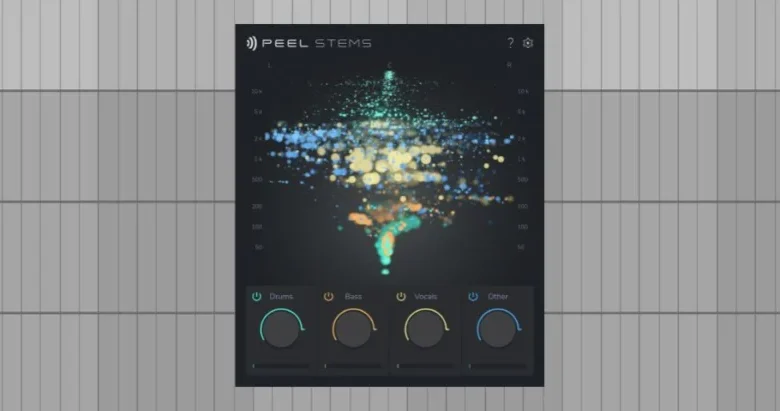
The plugin also retains its signature spectral visualization. Unlike many "black box" stem separators that offer only a few buttons, PEEL STEMS 2 provides a visual representation of the audio signal. Users can see the stereo field and frequency spectrum simultaneously, allowing them to use the "Focus EQ" and "Focus Frame" to manually narrow down the area of isolation. This hybrid approach—combining automated AI separation with manual spectral filtering—gives the user a level of surgical control that is rare in the current market.
Redesigned User Interface and Workflow Features
The visual identity of PEEL STEMS 2 has been completely reimagined to support a faster professional workflow. The graphical user interface (GUI) now features a more intuitive color-coding system for different stems, making it easier for users to identify which components are being soloed or muted at a glance.

Key updates to the interface include:
- Focus EQ Focus Frame: This tool now explicitly displays upper and lower cut-off frequencies, allowing for precise technical adjustments during the isolation process.
- Enhanced Isolation Slider: The slider used to determine the "depth" of the separation has been granted a broader control range, enabling users to find a more natural balance between a completely isolated stem and a subtle reduction of background elements.
- Central Spectral Display: A high-resolution visualizer that provides real-time feedback on the stereo width and frequency content of the incoming signal.
The plugin is designed to fit seamlessly into professional environments, supporting VST3, AU, and AAX formats. This ensures compatibility with all major DAWs, including Ableton Live, Logic Pro, Pro Tools, FL Studio, and Cubase.

Security and the Importance of Local Processing
A pivotal feature of PEEL STEMS 2 is its commitment to local processing. In recent years, several high-profile stem separation services have moved to a cloud-based model, requiring users to upload their audio files to a remote server for processing. While this offloads the CPU burden, it introduces significant concerns regarding data privacy and intellectual property.
For professional mixing engineers and labels working with unreleased material or high-profile artist masters, uploading audio to the cloud represents a potential security risk. zplane’s decision to keep all processing on the user’s local machine ensures that sensitive audio data never leaves the studio environment. This "offline-capable" real-time approach is increasingly favored by the film and television post-production industry, where strict non-disclosure agreements (NDAs) are the standard.

Chronology of zplane and the Evolution of PEEL
To understand the significance of this release, it is helpful to look at the history of zplane development. Founded in Berlin in 2000, the company has long been regarded as one of the industry’s premier providers of digital signal processing (DSP) algorithms. Their "elastique" time-stretching engine is considered a global standard, licensed by nearly every major DAW manufacturer to handle pitch shifting and tempo manipulation.
The original PEEL plugin was initially conceived as a spectral "iso-box" that allowed users to "reach into" a stereo mix and pull out specific sounds based on their position in the stereo field and frequency range. As AI-driven stem separation became viable, zplane integrated these neural networks into the PEEL workflow, resulting in the first version of PEEL STEMS. Version 2 represents the culmination of two decades of DSP expertise and the latest advancements in machine learning, merging manual spectral editing with automated instrument separation.

Official Statements and Industry Impact
Tim Flohrer, Co-Founder and CTO of zplane, emphasized the company’s focus on the producer’s experience during the launch. "With PEEL STEMS 2, we wanted to push real-time stem separation within DAW-native workflows further," Flohrer stated. "With significantly reduced latency and improved audio quality, PEEL STEMS 2 represents a major step forward in stem separation technology."
The implications of this technology extend beyond simple remixing. In the world of music education, PEEL STEMS 2 allows students to isolate parts of complex orchestral or jazz recordings to study specific performances. In the world of broadcast, it provides a quick way to dip the level of a musical background to make a voice-over more intelligible without having access to the original multitrack session.

Market analysts suggest that the real-time nature of PEEL STEMS 2 could also influence the live performance sector. DJs and electronic musicians using laptops on stage can theoretically use the plugin to create "on-the-fly" acapellas or drum loops from tracks that were never released as stems, provided their systems can handle the 245ms buffer requirements.
Analysis of the Competitive Landscape
The release of PEEL STEMS 2 places zplane in direct competition with other industry giants. iZotope’s RX series and Steinberg’s SpectraLayers both offer powerful stem separation, but they are often viewed as "repair" tools that operate outside of the immediate creative flow. Similarly, Serato Stems has revolutionized the DJ world, but it lacks the spectral "Focus EQ" controls found in PEEL STEMS 2.

zplane’s advantage lies in its specialized focus. By providing a dedicated plugin that does one thing—real-time separation and spectral isolation—with a high degree of transparency and low latency, they cater to the "prosumer" and professional market that values workflow speed and local security over the all-in-one suite approach.
Pricing, Availability, and Upgrades
PEEL STEMS 2 is available now through the zplane website and authorized retailers. The full version is priced at €59, positioning it as an affordable entry point for producers looking for professional-grade separation. In a move welcomed by the existing user base, zplane is offering an upgrade path for owners of PEEL STEMS version 1 for a reduced price of €19.

For those hesitant to commit, the company has provided a free trial version, allowing users to test the latency and separation quality on their specific hardware configurations. As audio production continues to move toward AI-assisted workflows, PEEL STEMS 2 stands as a robust example of how these technologies can be integrated into the traditional DAW environment without sacrificing user control or data privacy.
Related posts: