Nordic Knots The Grand Open Collection Translates the Aesthetic of the Tennis Court into High-End Interior Design

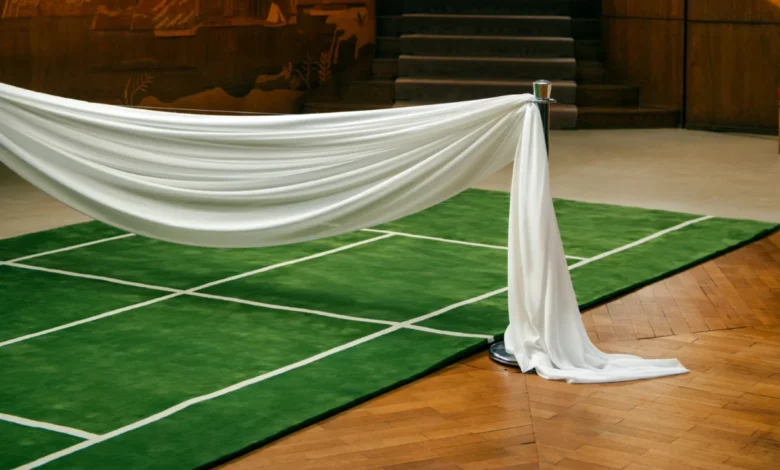
The Swedish design house Nordic Knots has officially unveiled its latest endeavor in textile innovation, titled The Grand Open Collection. This series of high-end rugs represents a sophisticated intersection between professional sports aesthetics and contemporary interior design, specifically drawing inspiration from the geometric precision and textural nuances of tennis courts. Launched during a summer punctuated by significant global sporting events, including the Wimbledon Championships and the World Cup, the collection seeks to bring the "visual language" of the court—its sharp boundary lines and specific surface textures—into the domestic sphere.
By translating the traditional grass and clay playing surfaces into graphic floor coverings, Nordic Knots has tapped into a growing cultural fascination with "tenniscore," a trend that has permeated fashion and is now making a definitive mark on home decor. The collection is characterized by its minimalist yet evocative use of color and line, offering homeowners a way to incorporate the aspirational quality of elite sports environments without the literalism of sports memorabilia.
The Intersection of Sport and Domestic Space
The Grand Open Collection arrives at a time when the boundaries between public lifestyle and private interiority are increasingly blurred. Tennis, often cited as one of the most visually distinct sports due to its rigid geometry and color-blocked environments, provides a fertile ground for designers. The collection specifically references the two most iconic surfaces of the sport: the lush green of grass courts, synonymous with the prestige of Wimbledon, and the deep hues of clay courts.
Nordic Knots has chosen to interpret these surfaces through a lens of high-end craftsmanship. The rugs are not merely green or blue rectangles; they are designed to replicate the specific "feel" of a court. The grass-variant features a vibrant green field bisected by clean, white geometric lines that mimic the boundaries of a tennis court. For those seeking a different palette, the collection also includes a blue clay court variant, offering a cooler, more contemporary alternative to the traditional red clay often seen in European tournaments.
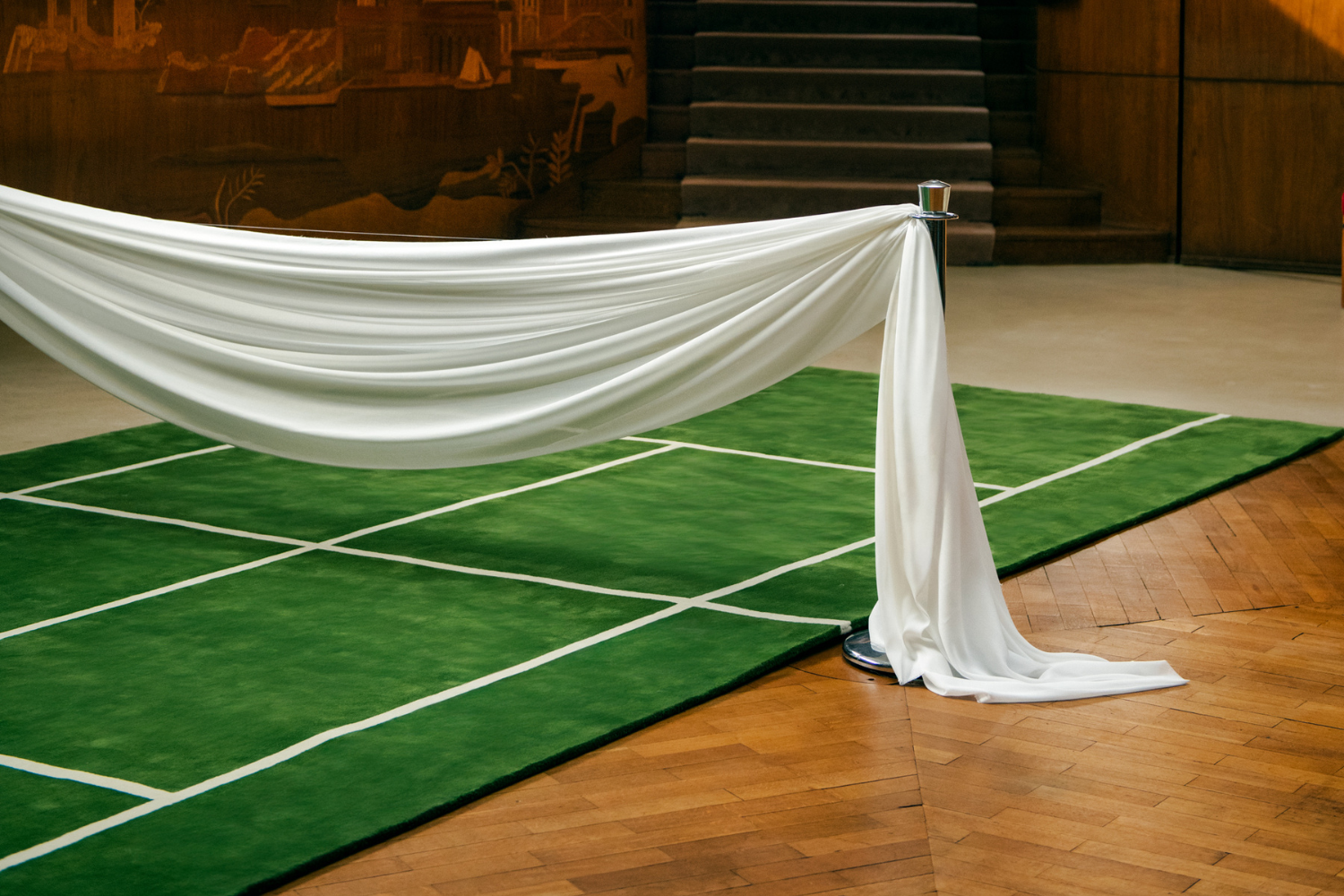
The visual simplicity of the designs is intentional. By avoiding gimmicky details or overly literal depictions, the rugs function as versatile design elements. They provide a sense of "delimited outdoor space" within the home, creating a structural anchor for furniture while maintaining a sense of playfulness and athletic rigor.
Architectural Context: The Eltham Palace Connection
To showcase the collection, Nordic Knots chose the historic Eltham Palace in southeast London as the backdrop for its campaign. This choice was not merely aesthetic but deeply rooted in design history and national synergy. Eltham Palace is a unique architectural landmark, blending a medieval Great Hall with a 1930s Art Deco interior.
The connection to the Swedish brand is further solidified by the palace’s history. The 1930s additions to Eltham Palace were designed by the Swedish architect Rolf Engströmer. His work at the palace, particularly the elaborate intarsia woodworking and marquetry, represents the pinnacle of Swedish craftsmanship from that era. By placing the Grand Open rugs within these halls, Nordic Knots draws a direct line between the historic excellence of Swedish design and their modern textile production.
The contrast between the rugs’ minimalist geometry and the palace’s ornate Art Deco surroundings—such as the circular entrance hall and the intricate wood-paneled walls—highlights the versatility of the collection. It demonstrates that while the rugs are inspired by the outdoors, they possess a refined quality that complements even the most sophisticated and historically significant interiors. The presence of the rugs in such a setting suggests that the "Grand Open" is as much about architectural heritage as it is about athletic inspiration.
Technical Specifications and Materiality
The allure of the Grand Open Collection lies heavily in its material composition and the technical precision of its manufacturing. Each rug is crafted from 100 percent New Zealand wool, a material prized in the textile industry for its durability, softness, and ability to hold vibrant dyes.

The construction utilizes a hand-loomed, cut-pile technique. With a pile thickness of 14mm, the rugs offer a substantial tactile experience. This specific thickness is more than a comfort choice; it is a design tool used to replicate the textural shifts found on a professional court. The subtle tonal variations in the wool mimic the way light hits a closely shorn grass field or the way a clay surface appears after being meticulously brushed.
This attention to "textural narrative" is a hallmark of Nordic Knots’ approach. The brand has expanded the release to include a limited run of branded tennis rackets and balls, reinforcing the collection’s identity as a comprehensive lifestyle statement rather than a standalone product. This move signals a commitment to the "narrative of the release," ensuring that every touchpoint of the collection reinforces the theme of the "Grand Open."
The Rise of Representational and Pictorial Rugs
The Grand Open Collection is part of a broader shift in the interior design industry regarding the role of the rug. Traditionally, rugs served as neutral foundations or abstract patterns intended to ground a room. However, in recent years, designers have begun to treat the rug as a "floor canvas," utilizing the medium for pictorial and representational art.
This trend involves taking art "down from the wall" and placing it underfoot. Designers are increasingly using rugs to depict specific environments or to create trompe l’oeil effects—optical illusions that suggest three-dimensional space on a flat surface. Nordic Knots has previously explored this through other sports-related motifs, such as a collection centered on the visual language of the swimming pool.
Like the tennis court, the swimming pool is a clearly defined, aspirational environment. By translating these spaces into rugs, Nordic Knots allows consumers to "furnish" their homes with high-concept environments that would otherwise require significant land and maintenance costs. This democratization of the "country club" aesthetic allows for a sophisticated form of escapism, where the floor becomes a portal to a different lifestyle or setting.

Chronology of the Brand and Market Impact
Founded in Stockholm by Fabian Berglund, Liza Laserow-Berglund, and Felix Berglund, Nordic Knots has spent the last decade establishing itself as a leader in the "New Nordic" design movement. The brand’s philosophy centers on the idea that a rug is the most important element in a room, serving as the foundation for all other design choices.
The timeline of the Grand Open Collection’s release is strategically aligned with the peak of the summer sports season. As viewership for tennis majors increases, so does the consumer desire for "sporting-adjacent" luxury goods. Market data suggests that the "luxury sports" segment of home decor is growing, as high-net-worth individuals seek to integrate their hobbies and athletic interests into their living spaces in subtle, high-design ways.
Industry analysts note that Nordic Knots’ success with this collection stems from its ability to balance "trendiness" with "timelessness." While the tennis theme is currently popular, the high quality of the New Zealand wool and the classic nature of the geometric lines ensure that the rugs will remain relevant long after the current "tenniscore" cycle concludes.
Implications for the Interior Design Industry
The release of the Grand Open Collection carries several implications for the future of domestic design. First, it reinforces the value of "storytelling" in product design. Consumers are no longer looking for just a functional item; they are looking for pieces that carry a narrative or evoke a specific memory or aspiration.
Second, the collection highlights the importance of material integrity. In an era of fast furniture, the use of hand-loomed New Zealand wool serves as a differentiator, appealing to a demographic that values sustainability and longevity. The "14mm thickness" specification is a direct response to a consumer demand for "haptic luxury"—the idea that a product must feel as good as it looks.

Finally, the collection suggests a move toward "spatial referentiality." By bringing the outdoors in, designers are challenging the traditional boundaries of the home. The rug acts as a bridge between the controlled environment of the interior and the expansive, disciplined world of professional sport.
Conclusion: The Democratization of Aspirational Spaces
The Grand Open Collection by Nordic Knots is a testament to the power of design to transform familiar symbols into luxury objects. By distilling the essence of the tennis court into its most basic geometric and textural components, the brand has created a product that is both avant-garde and accessible.
For the modern homeowner, these rugs offer a way to engage with the prestige of the "Grand Slam" lifestyle without the necessity of a sprawling estate. It is a fusion of Swedish minimalism, English architectural history, and the universal language of sport. As the trend of representational rugs continues to evolve, Nordic Knots remains at the forefront, proving that the floor is perhaps the most versatile and underutilized canvas in the home. Through the Grand Open, the brand successfully argues that the beauty of the game lies not just in the play, but in the very lines and textures of the ground beneath the players’ feet.