DxO ViewPoint 6 Review Advanced AI Distortion Correction for Modern Photography


Photographic distortion has remained a persistent challenge since the invention of the camera, manifesting as everything from the "vanishing point" effect in architectural shots to the unnatural stretching of subjects at the edges of wide-angle frames. For decades, photographers have relied on aggressive cropping or manual lens profile corrections to mitigate these issues, often at the expense of resolution or compositional integrity. With the release of DxO ViewPoint 6, the industry sees a shift toward AI-driven precision, offering a suite of tools designed to resolve these optical anomalies without the traditional trade-offs of image degradation.

The Evolution of Optical Correction Technology
The history of digital lens correction is rooted in the development of software-based geometric transformation. Early attempts in the late 1990s and early 2000s were limited to basic barrel and pincushion distortion profiles tied to specific lens hardware. As digital sensors grew in resolution, the demand for more granular control increased.
DxO Labs has been a leader in this niche, beginning with its optical laboratory research in the early 2000s, where they pioneered the measurement of lens performance across various camera bodies. ViewPoint 6 represents the culmination of this research, integrating artificial intelligence to move beyond static, profile-based corrections. Unlike previous iterations, which applied global changes to the entire frame, the current version utilizes machine learning to differentiate between subject matter and background elements, allowing for targeted adjustments that were previously deemed technically impossible by standard algorithms.

Core Functionality and Workflow Integration
DxO ViewPoint 6 is engineered to serve as both a standalone application and a robust plugin for major industry software, including Adobe Lightroom and the company’s own flagship raw-processing suite, DxO PhotoLab 9 and 10. The application supports a wide range of file formats, including high-bit-depth TIFFs, JPEGs, and native RAW files.
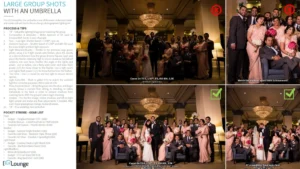
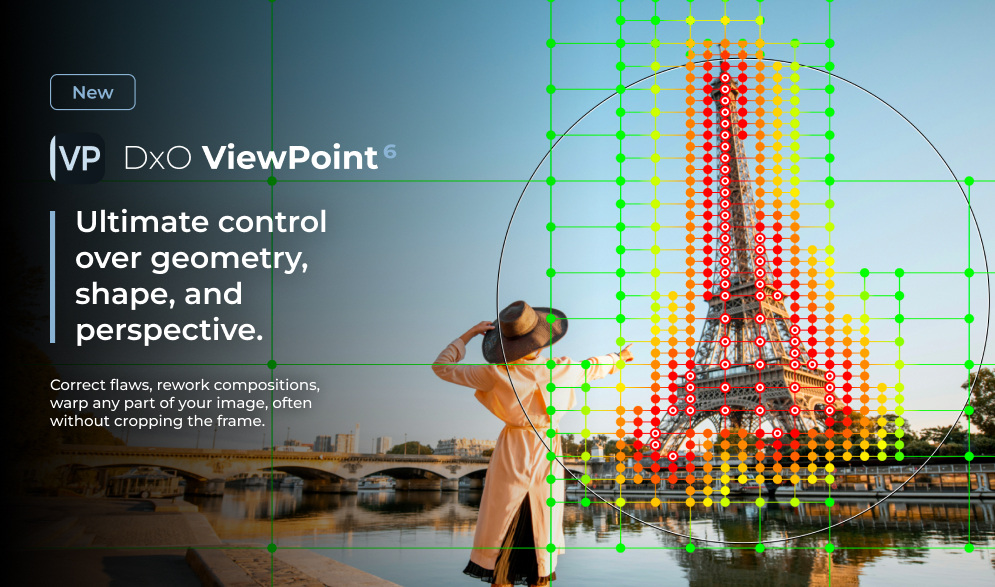
From a workflow perspective, the software maintains a non-destructive pipeline. The primary architectural innovation in this release is the ReShape Fusion tool. This feature employs AI-driven masking to isolate specific areas of an image, enabling the photographer to adjust perspective or volume deformation locally. For instance, in a group portrait where subjects at the edge of a wide-angle lens may appear stretched or "elongated," users can now apply a localized correction that restores natural proportions without altering the geometry of the center of the image.
Technical Specifications and AI Implementation
The integration of AI into the ReShape Fusion tool signifies a departure from traditional "force parallel" techniques. In earlier software versions, correcting vertical lines in a building often resulted in the warping of surrounding elements, such as trees or clouds, necessitating a loss of image data through cropping.
According to technical benchmarks conducted by industry professionals, the AI-masking engine in ViewPoint 6 operates with high efficiency even on legacy hardware. During performance testing, the software maintained stability on older Intel-based Mac systems, suggesting that the computational load is well-optimized. The application’s ability to process these complex transformations without requiring significant hardware upgrades is a notable development for photographers working in mobile or studio environments with varying equipment tiers.

Strategic Impact on Specialized Photography
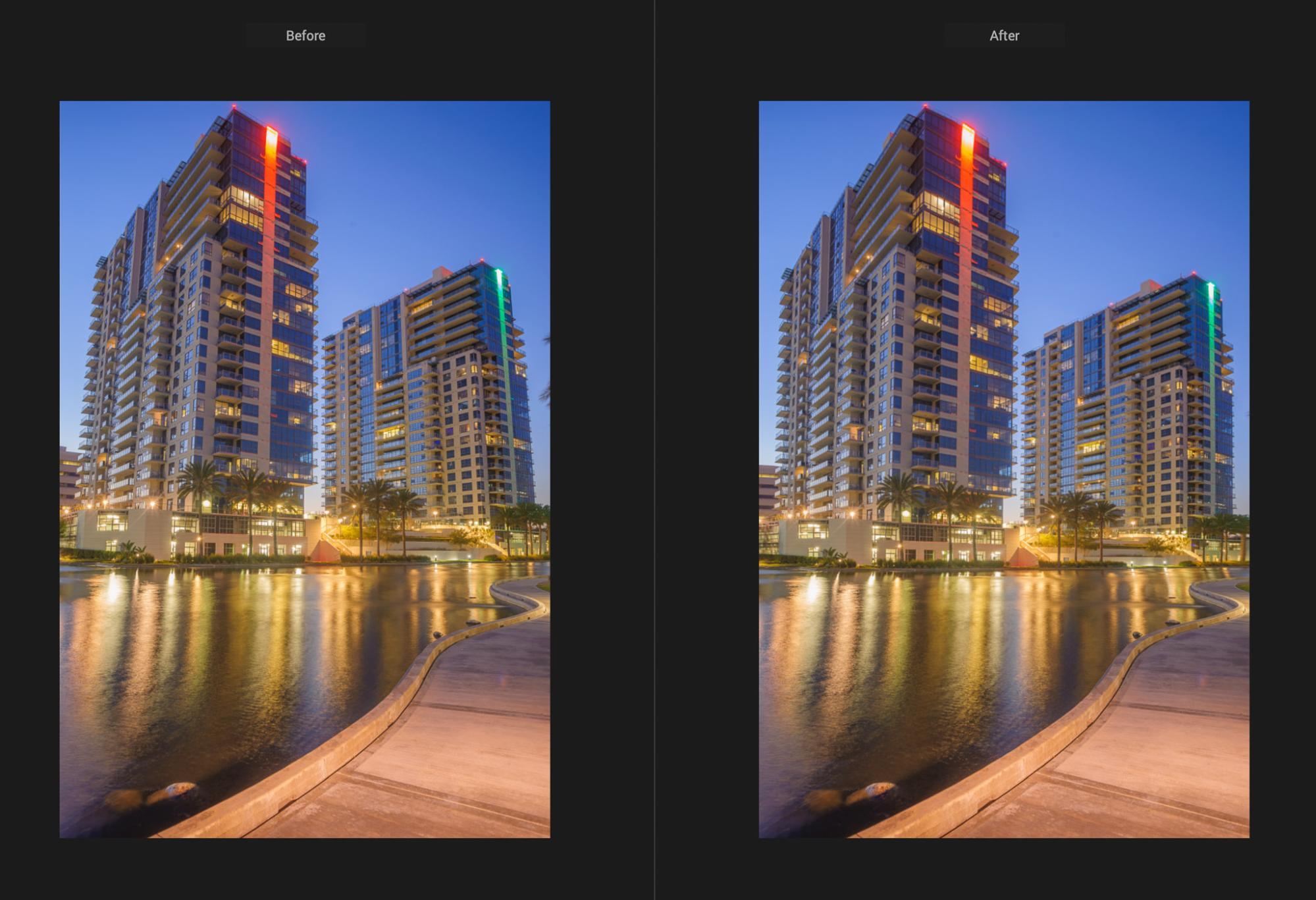
The implications of these tools are most profound in the sectors of architectural, real estate, and event photography. In architectural imaging, maintaining the integrity of parallel lines is not merely an aesthetic choice but a technical requirement. The ability to automatically correct perspective while preserving the composition’s intended framing reduces the post-processing time significantly.
For wedding and portrait photographers, the "volume deformation" correction addresses a long-standing issue associated with wide-angle optics. When shooting large wedding parties in tight spaces, the use of wide-angle lenses is often mandatory; however, this frequently leads to unwanted stretching of human limbs or faces at the frame’s perimeter. The ViewPoint 6 toolset provides a digital remedy that mimics the look of a longer focal length, thereby increasing the utility of existing lens kits.

Comparative Analysis and Market Position
In the current market, most RAW converters offer basic lens corrections, such as vignetting removal and chromatic aberration suppression. However, these tools generally lack the geometric "reshaping" capabilities of ViewPoint 6. The software’s ability to perform individual horizontal, vertical, and diagonal corrections distinguishes it from standard "auto-align" features.
Furthermore, the inclusion of a "Miniature Effect" tool—which simulates the depth-of-field characteristics of tilt-shift lenses—highlights a trend toward offering creative, artistic controls alongside technical utility. While tilt-shift lenses are expensive and specialized, the software-based simulation provides a high-fidelity alternative that accounts for variable bokeh, making it a valuable asset for photographers seeking to expand their creative repertoire without significant capital investment.
Limitations and Future Development Outlook
Despite the technical advancements, the software is not without a learning curve. Users familiar with basic slider-based editing may find the granular control of the ReShape Fusion tool complex. The "Force Parallel" feature, while powerful, currently lacks a "locking" mechanism for specific anchor points, which can lead to inadvertent shifts in parts of the image that the user may wish to remain static.
Industry observers note that this "all-or-nothing" movement of the four points in the parallel tool is a primary area for future iteration. A refined version would likely introduce a pin-based system, allowing for the isolation of specific corners or lines without affecting the broader geometry. Nonetheless, the current workarounds—such as secondary masking or blending—are sufficient for professional use cases, though they do add steps to the editing process.

Commercial Availability and Licensing
DxO continues to utilize a perpetual licensing model, a strategy that contrasts with the subscription-heavy landscape of modern professional software. This approach is particularly favored by independent photographers and small studios that prefer ownership of their tools.
The software is currently priced at $129.99 for new users, with an upgrade path available for existing customers at $84.99. The developer has also implemented a 30-day trial period, allowing for an evaluation of the software’s efficacy on specific photographic datasets. Promotional incentives, such as those currently offered through industry partners like SLR Lounge, remain a standard part of the company’s customer acquisition strategy.

Conclusion: The Role of Specialized Correction Tools
The transition toward AI-augmented software represents a fundamental shift in how photographic errors are managed. DxO ViewPoint 6 provides a comprehensive solution for photographers who require precision beyond the scope of general-purpose editing applications. While the software requires a commitment to learning its advanced toolset, the efficiency gains in post-production—particularly for architectural and wide-angle portrait photography—provide a clear justification for its inclusion in a professional workflow.
As AI continues to mature, the barrier between "photographic capture" and "digital refinement" will likely continue to blur. For now, ViewPoint 6 stands as a significant instrument for those looking to maintain the highest possible standard of geometric accuracy in an increasingly digital-first imaging industry. By balancing complex, high-end computational tools with a relatively accessible interface, DxO has reinforced its position in the post-processing market, providing a necessary bridge between the optical realities of glass and the creative intentions of the photographer.