Camera improvements: Will AI mods fix Framerate Malpractice before the guilty manufacturers bother to do it themselves?

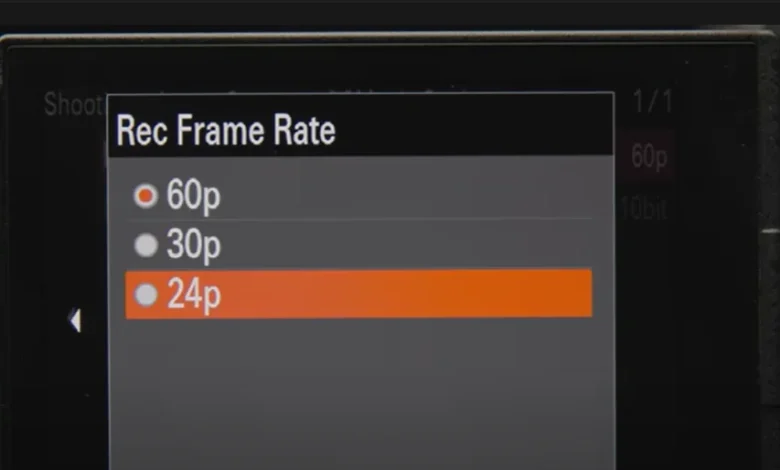
The digital imaging landscape is currently witnessing a paradigm shift as the intersection of artificial intelligence and firmware engineering begins to challenge the status quo of proprietary hardware limitations. For years, professional videographers and hobbyists alike have grappled with what is colloquially known as "Framerate Malpractice"—a strategic choice by camera manufacturers to omit specific, industry-standard frame rates (such as 24p, 30p, or 60p) from regional models or entry-level units to artificially differentiate product tiers or maintain outdated broadcast standards. Now, as community-driven, AI-assisted modifications gain traction, the question arises: will these grassroots technical interventions force manufacturers to abandon these restrictive practices, or will the industry see a new era of "camera jailbreaking"?
The Genesis of Framerate Malpractice
Framerate Malpractice is not a technical necessity; it is a marketing decision. Historically, manufacturers such as Sony, GoPro, and DJI have segmented their product lines by limiting the available frame rates on specific models based on the region of sale (NTSC vs. PAL). This practice forces users to purchase higher-end "world-cam" models to access universal frame rates, despite the underlying sensor hardware being capable of capturing these speeds globally.
This artificial segmentation has long been a point of contention within the production community. While global markets have largely converged toward digital workflows that render regional frame rate locks obsolete, legacy manufacturing processes and tiered pricing strategies have preserved these limitations. Users have frequently argued that a device capable of shooting at 50fps should, by definition, be capable of shooting at 60fps, yet software-level locks have prevented this functionality for years.
A History of Community Intervention
The current push for AI-assisted firmware modification is the latest chapter in a long-standing tradition of consumer-led hardware optimization. The most notable predecessor to this movement was the Magic Lantern firmware project for Canon DSLR cameras. Launched over a decade ago, Magic Lantern effectively unlocked professional-grade video features—such as raw video recording, focus peaking, and zebras—on entry-level bodies that were not intended by the manufacturer to serve as professional cinema tools.
Similarly, the "Sony Hack," which enabled users to convert regional-locked Sony mirrorless cameras into "world-cams" by unlocking NTSC and PAL rates, served as a proof-of-concept for the modern era. These early hacks relied on reverse-engineering, manual code patching, and deep system-level access. What has changed in 2025 and 2026 is the introduction of Large Language Models (LLMs) and generative AI, which have significantly lowered the barrier to entry for analyzing proprietary binary code and developing functional firmware patches.
The AI-Driven Modification Wave
Recent documentation from independent content creators has highlighted a rapid acceleration in the efficacy of AI-assisted camera modifications. Influencers and technical enthusiasts have begun utilizing AI tools to scan and decompile firmware files, identifying the exact strings and logic gates that impose regional locks or frame rate restrictions.
In recent months, several high-profile demonstrations have surfaced:
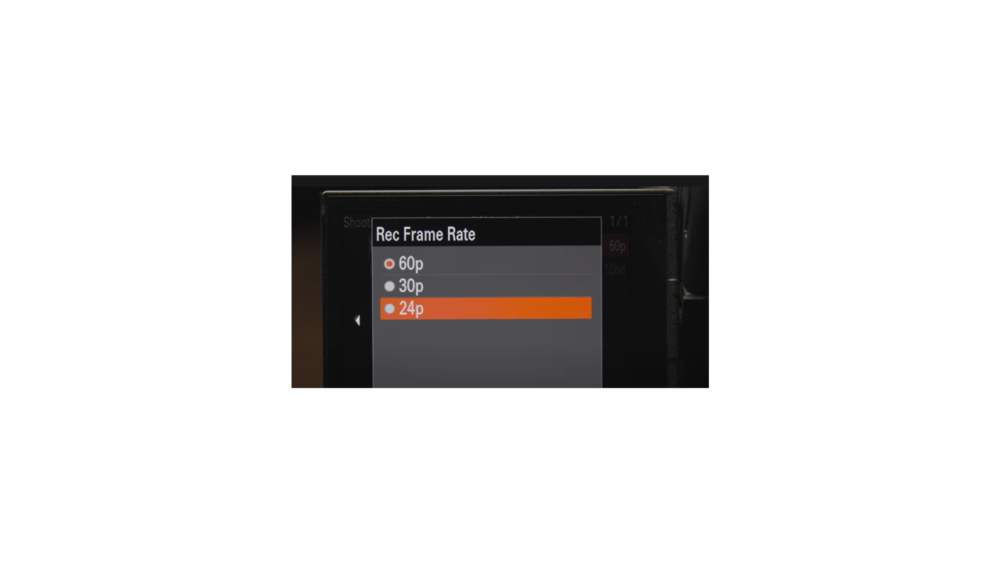
- Code Decompilation: AI agents have been tasked with mapping the complex, obfuscated code within camera firmware, allowing developers to identify the specific lines of code that govern sensor output and frame rate menus.
- Feature Injection: Beyond simply unlocking hidden features, developers are now using AI to simulate the behavior of higher-end firmware, effectively "tricking" the camera’s internal processor into enabling features that were previously restricted to flagship models.
- Automated Patching: What once took months of manual research is now being compressed into weeks, or even days, as AI tools generate and test potential patches against simulated camera environments.
These developments have been documented by creators such as Breno Loves Cameras, FUTC, and Tony & Chelsea Northrup, all of whom have explored the potential for "jailbreaking" cameras. These demonstrations serve as a warning to manufacturers: the digital moat surrounding their proprietary software is no longer as deep or as secure as it once was.
Technical and Legal Implications
The rise of these modifications presents a complex challenge for the camera industry. From a legal standpoint, manufacturers often cite the Digital Millennium Copyright Act (DMCA) and End User License Agreements (EULA) to discourage the modification of firmware. However, the consumer argument is centered on the principle of ownership: if a user purchases a piece of hardware, they argue they should have the right to utilize the full capabilities of the silicon installed within that chassis.
From a technical perspective, the risk of "bricking" a camera—rendering it non-functional—remains high. Unlike consumer-grade software updates, firmware modification involves writing directly to the device’s bootloader and non-volatile memory. Manufacturers often point to these risks to justify their closed-ecosystem approach. However, the community-driven nature of these projects means that testing is often conducted on a wide scale, with successful patches shared via open-source repositories, effectively crowdsourcing the quality assurance process.
The Response from Manufacturers
To date, major manufacturers have largely maintained a policy of silence regarding community-driven firmware modifications. There has been little to no public acknowledgement of "Framerate Malpractice" as an industry issue. Instead, the strategy remains one of hardware differentiation.
However, industry analysts suggest that if these AI-assisted hacks become stable and user-friendly, manufacturers may be forced to change their tune. If a $500 camera can be made to perform the functions of a $2,000 camera through a simple AI-generated firmware update, the value proposition of the higher-end product is severely compromised. This could force companies to shift their business model away from software-locked hardware and toward genuine hardware innovation, such as superior low-light performance, sensor size, or build quality, rather than artificial feature tiers.
Future Outlook: Toward Open Firmware?
The ultimate goal for many in the modding community is not merely to "hack" current devices, but to lobby for more transparent firmware policies. If manufacturers were to adopt an "open-feature" approach, allowing users to unlock specific capabilities through official channels, the need for dangerous or unauthorized hacks would dissipate.
As we move through 2026, the trajectory seems clear: the gap between hardware capability and software limitation is narrowing, and the power to bridge that gap is shifting from the manufacturer to the user. Whether this leads to a "democratization of features" or a technological arms race between developers and corporations remains to be seen. What is certain is that the era of "Framerate Malpractice" is being challenged by the very tools that are reshaping every other facet of the digital world.
For those tracking this evolution, the key will be the stability and accessibility of these AI-driven modifications. Should a reliable, "one-click" solution emerge that permanently resolves framerate restrictions across multiple camera brands, the industry will have no choice but to respond—either through litigation or through the inevitable abandonment of the regional-lock strategy that has defined the last decade of camera manufacturing. Until then, the community continues to watch, analyze, and, most importantly, iterate.
Related posts: