Rough Cuts on a Freelancer’s Clock: Understanding Adobe Premiere’s AI tools

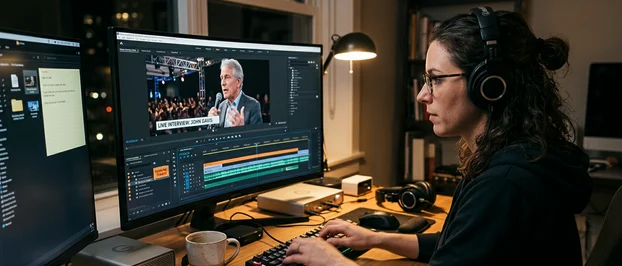
The modern freelance editor operates in a high-pressure environment defined by shrinking turnaround times and increasingly massive ingest requirements. When a client delivers three hours of conference footage, a disorganized repository of B-roll, and a tight 48-hour deadline for a polished recap, the traditional approach—manual scrubbing and logging—often results in an unsustainable erosion of profit margins. Adobe Premiere Pro has responded to these logistical bottlenecks by integrating a suite of Artificial Intelligence (AI) and machine learning tools designed to automate the administrative burden of post-production. By delegating the search, transcription, and cleanup phases to AI, editors can shift their focus from mechanical asset management to narrative storytelling.
The Evolution of Ingest and Media Intelligence
The traditional workflow for a project of this scale usually consumes the first day of production solely in "logging"—the process of identifying, labeling, and organizing raw files. According to industry surveys conducted by the Post Production Institute, an editor can spend up to 40% of their billable hours simply finding the right frames.
Adobe’s Media Intelligence feature, integrated directly into the ingest process, serves as the primary solution to this inefficiency. By allowing the software to analyze incoming data during the initial import, editors can reclaim the hours previously lost to manual indexing. Once the analysis is complete, the project becomes a query-based database. An editor can search for specific visual actions, such as "speaker walking offstage," or filter by metadata and spoken content. This capability essentially turns hours of raw video into a searchable asset library, allowing for a near-instantaneous retrieval of candidate clips.
Streamlining Scripted Content and Take Management
Scripted segments, such as executive introductions recorded via teleprompter, present a unique challenge in multi-take workflows. When a camera card contains seven distinct takes of the same paragraph, the risk of "scrub fatigue" is high. Editors historically had to open each clip individually, navigate to the relevant section, and keep a mental or manual log of which take performed best.
The integration of Speech-to-Text (STT) technology transforms this process. By generating a full transcript of all seven takes simultaneously, Premiere allows the editor to view the script as a unified document. Instead of scrubbing through video timelines, the editor searches for the specific line of dialogue. The AI returns a consolidated result set of every instance that line was spoken across all clips. This allows for a comparative analysis of delivery, pace, and accuracy in a fraction of the time, effectively eliminating the "hunting" phase of the edit.
Text-Based Editing and the Death of the Manual Cut
Perhaps the most significant shift in modern editing is the transition to Text-Based Editing. By utilizing the transcript generated during the ingest phase, the editor can manipulate the video sequence by editing the text itself. Deleting a paragraph in the transcript automatically ripples the sequence, removing the corresponding video clips. Furthermore, AI-driven pause detection can identify and strip out silence or "filler" words in bulk.
This methodology provides a robust structure for a rough cut by the time the editor reaches their lunch hour. Once the narrative skeleton is established via the transcript, the editor can transition to the creative phase—fine-tuning cuts, adjusting pacing, and applying color grading—with a solid, client-approved narrative flow already in place.
The Role of Audio Enhancement in Professional Deliverables
Audio fidelity is a frequent point of failure in conference and event videography, where ambient noise from exhibit halls often degrades the quality of interviews. Adobe’s "Enhance Audio" tool, currently deployed through its beta ecosystem, utilizes generative AI to de-mix audio tracks. It isolates speech from background noise, music, and reverb, allowing the editor to rebalance the mix with surgical precision.
From a technical perspective, this tool offers two distinct processing paths: a cloud-based model for high-fidelity generative output and a local, on-device option for editors working within restricted budgets or environments with limited internet connectivity. This flexibility is critical for freelancers who must account for the "generative credit" cost structures that often accompany high-end AI processing.
Building Initial Rapport with Generative Music
The "first look" of a rough cut is often the most critical stage in client communication. A silent edit can lead to premature negative feedback, as clients often struggle to visualize the final rhythm of a piece without a soundtrack. The "Generate Music" feature allows editors to create custom, royalty-free temp tracks tailored to the mood and length of the edit. By auditioning various musical variations against the picture, the editor can guide the client’s perception of the project’s tone, leading to more constructive feedback cycles.
Implications for the Freelance Economy
The shift toward AI-assisted post-production represents a fundamental change in the economics of video editing. When a rough cut that previously took two days to assemble is completed in half a day, the value proposition for the freelancer changes.
Industry analysts observe that this acceleration does not necessarily mean "doing less work." Rather, it allows the editor to offer a higher density of creative input. Instead of spending hours searching for a specific cutaway shot, the editor can spend that time refining the emotional arc of the story, perfecting color transitions, or iterating on advanced sound design—the elements that truly differentiate high-end professional work from automated content.
Conclusion and Future Outlook
The reliance on AI in professional workflows is no longer a matter of preference but a competitive necessity. As client expectations for speed increase, the ability to automate the mundane aspects of assembly—searching, transcribing, cleaning audio, and music selection—becomes the primary differentiator between successful production houses and those struggling to remain profitable.
For the modern freelancer, the goal is to reach the "creative gate" as quickly as possible. By leveraging Premiere’s AI suite, the editor offloads the technical labor to the software, reserving their human judgment for the decisions that matter most: the rhythm of the edit, the emotional resonance of the narrative, and the ultimate impact of the final story. As these tools continue to evolve, the editor’s role will increasingly resemble that of a director or curator, overseeing an automated process to produce high-quality media with unprecedented efficiency.