Brompton Technology Delivers the Cinematic Look Behind Bad Bunny’s Debí Tirar Más Fotos World Tour

The Debí Tirar Más Fotos World Tour represents a landmark achievement in modern live entertainment, solidifying Bad Bunny’s status as a global touring powerhouse. Spanning 57 stadium shows across nearly 20 countries, the tour—scheduled from November 2025 through August 2026—has not only shattered attendance records but has fundamentally altered the expectations for visual production in large-scale stadium environments. As the artist became the first Latin performer to surpass $1 billion in gross ticket sales, the technical execution behind his performance has come under the microscope, revealing a sophisticated integration of cinematic-grade processing and high-performance LED hardware designed to bridge the gap between intimate storytelling and stadium-sized spectacle.
The Engineering of a Global Spectacle
At the core of the tour’s visual identity is a massive LED canvas that serves as the primary stage backdrop. Measuring 42 meters in width and 11 meters in height, this main upstage wall operates at a resolution of 10,752 by 2,816 pixels. To manage a surface area of this magnitude, the production team, led by Video Technician and Head of LED Pieter Laleman, deployed four Brompton Technology Tessera SX40 LED processors. These processors are paired with sixteen Tessera XD 10G data distribution units—four per processor—ensuring that the high-bandwidth data requirements of the tour are met without latency or signal degradation.
Beyond the main display, the tour utilizes two additional delay screens positioned stage right and stage left. These secondary displays are powered by an independent SX40 processor and four XD units, maintaining visual consistency across the entire performance area. The selection of hardware was the result of a rigorous vetting process. During a 31-show residency in Puerto Rico, the artist and his production team conducted a head-to-head "shootout" between various LED manufacturers. The eventual selection of 462 INFiLED Black Widow AMT series panels was a deliberate choice, made by the artist himself to ensure the display technology could handle the specific color science and contrast levels required for his vision.
Cinematic Ambition and Technical Workflow
Bad Bunny’s creative vision for the Debí Tirar Más Fotos tour leaned heavily into a "cinematic" aesthetic. Approximately 90 percent of the show’s visual content is derived from live camera feeds, primarily captured by a fleet of 4K Sony cinema cameras. The imagery is processed in real-time, often enhanced with Notch effects, requiring a display chain that could handle 10-bit color depth and precise color management without introducing noise or banding.
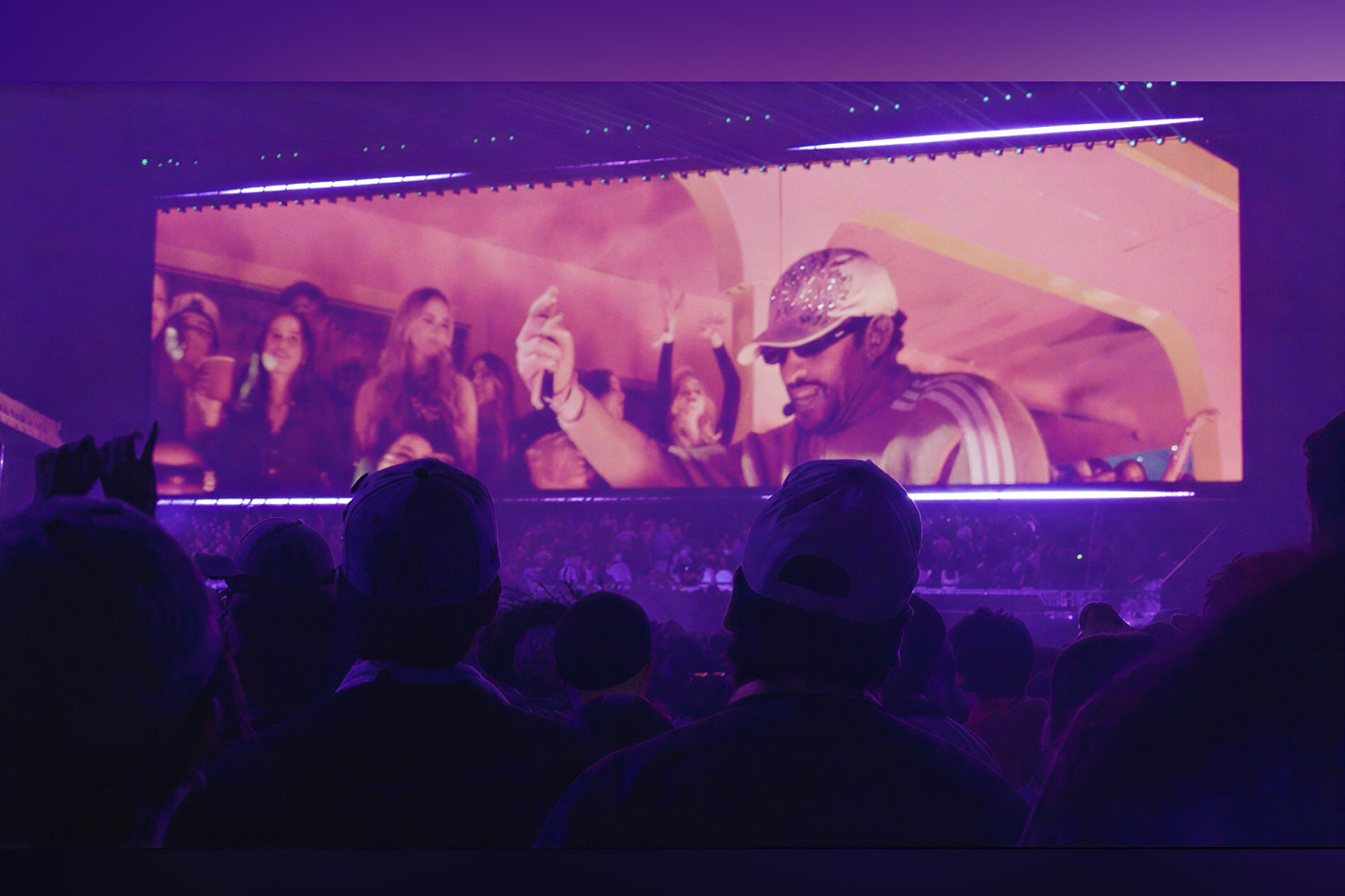
The mapping of such a large, non-standard canvas presented a significant hurdle for the engineering team. Rather than attempting to force the system into custom, non-native resolutions, the team opted to feed the processors four UHD signals sourced from a bank of Disguise GX 3+ media servers. This configuration allowed the production to leverage standard playback infrastructure while maintaining the high-fidelity color reproduction necessary for the 10-bit workflow. By utilizing custom Look-Up Tables (LUTs) during rehearsals, the team ensured that the visual treatment remained consistent from the opening number to the final encore, regardless of the venue’s lighting conditions or the specific nuances of the stadium environment.
Reliability and Redundancy in Stadium Environments
Touring at the stadium level requires an unprecedented level of system reliability. With 57 shows across multiple continents, the potential for hardware failure is a constant risk. The production employed Brompton’s proprietary topology monitoring, which provides the video engineering team with real-time health data for every individual LED panel. This allows for proactive maintenance; if a panel exhibits anomalous behavior or communication drops, the team can address the issue before it becomes apparent to the audience.
Furthermore, the system incorporates a closed-loop cable redundancy protocol. By utilizing two XD units per screen, the system ensures that if a data cable is severed or a connection is interrupted, the signal is rerouted instantaneously. This "near-seamless" failover ensures that the show continues without a single black panel, providing a layer of safety that is critical when playing to crowds exceeding 50,000 people. This approach to redundancy shifts the burden away from processor-level failover, focusing instead on the signal distribution path, which is statistically more prone to failure during the rigors of load-in and load-out.
Industry Context and Strategic Implications
The success of the Debí Tirar Más Fotos tour highlights a growing trend in the live events industry: the migration of film-production technology into the concert touring space. As artists strive to provide more immersive experiences, the reliance on high-end processing platforms—traditionally reserved for virtual production studios and film sets—is becoming the new industry standard.
Brompton Technology’s role in this project serves as a case study for the scalability of LED processing. Laurent Theurin, Technical Sales Manager for Brompton in France, noted that the tour represents a validation of the company’s long-term strategy to provide "cinematic ambition" for the world’s largest stages. For the wider touring industry, the implication is clear: the hardware bottleneck for creating high-fidelity, high-resolution visuals at scale has largely been removed. Production teams are no longer limited by how much data they can push to a screen, but rather by their ability to creatively utilize that bandwidth.
Chronology and Operational Scale
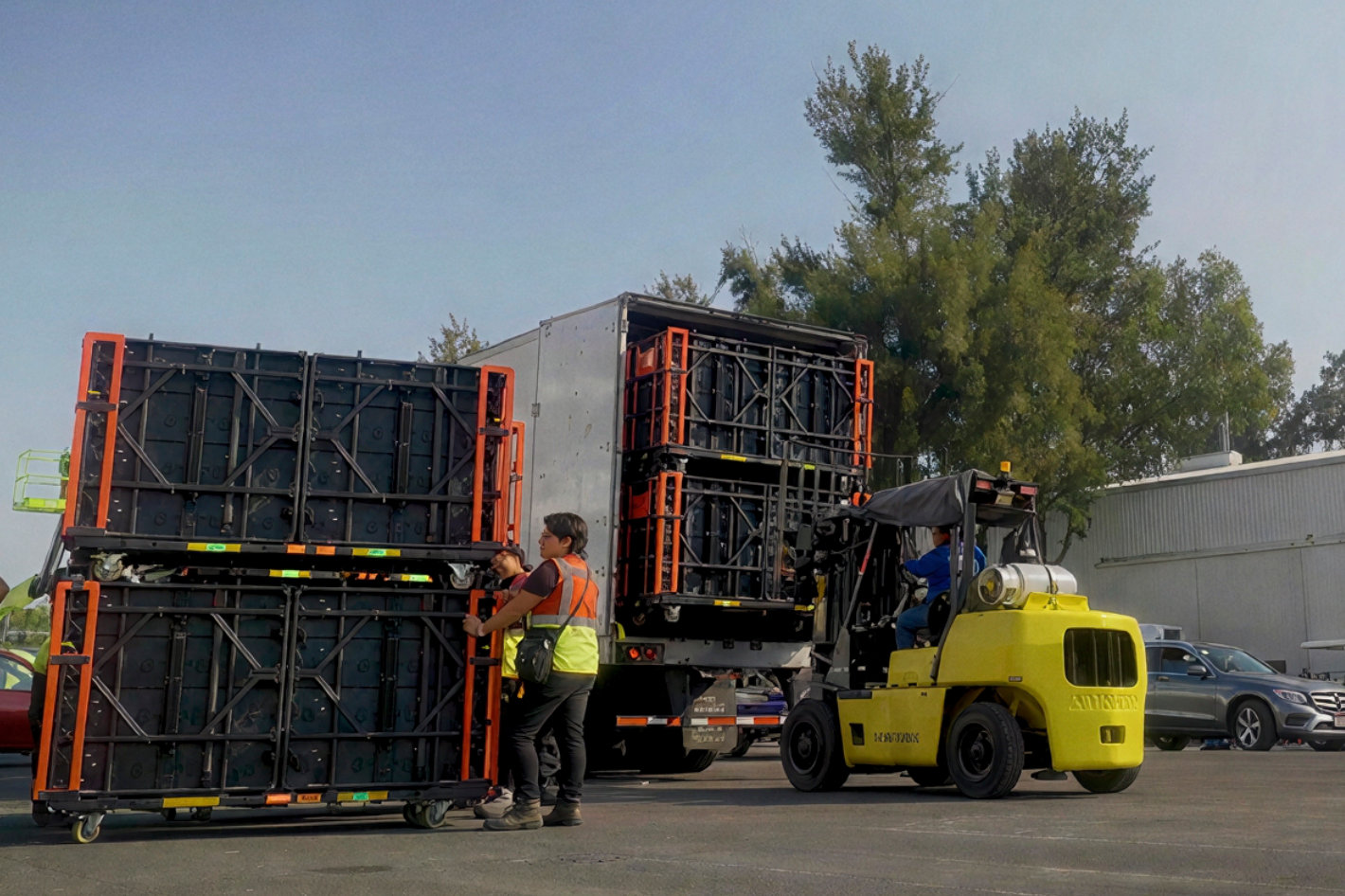
The tour’s journey began in late 2025, with an aggressive rollout schedule that saw the production move between diverse climates and electrical infrastructures across Europe and Latin America. The logistical planning required to maintain a consistent visual output across venues as varied as the Tottenham Hotspur Stadium in London and various open-air arenas in South America necessitated a highly modular and robust technical setup.
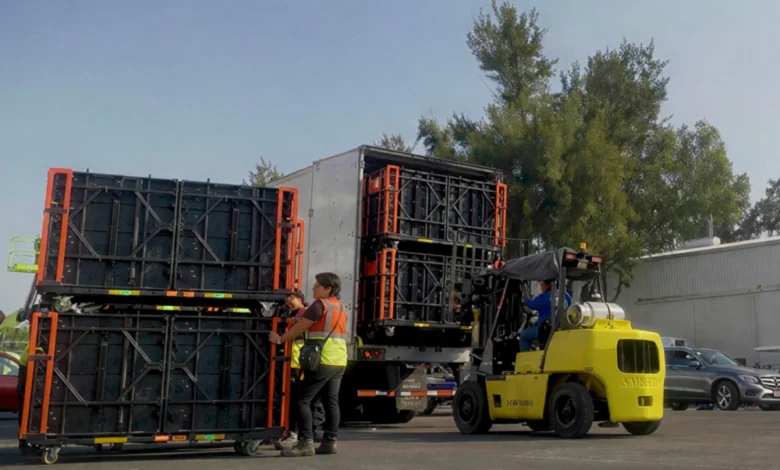
The procurement and management of the equipment were handled by Production Video Group, who worked closely with the touring crew to ensure that the 462 INFiLED panels could be broken down and reassembled with millimetric precision at each stop. This level of technical rigor is what allowed the tour to achieve its $1 billion milestone. The financial success of the tour is directly tied to its production quality; by creating a show that feels like a high-budget feature film, the artist is able to justify premium ticket pricing and sustain interest across a two-year performance cycle.
Conclusion: The Future of Stadium Visuals
As the Debí Tirar Más Fotos World Tour moves toward its conclusion in August 2026, it leaves behind a blueprint for future stadium productions. The marriage of 4K cinema-grade capture, robust 10-bit processing, and high-density LED panels has created a standard that is likely to be emulated for years to come.
The success of the collaboration between the artist’s creative team, Production Video Group, and Brompton Technology underscores the importance of a unified technical vision. By prioritizing image fidelity and hardware reliability, the tour has demonstrated that even the most complex visual setups can be executed with consistency on a global scale. As stadium tours continue to grow in complexity, the focus will undoubtedly remain on the tools that can deliver not just scale, but the nuance of a cinematic experience to every seat in the house. The legacy of this tour will not just be its record-breaking revenue, but the shift in expectations for what a live concert can look like when technology is used not just as a backdrop, but as an extension of the artist’s creative lens.
Related posts: