Bridging Tradition and Technology: Inside ProjectSAM’s Two-Decade Evolution of Orchestral Sampling and the Expansion of the Lineage Series

The landscape of virtual orchestration has undergone a profound transformation since the early days of rigid, dry sample blocks. For over twenty years, the developer ProjectSAM has occupied a pioneering role in this evolution, championing an ensemble-recording philosophy that integrates the natural, breathing acoustic environment of a physical scoring stage directly into the modern digital studio. With the ongoing expansion of their acclaimed Lineage Series—transitioning from specialized percussion instruments to fully realized string sections—industry observers and composers alike are taking a closer look at the intersection of traditional composition and advanced software engineering. This milestone coincides with broader industry developments, including deep integration with Native Instruments’ Native Kontrol Standard (NKS) framework and the ongoing availability of these tools through promotional retail events like the Big Partner Sale.
Main Facts and the Origins of a Sampling Philosophy
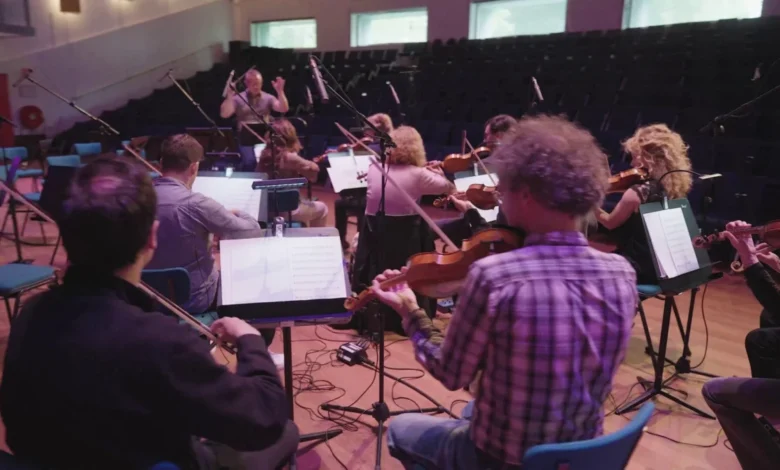
Founded in 2001 by composers Vincent and Maarten, ProjectSAM emerged during a period when the standard for virtual instruments relied heavily on close-microphone techniques. These early libraries yielded dry, isolated sounds that required extensive artificial reverberation to approximate the sonic character of a real concert hall. ProjectSAM disrupted this paradigm by capturing the natural acoustic perspective of an orchestra from a distance, placing microphones strategically within a resonant hall to record ensembles in their native environment.
The release of foundational libraries such as Symphobia and True Strike established a new benchmark for cinematic writing. Symphobia, in particular, introduced the concept of pre-orchestrated ensemble blocks and complex cinematic combinations, enabling media composers to sketch and execute massive cues with unprecedented speed. Over the subsequent two decades, the company shifted its technical focus exclusively to Native Instruments’ Kontakt platform, narrowing its development scope to maximize optimization, script execution, and sound quality. This trajectory culminated in the recent release of Lineage Strings, developed specifically for Kontakt 8, which bridges the gap between the rapid inspiration of the Symphobia universe and the intricate flexibility required for traditional, section-by-section orchestration.
Chronology of Innovation: From GigaSampler to Kontakt 8
The technical infrastructure underpinning virtual orchestration has evolved in parallel with ProjectSAM’s product catalog. A chronological review of the company’s development highlights significant milestones in software and hardware compatibility:
- 2001: ProjectSAM is founded; early products such as SAM Horns are distributed as preset collections for platforms like GigaSampler and early versions of Kontakt, navigating complex physical DVD installation formats.
- 2008: The company standardizes its development pipeline exclusively around Native Instruments’ Kontakt platform, streamlining sound design and scriptwriting capabilities.
- 2010s: The continuous expansion of the Symphobia line introduces advanced multi-mic mixing capabilities and curated ensemble patches, becoming a staple in film, television, and video game scoring suites.
- Recent Years: The introduction of the Lineage Series shifts the focus back toward individual orchestral sections, incorporating intelligent software assistants like Adaptive Sync and Adaptive Phrasing.
- Present Day: The release of Lineage Strings for Kontakt 8, coupled with comprehensive integration into the NKS2 ecosystem, marks a new chapter in workflow automation and accessibility for visually impaired musicians.
Integrating NKS and Enhancing Studio Accessibility

A critical element in the modern iteration of ProjectSAM’s software design is its partnership with Native Instruments and the adoption of the Native Kontrol Standard (NKS and NKS2). Historically, virtual instruments were heavily reliant on mouse-driven graphical user interfaces. While physical MIDI keyboards allowed for real-time performance, the vast array of hidden menus, articulation switches, and parameter controls remained largely inaccessible to blind and visually impaired members of the music production community.
The implementation of NKS fundamentally altered this dynamic. During the development of Lineage Strings and Lineage Percussion, ProjectSAM engineered their visual controls and hardware parameters simultaneously to achieve complete parity. This integration allows physical controllers—such as Native Instruments’ S-Series keyboards—to map seamlessly to the software parameters, utilizing hardware feedback mechanisms like the Light Guide. Engineering teams noted that incorporating features like Smart Lookahead delay required rigorous beta testing to synchronize hardware LED illumination precisely with audio triggering, ensuring a tactile and intuitive experience for all users.
Under the Hood: Adaptive Phrasing and Intelligent Arranging
At the technological core of Lineage Strings are two primary software engines: Adaptive Phrasing (supported by Smart Lookahead) and the Intelligent Arranger module. These features reflect a broader industry trend toward intelligent workflow assistants designed to reduce the mechanical friction of complex MIDI orchestration.

Adaptive Phrasing expands upon the Adaptive Sync technology previously utilized in libraries like Pandora and Lineage Percussion. Traditional orchestral libraries require composers to manually trigger keyswitches to transition between sustained notes, tenutos, staccatos, trills, and grace notes. The Smart Lookahead algorithm in Lineage Strings introduces a deliberate, calculated buffer of a few hundred milliseconds. This buffer allows the internal engine to analyze incoming MIDI data in real time, distinguish between phrasing intentions, and automatically apply the appropriate articulation without requiring constant manual keyswitching.
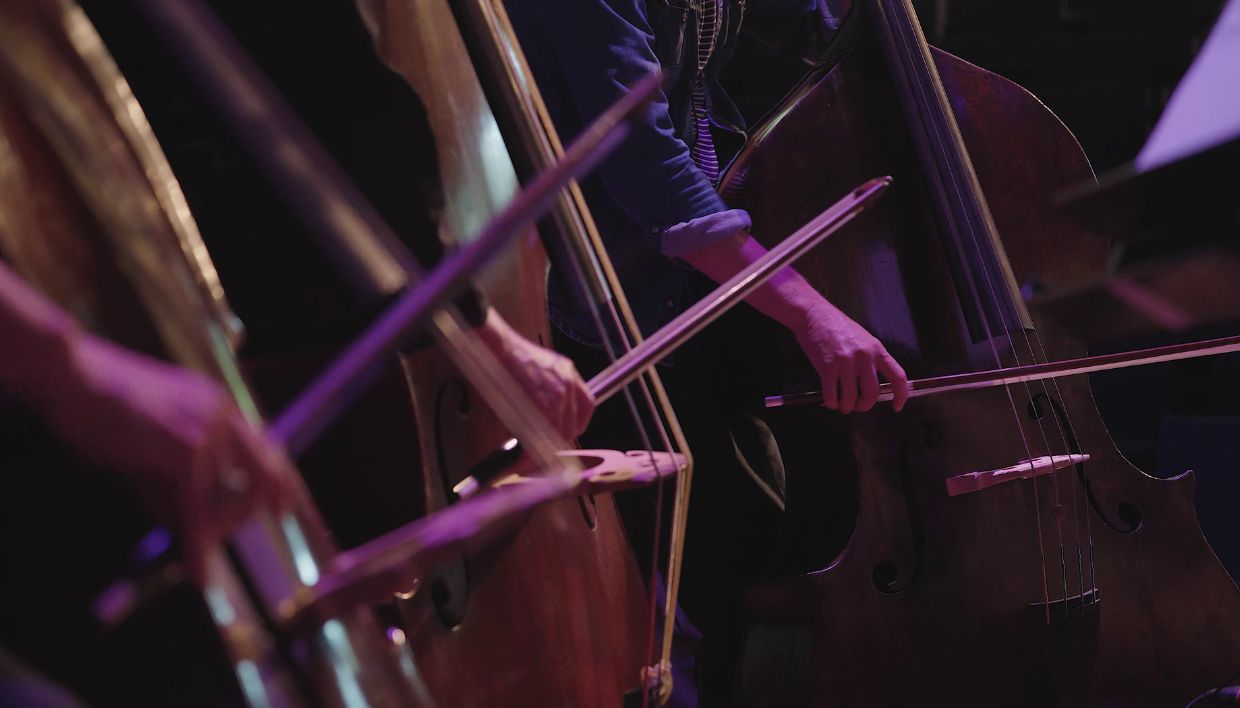
Concurrently, the Arranger module functions as an automated voice-leading assistant. By detecting chord inversions, root keys, and slash chords, the module automatically distributes incoming polyphonic input across the five primary string sections—violins I, violins II, violas, cellos, and double basses. Composers can utilize this tool either as a fully automated sketching pad or as a foundational template that can be manually overridden and refined, offering a flexible middle ground between automated assistance and meticulous compositional control.
Industry Implications: The Role of Artificial Intelligence and Machine Learning
The integration of predictive algorithms and machine learning into virtual instruments has sparked ongoing discussion within the music technology sector regarding the future of computer-assisted composition. While algorithmic aids streamline the production process, industry developers emphasize the inherent limitations of predictive technology.

Because real-time, low-latency performance is a baseline requirement for live keyboard players, implementing complex machine-learning algorithms presents a significant engineering challenge. An engine cannot anticipate a composer’s ultimate artistic intent before the notes are played; it can only react to the immediate stream of incoming data. Consequently, developers view these technologies not as autonomous creators, but as sophisticated assistants designed to alleviate technical bottlenecks. The consensus among producers and developers is that while automated phrasing and intelligent arranging will continue to accelerate drafting workflows, human oversight remains indispensable for injecting genuine expressive nuance into a musical performance.
Market Context and Promotional Availability
The ongoing expansion of the Lineage Series intersects with broader commercial activities within the digital audio workstation ecosystem. Promotional initiatives, such as the Big Partner Sale hosted by Native Instruments through the end of June, provide composers with access to hundreds of NKS-compatible instruments, sample libraries, and bundles from various top-tier developers, including ProjectSAM. These sales events reflect a broader retail strategy to lower the barrier of entry for professional-grade virtual instruments, enabling independent studios and large-scale media production facilities alike to update their sonic toolkits.
As virtual instruments continue to balance organic acoustic capture with advanced computational workflows, the trajectory of developers like ProjectSAM illustrates a sustained commitment to serving the practical demands of modern composers. By uniting traditional orchestration principles with intelligent software design and universal hardware integration, the industry moves steadily toward a future where technology enhances, rather than dictates, the creative process.