YouTube CPM vs RPM: Unpacking Creator Earnings and Advertiser Spend for 2026


Understanding the nuances between YouTube’s Cost Per Mille (CPM) and Revenue Per Mille (RPM) is fundamental for creators aiming to decipher their earnings and for advertisers seeking to optimize their spending on the platform. While often used interchangeably in casual discussion, these two metrics represent distinct financial perspectives: CPM reflects what advertisers pay for ad impressions, whereas RPM indicates what creators actually earn after platform fees and other deductions. This distinction is crucial for anyone involved in YouTube monetization, from individual content creators to large media organizations.
The term "mille," derived from Latin, signifies one thousand. Therefore, CPM translates to "cost per thousand," and RPM to "revenue per thousand." In the context of YouTube, this "thousand" refers to ad impressions or total views. The historical roots of these terms can be traced back to the late 19th century, when newspapers often priced advertisements based on their reach to a thousand subscribers. This practice, deeply embedded in the advertising industry, carried over into the digital age, hence the continued use of the Latin-derived abbreviation. This enduring terminology underscores a long-standing industry standard for quantifying advertising value based on audience reach.
Decoding YouTube CPM: The Advertiser’s Perspective
YouTube CPM (Cost Per Mille) represents the amount of money advertisers are willing to pay for every 1,000 times their advertisement is displayed on a YouTube video. It is crucial to emphasize that CPM is not the direct income of a creator. Instead, it signifies the gross advertising revenue generated before YouTube’s platform fees and potential revenue sharing with content owners are accounted for.
The calculation for CPM is straightforward:
CPM = (Total Ad Cost / Total Impressions) * 1,000
Several dynamic factors influence YouTube CPM rates, leading to significant fluctuations:
- Content Niche: Certain content categories, such as finance, technology, real estate, and education, tend to attract higher CPMs. This is because advertisers in these sectors often have higher profit margins and are willing to pay more for access to a targeted, potentially high-spending audience. Conversely, broader entertainment or lifestyle content may command lower CPMs due to a more diverse and less defined advertiser base.
- Audience Location: The geographical location of a video’s viewers significantly impacts CPM. Advertisers typically pay more to reach audiences in developed countries with higher disposable incomes and consumer spending power, such as the United States, Canada, Australia, and Western European nations. Viewers in developing regions often result in lower CPMs.
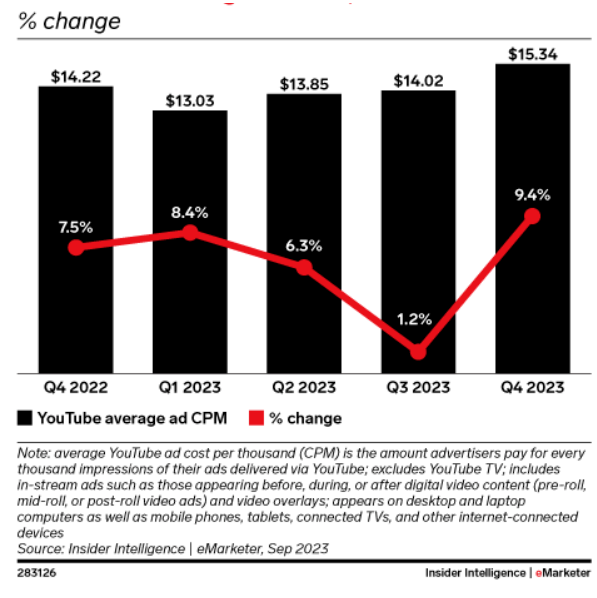
- Seasonality: Advertising spend is not uniform throughout the year. Periods like the fourth quarter (October-December), which includes major shopping holidays like Black Friday and Christmas, typically see a surge in advertiser demand and, consequently, higher CPMs. Conversely, the first quarter (January-March) often experiences a dip in ad spending as companies reassess budgets after the holiday season.
- Advertiser Demand: The overall economic climate and the competitive landscape among advertisers directly affect CPM rates. Higher competition among advertisers vying for ad space on YouTube leads to increased bids and, therefore, higher CPMs.
The AdSense business model on YouTube operates on an auction-based system. Advertisers bid on keywords and audience demographics, with the highest bidders securing ad placements. This dynamic auction process means that CPM rates can change by the second, reflecting real-time market conditions and advertiser competition. This inherent volatility means that a consistent CPM is an unrealistic expectation for creators.
Understanding YouTube RPM: The Creator’s Earnings

YouTube RPM (Revenue Per Mille) offers a more direct reflection of a creator’s earnings. It represents the total revenue a creator earns for every 1,000 total views their video accumulates, after all deductions and revenue shares have been applied. This metric encompasses not only ad revenue but also income from other YouTube monetization features.
The formula for RPM is:
RPM = (Total Creator Earned Revenue / Total Views) * 1,000
A critical aspect of RPM is understanding the various deductions that occur before revenue reaches the creator. YouTube takes a substantial 45% cut of the advertising revenue generated from a video. This revenue share is standard for most monetization programs.
Furthermore, if a video features copyrighted music for which the creator does not own the rights, the revenue generated from that music can be entirely claimed by the copyright holder. In such scenarios, the creator might receive no earnings from those specific ad views. Even when utilizing resources like YouTube’s Creator Music library, where a percentage of the revenue is shared with rights holders (often around 50%), the creator’s share is further reduced.
RPM encompasses a broader range of monetization sources beyond just advertisements. These include:
- Ad Revenue: Earnings from display ads, overlay ads, skippable video ads, and non-skippable video ads.
- Channel Memberships: Recurring monthly payments from viewers who become members of the channel, offering exclusive perks.
- YouTube Premium Revenue: A portion of the subscription fees paid by YouTube Premium members is distributed to creators based on how much watch time their content garners from these subscribers.
- Super Chats and Super Stickers: Live stream donations made by viewers to highlight their messages or stickers during live broadcasts.
- Other Revenue Streams: This can include merchandise shelf sales and other future monetization features introduced by YouTube.
For creators, RPM is the more pertinent metric to monitor as it directly indicates their actual take-home earnings per thousand views. While CPM provides insight into advertiser spending, RPM translates that spending into tangible creator income.
Key Differences and Why RPM Matters More for Creators
The fundamental distinction between CPM and RPM lies in their perspective and what they represent:
- CPM: Focuses on advertiser expenditure. It’s the gross amount advertisers pay for ad placements.
- RPM: Focuses on creator income. It’s the net amount creators earn after YouTube’s share and other deductions.
While CPM can offer valuable context, especially when analyzing market trends or considering content strategies (e.g., identifying niches with high advertiser demand), it does not tell the full story of a creator’s financial reality. RPM, on the other hand, provides a transparent view of what lands in the creator’s bank account. Therefore, creators should prioritize tracking and understanding their RPM to accurately assess their channel’s monetization performance.

Beyond CPM and RPM: Related Metrics
In addition to CPM and RPM, understanding other advertising metrics can provide a more comprehensive picture of YouTube monetization:
- CPC (Cost Per Click): This metric measures the amount an advertiser pays each time a user clicks on their advertisement. Unlike CPM, which focuses on ad visibility, CPC is driven by user engagement and action.
CPC = Total Ad Cost / Total Clicks - CPV (Cost Per View): CPV is particularly relevant for video ad formats, especially skippable ads. It quantifies the cost incurred by an advertiser for each instance a video ad is viewed.
CPV = Total Ad Cost / Total Views
It is essential for creators to grasp that YouTube primarily compensates them for ad views, not necessarily for every single total view on their video. While YouTube takes a 45% share of AdSense revenue, creators receive the remaining 55%. This revenue distribution model has resulted in YouTube paying out billions of dollars to creators globally. For instance, in the past four years, YouTube has reportedly paid over $100 billion to creators, a figure that encompasses payments to a wide array of beneficiaries, including media companies, rights holders, and individual creators.
Factors Influencing YouTube AdSense Earnings
The adage "it’s not what you make, it’s what you keep" strongly applies to YouTube earnings. Several interconnected factors contribute to the variability in creator income:
- Content Niche: As mentioned, certain niches inherently attract higher ad rates due to advertiser interest and the perceived value of the audience. Finance, technology, and educational content often outperform entertainment or general vlogging in terms of CPM.
- Viewer Demographics and Location: Advertisers target specific demographics and geographic regions. A video with an audience primarily composed of young adults in a high-income country will likely generate more revenue than a video watched by a global audience with a younger demographic skew and lower purchasing power.
- Ad Formats and Placement: The types of ads displayed (skippable, non-skippable, bumper, display) and their placement within a video (pre-roll, mid-roll, post-roll) influence revenue. Mid-roll ads, for example, are typically placed in videos longer than 8 minutes and can significantly boost earnings if viewers remain engaged.
- Watch Time and Viewer Retention: Longer watch times and higher viewer retention rates signal to YouTube that content is engaging. This can lead to more ad impressions, better ad placement opportunities (like mid-rolls), and potentially higher CPMs as advertisers value videos that keep viewers on the platform longer.
- Ad Blocker Usage: A significant portion of internet users employ ad blockers, which prevent ads from displaying on videos. This directly reduces the number of monetizable impressions and, consequently, a creator’s potential earnings.
- Brand Safety and Advertiser Suitability: Advertisers have strict guidelines regarding the content they associate their brands with. Videos deemed controversial, offensive, or otherwise unsuitable for brand advertising may be demonetized or have their ad rates significantly reduced, impacting creator revenue.
Estimating Creator Earnings: A Look at Averages
While precise figures vary widely, general estimates can provide a benchmark. Many creators observe RPMs in the range of $5 to $7 per 1,000 views. However, this is a broad average, and individual results can differ substantially. For instance, a creator focusing on a highly lucrative niche like financial education, with an audience in North America, might see RPMs exceeding $15-$20, while a creator in a less advertiser-friendly niche with a younger, international audience might earn as little as $1-$3 per 1,000 views.
Strategies to Enhance YouTube RPM
While creators cannot directly control CPMs, they can implement strategies to optimize their RPM:
-
Focus on High-Demand Keywords and Topics: Utilize tools like TubeBuddy’s Keyword Explorer to identify search terms that advertisers are actively bidding on. Aligning content with these popular and valuable topics can attract more relevant and higher-paying ads. However, it is crucial that keyword choices genuinely reflect the video’s content to maintain audience trust and engagement.
-
Create Engaging, Longer-Form Content: Videos exceeding eight minutes in length provide opportunities for mid-roll advertisements. The key is to maintain viewer engagement throughout the video. This involves compelling storytelling, valuable information, and effective pacing, rather than artificially inflating video length. High viewer retention signals to YouTube and advertisers that the content is valuable.
-
Understand Your Audience Demographics: Knowing who is watching your videos is essential. If your audience primarily consists of individuals in high-income regions and desirable demographics for advertisers, your RPM is likely to be higher. Tailor content to appeal to these valuable viewer segments where possible.
-
Diversify Monetization Streams: Relying solely on AdSense can be precarious. Exploring channel memberships, merchandise, affiliate marketing, sponsorships, and digital product sales can create more stable and potentially higher income streams, reducing reliance on ad revenue alone.
-
Optimize Video Titles, Descriptions, and Tags: While primarily for discoverability, well-optimized metadata can indirectly improve monetization by attracting the right audience and signaling content relevance to YouTube’s algorithm and advertisers.
Predictions for YouTube CPM and RPM in 2026
Forecasting future earnings is inherently speculative, but industry trends offer some insights. The digital advertising landscape continues to evolve, with increased competition and a growing emphasis on data-driven targeting.
- CPM Predictions for 2026: Experts anticipate that CPMs will likely remain competitive, particularly in high-demand niches. Factors such as economic conditions, the growth of specific industries, and advancements in advertising technology will play a significant role. While average CPMs might see modest increases, the variability based on niche and audience will persist. Channels focusing on finance, technology, and education are expected to continue commanding higher CPMs, potentially ranging from $8 to $20 or more.
- RPM Predictions for 2026: Consequently, RPMs are also projected to see gradual growth, albeit tempered by YouTube’s revenue share and other deductions. The average RPM for creators in 2026 is generally anticipated to fall between $2 and $8 per 1,000 views. However, channels with highly engaged audiences in affluent regions and those catering to premium advertiser segments could achieve significantly higher RPMs. The increasing adoption of YouTube Premium and the platform’s ongoing efforts to enhance creator monetization tools may contribute positively to overall RPM figures.
The broader impact of these trends suggests a continued need for creators to be strategic in their content creation and monetization efforts. Building a loyal and engaged audience, understanding market dynamics, and diversifying revenue streams will be paramount for sustained success on the platform. As YouTube continues to grow and evolve, so too will the complexities and opportunities within its creator economy.
Related posts: