YouTube CPM vs RPM: Understanding Creator Earnings in the Digital Age


The question of how much YouTube creators earn per view is a complex one, often leading to confusion due to the interplay of various financial metrics. At its core, understanding this revenue stream hinges on deciphering the distinctions between Cost Per Mille (CPM) and Revenue Per Mille (RPM). While both metrics relate to the number of times an advertisement is displayed or interacted with, they represent fundamentally different perspectives: CPM reflects what advertisers pay, while RPM indicates what creators ultimately earn. These metrics are the bedrock of a creator’s YouTube AdSense earnings and form the foundation of their overall YouTube monetization revenue.
The term "mille" itself is a Latin word meaning "thousand." Therefore, CPM translates to "cost per thousand" and RPM to "revenue per thousand." This "thousand" refers to a thousand ad impressions, or more broadly, a thousand views. The use of "mille" instead of "thousand" has historical roots, tracing back to the late 19th century when newspapers, a primary advertising medium at the time, would charge advertisers based on their circulation numbers, often expressed per thousand subscribers. This practice, established when Latin was a more common part of formal education, led to the enduring use of "CPM" in advertising vernacular. While the practice originated in print, the terminology has persisted in the digital advertising landscape, including on platforms like YouTube.
What is YouTube CPM?
YouTube CPM, or Cost Per Mille, represents the amount of money advertisers pay for every 1,000 ad impressions on YouTube videos. It is crucial to understand that CPM is not the direct income a creator receives. Instead, it is the gross amount paid by advertisers before any platform fees or revenue shares are accounted for. The formula to calculate CPM is:
CPM = (Total ad cost / Total impressions) * 1,000
The CPM rate on YouTube is a dynamic figure, influenced by a multitude of factors. These include the specific content niche of the video, the geographical location of the viewers, the time of year (with certain periods like the holiday season often seeing increased advertiser spending), and the overall demand from advertisers. For instance, a video targeting a demographic with high purchasing power or operating in a lucrative industry like finance or technology might command a higher CPM than a video in a less advertiser-favored category. This fluctuation means that a creator’s CPM can vary significantly from one video to another, and even for the same video over different time periods.
What is YouTube RPM?
YouTube RPM, or Revenue Per Mille, offers a more direct reflection of a creator’s earnings. It represents the actual amount of money a creator earns for every 1,000 total views on their channel, after all deductions, including YouTube’s revenue share, have been made. YouTube typically takes a 45% cut of the ad revenue generated from a video. This means that creators receive the remaining 55%. However, the final creator earnings can be further impacted by factors such as music licensing. If a video uses copyrighted music without proper licensing, the rights holder can claim a significant portion, or even all, of the revenue generated by that video, potentially leaving the creator with nothing from ad earnings for that specific content. In cases where creators utilize music from YouTube’s Creator Music library, a revenue share agreement is still in place, with rights holders often taking a 50% cut of the ad revenue generated by that music.
The formula for RPM is:
RPM = (Total creator earned revenue / Total views) * 1,000

It is important to note that RPM encompasses earnings from various sources beyond just standard video ads. This includes revenue from channel memberships, YouTube Premium subscriptions (where viewers who subscribe to YouTube Premium watch a creator’s content), Super Chats during live streams, and any other monetization features available to creators. Therefore, RPM provides a more holistic view of a creator’s income per thousand views.
CPM vs. RPM: Key Differences and Creator Focus
The fundamental distinction between CPM and RPM lies in their perspective. CPM is an advertiser-centric metric, illustrating their cost to reach an audience. RPM, conversely, is creator-centric, detailing their actual take-home earnings. For YouTube creators, RPM is the more critical metric to monitor and understand. While CPM can offer valuable insights, particularly when analyzing the potential profitability of different content niches or understanding advertiser behavior, it does not directly translate into a creator’s bank account.
For instance, a creator might see a high CPM for their videos, indicating that advertisers are willing to pay a substantial amount to place ads on their content. However, if a significant portion of that revenue is claimed by music rights holders or if YouTube’s platform fees reduce the creator’s share substantially, their actual earnings per thousand views (RPM) might be considerably lower. Therefore, creators should prioritize tracking and optimizing their RPM to understand their true earning potential. CPM can serve as a contextual indicator, helping creators identify niches or content strategies that attract higher advertiser spending, but RPM is the definitive measure of their financial success.
Understanding Other Advertising Metrics: CPC and CPV
Beyond CPM and RPM, other advertising metrics are relevant in the digital landscape:
-
Cost Per Click (CPC): This metric measures how much advertisers pay each time a user clicks on their advertisement. While CPM focuses on the visibility of an ad, CPC is centered on driving direct engagement and action from potential customers. The formula for CPC is:
CPC = Total ad cost / Total clicks -
Cost Per View (CPV): CPV measures the cost incurred each time a video advertisement is viewed. This metric is particularly common for skippable video ads, where advertisers pay when a viewer watches a certain duration of the ad or interacts with it. The formula for CPV is:
CPV = Total ad cost / Total views
It is crucial for creators to understand that YouTube’s monetization model generally pays creators for ad views, not for every total view. For eligible channels, YouTube shares the advertising revenue, typically providing the creator with 55% of the earnings and retaining 45% for platform operation and development. Over the past four years, YouTube has distributed over $100 billion to creators, a figure that also encompasses payouts to media companies, rights holders, and other stakeholders.
Factors Influencing YouTube AdSense Earnings
There isn’t a universal CPM or RPM that applies to all YouTube creators. Earnings are highly individualized and depend on a complex interplay of factors. While average figures can be calculated, the actual rates received by creators are subject to significant variation. These influencing factors include:

-
Content Niche: As mentioned, certain niches attract higher advertiser interest. Industries with products or services that have a high customer lifetime value or target affluent demographics tend to offer more lucrative advertising opportunities. Examples include finance, business, technology, real estate, and high-end product reviews. Conversely, content that appeals to a broader, less defined audience, or is in highly saturated markets, may see lower CPMs.
-
Audience Location: Advertisers often pay more to reach audiences in developed countries with higher disposable incomes and a greater propensity to purchase goods and services. Viewers from regions like the United States, Canada, the UK, Australia, and Western Europe typically generate higher CPMs than viewers from regions where consumer spending power may be lower.
-
Seasonality: The advertising market experiences fluctuations throughout the year. Periods like the fourth quarter, encompassing Black Friday, Cyber Monday, and the holiday season, typically see a surge in advertiser spending as businesses ramp up their marketing efforts to capitalize on increased consumer demand. This can lead to higher CPMs during these months. Conversely, the first quarter of the year, following the holiday rush, can sometimes see a dip in ad spending and, consequently, CPM rates.
-
Advertiser Demand and Competition: The AdSense business model operates on an auction-based system. Advertisers bid on keywords and ad placements. When demand for specific keywords or ad inventory is high, competition among advertisers intensifies, driving up the cost of ads, and thus, CPM. Conversely, low demand can lead to lower CPMs.
-
Video Length and Ad Placement: Longer videos offer more opportunities for ad placements, including mid-roll ads that can be inserted during the video. While simply extending video length for the sake of ads is generally not recommended, well-paced, longer videos that maintain viewer engagement can lead to more ad revenue. The placement and type of ads (skippable vs. non-skippable, bumper ads, etc.) also influence overall earnings.
-
Viewer Engagement and Watch Time: YouTube’s algorithm favors content that keeps viewers engaged. Videos with higher watch time and audience retention rates are more likely to be recommended to a wider audience, leading to more views and potentially more ad impressions. Engaged viewers are also more likely to pay attention to ads, making them more valuable to advertisers.
Estimating Creator Earnings
While precise figures are elusive due to the dynamic nature of the ad market, general estimates can provide a baseline understanding. Based on industry observations and creator reports, the CPM on YouTube can range broadly, often falling between $1.50 and $20 or more per 1,000 ad impressions. However, this is the advertiser’s cost.
For creators, the RPM is a more realistic indicator of earnings. Many creators report RPMs in the range of $2 to $8 per 1,000 total views. Some channels in highly lucrative niches, with audiences in premium geographic locations, might see RPMs significantly higher than this average, potentially reaching $10, $20, or even more. Conversely, channels with less advertiser demand or audiences in lower-paying regions might see RPMs closer to the lower end of the spectrum.
Predictions for 2026 and Beyond
Looking ahead, several trends are likely to shape YouTube CPM and RPM in the coming years. The continued growth of digital advertising, the increasing sophistication of ad targeting technologies, and the expansion of creator monetization tools are all positive indicators for revenue potential. However, potential challenges include evolving privacy regulations, the rise of ad-blocking software, and increased competition for advertiser budgets.
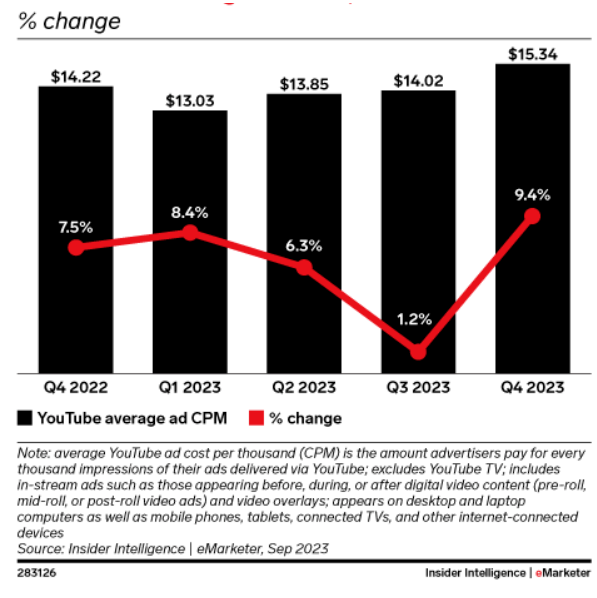
Industry analysts predict that the average YouTube CPM for 2026 will likely continue to hover in the $8 to $20 range, with niche and audience demographics remaining the primary drivers of variance. For creators, the average YouTube RPM in 2026 is expected to remain between $2 and $8 per 1,000 views, although continued growth in viewer engagement and the adoption of new monetization features could push this figure higher for successful channels. The ongoing evolution of advertising technology and a persistent demand for engaging video content suggest that creators who can consistently produce high-quality, audience-attracting videos will be well-positioned for continued financial success on the platform.
Strategies to Increase YouTube RPM
Creators can implement several strategies to enhance their YouTube RPM:
-
Optimize Content for High-Demand Keywords: Utilizing keyword research tools can help creators identify topics that are actively being searched for by users and are also of interest to advertisers. Tools like TubeBuddy’s Keyword Explorer can reveal search trends and advertiser interest, guiding content creation towards subjects that attract more valuable ads. However, it’s imperative that keywords accurately reflect the video’s content to maintain viewer trust and engagement.
-
Focus on Viewer Engagement and Watch Time: Creating compelling content that holds viewers’ attention for longer periods is crucial. This not only satisfies YouTube’s algorithm, leading to broader content distribution, but also allows for more ad impressions, particularly mid-roll ads. The goal should be to provide genuine value and maintain viewer interest naturally, rather than artificially extending video length.
-
Understand Your Audience Demographics: Knowing who your viewers are – their age, location, interests, and purchasing power – can help you tailor your content and attract advertisers who are specifically targeting those demographics.
-
Explore Multiple Monetization Streams: While ad revenue is a primary source, creators can diversify their income through channel memberships, merchandise sales, affiliate marketing, sponsorships, and digital product sales. This reduces reliance on ad revenue alone and can contribute significantly to overall earnings.
-
Regularly Analyze Performance Metrics: Consistently reviewing YouTube Analytics, paying close attention to RPM trends, and identifying which videos or series perform best in terms of monetization, can provide valuable insights for future content strategy.
In conclusion, while understanding CPM is useful for context within the advertising ecosystem, it is RPM that truly matters for YouTube creators aiming to gauge and grow their earnings. By focusing on creating high-quality, engaging content, understanding their audience, and strategically optimizing their monetization efforts, creators can significantly improve their revenue per thousand views and build a sustainable career on the platform. The digital landscape is constantly evolving, and staying informed about these key metrics and adapting strategies accordingly is paramount for success.
Related posts: