Unleashing the Beast: Inside the Evolution of Jeep Gladiator V8 Power and the Extreme $210,000 Hellcat Conversions

For years, automotive enthusiasts shopping for a new Jeep Gladiator have faced a singular powertrain limitation. While the midsize truck has routinely earned praise for its exceptional off-road architecture, utilitarian bed, and open-air design, it has historically launched and lived with just one factory engine option: a 3.6-liter Pentastar V6. Generating a respectable 285 horsepower and 260 pound-feet of torque, this naturally aspirated powerplant remains a capable workhorse for navigating rugged backcountry trails and handling everyday towing duties. Yet, a vocal segment of the off-road community has continually demanded more muscle from under the hood.
This consumer desire for enhanced performance has not gone unnoticed by automotive journalists or manufacturers. In comprehensive reviews of recent model-year Gladiator Rubicon variants, automotive critics frequently laud the vehicle’s articulation, suspension tuning, and trail-conquering technology, while simultaneously criticizing the glaring lack of alternative engine choices. For buyers dreaming of factory-backed, high-displacement V8 performance—specifically a supercharged Hellcat configuration directly from Stellantis assembly lines—the official catalog has consistently come up empty.
However, the landscape of high-performance midsize trucks is undergoing a significant shift. Driven by shifting corporate product strategies and an active aftermarket sector, the horizon is expanding for Jeep enthusiasts who refuse to compromise on horsepower. While official factory V8 options are finally making their way back into the broader Jeep ecosystem, motorists seeking ultimate, uncompromising supercharged performance have long relied on specialized engineering firms to bridge the gap. Among these, America’s Most Wanted 4×4 (AMW4x4) has emerged as an industry leader, transforming standard Gladiators into terrifyingly fast, seven-hundred-horsepower off-road titans.
The Factory Shift: Jeep’s Hemi and V8 Strategy
The overarching narrative surrounding Jeep’s powertrain philosophy has experienced notable fluctuations over the past several model cycles. When Stellantis phased out the acclaimed Wrangler Rubicon 392—which packed a 6.4-liter Hemi V8 producing 470 horsepower—enthusiasts mourned the apparent death of mainstream V8-powered Jeep products. The decision was initially framed as a casualty of increasingly stringent corporate average fuel economy (CAFE) standards and an aggressive industry-wide pivot toward electrification and turbocharged six-cylinder engines, such as the Hurricane inline-six.
Despite these regulatory pressures, consumer demand proved resiliently vocal. Recognizing the enduring passion for traditional displacement, Jeep leadership recently signaled a strategic course correction. Bob Broderdorf, CEO of the Jeep brand, addressed these enthusiast concerns during a corporate briefing, delivering news that electrified the loyalist community. Broderdorf explicitly stated that the brand intends to extend the availability of the 392 powertrain on the Wrangler and actively leverage the raw power and performance of the legendary Hemi engine across a broader array of Jeep products.
Addressing Wrangler and Gladiator fans directly, Broderdorf offered reassurance: "Don’t worry." This statement confirmed that factory V8 power is indeed on the horizon for the broader Jeep lineup. Nevertheless, industry analysts note a crucial distinction for truck buyers: while a standard V8 may eventually materialize in a factory showroom, a factory-built, supercharged Hellcat-powered Gladiator remains strictly in the realm of aftermarket modification. For buyers unwilling to wait for official corporate timelines, specialized third-party converters are the only route to achieving ultimate Hellcat performance.
Anatomy of an Aftermarket Transformation: The AMW4x4 Hellcat Approach
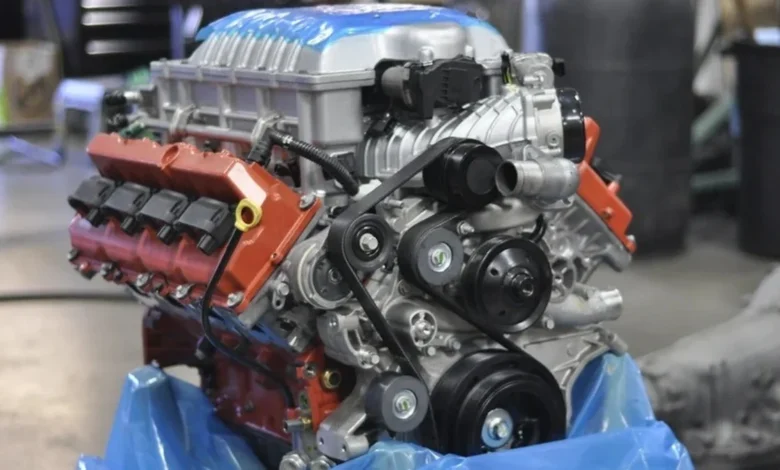
For those who view factory power figures as merely a baseline, aftermarket specialists like AMW4x4 provide an extreme alternative. Operating outside the traditional OEM framework, these custom builders take brand-new or customer-supplied Gladiators and completely re-engineer their mechanical architecture to safely harness the ferocious output of a supercharged 6.2-liter Hellcat Hemi crate engine.
The performance metrics associated with these conversions fundamentally redefine the midsize truck segment. AMW4x4 offers primary conversion tiers that yield either 707 or 717 horsepower, with both versions churning out a massive 650 pound-feet of torque. Compared to the standard factory 3.6-liter V6, these upgraded platforms deliver an astonishing additional 400-plus horsepower and nearly 390 pound-feet of torque. This vaults the Gladiator from a competent trail explorer into an ultra-high-performance machine capable of astonishing acceleration both on and off the pavement.
Decoding the Pricing and Turnkey Packages
Transforming a vehicle designed for a modest V6 into a receptacle for a supercharged V8 is far from a simple bolt-on procedure. It requires a comprehensive overhaul of nearly every major mechanical system. Consequently, achieving Hellcat-level performance in a Jeep Gladiator requires a substantial financial investment.
For buyers seeking a complete, ready-to-drive solution without the hassle of sourcing a donor vehicle, turnkey models represent the pinnacle of the tuner market. The flagship 2025 AMW 707 8LUG Hellcat conversion, for instance, commands a price tag of $210,245. This premium cost is justified by a sweeping array of heavy-duty hardware upgrades tailored to handle the immense torque load. Such vehicles are typically outfitted with 17-inch forged beadlock wheels wrapped in aggressive Nitto Trail Grappler MT tires, a ported cast-iron gearbox, massive 8-piston brake calipers to bring the heavy truck to a controlled stop, and specialized suspension components designed to maintain stability at high speeds.
Buyers looking for a slightly more accessible entry point into the lineup can opt for the AMW 717 Gladiator package, which starts at $133,855. While less expensive than its 8-lug sibling, this configuration still incorporates critical foundational enhancements, including comprehensive suspension geometry revisions, upgraded transmission components, and a functional RAM air hood designed to feed the supercharged engine with cool ambient air.
The Conversion Process: Engineering Challenges and Labor Realities
Motorists who already own a Jeep Gladiator and wish to convert their existing vehicle face a different financial and logistical structure. AMW4x4 offers a standalone Hellcat powertrain installation package priced at just under $60,000.
While the supercharged crate engine itself commands a retail price north of $16,000, simply dropping the massive iron-block V8 into the engine bay is mechanically impossible without extensive supporting infrastructure. The comprehensive Gladiator Conversion Package includes a multitude of mandatory reinforcements. These comprise a heavy-duty engine mounting system engineered to withstand torsional stress, advanced thermal management systems featuring a dedicated oil cooler kit and a high-flow 940-watt electric cooling fan, a significantly beefed-up ZF automatic 8-speed transmission capable of handling high-torque outputs, an upgraded high-pressure fuel pump, and a high-output alternator to power the vehicle’s electrical demands.
According to engineering specifications provided by conversion shops, executing a complete Gladiator Hellcat conversion requires approximately 65 hours of specialized labor. This extensive timeframe underscores the intricate nature of integrating modern computerized engine management systems, custom wiring harnesses, and heavy-duty drivetrain components into a vehicle chassis that was never originally engineered to accommodate them from the factory floor.
Broader Market Implications and Competitive Landscape
The market for high-horsepower midsize trucks exists within a fascinating niche of the modern automotive industry. While mainstream manufacturers are increasingly pressured to downsize engines, adopt hybrid architectures, or transition entirely to battery-electric propulsion, a passionate sub-market of consumers continues to place a premium on internal combustion performance, acoustic drama, and mechanical mechanical simplicity.
The existence of six-figure Hellcat-powered Gladiators highlights a broader trend: the flourishing ecosystem of high-end vehicle upfitters. Companies like AMW4x4, along with various other boutique customizers, operate in a space where OEM limitations serve as business opportunities. For affluent enthusiasts, these conversions offer an alternative to cheaper factory alternatives or standard midsize pickups that prioritize efficiency over exhilaration.
Furthermore, the impending arrival of official factory V8 options from Jeep suggests that the brand recognizes the enduring cultural equity of traditional engine layouts. Even as regulatory bodies push for greener fleets, the psychological and marketing power of the Hemi badge remains potent. Whether consumers choose to wait for a factory-engineered V8 solution or immediately invest in an aftermarket Hellcat conversion, the Jeep Gladiator has firmly cemented its status as one of the most versatile and customizable platforms in automotive history—proving that for the right price, power is truly limitless.