UGREEN Unveils Ambitious Local AI Home Ecosystem and Robotics Platforms at IFA 2026

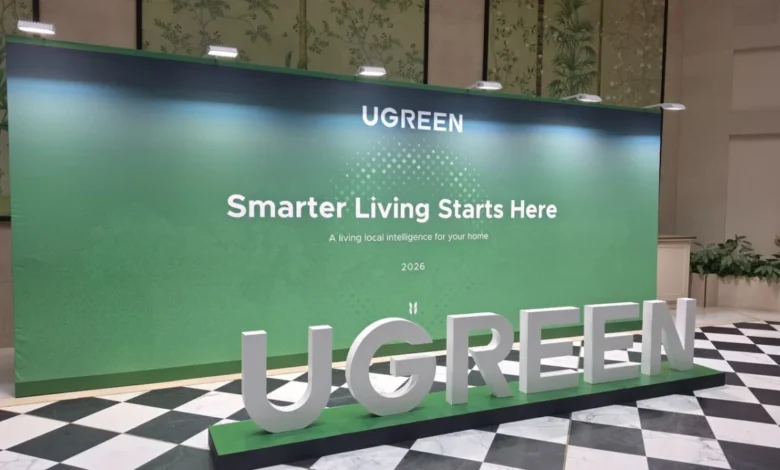
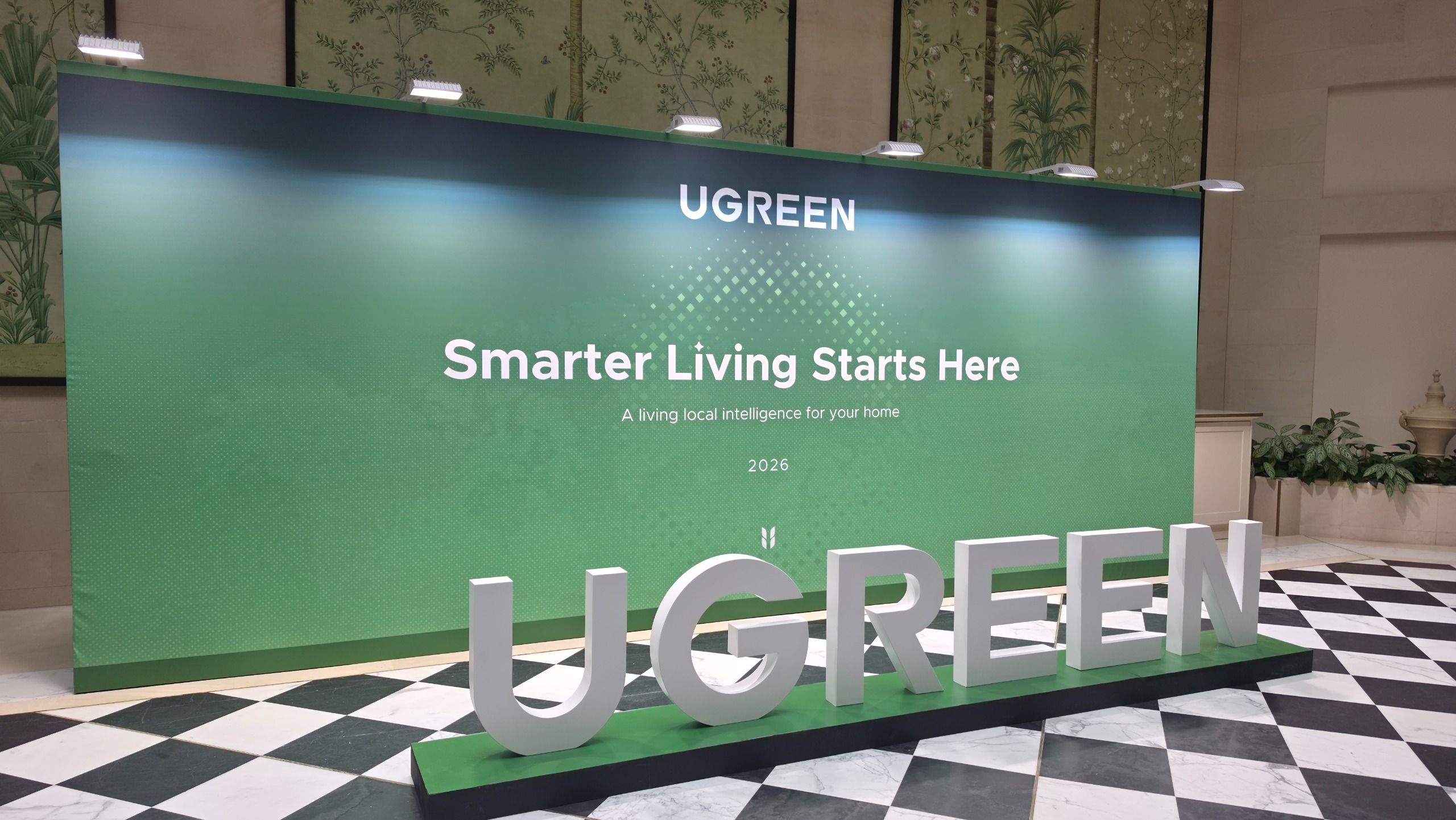
The annual IFA consumer electronics trade show in Berlin, widely regarded as one of the most influential technology exhibitions in the world, served as the backdrop for a significant strategic pivot by UGREEN. While the company has historically established its market presence through high-quality charging solutions, power banks, and data storage peripherals, its 2026 showcase marked a bold entry into the high-end smart home automation and local artificial intelligence sectors. The centerpiece of this expansion is the Master Home Agent series, a lineup of localized AI hubs designed to shift the paradigm of home intelligence away from cloud-dependent processing toward secure, on-device compute.
A New Era of Localized Intelligence
The core challenge facing the smart home industry remains the tension between convenience and privacy. Historically, voice-activated assistants and automated security systems have relied on cloud-based servers to process natural language queries and analyze video feeds. This dependence raises significant concerns regarding data security, latency, and system functionality during internet outages. UGREEN’s new Home Agent series seeks to address these friction points by utilizing the NVIDIA Jetson Thor robotics platform.
By integrating the Jetson Thor architecture—a powerhouse in the realm of autonomous machines and edge computing—UGREEN is positioning its hardware as a "local brain" for the modern residence. Unlike standard smart speakers that merely act as an interface for cloud servers, the Home Agent acts as a centralized server that manages storage, computing, and AI-driven logic entirely within the physical confines of the user’s home. This architecture ensures that sensitive data, such as personal media files and real-time security footage, never leaves the local network.
The Home Agent Product Hierarchy
During the keynote event at IFA 2026, UGREEN introduced a three-tiered structure for its Home Agent lineup, each targeting a distinct segment of the high-end smart home market:
- The Master Home Agent: Positioned as the flagship, this $20,000 unit is clearly aimed at enterprise-level smart homes, luxury residential projects, and users requiring heavy-duty computational power. It represents the pinnacle of UGREEN’s current R&D capabilities.
- The HA100 Pro: Priced at $5,999, this model serves the "prosumer" market. It retains the core local AI capabilities of the flagship but is streamlined for high-end residential integration.
- The HA100: Retailing at $1,799, this serves as the entry point into the ecosystem. While it remains a significant investment for a household hub, it offers the fundamental benefits of local AI privacy at a more accessible, albeit still premium, price point.
The reaction from industry analysts and attendees was mixed, with the $20,000 price point of the flagship model drawing both curiosity and skepticism. However, from a technical perspective, the pricing reflects the cost of integrating enterprise-grade edge computing hardware into a consumer-facing chassis.
Expanding the Ecosystem: Surveillance and Peripherals
Beyond the central intelligence hubs, UGREEN utilized the IFA stage to unveil a comprehensive suite of hardware designed to communicate directly with the Home Agent series. The new "SynCare" security line is specifically engineered to feed data into the local AI architecture:
- SynCare Indoor Cam ID500 Pro: A high-resolution camera optimized for interior monitoring with localized processing.
- SynCare PoE Cam OD600 Pro: An outdoor solution utilizing Power over Ethernet (PoE) to ensure reliable connectivity and power delivery, essential for perimeter security.
- SynCare Battery Cam OD800 Pro: A versatile, wire-free option for flexible deployment.
In addition to security, UGREEN introduced the Gallery E-Paper Smart Frame, which integrates with the Home Agent to display curated content locally, and a dedicated smart speaker designed to interact with the system’s proprietary "Uliya" voice interface. Furthermore, the company demonstrated the MagFlow Pro Magnetic Power Bank, which distinguishes itself as the world’s first Qi2-certified power bank featuring integrated liquid cooling. This advancement addresses the thermal throttling issues often associated with fast wireless charging, reinforcing UGREEN’s commitment to technical innovation in its traditional power-accessory segment.
The Strategic Shift: Privacy as a Premium Feature
The decision to emphasize "local-only" AI is a deliberate strategic move. In the current market, consumer trust regarding data privacy is at an all-time low, with reports of data leaks and unauthorized cloud access periodically surfacing in the tech sector. By marketing its systems as "for your eyes only," UGREEN is tapping into a growing demographic of users who are willing to pay a premium for hardware that functions without an active internet connection.
Industry observers suggest that this pivot places UGREEN in direct competition with established smart home incumbents, though the company’s approach is distinctly hardware-centric. By utilizing NVIDIA’s robotics-grade components, UGREEN is essentially building a miniature data center for the home. The implications of this are significant: if successful, this could set a new industry standard where the "smart" in smart home is defined by local processing power rather than cloud-connected convenience.
Implications for the Smart Home Market
The arrival of the Home Agent series represents a broader trend within the electronics industry toward "Edge AI." By moving the intelligence to the edge (the device itself), manufacturers are reducing the load on centralized data centers while simultaneously enhancing user experience through lower latency.
However, the barrier to entry remains high. With the cheapest unit starting at $1,799, these products are currently out of reach for the average consumer. This creates a market dichotomy: advanced privacy and local control are currently being positioned as luxury goods, rather than standard consumer features. The primary challenge for UGREEN moving forward will be scaling these technologies downward. For the Home Agent to reach mass-market adoption, the company will need to iterate on its hardware to lower production costs without compromising the integrity of the local AI processing.
Future Outlook and Industry Context
IFA 2026 has served as a pivotal moment for UGREEN. By moving beyond charging cables and power banks, the company is attempting to transition into a "lifestyle technology" brand. The integration of the NVIDIA Jetson platform is a strong signal that UGREEN intends to be taken seriously as a player in the robotics and automation space.
Looking ahead, the success of the Home Agent ecosystem will likely depend on software interoperability. A smart home hub is only as effective as the devices it can control. If UGREEN can establish broad compatibility with existing third-party smart home standards, its localized AI could become the preferred choice for privacy-conscious users.
As the "home agent era" begins, the industry will be watching to see if UGREEN’s high-performance, high-price strategy resonates with the global market. While the $20,000 flagship may be a headline-grabber, the true test lies in whether the HA100 series can convince enough consumers that privacy and local processing are worth the significant investment. For now, UGREEN has successfully shifted the conversation, forcing competitors to consider whether their own cloud-first models remain viable in an increasingly privacy-focused landscape. The company’s presence in Berlin has not only showcased new products but has challenged the status quo of how we interact with our living spaces, setting the stage for a transformation that prioritizes local autonomy over cloud dependence.