Three Sisters Marry Their Cameraman Amidst Controversy and Police Investigation in India

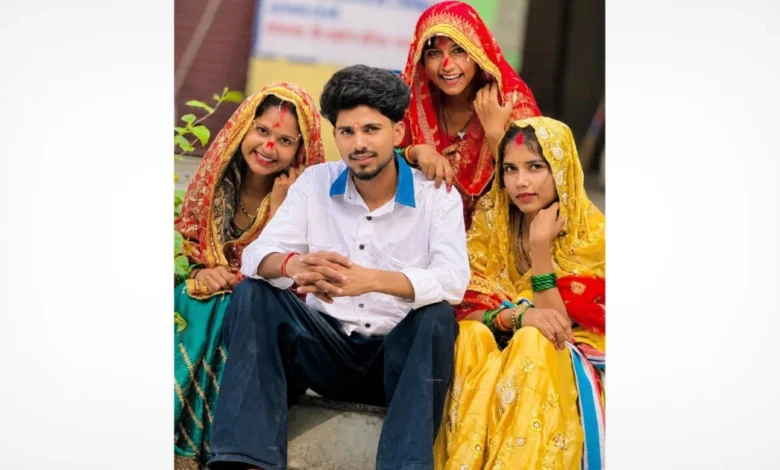
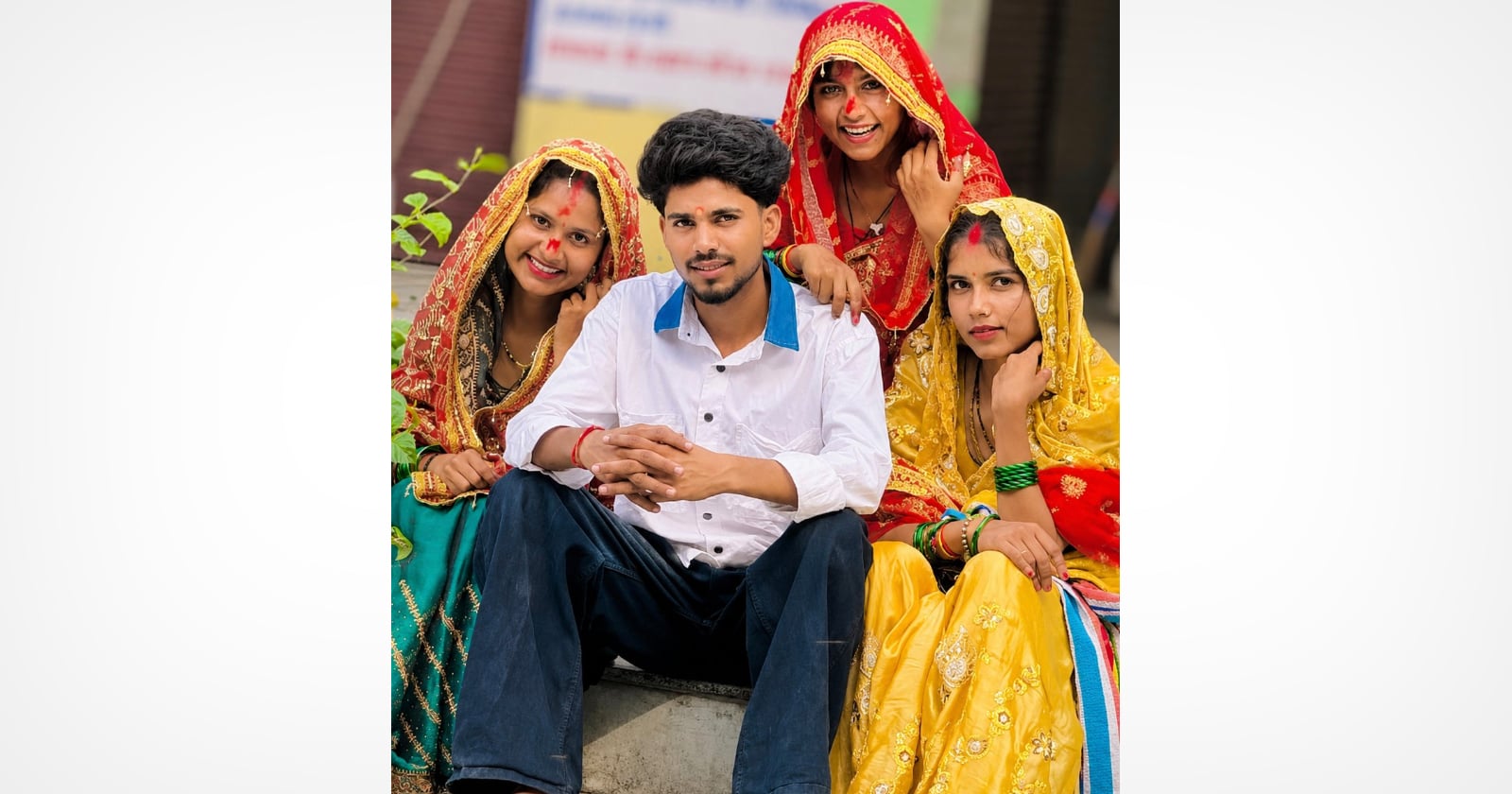
Indian police are investigating allegations that a photographer married two sisters and their cousin who he had been working for. The reported marriage between 23-year-old cameraman and photographer Vikas to sisters Santosh, 18, and Savitri, 19, along with their cousin Saroj, 20, has sparked significant controversy and public debate in India. The unusual union, which allegedly took place on July 15, 2026, has drawn widespread attention due to its unconventional nature and the subsequent official inquiry.
Unfolding the Allegations: A Viral Wedding and Official Scrutiny
The narrative began to gain traction after a video, purportedly showing the wedding ceremony of Vikas with the three women at a temple in Padar, India, went viral across social media platforms. This digital dissemination prompted local police officials to launch an investigation into the circumstances surrounding the alleged marriages. The core of the police inquiry revolves around verifying the age of the individuals involved and ensuring that no legal or ethical boundaries have been crossed, particularly concerning marriage laws in India which stipulate a minimum age for both brides and grooms.
According to multiple Indian news reports, Vikas had been collaborating with the three women, who are described as social media influencers, for approximately six months. His role involved providing photography and videography services for their online content. The three women, Santosh, Savitri, and Saroj, have publicly defended their decision, stating that their union with Vikas was motivated by a desire to remain together and avoid separation, particularly in light of societal pressures and potential familial arrangements for individual marriages. This rationale, however, has not quelled criticism from certain religious groups and a segment of the online community in India, who view the alleged polygamous marriage as a transgression of traditional and religious norms.
Timeline of Events: From Collaboration to Controversy
The sequence of events leading to the current investigation appears to have unfolded over several months, culminating in the reported ceremony in mid-July 2026.
- Approximately Six Months Prior to July 2026: Vikas begins working as a photographer and videographer for Santosh, Savitri, and Saroj, who are active social media influencers. During this period, a professional relationship develops, which the women claim later evolved into a desire for a collective union.
- Early July 2026: Reports suggest that the families of the sisters began arranging separate marriages for them. This, according to the women, was a primary catalyst for their decision to marry Vikas.
- July 15, 2026: The alleged wedding ceremony takes place at a temple in Padar, India. Details of the ceremony are sparse, but a video purportedly capturing the event begins to circulate online.
- Mid-July 2026: The viral video of the ceremony sparks widespread discussion and criticism on social media. Religious groups and concerned citizens begin to voice their objections.
- Late July 2026: Following the viral spread of the video and the ensuing public outcry, Indian police officials in the Amroha district of Uttar Pradesh initiate an investigation. The four individuals involved are summoned to the police station.
Official Responses and Legal Scrutiny
The investigation is being handled by the Hasanpur police station. Senior Sub-Inspector Amit Kumar confirmed that the four individuals, Vikas and the three women, were called in for questioning. The primary focus of the police’s immediate action was to verify their ages and gather initial statements regarding the alleged marriage.
"We have requested proof of age from all four individuals," stated Circle Officer Pankaj Kumar Tyagi in a report to The Tribune. "Legal action will be taken if a complaint is received or if any violation of the law is found." The police have reportedly instructed the individuals to submit written statements explaining the circumstances that led to the alleged marriage. The authenticity of the documents and the statements are currently under verification.
Beyond the police inquiry, the temple where the alleged ceremony took place has also initiated its own internal investigation. This probe aims to ascertain the identity of the officiant and the validity of the marriage rituals performed, if any. The potential legal ramifications could range from charges related to bigamy or polygamy, depending on the specific laws applicable and the confirmed marital status of the individuals, to violations of child marriage prevention acts if any of the individuals are found to be below the legally stipulated age.
Supporting Data and Legal Context
In India, the legal age for marriage is 18 years for women and 21 years for men. Marriages involving individuals below these ages are considered illegal and can have severe consequences. Furthermore, while India has historically had provisions for polygamy, particularly within certain religious communities, such practices are subject to strict legal scrutiny and are generally not permitted under secular law. The Indian Penal Code addresses offenses related to marriage, including bigamy.
The women involved, Santosh (18), Savitri (19), and Saroj (20), are all of legal age to marry as individuals. However, the union with a single male partner, Vikas (23), raises questions about the legal permissibility of such a marriage under Indian law, which typically recognizes monogamous unions. The police’s emphasis on age verification is crucial, as any minor involved would immediately trigger a different set of legal actions.
The fact that the women are social media influencers adds another layer to the narrative. Their public personas and online presence mean that the story has been amplified significantly, leading to a broader public discourse on marriage, tradition, and individual choice. The women’s stated reason for the marriage – to avoid separation – highlights a complex interplay of personal desires and societal pressures.
Reactions and Broader Implications
The alleged marriage has elicited a spectrum of reactions. While the women assert their autonomy and decision-making as adults, several Hindu groups and local traders have condemned the act, deeming it contrary to religious traditions and societal values. This criticism reflects a common sentiment in many parts of India where traditional family structures and marriage customs are deeply ingrained.
The women’s defiant statement, "We will die but will not separate," underscores their commitment to their unusual union and their rejection of societal disapproval. This sentiment, while potentially driven by personal conviction, also brings into sharp focus the challenges faced by individuals who deviate from established norms.
The implications of this case extend beyond the immediate legal scrutiny. It raises questions about:
- The Influence of Social Media: How online platforms can amplify personal stories and potentially create alternative narratives that challenge traditional societal structures.
- Individual Autonomy vs. Societal Norms: The ongoing tension between an individual’s right to make personal choices regarding relationships and marriage, and the expectations and regulations imposed by society and religious institutions.
- The Evolution of Marriage: In a rapidly changing world, particularly with the rise of digital culture, definitions and practices surrounding marriage are being tested and redefined. This case, however unusual, can be seen as an extreme manifestation of this ongoing evolution.
- The Role of Law Enforcement: The police’s involvement highlights the delicate balance between respecting individual freedoms and upholding the legal framework governing marriage and personal conduct.
The investigation is ongoing, and the final outcome will depend on the evidence gathered and the interpretation of relevant laws. However, the story of Vikas and the three sisters has already become a talking point, reflecting the diverse and often conflicting values present in contemporary India. The case serves as a potent reminder of the societal debates surrounding marriage, tradition, and individual choice in the 21st century.