The evolving landscape of post-production and the future of professional creative education in the age of platform convergence

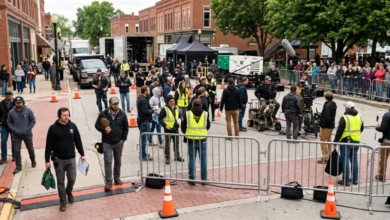
The recent NAB New York conference served as a bellwether for the professional media industry, highlighting a period of profound transition. As hosts Scott Simmons, Katie Hinsen, and Michael Kammes explored in their latest analysis, the line between broadcast-grade workflows and social-media content creation is blurring at an unprecedented rate. This shift, coupled with broader macroeconomic instability and the changing nature of how industry professionals acquire skills, suggests that the media sector is currently navigating its most significant pivot since the transition from film to non-linear digital editing.
NAB New York: Convergence and Technical Shifts
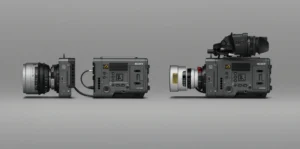
The NAB New York exhibition floor this year provided a snapshot of an industry in the throes of integration. The traditional barriers between "prosumer" social media tools and high-end broadcast equipment are dissolving. A primary example of this is the advancement of PTZ (Pan-Tilt-Zoom) camera technology, which now offers image quality and color science previously reserved for cinema-grade setups. These cameras are increasingly becoming the backbone of hybrid event coverage and high-end streaming, reflecting a workflow where the demand for efficiency often outweighs the traditional reliance on multi-person camera crews.
Simultaneously, the industry is grappling with the tension between vertical and horizontal video formats. While mobile-first platforms have dictated the "vertical" aesthetic for nearly a decade, recent moves by platforms like Instagram—which is actively testing 90-minute horizontal video capabilities—indicate a strategic pivot toward long-form, television-style viewing. This move represents a direct challenge to YouTube’s dominance and signals that social platforms are no longer just repositories for bite-sized clips; they are positioning themselves as primary digital broadcasters.
Industry Instability: Layoffs and Corporate Consolidation
The broader professional landscape is currently marked by a series of contractionary events. Recent months have seen significant workforce reductions across the sector, with Netflix initiating layoffs affecting approximately 6% of its global staff as growth rates stabilize. Similarly, the merger between Paramount and Skydance has triggered a wave of voluntary redundancy programs and buyouts, reflecting a broader effort across major studios to streamline operations in an era of high interest rates and declining linear cable revenue.
This climate of uncertainty is compounded by the ongoing debate over artificial intelligence. The industry is currently locked in a complex discourse regarding the use of copyrighted material to train generative AI models. As studios and independent creators alike weigh the productivity gains of AI-assisted post-production against the risks of IP dilution, the legal and ethical frameworks remain in flux. This volatility is further evidenced by a trend of software acquisitions and price adjustments, such as Blackmagic Design’s recent promotional discounts for DaVinci Resolve, juxtaposed against hardware price hikes that reflect the rising costs of global supply chain logistics.
The Closure of Mixing Light and the Shift in Professional Education
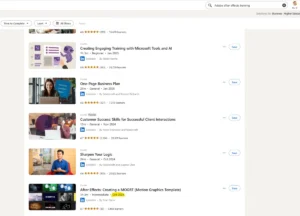
Perhaps the most symbolic moment of this transition is the closure of Mixing Light, a platform that served as a cornerstone for color-grading education since 2013. Founder Patrick Inhofer recently announced the difficult decision to shutter the site, citing a confluence of factors: subscription fatigue, declining retention rates, and the ubiquity of free technical instruction on platforms like YouTube.
The closure of a niche, high-end educational resource raises critical questions about the future of professional development. Inhofer noted that while the technical aspects of color grading are now easily accessible via fragmented, free video tutorials, the deeper, context-driven knowledge—the "why" behind the "how"—is becoming harder to find. In the past, the apprentice-style mentorship fostered within physical post-production facilities acted as an incubator for senior-level judgment. As those facilities downsize or move to remote-first models, the industry risks losing the mentorship pipeline that historically produced highly skilled colorists and editors.
The Role of Automation and Human Craft
While the industry embraces tools like Bitfocus Companion to streamline complex tasks, there is a growing consensus that technical speed should not be conflated with creative expertise. The discussion among industry experts suggests that while automation can handle the repetitive, manual aspects of the post-production pipeline, it cannot replicate human judgment or emotional nuance.
The reliance on AI-driven color correction or automated framing tools can accelerate a project, but it also carries the risk of homogenization. Without the structured, deep-dive education that platforms like Mixing Light once provided, junior professionals may become proficient in using software tools while remaining under-trained in the fundamentals of color science, visual narrative, and the subtle art of the final polish. The consensus is that while the business models for professional training must evolve, the industry remains fundamentally reliant on human-led curation and the preservation of craft.
Regional Shifts in Production Geography
Geographically, the industry is seeing a notable shift in production centers. Recent data from the Hollywood Reporter indicates that New York is poised to overtake California as the top state for television and film production. This trend is driven by a combination of state-specific tax incentives, the availability of specialized studio space, and a move away from the high cost-of-living centers that have historically dominated the industry. This shift is likely to persist as production companies seek to minimize overheads while maximizing the quality of the local labor pool.
Addressing the Future: Curation and Community
Despite the disruptions, there remain pockets of innovation and community-driven progress. The "One Cool Thing" segment of the industry discussion highlighted a move toward broader social responsibility and tool-based efficiency. Projects like the Akuakrom Development Project in Ghana and the Haiti Housing Collaborative Initiative illustrate a growing interest among media professionals in applying their organizational and project-management skills to disaster-resilient, sustainable housing.
These initiatives, combined with technical advancements like the integration of MotionVFX into the Apple Creator Studio, show that the industry is not dying—it is transforming. The challenge for the next generation of post-production professionals is to adapt to a landscape where the "professional" grade is no longer defined by the hardware one owns, but by the ability to navigate a sea of free information and curate a meaningful creative path.
Summary of Industry Indicators
- Production Geography: New York is showing consistent growth in production volume, challenging California’s long-held status as the primary hub for film and television.
- Corporate Trends: Major streamers and studios (Netflix, Paramount/Skydance) are actively engaging in cost-cutting measures, including workforce reductions and voluntary buyouts.
- Technological Shifts: The move toward long-form horizontal content on social platforms (e.g., Instagram) marks a formal entry into the traditional broadcasting arena.
- Educational Evolution: The closure of specialized platforms like Mixing Light signals a move away from subscription-based, curated deep-learning toward fragmented, high-speed, free educational content, raising concerns about the long-term health of professional craftsmanship.
As the industry moves forward, the consensus among observers is that the tools will continue to get faster and cheaper, but the value of human experience—mentorship, contextual awareness, and the ability to make artistic decisions that software cannot quantify—will become the defining differentiator for successful professionals in the coming decade. The transition period, while difficult, is likely to lead to a more decentralized, technologically integrated, and globally dispersed creative workforce.