Native Instruments Announces Collaboration with A.G. Cook to Launch Super*Saw Synthesizer Plugin

The landscape of electronic music production and sound design has long been defined by the distinctive, harmonically dense architecture of the stacked sawtooth wave. Originating during the digital and virtual analog hardware revolution of the 1990s, the "supersaw" quickly became the foundational element of European rave anthems, euphoric pop arrangements, and contemporary wall-of-sound club music. Expanding upon this enduring legacy, audio software pioneer Native Instruments has officially announced the release of Super*Saw, a dedicated software synthesizer co-developed alongside visionary producer, songwriter, and PC Music founder A.G. Cook. Pronounced "SuperStarSaw," the instrument represents a significant collaborative effort to codify decades of hyper-layered sound design into a single, highly expressive, and streamlined virtual studio technology (VST) plugin.
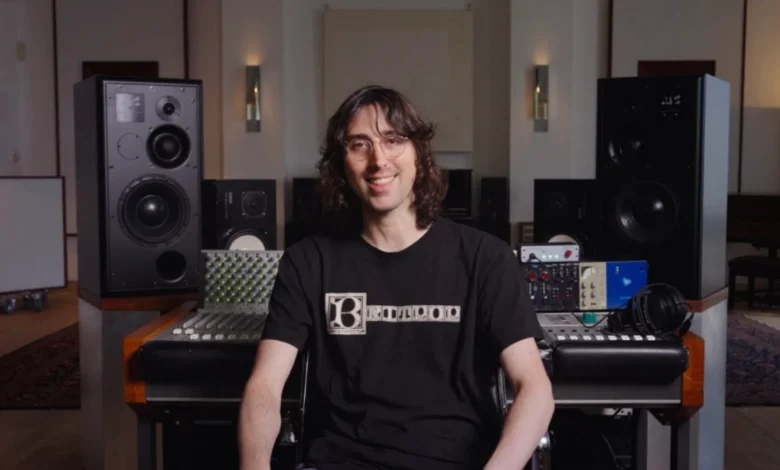
To mark the global rollout of the instrument, Native Instruments and A.G. Cook coordinated an exclusive behind-the-scenes press briefing and demonstration at the historic Baltic Studios in London. During the session, industry observers, engineers, and music journalists were given an in-depth look at Cook’s personal production methodologies, his approach to subverting traditional digital instrument boundaries, and the technical engineering required to distill complex multi-track stacking workflows into an intuitive interface designed for real-time performance.
Historical Evolution and the 1990s Supersaw Legacy
To understand the engineering and aesthetic goals behind Super*Saw, one must examine the origins of the original supersaw waveform. Popularized in the late 1990s—most notably with the introduction of Roland’s JP-8000 hardware synthesizer in 1997—the supersaw architecture allowed multiple sawtooth oscillators to run simultaneously, slightly detuned against one another, within a single voice. This innovation generated an immense, wide, and aggressive sonic footprint that defined the trance, techno, and progressive house movements of the turn of the millennium.
Over the subsequent decades, producers continually pushed this concept further, particularly within the hyperpop, underground electronic, and experimental pop scenes of the 2010s and 2020s. Artists began manually duplicating tracks, automating fine-tuning parameters across disparate third-party plugins, and layering dozens of individual voices to achieve an even thicker, more saturated wall of sound.
A.G. Cook, known widely for his decade-long trajectory as the founder of the influential PC Music label and his extensive production and remix work with mainstream and avant-garde artists such as Charli XCX, Caroline Polachek, and Oklou, has frequently utilized these complex stacking techniques. Across his extensive catalog—including his multi-disc solo project 7G, his sophomore studio album Apple, and his recent record Britpop—Cook systematically explored the outer limits of digital synthesis. However, achieving these signature textures historically required tedious audio routing and time-consuming DAW (Digital Audio Workstation) session management. Super*Saw was conceived to eliminate these administrative production hurdles, transforming a laborious technical workaround into an immediate, playable instrument.
Design Philosophy: Balancing Minimalist Workflow with Maximalist Sound
The development of Super*Saw bridges the gap between historical reverence and modern software efficiency. Reflecting on the genesis of the project, A.G. Cook noted that designing a proprietary signature software instrument had been a long-term professional ambition.
"It’s funny having my own synth plugin," Cook observed during the London launch event. "It’s something that’s always been a bit of a goal of mine and kind of on the back burner. I’m always excited when I see artists make their own tools around a specific ideology they have."
That underlying ideology focuses on taking established musical paradigms and stretching their structural integrity. Rather than attempting to simulate acoustic instruments or emulate traditional analog warmth, Super*Saw fully embraces the pristine, aggressive, and potentially chaotic nature of digital processing. Cook’s production philosophy frequently leverages stark contrasts between minimal structures and maximalist execution, a tension that is visually and aurally represented within the new plugin’s architecture.
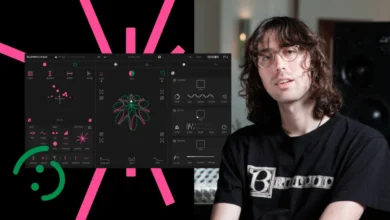
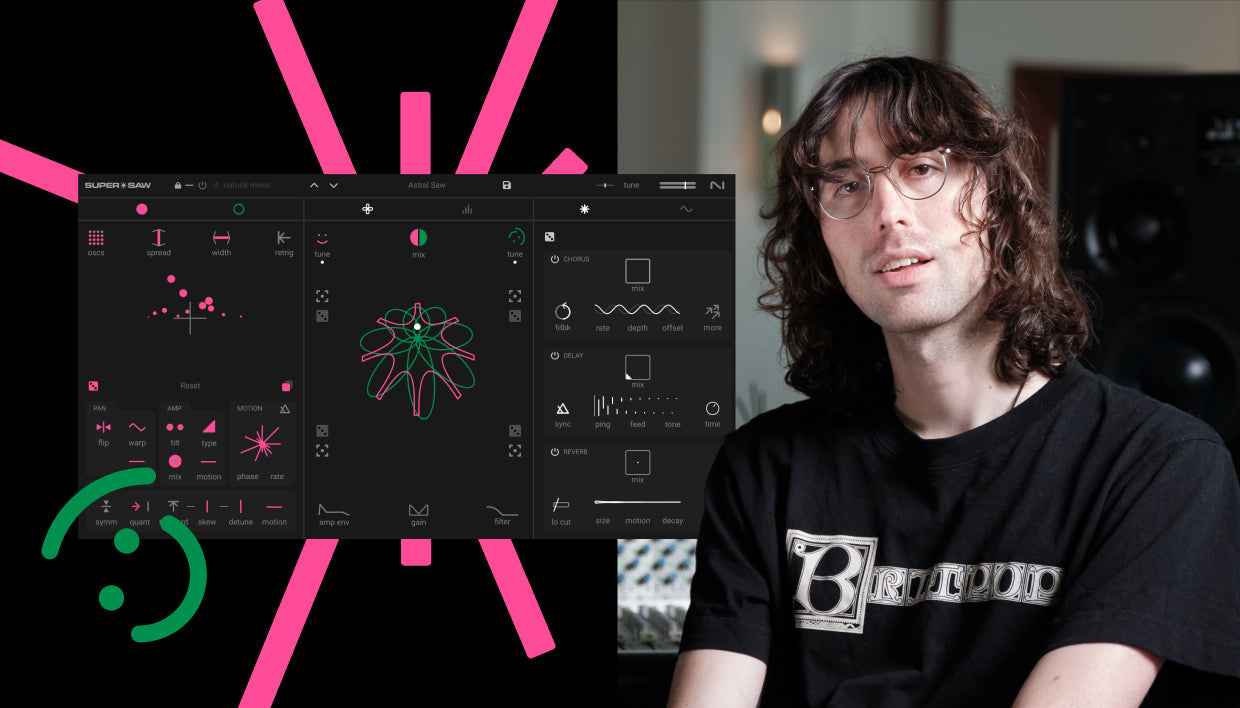
The instrument features a dual eight-voice sawtooth oscillator system divided into two distinct, color-coded visual and functional layers: pink and green. This binary structural choice draws direct aesthetic inspiration from Cook’s recent album Britpop while serving a practical acoustic purpose.
"I had a strong sense that it would be two layers, these two groups, because that’s often how I think about building sounds," Cook explained. "It’s almost like having a comedic duo. One half could be going crazy and the other half could be anchoring it with a fundamental note. It then became obvious that pink and green would stack really well while feeling distinct, so you have these two vivid, contrasting colour worlds."
Technical Architecture and Interface Innovations
Engineered for real-time interaction and dynamic performance, Super*Saw moves away from static preset manipulation and tedious mouse-drawn automation curves. At the core of the interface is a four-corner Morpher, which allows performers to smoothly transition between disparate chord voicings, detuning rates, and internal modulation states simply by manipulating a central control point.

The instrument’s architecture incorporates several key engineering features tailored for modern electronic music production:
- Dual 8-Voice Sawtooth Oscillators: Two independent, highly configurable layers enabling complex polyphonic stacking without excessive CPU taxation.
- Integrated Motion Controls: A star-shaped modulation matrix capable of being mapped simultaneously to stereo panning, amplitude envelope, and pitch shifting.
- Randomization Engine: Built-in stochastic "dice" parameters allowing producers to instantly generate unexpected variations across either the pink or green layers, fostering rapid experimentation.
- Controlled Saturation and Filtering: Specialized shaping tools designed to handle the extreme harmonic build-up inherent in heavily stacked sawtooth waves, preventing digital clipping while preserving high-end clarity.
By restricting the sound generation engine entirely to variations of the sawtooth wave, Super*Saw encourages users to focus purely on the physics of frequency stacking, stereo imaging, and rhythmic modulation. According to Cook, pushing these oscillators to their absolute limits often yields unexpected sonic transformations.
"The supersaws get so thick that they’re essentially percussion," Cook noted, referencing tracks from his 7G release like "Mad Max." "At that point, it stops even being audible as a chord, and you just hear it as a block of sound."
Industry Implications and Broader Market Impact
The release of Super*Saw arrives at a time of significant maturation within the virtual instrument market. As software developers increasingly partner with prominent contemporary producers and genre architects—rather than relying solely on traditional sound designers or legacy synthesizer manufacturers—the market has seen a rise in workflow-specific, artist-endorsed plugins designed to solve niche production challenges.
For Native Instruments, a company with a rich history of developing industry-standard production suites such as Komplete, Massive, and Kontakt, the collaboration with A.G. Cook signals a strategic alignment with the cutting edge of modern pop and electronic music design. By capturing Cook’s specific workflow philosophy into a commercially viable tool, Native Instruments provides bedroom producers and professional mixing engineers alike with direct access to techniques that previously required advanced routing expertise and custom macro programming.
Furthermore, the instrument serves as a conceptual bridge connecting the foundational electronic music production tools of the late 1990s with the hyper-accelerated production methodologies of the 2020s. Industry analysts suggest that plugins focused on a single, highly specialized waveform or synthesis technique—rather than exhaustive multi-engine workstations—are experiencing a surge in demand as producers seek speed, immediate character, and focused creative constraints.

Availability and Future Outlook
Super*Saw is available immediately via the official Native Instruments digital store, compatible with major digital audio workstations across both macOS and Windows operating systems. The release is accompanied by a series of official video walkthroughs, preset libraries designed by Cook and guest sound designers, and technical documentation aimed at helping producers integrate the dual-layer architecture into their existing templates.
For A.G. Cook, the instrument functions as a definitive milestone that encapsulates a major era of his creative output while establishing a platform for future generations of electronic musicians.
"This plugin is a sort of coda, epilogue, or final chapter to the albums that I’ve already released as A.G. Cook," he concluded. "Not just the Britpop pink-and-green color scheme, but also the echoes of 7G and Apple’s sonic world. It feels more exciting than just making a big sample pack of all those sounds, to think about boiling that stuff down into an instrument that can be used by other people in completely different ways."
As electronic music continues to evolve through the intersection of nostalgic hardware emulation and futuristic digital manipulation, tools like Super*Saw demonstrate that foundational waveforms—when reimagined through modern software engineering—retain an unlimited capacity for reinvention.
Related posts: