Seth MacFarlane’s Ted Season 2 Elevates Visual Effects with Groundbreaking AI and Intricate World-Building

While known for creating raunchy, boundary-testing comedies, Seth MacFarlane is equally willing to push technological boundaries to realize his storytelling ambitions, a commitment nowhere more apparent than in the Ted franchise. The fully CG title teddy bear has headlined two successful feature films and now two seasons of a popular TV series on Peacock, continually challenging visual effects teams to innovate. For the eight-episode sophomore season of Ted, Co-Visual Effects Supervisors Blair Clark and Hoyt Yeatman faced an eclectic mix of visual effects challenges, ranging from conjuring a detailed fantasy world for a Dungeons & Dragons-themed episode to digitally recreating a period-appropriate Bill Clinton using advanced machine learning, and even making Ted fluffier than ever before. This season represents a significant leap in the integration of cutting-edge technology with traditional VFX artistry, demonstrating how MacFarlane’s vision continues to drive technical innovation in television production.
The Enduring Appeal of Ted: A CGI Protagonist’s Journey
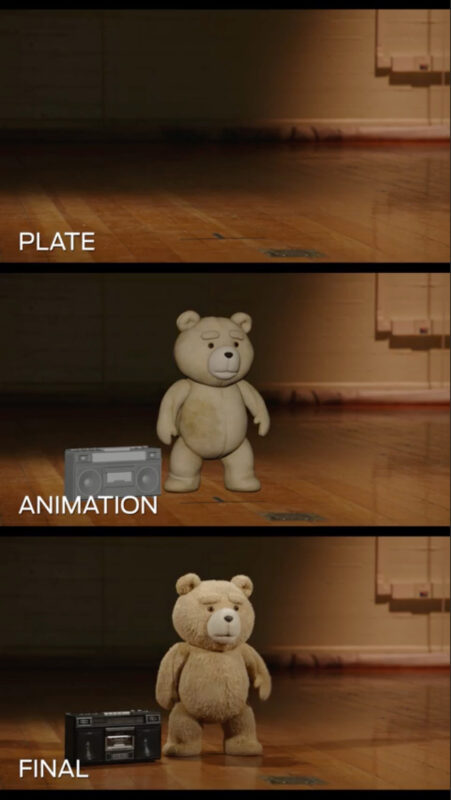
The character of Ted, a foul-mouthed, sentient teddy bear, first captivated audiences in 2012. His creation presented a unique challenge: a fully computer-generated main character interacting seamlessly with live-action actors in a grounded, contemporary setting. This foundational technical hurdle set a high bar for believability, requiring meticulous animation, realistic fur simulation, and precise integration into various environments. Over the past decade, as the franchise transitioned from blockbuster films to a streaming series, the core team, including animation powerhouse Framestore, has maintained a consistent level of quality, evolving Ted’s digital presence with each iteration. The series, set in 1993, serves as a prequel, exploring Ted’s early years with a teenage John Bennett, allowing for new comedic scenarios and, consequently, new visual effects demands. The continuity of the creative and technical teams, particularly Framestore’s long-standing involvement, has been crucial in preserving Ted’s distinctive personality and visual integrity, making him a beloved, if unconventional, member of the cast rather than a mere digital construct.
Pushing Boundaries: Seth MacFarlane’s Vision for VFX
Seth MacFarlane’s career is marked by a distinctive blend of irreverent humor and an unyielding drive for technical excellence. From the pioneering animation techniques in Family Guy to the ambitious space opera aesthetics of The Orville, MacFarlane consistently leverages technology to enhance his storytelling. The Ted series, despite its comedic premise, is no exception. "This season we went in a bunch of different directions. There were a lot of effects that went outside of the realm of doing a Ted," notes Hoyt Yeatman, underscoring the expanded scope of visual effects in Season 2. MacFarlane’s hands-on approach and clear creative directives often push his VFX teams to explore novel solutions, transforming what might seem like straightforward comedic setups into complex technical undertakings. This season’s challenges, from historical recreations to fantastical realms, exemplify this philosophy, demanding innovative approaches that blend traditional VFX methodologies with emerging technologies like machine learning.
The Art of Reanimation: Bringing Bill Clinton to Life with AI
One of the most ambitious and technically challenging sequences in Ted Season 2 involved Seth MacFarlane portraying a mid-1990s Bill Clinton. The initial directive from the studio prohibited the use of AI, necessitating a traditional CG approach. Rights for news videos and presidential portrait photographs were acquired from the William J. Clinton Presidential Library, forming the basis for an accurate ZBrush sculpt of the former U.S. president. However, a significant anatomical discrepancy became evident: the head shapes of MacFarlane and Clinton were vastly different, making a simple digital paint-over or minor adjustment impractical. This led to the realization that a full CG head replacement was required.
Initial Challenges and the Uncanny Valley
Gradient Effects was initially engaged, utilizing their proprietary Shapeshifter software to create a 3D mesh of MacFarlane’s head, which was then applied to the Clinton rig based on the ZBrush sculpt. While an improvement, this method struggled to overcome the "uncanny valley" effect – a phenomenon where human replicas that appear almost, but not quite, human elicit feelings of eeriness and revulsion. Achieving the subtle nuances of human facial expression and speech with traditional CG in a highly recognizable public figure proved immensely difficult, particularly when factoring in existing photography, established lighting, and MacFarlane’s live performance. This challenge is common in digital de-aging or celebrity recreation, where the audience’s inherent familiarity with the real person makes any imperfection glaring.
Deep Voodoo’s AI Solution: A New Tool in the Arsenal
Faced with these persistent difficulties, the team sought more advanced solutions. They discovered Deep Voodoo, a visual effects house based in Venice, California, founded by South Park creators Trey Parker and Matt Stone, which specializes in visual effects with a focus on AI. Deep Voodoo was developing an application that mirrored traditional CG head replacement, but with the added power of artificial intelligence. Yeatman explains, "They were literally trying to do what we do in CG, which is to lop the head off somewhere through the neck and replace the whole head with CG, including the hair, ears and the back of the head."
The key advantage of Deep Voodoo’s approach was its AI’s profound understanding of the human face and, critically, human speech. The AI model was trained on Bill Clinton’s facial features and then tasked with analyzing the existing plate footage, meticulously accounting for Seth MacFarlane’s performance, camera lensing, tracking data, and on-set lighting. It rendered a 1024 x 1024 pixel window that precisely replaced MacFarlane’s head.
Integrating AI into the Traditional VFX Pipeline
Yeatman elaborates on the transformative impact of this AI integration: "The advantage of using AI over CG is that it understands human speech well. This means you can look into the mouth and see the tongue moving. In animation, you can’t capture that, or the little nuances around the eyes and squints; AI does that perfectly. AI does all the heavy lifting that is not seen by the viewer but is felt by them. That’s the last 5% or 10% that you struggle with in traditional CG. AI was another tool in the visual effects arsenal." This statement highlights a crucial shift: AI isn’t a replacement for VFX artists but an enhancement, capable of handling the minute, almost imperceptible details that elevate a digital human from "almost real" to genuinely believable. It’s about achieving that final layer of authenticity that often proves elusive and labor-intensive with conventional methods. It’s important to note that this was not a "magic pushbutton" solution; the AI-generated element was still fed into a standard visual effects pipeline, undergoing compositing, multiple approval stages, and color correction, just like any other VFX asset. This demonstrates a thoughtful and controlled application of AI within established production workflows, ensuring quality and creative oversight.
Venturing into Fantasy: The Dungeons & Dragons Episode
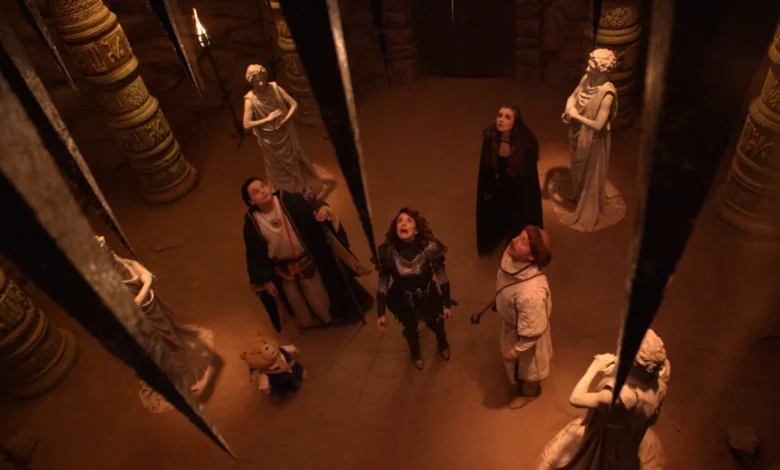
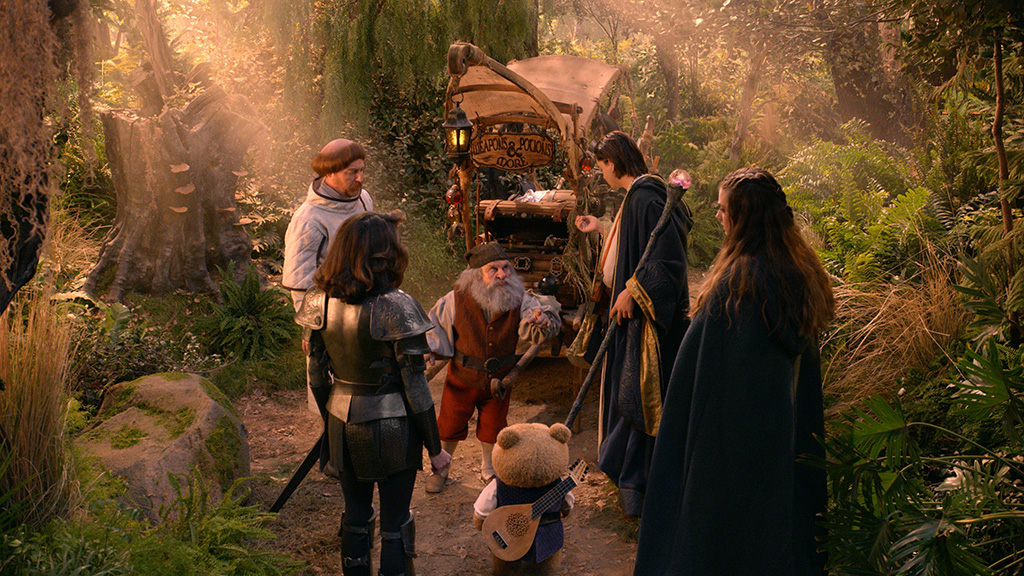
Beyond the complex facial reconstruction, Ted Season 2 also plunged into an elaborate fantasy realm for its Dungeons & Dragons-themed episode (Episode 203). This required a dramatic shift in visual style and presented a different set of challenges, demanding extensive collaboration between visual effects, art, and costume departments.
Crafting an Immersive World: Practical Builds and Digital Extensions
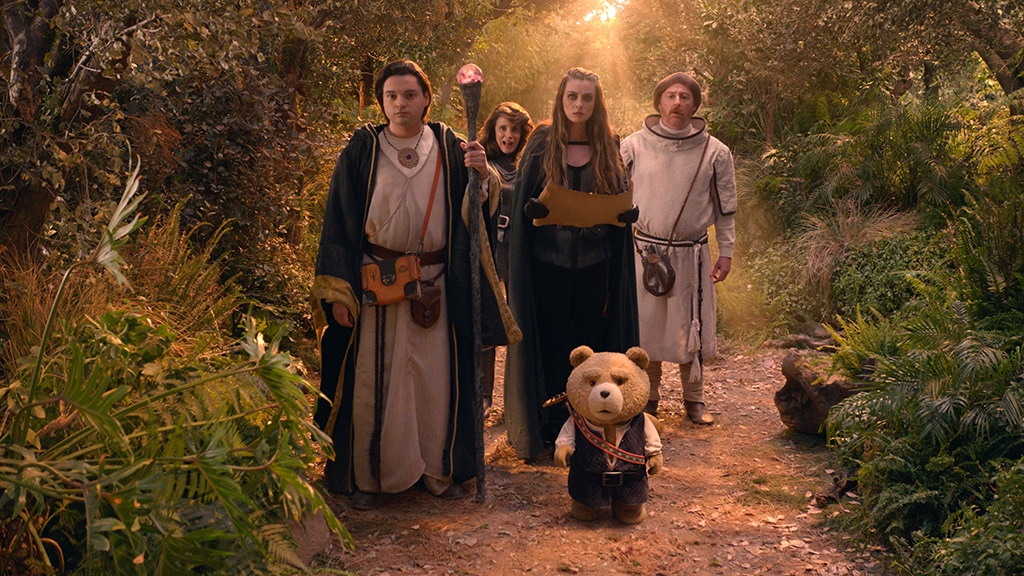
For the D&D quest, specific rules governed Ted’s appearance; for instance, he was never to wear shoes, as "they look like an orthopedic contrivance that’s ridiculous," Clark shares. The art department played a pivotal role, creating a comprehensive Unreal Engine previs (previsualization) of the sequence, mapping out everything from a grand vista to the intimate forest path where the actors would walk. This previs allowed the team to plan complex camera movements, such as a 64-foot crane shot that was later executed as a 24-foot physical move extended digitally.
A massive practical forest set was constructed on a Universal Studios stage, featuring over 3,000 linear feet of bluescreen extending 40 feet high. This immense scale, however, brought its own challenges. "The tree branches were less than eight or nine inches away from the bluescreen, which is typically a big no-no," Yeatman laughs, referring to the ideal separation needed for effective lighting and keying. Despite these close quarters, the team aimed for a magical, immersive feel, including "God rays" filtering through the branches and subtle particulates floating in the air. Achieving this naturally on a stage, especially the columnated light rays from a distant sun, was impossible. The solution involved LiDAR scanning the practical set to create a volumetric 3D representation of all elements – plants, trunks, rocks. This digital replica allowed VFX artists to precisely track the camera, fill the CG area with atmospheric effects, and artificially introduce a key light source to generate the realistic God rays. These effects were composited in layers, creating a sophisticated "clamshell" effect that seamlessly blended foreground, actors, midground, and digitally extended backgrounds, ensuring the forest felt boundless and enchanting.
Conjuring Creatures: The Demon Dra’hul
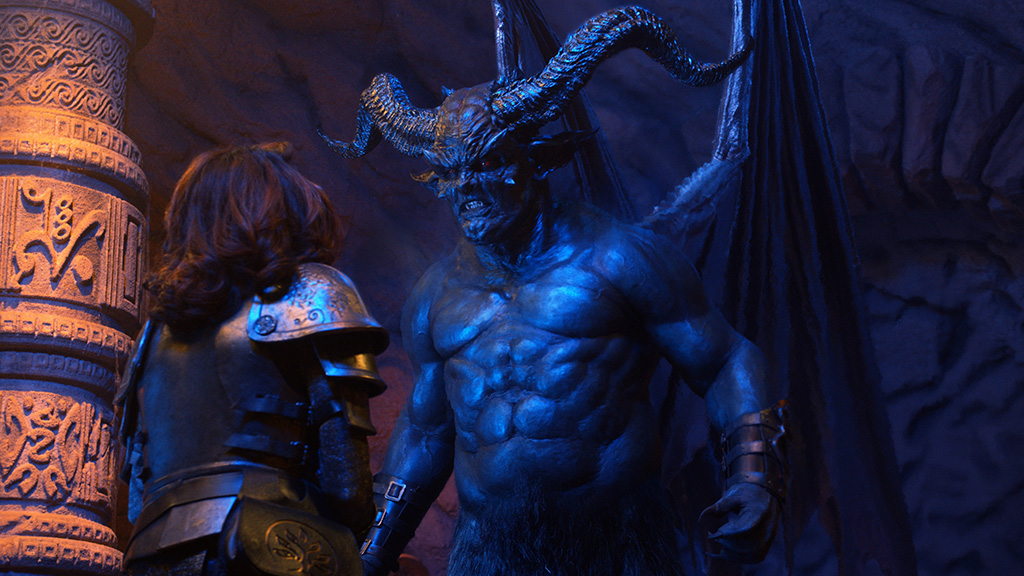
The episode also featured the demon Dra’hul, brought to life through a combination of practical prosthetics and digital enhancements. Clark reveals, "We added wings, slimmed down the waist and did a treatment on the skin that was otherworldly or ethereal. Other than that, it was straight makeup. It looked great." This hybrid approach allowed for tactile interaction on set with the actor in prosthetics while leveraging VFX to add fantastical elements that would be impossible or impractical to achieve physically, resulting in a believable and menacing creature.
The Many Moods of Ted: From Fluffy to Furballs
At the heart of the show’s visual effects remains Ted himself, a testament to consistent character animation and technical artistry.
Framestore’s Legacy: Consistency and Character Nuance
Framestore in Melbourne has been the primary animation studio for Ted since the first feature film. This long-term commitment has cultivated a deep understanding of the character. "Framestore in Melbourne did all the Ted work in this season. It was a continuation of a labor of love. The same team has been on the show since the first feature, so they had the recipe for his movements and mannerisms," Clark highlights. This continuity is vital for maintaining Ted’s established personality, comedic timing, and physical presence, ensuring he feels like a consistent character despite being entirely digital.
Physicality and Performance: Making Ted Believable
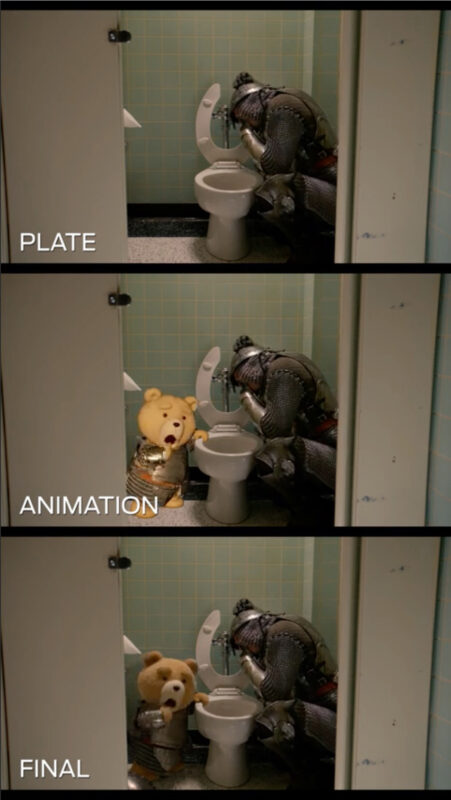
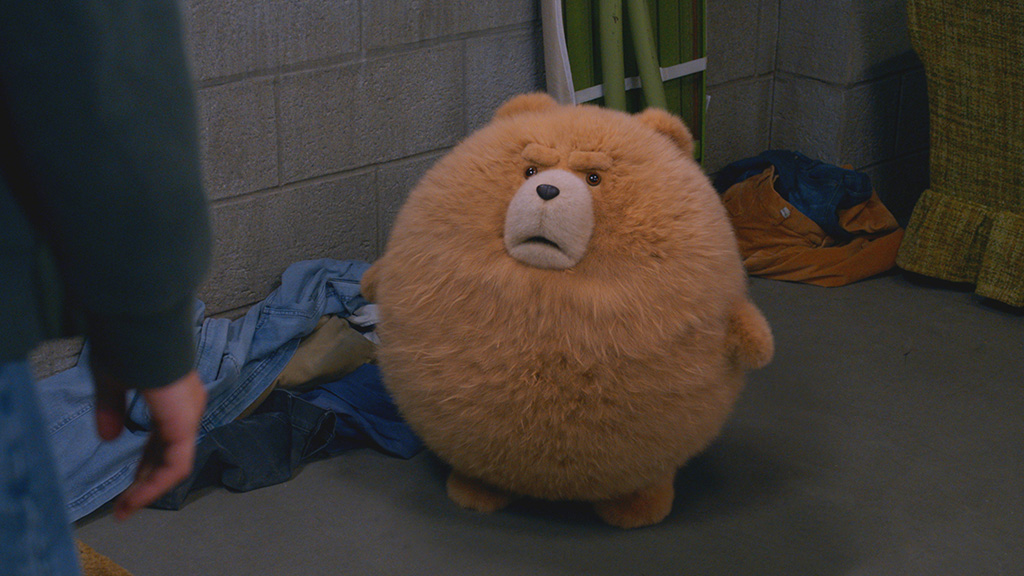
The season featured several memorable gags involving Ted’s physical state. One popular meme-generating moment involved Ted emerging from a dryer, "the fluffiest he had ever been!" MacFarlane’s specific vision for this was a "full sphere of fur," pushing the animators to exaggerate Ted’s fluffiness beyond previous portrayals, showcasing the artistic license allowed within the established character design. Another recurring gag involved Ted coughing up furballs. Clark notes, "The success in that was mainly the pantomime. It wasn’t a struggle, but part of the trick was to keep Ted grounded in subtlety with his mannerisms and not going cartoony. Just go in enough so that people forget he is a CG character and buy him as another member of the cast." This emphasis on subtle, believable pantomime is crucial for Ted’s integration into the live-action world, preventing him from feeling like a caricature.
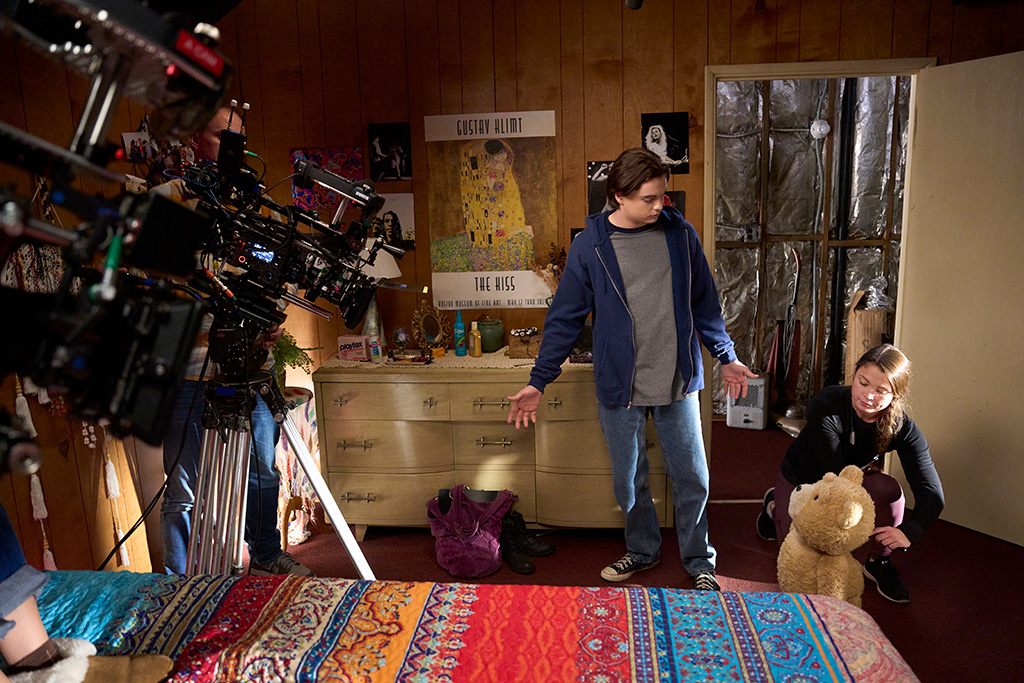
Even when Ted is thrown around, the illusion of his physicality is maintained. "Most of that was the talent of Scott Grimes being able to throw something and make it feel believable, like a football," Clark remarks. A "stunt stuffie" with detachable limbs, nicknamed "the egg" (the torso), was used for Scott Grimes to practice with, giving him a tangible sense of Ted’s volume and mass. For the actual takes, Grimes pantomimed throwing the invisible character, a testament to his performance and the precise planning by the VFX team. On set, Blair Clark often physically stands in for Ted during rehearsals, allowing MacFarlane to direct character blocking and pacing, and helping camera operators visualize the scene before the digital Ted is composited.
On-Set Innovation: Real-time Previews and Organic Performances
The integration of technology on set is critical for productions featuring CG characters. ViewScreen Studio, a real-time compositing system, remains a crucial tool for Ted.
ViewScreen Studio: Aiding Environmental Visuals
ViewScreen allows camera operators to see a rough, real-time render of Ted composited into the viewfinder, providing immediate feedback on framing and interaction. Clark observes, "It was a good reference. We integrated it as much as possible with Framestore’s capabilities because it had to be seamlessly worked into their pipeline." While helpful for general composition, its utility becomes particularly pronounced in complex environmental shots. Yeatman explains its use in the D&D forest sequence: "We did use ViewScreen in the forest as it allowed us to see beyond what we had physically on set. We had an opening shot where the camera moves 24 feet, but it was actually a 64-foot crane in the Unreal Engine animatic that we had. It gives everyone an idea of where we have to be and where the camera has to be pointed." Similarly, for a scene in a temple ceiling where spikes descend, ViewScreen aided in framing, visualizing set extensions, and determining the speed of the spikes.
The Human Element: Directing an Invisible Star
However, for dynamic character performance, the organic, improvisational nature of the Ted set often supersedes real-time digital previews. "It’s harder on the character because it’s so dynamic on set. It’s like the difference between jazz and classical music. In classical music, every single note is written down, but here you know the tune and melody and just get in there, and it organically happens," Yeatman states. This analogy perfectly encapsulates the production philosophy: while technical tools provide a framework, the human element of performance and direction drives the character’s nuanced interactions. The long-standing collaboration of the cast and crew, having worked together across features and seasons, means "they have it drilled down. That’s why it goes as smoothly as it does because everyone knows how it goes." This synergy between human performance and digital artistry is a cornerstone of the Ted franchise’s success.
Time Travel to the 90s: Recreating Boston’s Past
Beyond the titular bear and fantasy sequences, a significant portion of the VFX work was dedicated to meticulously recreating 1990s Boston. This involved extensive environmental work, transforming the backlots of Universal Studios Hollywood into period-appropriate settings.
Authenticity in Every Detail: From Trees to Traffic
"Seth was keen on the trees," Clark reveals, illustrating MacFarlane’s meticulous attention to detail. "He would be like, ‘Those look like West Coast trees.’ Seth was very specific." This required digital modification or replacement of foliage to match the distinct East Coast flora of the era. Maintaining the illusion of a specific time period presented its own set of challenges. Driving scenes, for instance, relied on traditional greenscreen techniques. "We have three cameras running all the time, so we have to deal with multi-camera shoots, which is another part of the challenge of doing visual effects," Yeatman explains. This multiplies the workload, as background plates and digital environments must be rendered for multiple perspectives simultaneously.
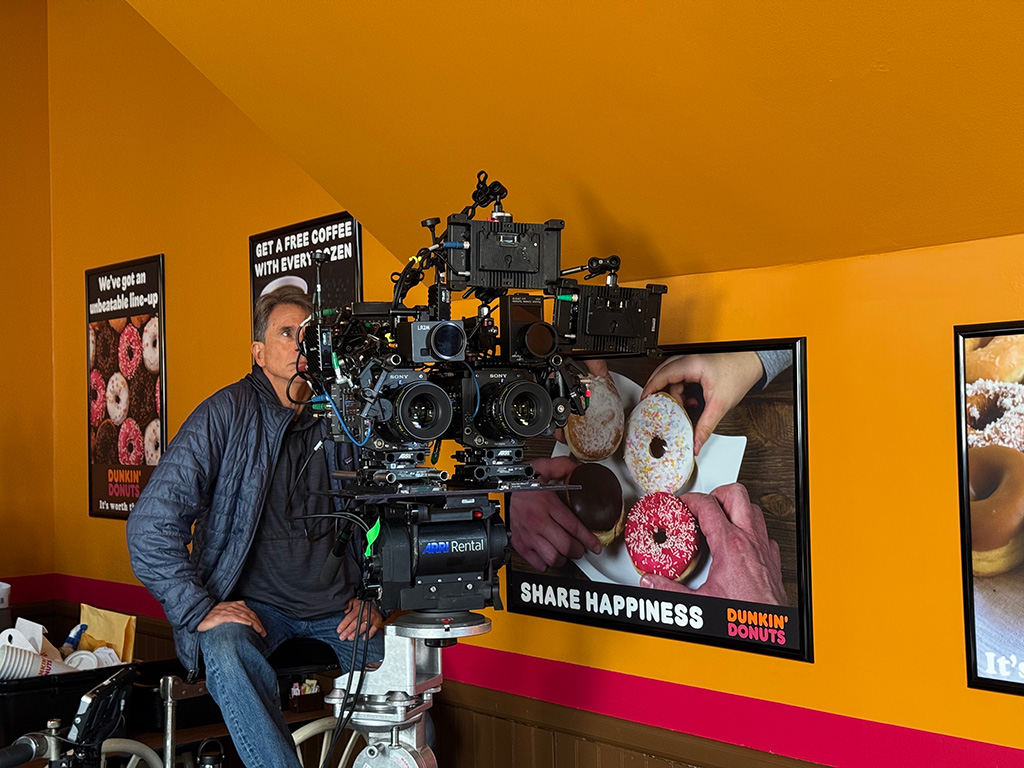
The team also utilized plates from the previous season, which were actually shot in Boston. However, even these authentic plates required significant clean-up, as anachronistic elements like modern cars had to be digitally removed and replaced with period-appropriate vehicles. For scenes at the mansion, an eight-camera array was used, providing "complete freedom on the stage," allowing for any camera angle to be seamlessly integrated with digital backgrounds. While video walls are becoming increasingly common for virtual production, Yeatman notes that for their workflow and the speed of their multi-camera shoots, their current approach was highly effective. Additionally, scenes depicting snow required practical applications of powder paper on parts of the Universal backlot, which then necessitated extensive digital extensions to cover entire neighborhoods and maintain continuity across various camera angles.
The Future of Visual Effects: Adaptability and Artistic Freedom
Co-Visual Effects Supervisors Hoyt Yeatman and Blair Clark have careers spanning decades, witnessing and contributing to the remarkable evolution of digital technology in filmmaking. Their philosophy for Ted reflects this experience: "Blair and I stay up on the latest greatest [tech] and make sure it works before we put it into practice," Yeatman affirms. This proactive approach ensures that the team can leverage emerging tools without compromising the production’s demanding schedule or creative integrity.
Their primary goal is to empower Seth MacFarlane’s unique creative vision. "We want to give Seth the greatest amount of freedom that he can have and still achieve a good look," Yeatman emphasizes. This often involves tackling seemingly "crazy" ideas that push the boundaries of what’s technically feasible. However, with a robust "back pocket" of technological solutions and a highly skilled, experienced team, they are consistently able to "pull it out, make some shots that look cool and make the day," a testament to their adaptability and problem-solving prowess. The second season of Ted stands as a compelling example of how a combination of seasoned expertise, continuous technological exploration, and a collaborative spirit can deliver ambitious visual effects that enhance storytelling, whether recreating historical figures with AI or conjuring fantastical worlds.
Collaborative Craftsmanship: A Symphony of VFX Talent
The extensive visual effects work on Ted Season 2 was a massive collaborative undertaking, involving nearly 3,000 visual shots. Alongside Framestore, key contributions came from Studio Blackbird, Rising Sun Pictures, Deep Voodoo, and Pitch Black. This consortium of talent, under the expert guidance of Clark and Yeatman, collectively ensured that every digital element, from the titular bear’s nuanced performance to the sprawling 1990s Boston streetscapes and the fantastical realms of a D&D adventure, met MacFarlane’s exacting standards. The seamless integration of their diverse specializations underscores the complex, multi-faceted nature of modern visual effects production, where innovation and collaboration are paramount.
Related posts: