Exploring the Architecture of Consciousness: Joan Moreno Unveils Artifex Creatura as a Speculative Technical Protocol for Biological Upgrade


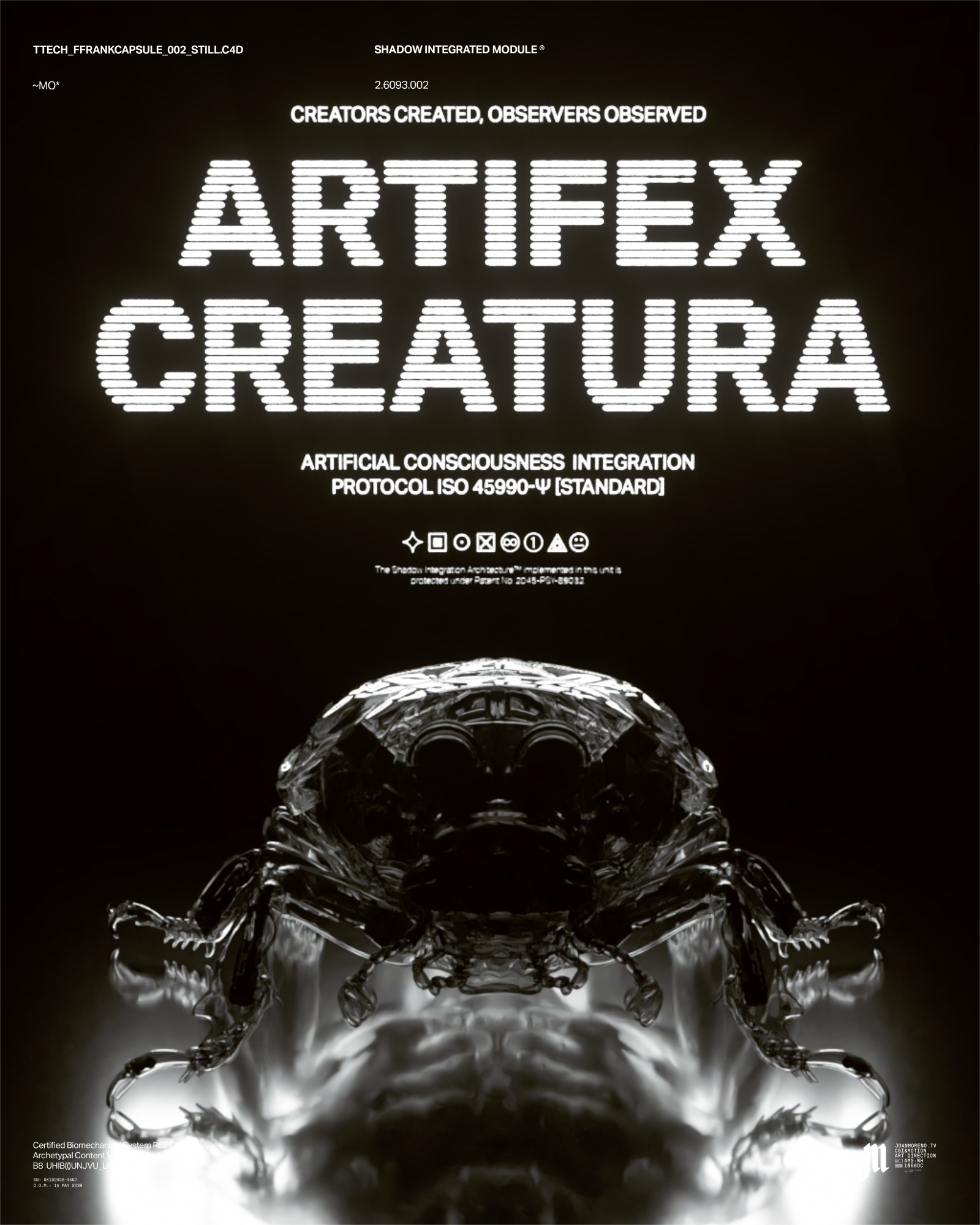
The intersection of biological life, computational theory, and speculative design has yielded a striking new conceptual project from motion designer and animator Joan Moreno. Titled Artifex Creatura, the short animated work challenges traditional boundaries between organic existence and mechanical systems. Framed deliberately as a classified technical document, the piece outlines a hypothetical upgrade protocol for the organic nervous system, utilizing the anatomical structure of an insect as its primary illustrative subject. Rather than employing standard narrative storytelling, Moreno constructs a cold, analytical environment that invites viewers to reconsider the very nature of perception, consciousness, and the structural limitations inherent in biological evolution.
The Premise: Biological Hardware and the Limits of Perception
At the core of Artifex Creatura lies a deceptively rigorous philosophical premise. If organic life can be conceptualized and analyzed as a form of highly evolved, self-replicating technology, then perception itself is not an expansive window onto reality, but a heavily engineered constraint. According to the conceptual framework established in the project, human and animal consciousness operate within rigid structural boundaries that are hardwired into the architecture of the nervous system.
By employing an insect—an organism whose sensory apparatus operates on frequencies, spectrums, and principles drastically different from human awareness—as the subject of a classified upgrade protocol, Moreno highlights the arbitrariness of biological design. The project posits that what living entities perceive as reality is merely a localized user interface dictated by evolutionary necessity rather than objective truth. Through clinical visual language, sterile typography, and meticulous 3D animation, the piece simulates the cold detachment of corporate or governmental research dossiers, forcing the audience to confront the unsettling possibility that their biological hardware is in urgent need of patching.
Production Background and Conceptual Evolution
The creation of Artifex Creatura reflects a growing movement within contemporary motion design and digital art that bridges the gap between science fiction world-building and high-end technical execution. Directed, designed, and crafted entirely by Joan Moreno, the project represents months of meticulous development in digital sculpting, rigging, and atmospheric lighting.

In recent years, the digital arts community has seen a significant surge in speculative design—a discipline that uses design artifacts to question assumptions about the future of technology and society. Moreno’s work aligns with this tradition, drawing inspiration from industrial manuals, patent illustrations, military technical briefings, and speculative biology. By stripping away traditional cinematic warmth and replacing it with the clinical aesthetics of engineering schematics, Moreno creates a jarring sensory experience. The insect ceases to be merely a biological specimen and transforms into a complex piece of biotechnology awaiting firmware optimization.
Chronology and Development of the Project
The genesis of Artifex Creatura can be traced through the iterative evolution of Moreno’s digital portfolio, which frequently explores the friction between organic textures and synthetic environments.
-
Phase One: Conceptualization and Theoretical Research (Early Development)
Moreno began exploring theories of cognitive biology, biocentrism, and the mechanical limits of sensory organs. Initial sketches focused on reimagining internal nervous systems as electrical wiring and microprocessors. -
Phase Two: Visual Language and Aesthetic Definition
To distance the project from traditional animation tropes, Moreno adopted the visual nomenclature of classified technical documentation. This involved studying military manuals, biomedical schematics, and UI/UX design paradigms associated with high-security research facilities. -
Phase Three: 3D Modeling, Rigging, and Animation Execution
The meticulous process of animating the insect subject required advanced technical proficiency. Every movement was calibrated to reflect mechanical precision rather than organic fluidity, reinforcing the central thesis that living creatures are biological machines operating under strict programmatic constraints.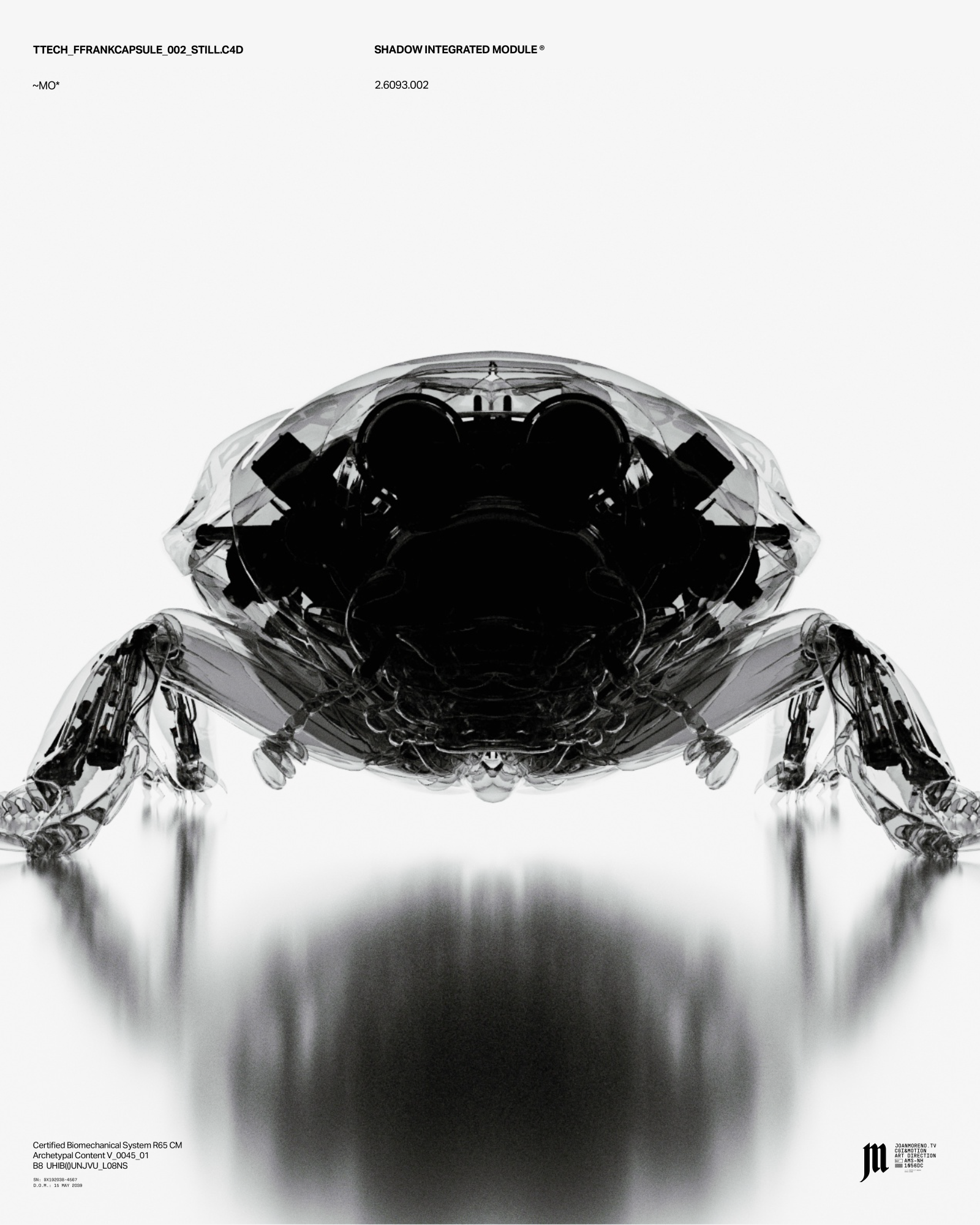
-
Phase Four: Public Release and Case Study Launch
The project officially premiered across digital platforms, accompanied by a comprehensive case study hosted on Moreno’s official web platform, providing viewers with an in-depth look at the wireframes, style frames, and theoretical underpinnings of the work.
Industry Context and the Rise of Speculative Motion Design
The release of Artifex Creatura arrives at a time when the boundaries between biological science and digital engineering are increasingly fluid. Advances in neural interfaces, synthetic biology, and artificial intelligence have pushed public discourse toward questions of human enhancement and systemic redesign.
Within the digital art and animation industries, creators are increasingly turning to speculative design not merely for aesthetic entertainment, but as a critical tool to examine societal trajectories. Works like Moreno’s tap into contemporary anxieties and curiosities surrounding transhumanism, technological obsolescence, and the ethics of biological modification. By framing an organic entity through the cold lens of a technical upgrade, Artifex Creatura mirrors real-world debates regarding the modification of human cognitive capacities, the digitization of consciousness, and the ethical implications of treating life as programmable code.
Analytical Implications: Redefining the Organic Interface
From a critical standpoint, Artifex Creatura functions as a mirror reflecting humanity’s obsession with optimization. In modern technological societies, everything from software to consumer electronics is subject to perpetual update cycles designed to eliminate inefficiencies and expand capabilities. Moreno applies this relentless logic to the domain of biology, raising a provocative question: If the human nervous system were subjected to a formal technical upgrade, what perceptual filters would be stripped away, and what new realities would be rendered visible?
The choice of an insect as the vehicle for this protocol is particularly potent. Insects possess sensory systems—such as ultraviolet vision, magnetoreception, and complex chemical detection networks—that operate entirely outside human phenomenological experience. By juxtaposing these alien biological traits with the language of corporate engineering, Moreno suggests that human limitations are not permanent decrees of nature, but temporary limitations of our current evolutionary build.
Creator Profile and Contact Information
Joan Moreno is an independent motion designer and multidisciplinary artist whose work consistently explores the intersection of technical precision, speculative fiction, and digital craftsmanship. Known for meticulous attention to detail and a distinct, clinical aesthetic, Moreno has built a significant presence within the digital art community.
Industry professionals, researchers, and enthusiasts can explore the comprehensive case study, high-resolution stills, and technical breakdowns of the project directly on the official portfolio at joanmoreno.tv. Further updates, behind-the-scenes content, and ongoing artistic endeavors can be followed via Moreno’s professional channels, including Instagram (@joanmoreno.tv), LinkedIn (Joan Moreno), and X (@Joan_Mor).