Revitalizing the Past: Cincinnati’s Historic Gwynne Building Enters a New Era as The Fidelity Hotel

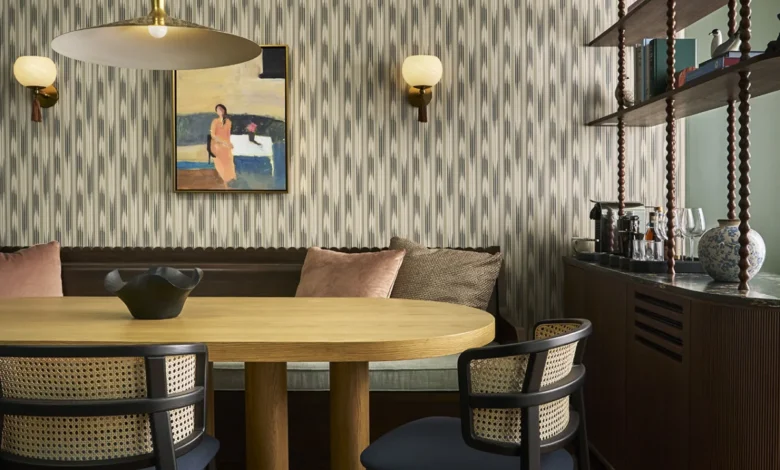
The contemporary hospitality landscape is undergoing a significant paradigm shift, steadily moving away from standardized, cookie-cutter design models toward site-responsive, highly contextual developments. In downtown Cincinnati, Ohio, this transition is personified by the newly opened Fidelity Hotel. Encompassing 165 thoughtfully appointed guest keys, the property occupies the historic Gwynne Building—a distinguished Beaux-Arts architectural landmark originally designed by early 20th-century visionary Ernest Flagg. Once celebrated as the corporate headquarters of Procter & Gamble, the structure now bridges a century of civic history with the evolving demands of modern urban travelers. Developed by the hospitality firm New Waterloo and meticulously designed by Dallas-based Looney & Associates, the hotel’s transformation serves as a case study in adaptive reuse, historical preservation, and the economic revitalization of America’s urban centers.
Architectural Heritage Meets Modern Adaptive Reuse
Constructed in the early 1900s under the direction of Ernest Flagg, an architect renowned for his pioneering work on early skyscrapers and his advocacy for building height limits and light courts, the Gwynne Building has long stood as an anchor of Cincinnati’s architectural identity. The structure’s intricate Beaux-Arts facade reflects an era when the city was frequently romanticized as the "Paris of America," a moniker earned through its burgeoning cultural institutions, thriving commerce, and ambitious urban planning.
However, transforming a century-old corporate headquarters into a high-functioning, 165-room boutique hotel presented formidable engineering and design hurdles. The National Register-listed building is not a monolithic structure; rather, it is a complex composite comprising four distinct buildings featuring varying floor elevations, differing structural framing systems, and disparate interior layouts.

To unify these fragmented spaces into a cohesive hospitality program, the project’s architects and engineers introduced a striking central intervention: a brand-new four-story light court crowned by a grand staircase. This architectural feature does double duty. Historically sensitive yet structurally innovative, the light court acts as a central lung for the interior, drawing abundant natural light and fresh air deep into the core of a building that was previously segmented and dark. Furthermore, the development team reopened several long-closed outdoor terraces, reestablishing a visual and physical connection between the hotel’s guests and the surrounding Cincinnati skyline.
Design Philosophy: Rejecting Minimalism for Residential Intimacy
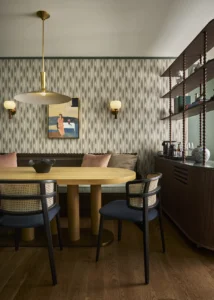
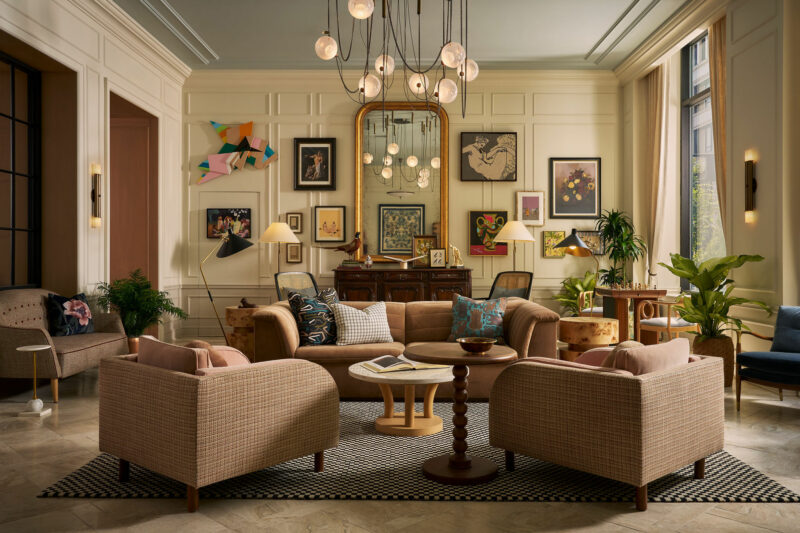
In an era where many luxury and boutique hotels lean toward sterile minimalism or ostentatious display, the interior architecture team at Looney & Associates chose a more restrained, layered approach. Stepping into the expansive lobby, visitors encounter an atmosphere of quiet confidence that feels less like a commercial hotel and more like a refined residential salon.
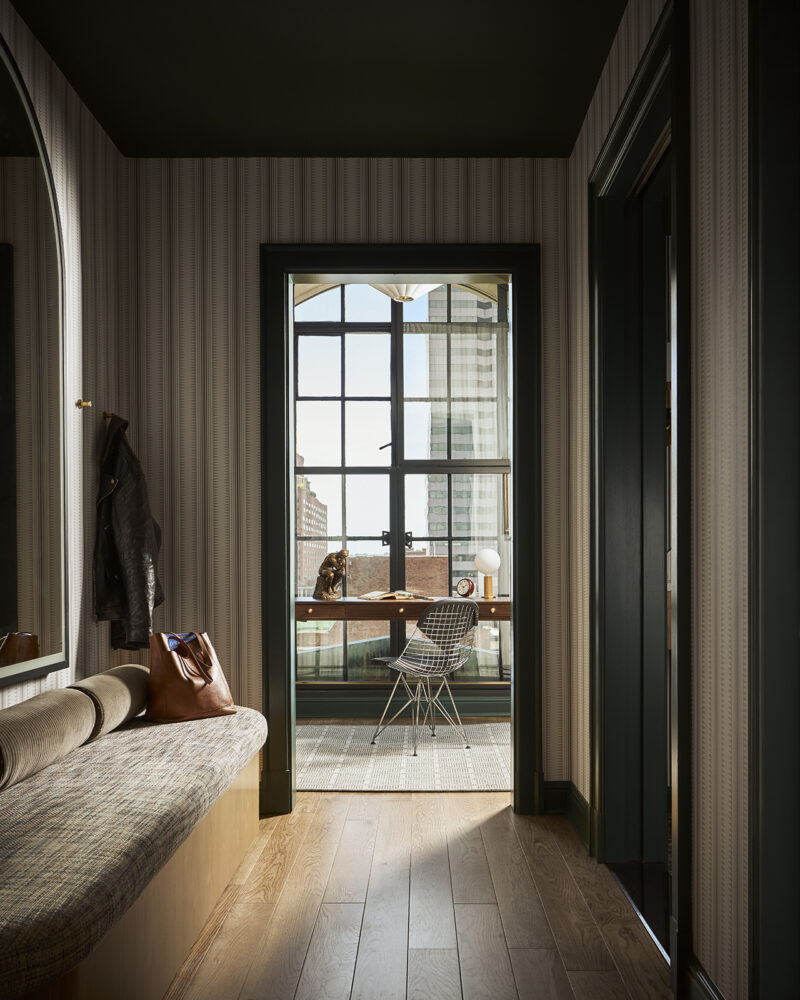
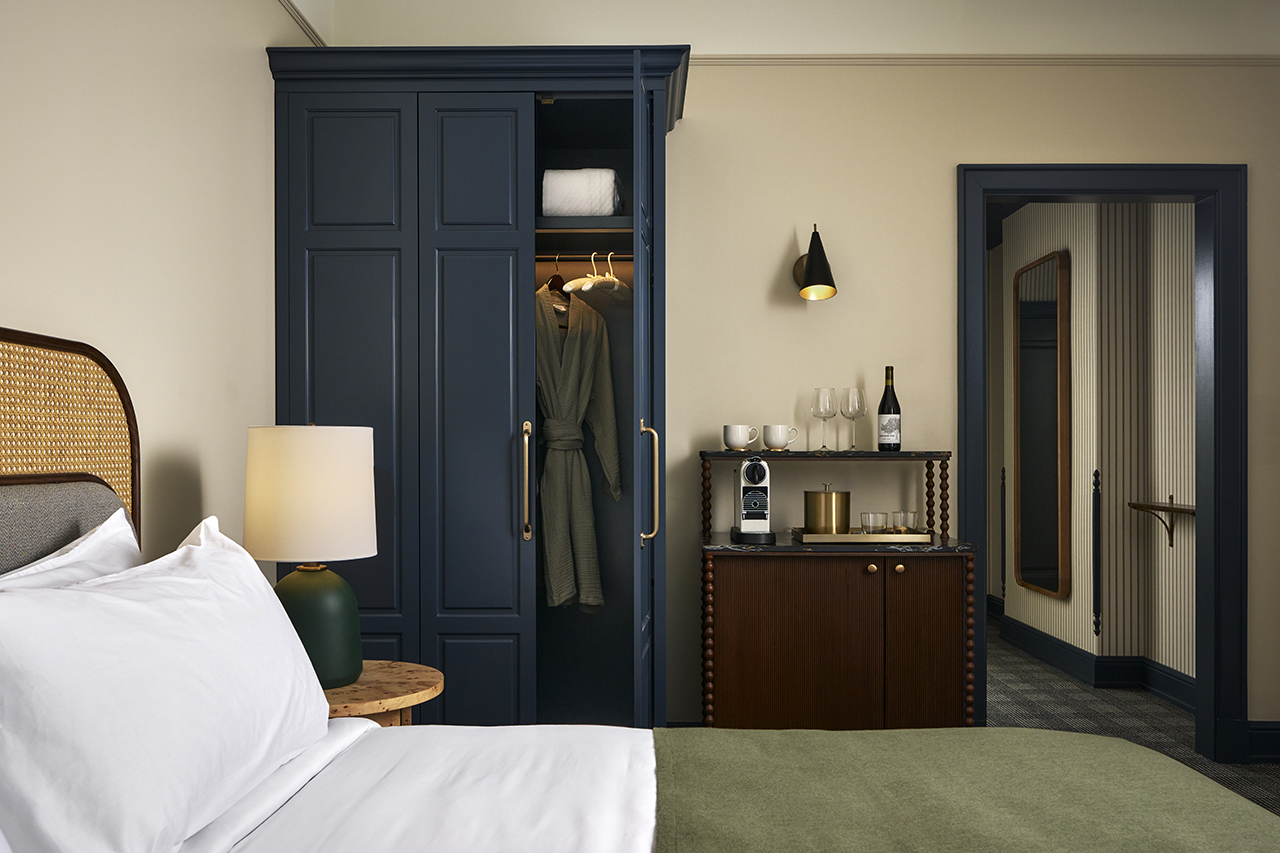
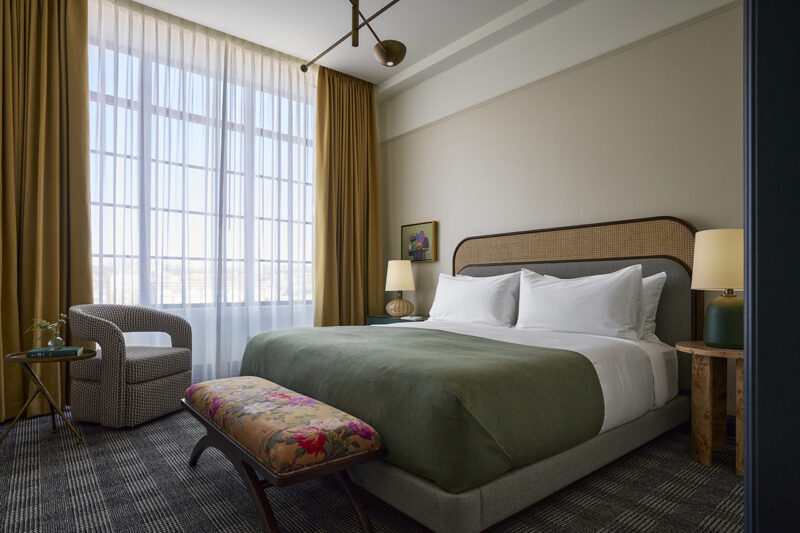
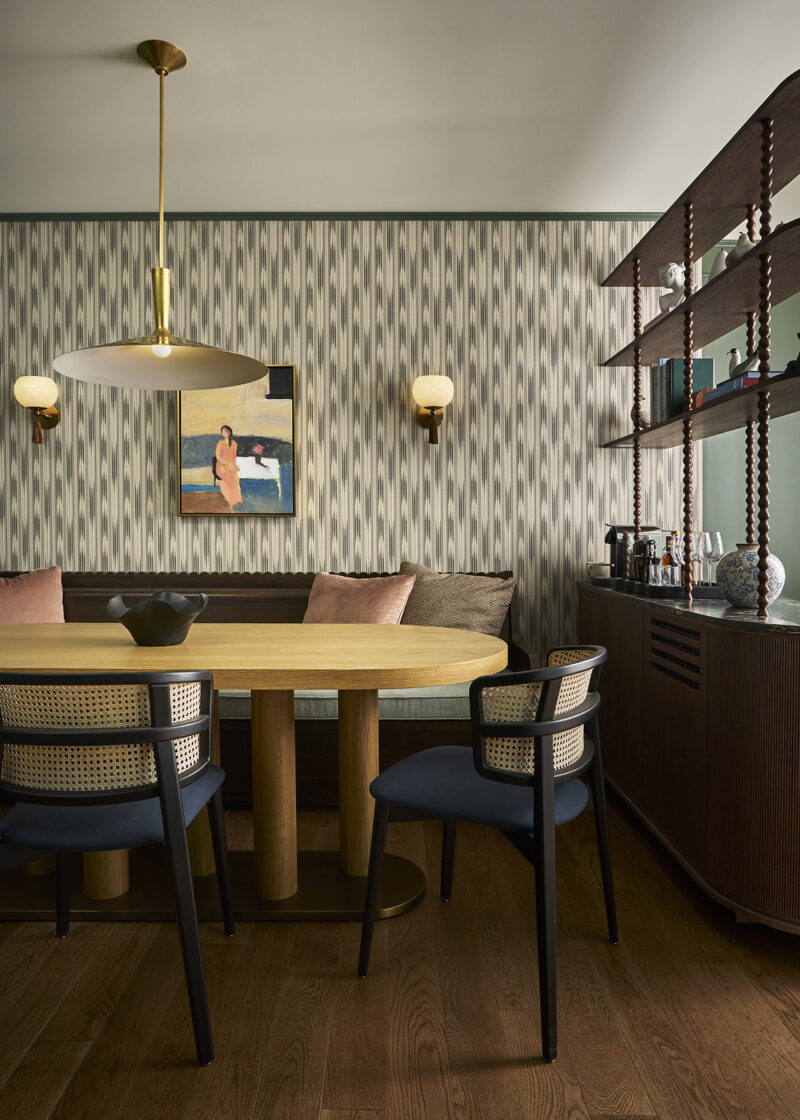
This residential ethos extends directly into the 165 guest rooms and suites. Eschewing cavernous, impersonal layouts, the design team prioritized an intimate, parlor-like aesthetic. Tactile material choices define the guest experience: unlacquered brass fixtures, rich hardwood flooring, and heavily layered textiles create an environment that feels as though it has evolved organically over decades rather than being assembled overnight. Guest accommodations are further elevated through locally sourced minibars that highlight regional artisanal products and plush Parachute bathrobes, blending local authenticity with everyday luxury.
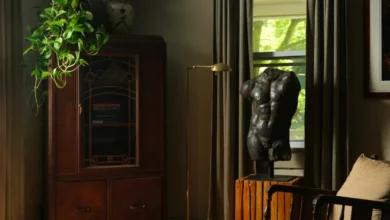
Throughout the property, a sophisticated, darker color palette is paired with classic frame molding. This strategic design choice serves a dual purpose: it reinforces the stylistic dialogue between the building’s historic bones and its modern use, while visually balancing room proportions that might otherwise feel overly constricted or cavernous due to the peculiarities of the original 20th-century construction.
Culinary Destinations and Urban Integration
A hotel’s integration into its host city is frequently tested through its food and beverage offerings, and The Fidelity Hotel approaches this challenge by leaning heavily into regional culinary history. Located just off the main lobby through a sequence of recessed, curved passageways, the hotel’s signature restaurant, Gwynne, is rendered in a welcoming shade of light salmon pink. Helmed by Chef Brad Bernstein, the restaurant’s menu pays direct homage to the Ohio River Valley and Cincinnati’s historical identity as "Porkopolis"—a mid-19th-century designation stemming from the city’s status as the nation’s leading pork-packing center.
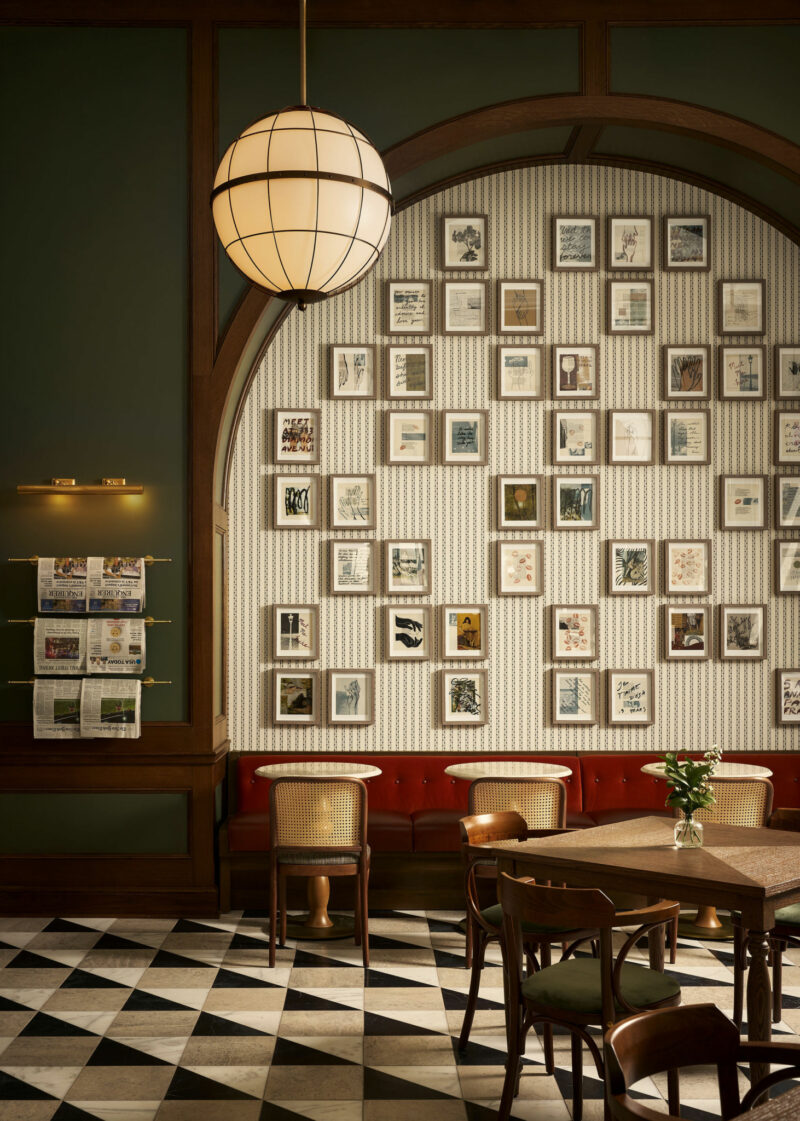
Adjacent to the main dining room is Cora’s All Day Café. Drawing design and operational inspiration from the historic public markets that once enlivened the surrounding Fountain District, Cora’s features classic checkerboard flooring, red-cushioned banquettes, and walls decorated with vintage framed photographs and historical newspaper clippings. Both Gwynne and Cora’s All Day Café are intentionally designed to open directly onto the revitalized streetscape, functioning not merely as hotel amenities, but as vibrant urban living rooms for both travelers and local residents.
Economic Context and Market Positioning
The opening of The Fidelity Hotel arrives at a crucial moment for downtown Cincinnati’s tourism and real estate sectors. Over the past decade, the city center has experienced a resurgence driven by private-public partnerships, historic tax credits, and increased investment in residential and commercial adaptive reuse projects.
However, entering the Cincinnati boutique hotel market requires a distinct value proposition. The city is already home to critically acclaimed, art-centric properties such as the 21c Museum Hotel, which pioneered the integration of contemporary museum-quality art within a hospitality setting. Rather than attempting to compete through high-concept, singular "wow" moments or transitory art installations, The Fidelity Hotel has chosen a subtler path. Its market differentiation relies on the cumulative, authentic impact of its architecture, tactile material selection, and deep historical grounding.
Industry analysts note that modern travelers—particularly Millennials and Generation Z—increasingly prioritize authenticity and sustainability over standardized luxury. By engaging in adaptive reuse rather than new construction, developers like New Waterloo significantly reduce the carbon footprint associated with demolition and material manufacturing while preserving the irreplaceable cultural heritage of the urban core.
Broader Implications for Historic Preservation and Hospitality
The successful transformation of the Gwynne Building into The Fidelity Hotel offers a broader blueprint for urban developers navigating the post-pandemic economic landscape of American downtowns. As corporate office footprints shrink and hybrid work models alter the demand for commercial real estate, urban centers face mounting pressure to repurpose vacant or underutilized historic structures.
Projects like The Fidelity demonstrate that complex historic buildings can be successfully adapted for contemporary hospitality uses without erasing the architectural integrity that made them regional landmarks in the first place. By balancing the technical complexities of uniting disparate structural systems with a sensitive, place-rooted design narrative, the development team has secured a sustainable future for a 20th-century architectural icon.
Ultimately, The Fidelity Hotel represents more than just an addition to Cincinnati’s growing lodging inventory. It stands as a physical manifestation of a changing industry—one that recognizes that the future of hospitality lies not in replicating the exact same experience across the globe, but in celebrating the unique, irreplaceable history of the neighborhoods and buildings that welcome travelers in.