Reed Hastings to Step Down from Netflix Board Marking the End of an Era for the Streaming Pioneer and Animation Disruptor

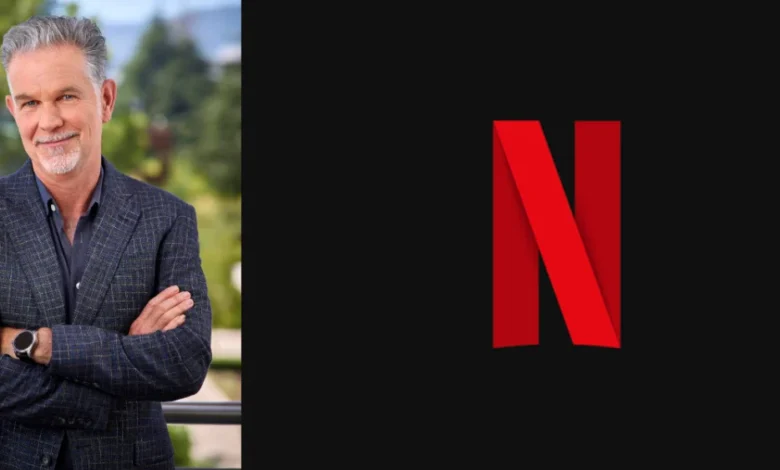
Reed Hastings, the visionary co-founder and former long-time CEO of Netflix, has officially announced his intention to resign from the company’s board of directors this June, concluding a transformative journey that spanned nearly three decades and fundamentally altered the global media landscape. Since co-founding the company in 1997 as a mail-order DVD service, Hastings has guided Netflix through multiple seismic shifts in technology and consumer behavior, ultimately establishing the platform as the world’s dominant streaming service. His departure from the board marks the final formal transition of power at the company he built, leaving behind a legacy defined by aggressive disruption, a unique corporate culture, and a late-career pivot into becoming a major powerhouse in the global animation industry.
The Genesis and Evolution of a Media Empire
The trajectory of Reed Hastings’ career is inextricably linked to the evolution of the modern entertainment economy. Founded alongside Marc Randolph, Netflix began as a direct challenge to the brick-and-mortar video rental model dominated by Blockbuster. Under Hastings’ leadership, the company introduced the subscription-based model in 1999, which eliminated late fees and prioritized customer convenience. However, it was the 2007 pivot to streaming video that cemented Hastings’ reputation as a forward-thinking executive. By recognizing that the future of content lay in digital delivery rather than physical discs, he positioned Netflix to capture a market that did not yet fully exist.
By 2013, Hastings oversaw another critical transition: the move from being a mere distributor of third-party content to a producer of original programming. The launch of House of Cards and Orange Is the New Black signaled to Hollywood that Netflix was no longer just a "digital warehouse" but a creative studio capable of competing for the highest honors in television. This strategy was eventually mirrored in the film sector, where Netflix began acquiring and producing high-budget features, eventually garnering hundreds of Academy Award nominations. As of early 2026, the company boasts a global subscriber base exceeding 280 million, a testament to the scalability of the model Hastings championed.
The Strategic Pivot to Animation
While Hastings’ background was rooted in software and mathematics rather than the arts, he became one of the most vocal advocates for animation as a cornerstone of Netflix’s long-term growth strategy. In 2021, Hastings made headlines by explicitly stating that Netflix’s goal was to "compete with Disney in animation." This was not merely a rhetorical flourish; it was backed by a massive infusion of capital and the recruitment of top-tier talent from legacy studios like Disney, Pixar, and DreamWorks.
Hastings viewed animation as a "moat" against competitors. Unlike live-action content, which can often be localized through dubbing or subtitling, high-quality animation has a unique ability to travel across borders and resonate with audiences of all ages, creating long-term intellectual property (IP) value. Under his watch, Netflix Animation transformed from a small experimental wing into a massive operation producing a diverse array of content, ranging from adult-oriented series like BoJack Horseman and Arcane to family-friendly features such as The Sea Beast and Leo.
The crowning achievement of this era was arguably the 2023 Academy Award win for Guillermo del Toro’s Pinocchio, which marked the first time a streaming service won the Oscar for Best Animated Feature. This victory served as a validation of Hastings’ "creators-first" approach, which often granted established directors more creative freedom than traditional Hollywood studios.
Chronology of Major Animation Milestones Under Hastings
To understand the scale of Hastings’ impact on the medium, one must look at the chronological development of Netflix’s animation arm:
- 2013: Netflix enters the animation space via a landmark multi-year deal with DreamWorks Animation to produce original series.
- 2017: The company begins aggressively acquiring independent animated features, such as the Oscar-nominated I Lost My Body.
- 2018: Netflix announces a massive slate of original animated projects, signaling the internal build-out of its own studio.
- 2019: Klaus, Netflix’s first original animated feature, receives an Academy Award nomination and wins seven Annie Awards.
- 2021: Reed Hastings reaffirms the goal to surpass Disney in animation supremacy during quarterly earnings calls.
- 2022: A period of "market correction" leads to high-profile cancellations, including the adaptation of the comic series Bone and the hand-drawn feature Ember.
- 2023: Guillermo del Toro’s Pinocchio wins the Academy Award for Best Animated Feature.
- 2024–2025: Successes like Leo (voiced by Adam Sandler) and Blue Eye Samurai demonstrate the platform’s ability to produce both commercial hits and critically acclaimed prestige content.
Operational Turbulence and the Price of Rapid Scaling
The journey was not without significant friction. The rapid expansion of Netflix Animation led to what many industry insiders described as "growing pains." In 2022, following a rare drop in subscriber numbers, Netflix underwent a series of layoffs that hit the animation department particularly hard. Approximately 70 positions were eliminated in the animation wing, and several high-profile projects in development were shuttered.
Critics argued that the "Netflix model"—which prioritized volume and algorithmic appeal—sometimes clashed with the long development cycles and meticulous nature of animation production. The cancellation of Sergio Pablos’ Ember was cited by many as a sign that the company was pivoting away from "risky" artistic ventures toward more traditional, commercial fare. Furthermore, the company faced ongoing criticism from the theatrical community. Hastings remained steadfast in his "members-first" philosophy, generally refusing to grant animated films long exclusive theatrical windows, a move that some believe limited the "cultural buzz" and box-office potential of titles like The Mitchells vs. the Machines.
Despite these setbacks, the sheer volume of production remained unprecedented. By 2025, Netflix was releasing more animated content annually than any other single studio, effectively subsidizing an entire generation of artists and technicians during a period of broader industry contraction.
Corporate Culture and Political Advocacy
Beyond his business acumen, Hastings was known for fostering a unique, and often controversial, corporate culture. The "Netflix Culture Memo," which emphasized "radical transparency" and a "keeper test" (where managers were asked if they would fight to keep an employee), became a blueprint for Silicon Valley but was often viewed as cold or high-pressure by those in the creative sectors.
.png)
However, Hastings also used his platform to engage in social and political issues, distinguishing himself from many of his more reclusive peers. During the late 2010s, he became a vocal critic of restrictive immigration policies, arguing that such measures harmed the global talent pool essential for a tech-driven media company. He famously described certain federal travel bans as "un-American" and donated millions to educational causes and political campaigns aimed at fostering social mobility. This willingness to take a stand occasionally put the company in the crosshairs of political debate, but Hastings maintained that a company’s values were inseparable from its brand.
Succession and the Future of the Platform
The transition of Reed Hastings out of the board follows his 2023 decision to step down as co-CEO, handing the reins to Ted Sarandos and Greg Peters. Sarandos, who has long been the creative architect of Netflix’s content strategy, has signaled that the company’s commitment to animation will remain a top priority. In recent statements, Sarandos highlighted upcoming projects like KPop Demon Hunters and continued collaborations with Skydance Animation as evidence that the "post-Hastings" era will continue to challenge the traditional studio hegemony.
Market analysts suggest that Hastings is leaving the board at a moment of relative stability. After the "streaming wars" of the early 2020s led to a period of consolidation and belt-tightening across the industry, Netflix has emerged as the clear leader in profitability and subscriber retention. The introduction of an ad-supported tier and a crackdown on password sharing—strategies that were initially met with skepticism—have successfully diversified the company’s revenue streams.
Impact and Implications for the Global Media Industry
The departure of Reed Hastings from the Netflix board is more than a change in leadership; it is a symbolic milestone for the entire entertainment industry. Hastings proved that a technology company could not only compete with but eventually lead the storied institutions of Hollywood.
For the animation community, his legacy is complex. On one hand, he provided a platform for diverse voices and experimental styles that might never have found a home at a traditional studio. On the other hand, the "streaming-first" model he pioneered has fundamentally changed the economics of the medium, often at the expense of theatrical tradition.
As Hastings moves into a more philanthropic role, focusing on education and climate initiatives, the company he built faces a new set of challenges. The rise of artificial intelligence in production, the ongoing debates over streaming residuals, and the increasing saturation of the global market will define the next chapter of Netflix. However, the foundation laid by Hastings—one of relentless innovation and a belief in the global power of digital storytelling—remains the bedrock of the company’s identity. The "Disney-level" ambition for animation remains unfulfilled in terms of century-long legacy, but in terms of sheer market presence, Hastings has ensured that Netflix is no longer just a challenger, but a titan in its own right.