YouTube Music is accelerating its push into artificial intelligence and personalized audio discovery, introducing a suite of conversational and automated tools designed to reshape how users interact with its massive catalog of over 300 million tracks and millions of podcasts. Announced by T. Jay Fowler, Senior Director of Product Management for YouTube Music, at the annual Made On YouTube event, the platform is rolling out advanced features aimed at capitalizing on a surge in user discovery—highlighted by the platform’s milestone of users discovering an artist entirely new to them more than 450 million times in July 2026 alone.
The latest updates, scheduled to launch globally for standard YouTube Music and YouTube Premium subscribers, introduce "Ask Music"—a deeply integrated conversational engine—alongside "Your Podcast Lineup," a personalized AI-powered audio guide. These additions mark a significant evolution in streaming technology, shifting the paradigm from static recommendation algorithms to interactive, voice-driven curation.
The Rise of Conversational Discovery: Meet Ask Music
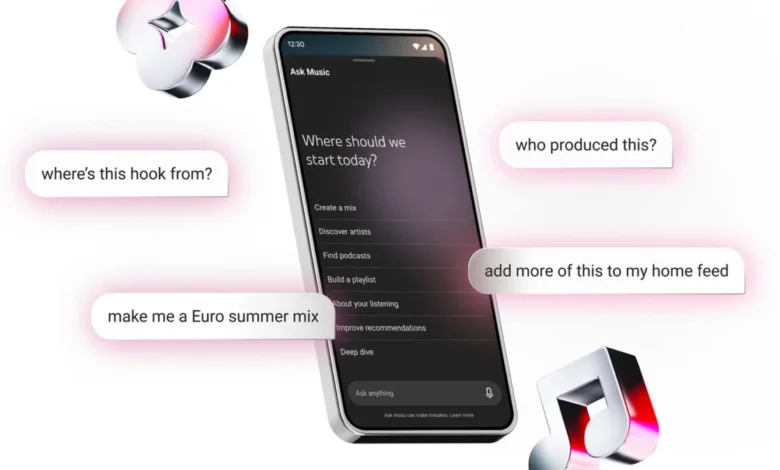
At the core of the new release is Ask Music, a native conversational experience embedded directly within the YouTube Music application. Unlike traditional search bars that require precise artist names or track titles, Ask Music allows users to interact with the platform using natural language.
The tool taps into YouTube’s expansive library, which encompasses not just official studio recordings, but also deep-cut remixes, rare live performances, user-generated covers, and full DJ sets. Furthermore, Ask Music seamlessly bridges the gap between music and spoken-word content, allowing users to query across podcasts as well.
According to product leadership, Ask Music was engineered to solve "crate-digging fatigue"—the overwhelming feeling users often experience when faced with limitless choices. By allowing listeners to make nuanced requests—such as curating a queue based on a specific mood, asking for the backstory or lore behind an obscure artist, or dynamically shifting genres on the fly—the feature transforms passive listening into an active, guided exploration.
Industry analysts note that conversational AI interfaces are quickly becoming the industry standard across digital media. By integrating this capability directly into the music discovery pipeline, YouTube Music is positioning itself to compete more aggressively with conversational features pioneered by competitors, while leveraging YouTube’s unique advantage: its unmatched repository of user-generated audio and video content.

Tailored Audio Previews with Your Podcast Lineup
Complementing the conversational capabilities of Ask Music is "Your Podcast Lineup," a new feature tailored specifically for podcast enthusiasts and premium subscribers. As the podcasting ecosystem continues to mature, listeners frequently express frustration with the discovery process, often struggling to find new shows that match their specific interests among millions of active titles.
Your Podcast Lineup addresses this friction by introducing a personalized AI-audio guide directly inside the YouTube Music app. Delivered on a weekly basis, the feature provides a quick, spoken preview of recommended shows. Crucially, the AI guide does not merely list titles; it provides context, explaining precisely why the listener is likely to enjoy a particular show based on their historical listening habits.
Designed for maximum convenience, the feature enables a completely hands-free and eyes-optional experience. Users can listen to the AI-generated curation and, once a show catches their interest, seamlessly transition into the suggested episode without navigating away or breaking their workflow. This focus on frictionless, spoken-word navigation reflects a broader industry trend toward ambient computing and audio-first interfaces.
Context and Chronology: The Evolution of Made On YouTube
The introduction of Ask Music and Your Podcast Lineup fits into a broader, multi-year strategy by Google and YouTube to infuse generative AI and conversational tools across their entire ecosystem. The Made On YouTube event has historically served as the launchpad for the platform’s most ambitious technological leaps, bridging creator tools with consumer-facing experiences.
Over the past several years, YouTube Music has steadily evolved from a supplementary video-streaming spin-off into a primary standalone music streaming service. Following its initial rollout to replace Google Play Music, the platform has systematically closed the feature gap with legacy streaming giants while carving out a distinct identity rooted in YouTube’s video DNA.
The milestone of 450 million new artist discoveries in July 2026 underscores the effectiveness of these historical algorithm tweaks. However, platform executives realized that traditional algorithmic carousels—while effective at serving predictable recommendations—often failed to capture the serendipity of physical crate-digging or word-of-mouth recommendations. By introducing AI guides that talk the user through a recommendation and conversational interfaces that understand deep catalog lore, YouTube Music is attempting to replicate the human element of a local record store clerk.
Industry Implications and Market Impact
The deployment of these features arrives at a critical juncture for the digital audio streaming market. As major platforms vie for subscriber loyalty in an increasingly saturated market, differentiation increasingly hinges on personalization depth and user experience innovation.

By embedding AI deeply into both music and podcast discovery, YouTube Music is addressing two primary friction points: choice paralysis and cross-format fragmentation. Historically, music apps and podcast apps have lived in separate silos, forcing users to switch platforms or navigate disparate interfaces. By unifying music catalogs and podcast libraries under a single conversational umbrella powered by Ask Music, YouTube is reinforcing its value proposition as an all-in-one audio destination.
Furthermore, the integration of AI-driven audio guides like Your Podcast Lineup provides a distinct advantage for YouTube Premium subscribers. By offering value-add features that save time and enhance discovery, the platform strengthens subscriber retention in an economic climate where consumers are increasingly selective about their recurring digital subscriptions.
Broader Impact on Artists and Creators
Beyond consumer convenience, these updates carry significant implications for independent artists, creators, and podcasters. In a vast catalog of 300 million tracks, visibility remains the single greatest challenge for emerging talent. Traditional algorithmic models often favor established mainstream acts, making organic discovery difficult for underground or niche artists.
By utilizing conversational AI that understands deep catalog metadata, remixes, live versions, and artist lore, Ask Music has the potential to surface long-tail content that traditional search algorithms overlook. When users ask complex, narrative-driven queries about music history or regional subgenres, the AI can direct traffic to lesser-known tracks and independent creators who might otherwise remain buried in the catalog.
Similarly, podcasters stand to benefit from the weekly AI audio guide. By having their shows dynamically summarized and recommended to targeted listeners based on thematic alignment rather than sheer download volume, independent podcasters gain a new, organic discovery funnel that operates independently of traditional charts.
Looking Ahead: The Global Rollout
As YouTube prepares for the global rollout of Ask Music and Your Podcast Lineup, attention will turn to how users adopt these features in daily practice. The success of conversational AI in media streaming depends heavily on latency, accuracy, and natural interaction—metrics that YouTube has spent considerable engineering resources refining.
With these updates, YouTube Music is signaling that the future of streaming is not merely about having the largest library, but about making that library navigable, conversational, and intimately personal. As the features land in the hands of millions of global subscribers in the coming weeks, they will test the appetite for AI-guided, voice-driven audio discovery on a massive scale.
Related posts: