The digital sphere, a dynamic and ever-expanding ecosystem, has reached a point of unprecedented complexity, compelling brands to fundamentally rethink their approach to reputation management and consumer engagement. What was once manageable through manual tracking a few years ago has morphed into a sprawling, multi-layered environment where the sheer volume and velocity of online content render traditional monitoring methods largely ineffective. In this new paradigm, Artificial Intelligence (AI) brand monitoring has transitioned from a competitive edge for early adopters to an indispensable operational standard for any organization aiming to safeguard its reputation and foster growth.
The Escalating Challenge of Digital Visibility
The foundational shift stems from the exponential growth of online content. Billions of social media posts, countless news articles, forum discussions, and review site entries are generated daily, creating an almost insurmountable data flood. According to Statista, the number of social media users worldwide is projected to reach nearly 4.9 billion by 2027, each contributing to this digital deluge. This ceaseless creation of content means that a brand’s narrative is constantly being shaped and reshaped across myriad platforms, often outside direct corporate channels.
Adding a critical new layer to this complexity is the rise of sophisticated AI chatbots such as ChatGPT, Claude, and Gemini. These generative AI models are not merely content aggregators; they are becoming primary interfaces for information consumption, acting as conversational search engines that synthesize data from every conceivable corner of the internet. They present brand information to audiences in ways that bypass traditional web traffic analytics, creating "zero-click" content where users receive answers directly from the AI without visiting a brand’s website. Ahrefs reported in early 2024 that AI overviews significantly reduce click-through rates, posing a direct challenge to conventional digital marketing and brand visibility strategies. This phenomenon means brands must now contend with AI-generated summaries and interpretations of their identity, often without direct control or even immediate awareness of what is being communicated.
Furthermore, the accessibility of AI tools has lowered the barrier to content creation dramatically. This democratization of content generation, while fostering creativity, also amplifies the risk of misinformation, negative narratives, or brand misrepresentation proliferating at an alarming rate. AI chatbots are already answering specific questions about brands that companies may not even realize are being asked, introducing new dimensions of brand risk and opportunity. The traditional work of monitoring news and conventional media continues alongside this AI-driven evolution, layering additional demands on already strained brand management teams.
The Evolution of Brand Monitoring: A Necessary Chronology
The journey of brand monitoring reflects the broader evolution of media consumption and technological capabilities.
- Pre-Digital Era (Early 20th Century – 1990s): Monitoring was primarily manual, involving clipping services that physically cut out newspaper and magazine mentions. This was slow, limited in scope, and often reactive.
- Early Digital Era (1990s – Early 2000s): The advent of the internet brought rudimentary keyword searches and basic web crawlers. Brands could track mentions on nascent news websites and early forums, but sentiment analysis was largely manual and subjective.
- Social Media Revolution (Mid-2000s – Early 2010s): With the explosion of platforms like MySpace, Facebook, and Twitter, social listening tools emerged. These platforms allowed for tracking mentions, hashtags, and basic sentiment on social channels, offering a more immediate but still largely quantitative view of brand health.
- Big Data & Advanced Analytics (Mid-2010s – Present): As data volumes grew, machine learning began to be applied for more sophisticated sentiment analysis, topic modeling, and influencer identification. However, these tools often struggled with nuance, sarcasm, and the sheer scale of the emerging content landscape.
- The AI Imperative (Present – Future): The integration of Large Language Models (LLMs) and agentic AI marks the current frontier. This era demands a holistic, intelligent, and proactive approach to brand health, moving beyond mere data aggregation to deep contextual understanding and autonomous action.
Defining AI Brand Monitoring: A Holistic Perspective
At its core, AI brand monitoring transcends traditional data collection by synthesizing the entire internet into a single, cohesive, and intelligent view of a brand’s health. Leveraging advanced Natural Language Processing (NLP), machine learning, and deep learning algorithms, AI performs the heavy lifting of processing massive datasets across an incredibly diverse range of sources—social media, news outlets, forums, review sites, blogs, and increasingly, AI chatbot outputs. This sophisticated processing surfaces critical insights that even the largest manual teams would invariably miss due to the overwhelming quantity and complexity of data.
The power of AI allows brand strategies to move beyond simple individual mentions and basic volume metrics. Instead of merely observing a spike in online activity, AI-driven systems instantly group conversations into coherent themes. This thematic clustering allows for the rapid identification of underlying trends, patterns, and nascent issues within the data. This capability is paramount for intervening in critical situations before they escalate into full-blown crises. For instance, an AI system might detect an emerging theme of dissatisfaction related to a specific product feature across diverse platforms, enabling a brand to address the issue proactively with a product update or targeted communication campaign.
Traditional keyword monitoring, while still having its place, often leaves brands blind to the deeper context of how people genuinely communicate and create content. With the advanced language processing capabilities of LLMs, AI monitoring can discern the nuance, sentiment, and emotional undertones of conversations without requiring a perfectly refined or exhaustively comprehensive keyword list. This understanding of context saves countless hours that would otherwise be spent manually researching broader conversations, providing an invaluable, real-time understanding of brand health.
For nascent teams, the initial approach to AI brand monitoring might involve utilizing brand safety tools to summarize ongoing conversations. This provides a complete historical picture of events, whether it’s a surge in news coverage, a spike in social posts, or a series of negative reviews. As teams mature, the integration of AI agents becomes a crucial strategic asset. These autonomous agents can seamlessly integrate into existing workflows, constantly scanning for new, relevant information, and alerting teams to significant shifts without requiring continuous dashboard monitoring.
Leveraging AI for Thematic Distillation and Proactive Strategy
In an era where every conversation contributes to a brand’s narrative, it is genuinely impossible for human teams to track every mention. The digital landscape is simply too vast, and the volume of information too immense. To effectively protect and enhance brand equity, organizations must gain an immediate understanding of what drives the most relevant conversations and how these drivers evolve over time.
AI excels in this domain by processing thousands, even millions, of individual conversations—from fleeting social posts to in-depth review site commentaries—and intelligently grouping them into broader, logical themes. This thematic approach transforms a disorganized mass of text into a clear, actionable map of specific topics influencing brand health. This capability acts as an indispensable early warning system. By distilling conversations into themes, AI helps brands spot emerging trends, subtle shifts in public opinion, or the early rumblings of a potential crisis before they gain widespread traction. When a new sentiment begins to ripple through a specific theme, AI summaries surface it immediately. This foresight enables a profound shift from a reactive crisis management posture to a proactive strategic one, allowing brands to address concerns or capitalize on opportunities while they are still gaining momentum.
The true value derived from this thematic distillation lies in context, not merely the volume of mentions. A bird’s-eye view, provided by AI, allows stakeholders to grasp the overarching narrative surrounding their brand. Understanding this narrative provides the strategic perspective necessary to actively shape the brand’s future, rather than merely reporting on its past performance.
Agentic AI: The Sentinel of Brand Reputation
While AI summarization offers a valuable first step, it often still necessitates manual effort in setting up queries and regularly revisiting dashboards. Agentic AI, a more advanced form of artificial intelligence, is specifically designed to shoulder the continuous, heavy burden of brand monitoring, thereby freeing human teams to focus on strategic response and engagement. As Paul Quigley, General Manager of Sprout Listening and NewsWhip, articulates, “The Trellis Monitoring Agent takes over the most stressful and difficult part of the job for many of our users. Previously, when a negative story broke on social media, comms professionals had to scramble to quickly detect, understand and quantify it. Now when something kicks off, they get an immediate notification and a comprehensive report. It puts them squarely in the driving seat for understanding what’s happening, and deciding the best response.”
These AI agents can manifest in various forms, with a particularly powerful use case being the continuous scanning for significant changes in coverage or audience engagement. Should a new article, social post, or narrative mentioning a brand gain substantial traction, the agent is triggered to investigate the root cause of this traction. It then delivers timely alerts, complete with contextual information about the posts, ensuring that brand managers are always ahead of the narrative curve and can make confident, data-driven decisions.
The paramount advantage of agentic AI is the ability to react swiftly and strategically to what genuinely matters, cutting through the ubiquitous "social media noise." Agents can be meticulously configured to prioritize any metric critical to a team, be it a surge in mentions, a significant shift in sentiment, or an uptick in engagement. Tools like NewsWhip by Sprout Social, which leverages the Trellis Monitoring Agent, exemplify this capability. In the event of an emerging crisis, such systems ensure that relevant personnel are informed, even when away from their dashboards. The monitoring agent continuously scans configured dashboards and delivers alerts via email or preferred workplace messaging solutions. The sensitivity of these alerts can be finely tuned, from notifying of any minor change in coverage to only triggering for substantial events.
Crucially, while these alerts can be widely distributed, it is essential for stakeholders to receive the full context of what is happening to prevent potential panic or misunderstanding. This is where the "human in the loop" becomes indispensable. The most effective teams establish internal benchmarks and thresholds for various goals. Human experts, drawing on their experience, can define the specific conditions (e.g., more than 20 articles published on a topic, or a single article receiving over 1,000 shares) that warrant an alert. They also provide the nuanced judgment to discern when an issue requires immediate escalation versus when it can be allowed to play out organically. This synergistic pairing of human intuition and AI’s analytical power forms a robust mechanism for reasoned, strategic action in a potential crisis, providing a 24/7 early warning system.
The Nuance of AI-Powered Sentiment Analysis
Traditional sentiment analysis has historically struggled with the inherent complexities of human language. It often stumbles over grey areas such as sarcasm, irony, cultural nuances, idiomatic expressions, and subtle linguistic cues. AI-powered sentiment analysis represents a significant leap forward, bridging this gap by moving beyond mere keyword detection to identify the underlying intent and emotional tone. It can, for example, accurately interpret a "great job" comment on a delayed delivery post as sarcasm, thereby capturing the true negative emotional intent. This capability ensures that brand teams receive an accurate reflection of public sentiment.
AI’s ability to distill these complex emotional nuances into high-level, clear, and actionable reports provides invaluable insights into the efficacy of PR, marketing, and customer care initiatives. Understanding the "why" behind the data transforms engagement strategies. When the intent behind the sentiment is clear, teams gain a fuller, more accurate picture of brand health. This clarity empowers them to make precise decisions: knowing exactly when to intervene with a high-touch human response to de-escalate frustration, and when it is more strategic to allow an organic conversation to unfold. This targeted approach ensures that resources and energy are focused where they will genuinely drive connection and positive impact.
Navigating Brand Visibility in the Age of AI Search
The landscape of search is undeniably undergoing a profound transformation. While declarations of "search is dead" are premature, the method of searching is fundamentally changing. The era of ten blue links per page is ceding ground to conversational interfaces and Large Language Models (LLMs) that provide synthesized answers directly. Consequently, there is a high probability that users will receive their information without ever clicking through to a brand’s website, even if that brand’s content is the original source. As previously noted by Ahrefs’ 2024 analysis, AI overviews significantly reduce click-through rates, emphasizing the critical need for brands to monitor and influence these AI-generated summaries.
This necessitates a proactive awareness of what AI overviews are stating about a brand. These AI responses often function as "zero-click" content, making it imperative to track mentions, citation frequency, and sentiment across platforms that provide these AI-summarized answers. Key players in this emerging space include ChatGPT, Perplexity, Google’s AI Overviews, and Anthropic’s Claude. However, continuous monitoring for new entrants or shifts in market share within this rapidly evolving industry is also crucial.
Much of the content that feeds these AI answers is sourced from the same social feeds, news outlets, and forums that brands are already monitoring. Therefore, possessing a dual layer of context—understanding both the original source narrative and its AI-generated summary—is essential for successfully shaping the brand story.
This new environment gives rise to Generative Engine Optimization (GEO), an evolution of traditional Search Engine Optimization (SEO). GEO focuses on optimizing content specifically for AI models and conversational search. Specialized tools can identify gaps in a brand’s content strategy by analyzing what LLMs "know" about the brand and how frequently they cite it for related answers. For instance, a brand can assess how often it is mentioned alongside a key feature or market segment (e.g., "best CRM tool for small businesses") compared to a competitor. If a competitor receives more frequent mentions, or if the brand is absent from relevant discussions, this indicates a critical content gap that must be addressed to strategically position the brand as a market leader.
GEO also presents a vital opportunity to ensure clarity and consistency in brand messaging. LLMs offer a blended synthesis of all available information about a brand. If this synthesized narrative does not align with the brand’s intended messaging, it can create consumer confusion and potentially damage brand equity. Monitoring these AI overviews allows brands to identify inconsistencies in their representation and proactively engineer the narrative back toward their core messaging and overarching business objectives.
Leading AI Brand Monitoring Tools
A diverse array of tools is emerging to empower brands in maximizing the success of their AI brand monitoring efforts, spanning from AI-enhanced news and social alerts to sophisticated Answer Engine Optimization (AEO).
-
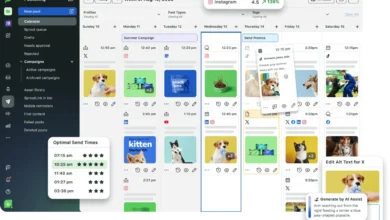
Sprout Social: Offers comprehensive AI brand monitoring solutions through its agentic AI, Trellis. The monitoring agent tracks news coverage and social posts, alerting users to any significant changes in frequency or engagement, providing context on when, why, and how these changes occurred. NewsWhip by Sprout Social extends these alerts across major social networks including X, TikTok, Bluesky, Facebook, Instagram, and Reddit. Sprout Listening, also powered by Trellis, delivers conversational, custom insights by allowing teams to query billions of data points with plain-language questions, facilitating instant market research, competitive analysis, and brand health monitoring. Used in tandem, NewsWhip and Listening enable early signal identification and deeper evolutionary analysis of narratives. These capabilities are further augmented by Sprout Social’s Smart Inbox, which uses AI to detect and alert users to spikes in message volume, serving as another early warning system for critical shifts in customer conversations.
-
Semrush Enterprise AIO: This platform is engineered to maximize brand visibility within AI-driven search environments like Google AI Overviews and ChatGPT. It provides AI Visibility Tracking, which monitors brand mentions, citations, and sentiment on a global scale. Semrush maintains an extensive database of over 213 million LLM prompts, enabling brands to align their content strategies with actual user queries and conversational patterns. The platform also offers robust competitor benchmarking via its AI Visibility Index and technical audits to ensure content is optimized for easy readability by AI crawlers, crucial for consistent monitoring and favorable AI-generated summaries.
-
Profound: A specialized platform focusing on monitoring and optimizing brand performance across conversational AI platforms such as Perplexity, Gemini, and ChatGPT. Its Answer Engine Insights track precisely how AI models represent a brand’s narrative within their generated conversations. Agent Analytics provides detailed data on how AI bots crawl and interpret website content. Profound also monitors prompt volumes to identify shifting consumer demands and specifically tracks product placement in AI-generated shopping recommendations. By deploying autonomous agents, Profound assists teams in automating the creation of AI-optimized content, ensuring brands maintain their recommended and cited status in the burgeoning realm of AI-driven discovery.
AI Brand Monitoring: The Path to Proactive Resilience
In conclusion, AI brand monitoring is not merely a technological upgrade; it represents a fundamental strategic shift from reactivity to proactivity. By identifying the earliest signals of narrative shifts, sentiment changes, or spikes in engagement, AI empowers teams to move beyond the traditional reactive mode of responding to crises after they have already broken. Instead, these sophisticated tools function as an intelligent early warning system, allowing organizations to address concerns, clarify misconceptions, and shape conversations before they become entrenched or unmanageable.
In a digital ecosystem where a single social media post, a viral video, or an AI-generated answer can instantaneously redefine a brand’s reputation, always-on, intelligent monitoring is the only viable path forward. Maintaining a resilient, trusted, and respected brand in this dynamic environment demands a constant, nuanced pulse on brand health, ensuring that organizations are consistently one step ahead of the news cycle and the evolving digital narrative. Embracing AI in crisis and reputation management is no longer optional; it is an existential requirement for sustained success in the age of artificial intelligence.