OneOdio Studio Max 2 Review: Ultra-Low-Latency Wireless Headphones Target Tech Enthusiasts, Gamers, and Creators

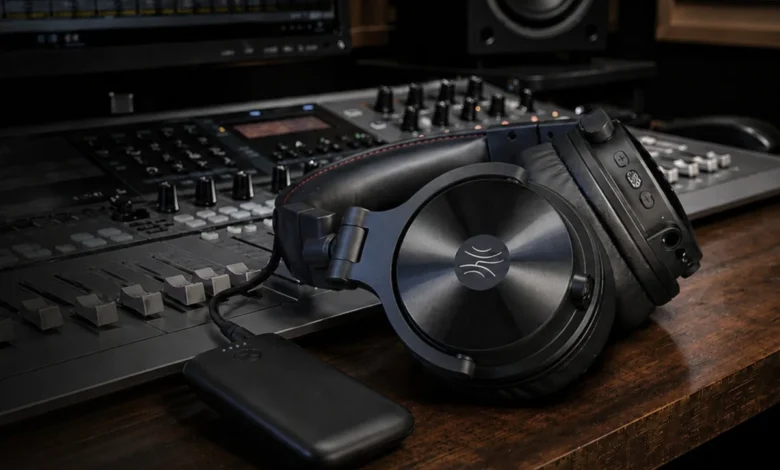
The consumer audio landscape has long forced users into a compromise: enjoy the untethered freedom of wireless connectivity while enduring frustrating audio latency, or remain physically bound to a desk by cables to secure real-time acoustic precision. For professionals in the creative arts, competitive gamers, and software developers whose workflows demand absolute synchronization between visual stimuli and audio feedback, traditional Bluetooth headphones have historically been inadequate. Entering this demanding market segment, audio brand OneOdio has introduced its latest flagship offering: the OneOdio Studio Max 2 closed-back, over-ear wireless headphones. Priced at $199.99, this new device aims to obliterate the historical latency barriers of consumer audio by combining a versatile multi-connectivity architecture with ultra-fast 2.4GHz wireless transmission, catering directly to an audience that values technical performance as much as acoustic fidelity.
The debut of the Studio Max 2 arrives at a transitional period for the personal audio industry. Over the past several years, advancements in Bluetooth codecs—such as the widespread adoption of Sony’s LDAC and Qualcomm’s aptX adaptive suites—have significantly improved wireless bitrates, allowing for high-resolution streaming. However, inherent processing delays in standard Bluetooth protocols continue to plague real-time applications like video editing timeline scrubbing, software development involving audio triggers, and competitive esports gaming, where a delay of even 50 milliseconds can disrupt user experience. Recognizing this persistent market gap, OneOdio engineered the Studio Max 2 to serve as a bridge between professional studio monitor gear and consumer-friendly gaming headsets. By offering a hybrid connectivity model that includes a dedicated USB transmitter alongside high-end wireless specifications, the company is positioning the product as an all-in-one hardware solution for modern tech enthusiasts who juggle multimedia creation, gaming, and remote collaboration throughout their daily routines.
Industrial Design and Ergonomics
Constructed primarily from a matte black polymer composite, the chassis of the OneOdio Studio Max 2 strikes a balance between understated professional aesthetics and the brand’s historic roots in DJ hardware. The physical headband is reinforced with a numbered metal core, allowing for precise, repeatable size adjustments that withstand the rigors of frequent travel and studio handling. A subtle nod to vinyl culture is embedded in the exterior design of the earcups, which feature a concentric record-groove pattern that catches ambient light without appearing overly ostentatious. Practicality dictates much of the physical layout; the earcups are engineered to rotate a full 180 degrees and fold inward toward the headband. This collapsible framework not only minimizes the device’s physical footprint during transport but also accommodates the single-ear monitoring technique favored by audio engineers and digital music creators on the move.
Comfort and weight distribution remain critical factors for over-ear headphones intended for extended multi-hour sessions. OneOdio has equipped the Studio Max 2 with thick, memory foam cushions wrapped in soft protein leather, ensuring effective initial contact and plushness. The ergonomic clamping force is calibrated to maintain a secure acoustic seal without applying excessive lateral pressure to the user’s jaw. Yet, physical compromises are present in the design. Weighing moderately heavy due to its robust internal battery and multi-chip wireless architecture, the headset’s headband padding can generate a localized pressure point directly on the crown of the head after roughly two hours of continuous wear. Users subjected to marathon coding sprints or extended gaming tournaments will likely find themselves periodically shifting the headband to alleviate fatigue. Furthermore, the expansive over-ear footprint demands considerable desk space when stowed casually, though OneOdio mitigates this by bundling a rigid, form-fitting EVA carrying case. This protective shell safely houses both the headphones and the extensive suite of accompanying cables, making the device well-suited for hybrid workers shifting between home and office environments.

Advanced Connectivity and Multi-Source Integration
Perhaps the most defining engineering achievement of the Studio Max 2 lies in its comprehensive connectivity suite, which supports up to four distinct operational modes. For everyday mobile use, the headphones incorporate Bluetooth 6.0 technology equipped with multipoint pairing capabilities. This allows users to maintain simultaneous active links to a smartphone and a laptop, seamlessly transitioning audio playback from an incoming phone call to a desktop video conference without manual re-pairing. However, the standout feature for latency-sensitive applications is the inclusion of the M2 USB wireless transmitter. Utilizing proprietary RapidWill+ 3.0 technology over a dedicated 2.4GHz radio frequency band, this compact dongle bypasses standard Bluetooth audio stacks to drop latency down to an astonishing 9 milliseconds. This near-instantaneous signal transmission effectively eliminates the perceptible audio lag that plagues video editing, MIDI keyboard input monitoring, and fast-paced gaming genres like first-person shooters.
Beyond its wireless versatility, the Studio Max 2 embraces analog purists by providing both 3.5mm and 6.35mm input jacks directly on the earcup chassis. A particularly inventive hardware feature is the ability to connect two independent wired audio sources concurrently, allowing users to monitor multiple channels without an external mixing board. High-resolution wireless audio streaming is fully supported via the inclusion of Sony’s LDAC codec, satisfying audiophiles who demand higher bitrates from compatible source devices. Comprehensive customization of the listening experience is facilitated through the companion OneOdio mobile application, where users can remap EQ presets, inspect battery telemetry, and establish hard volume ceilings to protect hearing health over time.
Despite these advanced networking capabilities, the hardware does present specific functional limitations. The Studio Max 2 carries no official IP rating for water or dust resistance, necessitating caution when operating in environments exposed to moisture or particulate hazards. More critically, the integrated internal microphone is hard-coded to disable itself whenever the headset is operated via the ultra-low-latency 2.4GHz transmitter or physical audio cables. Consequently, voice chat functionality is strictly restricted to Bluetooth mode, forcing users to rely on separate standalone microphones if they wish to utilize zero-lag wireless connections during multiplayer voice communications or professional conference calls.
Acoustic Performance and Driver Capabilities
Aural fidelity is driven by custom-tuned 45mm High-Flux dynamic drivers housed within the closed-back earcups. Out of the box, the default audio profile—designated as the "Music" EQ setting within the companion software—is explicitly contoured to appeal to contemporary mainstream listeners. This profile heavily emphasizes sub-bass frequencies while somewhat recessing the lower midrange, yielding an energetic presentation that can occasionally border on muddy during complex musical passages featuring dense instrumentation. Fortunately, the acoustic character of the headphones changes dramatically upon switching to alternative software profiles. Applying the "Monitoring" preset or the specialized custom DJ KSHMR profile flattens the frequency response curve significantly. This recalibration tightens the low-end response, subdues unwanted boominess, and brings vocal clarity and instrument separation to the forefront.

In a professional or analytical context, this flat profile proves invaluable. Software developers, video editors, and gamers benefit immensely from the enhanced transient response and precise spatial imaging. Directional audio cues in video games—such as distant footsteps or environmental acoustics—become distinctly easier to isolate and locate in a three-dimensional space. Similarly, editors scrubbing through timeline audio can pinpoint exact edit points without the smeary low-end interference typical of bass-heavy consumer headsets.
Because the Studio Max 2 lacks Active Noise Cancellation (ANC) circuitry and transparency listening modes, ambient sound suppression relies entirely on passive acoustic isolation. The combination of the high-density memory foam earpads and the clamping force of the headband creates a dependable physical barrier against constant, low-frequency room noise, such as computer fan hums and mechanical keyboard clatter. However, users operating in chaotic public environments like bustling cafes or open-plan transit hubs will still experience notable ambient sound bleed through the earcups, underlining the device’s design orientation toward controlled office, studio, and home gaming environments. When deployed for voice calls over Bluetooth, the internal microphone array captures speech with admirable clarity, handling standard cellular conversations and corporate video meetings with reliable intelligibility.
Endurance, Power Management, and Market Positioning
Battery performance represents one of the most compelling operational strengths of the Studio Max 2. Powering the extensive wireless architecture is a high-capacity internal cell capable of delivering up to 120 hours of continuous audio playback when utilizing standard Bluetooth connectivity. Engaging the high-performance 2.4GHz USB transmitter naturally increases power consumption, reducing the total operational runtime to a still impressive 50 hours on a single charge. Recharging is handled via a modern USB-C interface. For users pressed for time, the hardware incorporates a rapid-charge feature: a mere five-minute connection to a power source injects sufficient energy to restore nine hours of uninterrupted listening time, effectively neutralizing battery anxiety for frequent travelers.
Priced at an aggressive retail point of $199.99, the OneOdio Studio Max 2 positions itself as a high-value alternative to premium gaming headsets and professional studio monitors that often lack wireless flexibility. By bridging the gap between ultra-low-latency professional gear and everyday consumer convenience, OneOdio has crafted a compelling hardware package for developers, creators, and enthusiasts. The product is available for purchase directly through the official OneOdio web store and major online retailers like Amazon, with promotional launch incentives providing accessible entry points for early adopters seeking to upgrade their acoustic workflow.
Related posts: