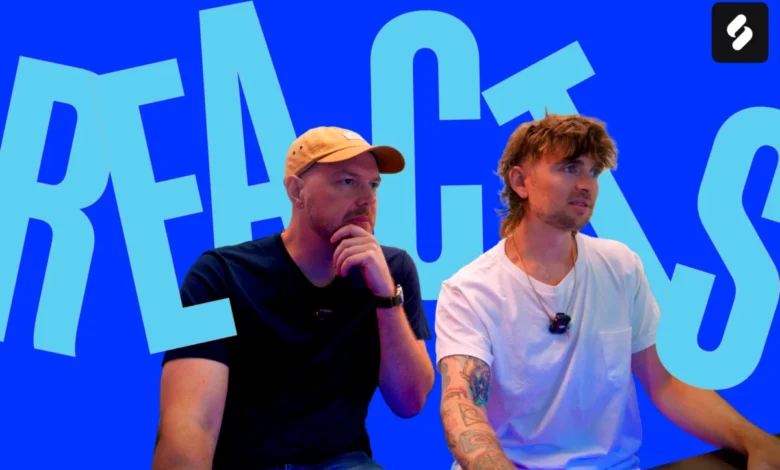
The Intersection of Professional Pedigree and Community Engagement
The producers involved in this project carry significant weight within the contemporary music industry. Oliver, a duo renowned for their synth-heavy, retro-futuristic aesthetic, has long been a staple of the electronic music scene. Their production credits and influence extend into the upper echelons of pop and hip-hop, having worked with high-profile acts such as BLACKPINK, TWICE, Megan Thee Stallion, and DaBaby.
Dwilly, equally established in his own right, brings a contemporary approach to sound design and arrangement that complements Oliver’s technical proficiency. By opening their ears to demos from independent creators, these producers bridge the gap between global chart-topping production and the bedroom studio environment. The event marks a shift in how professional sample libraries are marketed; rather than relying solely on static audio previews, companies like Splice are increasingly utilizing interactive, peer-to-peer feedback sessions to foster community growth and technical literacy among their user base.
A Chronology of the Collaboration
The collaboration between Oliver, dwilly, and the Splice platform did not happen in a vacuum. It represents the culmination of a months-long development cycle for their joint sample pack, Overdrive I.
- Early Q3 2026: Oliver and dwilly entered the studio to finalize the sound design for the Overdrive I collection. The project focused on high-fidelity melodic loops, aggressive percussion, and futuristic one-shots, catering to the demand for high-energy production tools.
- Late August 2026: Splice initiated a call-to-action on their Discord server, inviting producers of all skill levels to submit their original compositions for potential review by the duo.
- Early September 2026: The submission window closed, and the production team curated a selection of tracks that represented a broad cross-section of genres and technical capabilities.
- September 10, 2026: The official feedback video was published on the Splice YouTube channel, providing a public platform for the critique of the community-submitted tracks.
Technical Analysis of the Feedback Session
The feedback provided by Oliver and dwilly centered on core production pillars: arrangement, sonic clarity, and the integration of sampled material. During the review, the duo frequently highlighted the importance of "headroom"—a critical aspect of mixing that ensures tracks remain punchy without succumbing to digital clipping.
One of the recurring themes in their analysis was the effective use of texture. When critiquing specific submissions, the producers emphasized that modern pop and hip-hop production often relies on "ear candy"—small, subtle layers of sound that provide depth to a track without overwhelming the vocal. By demonstrating how their own Overdrive I samples could be used to fill these gaps, the producers provided a practical application for the tools they developed.
From an industry perspective, this type of critique is invaluable. Independent artists often work in isolation, lacking the objective ears of a seasoned mix engineer or producer. By providing feedback on song structure, the producers highlighted how even the most technically sound track can fail if the arrangement does not support the emotional arc of the composition.
Data and Industry Context
The digital sample market has seen exponential growth over the past five years. According to recent industry reports, the demand for high-quality, royalty-free audio assets has surged as the number of independent creators continues to climb. Splice, as a market leader, currently hosts millions of samples, with a user base that spans professional studios in Los Angeles and Seoul to independent creators in remote locations.
The involvement of producers with credits for global superstars like BLACKPINK and Megan Thee Stallion serves as a validation of the "pro-sumer" market. In the past, professional-grade sounds were locked behind the doors of expensive, private studios. Today, the democratization of high-end production tools allows any artist with a laptop and a stable internet connection to access the same sonic palette used by top-tier producers. The feedback session on the Splice Discord confirms that while the tools are now ubiquitous, the technical knowledge required to manipulate them remains a high-value commodity.
Official Stance and Community Reaction
Representatives from Splice have noted that these Discord-based initiatives are critical for user retention and community building. By creating a direct line of communication between the creators of the tools and the users, the platform creates a more robust feedback loop.
"Our goal is to provide more than just files," a spokesperson noted regarding the initiative. "We want to provide the context and the mentorship that helps our users succeed in a highly competitive industry."
The response from the community has been largely positive. In the comments section of the video, users cited the specific technical advice—such as how to layer kick drums or balance frequency ranges—as being more beneficial than standard, generic tutorials. The success of this session suggests that the future of music production education lies in this hybrid model of high-level critique and accessible digital tools.
Broader Implications for Music Production
The broader implication of this event is the shifting role of the "Producer" as an educator and curator. As the barriers to entry in music production continue to dissolve, the value of a producer’s work is increasingly defined by their ability to teach and mentor the next generation. Oliver and dwilly’s willingness to engage with amateur demos reflects a broader trend toward collaborative, open-source-style knowledge sharing.
Furthermore, the integration of these feedback sessions into the product marketing cycle for sample packs is a masterstroke in brand alignment. It demonstrates the utility of the product in real-time, effectively moving the needle from "selling a sample" to "selling a solution." For an artist trying to emulate the sound of contemporary K-pop or modern trap, seeing how an industry pro uses those exact sounds to solve a mixing issue provides a level of practical utility that traditional advertisements cannot match.
Looking Ahead: The Future of Producer Feedback
As digital communities continue to consolidate, it is likely that initiatives like the one seen on the Splice Discord will become standard practice for major software and sample providers. The success of this collaboration sets a benchmark for how companies can provide value-added services to their subscribers.
Moving forward, the industry is watching closely to see if this model can be scaled. The logistical challenges of reviewing hundreds of submissions are significant, but the engagement metrics—view counts, comments, and community sentiment—suggest that the audience is hungry for this type of interaction.
For the individual producer, the lesson is clear: the path to professional quality is found in the details of the arrangement and the strategic application of sound design. Whether through watching these feedback sessions or participating in future community events, the opportunity to learn from the architects of the current pop soundscape has never been more accessible. As Splice continues to facilitate these connections, the gap between the professional studio and the home environment continues to narrow, potentially giving rise to a new wave of producers who have learned their craft through direct, expert-led critique.
Ultimately, the event serves as a reminder that music production is an iterative process. Even the most successful producers, such as Oliver and dwilly, rely on constant refinement and a deep understanding of their tools to stay relevant. By inviting the community into that process, they have provided a roadmap for aspiring producers to follow, ensuring that the industry remains dynamic, collaborative, and, above all, focused on the quality of the sound.
Related posts: