Native Instruments Announces Super*Saw Synthesizer Developed in Collaboration with PC Music Founder A. G. Cook

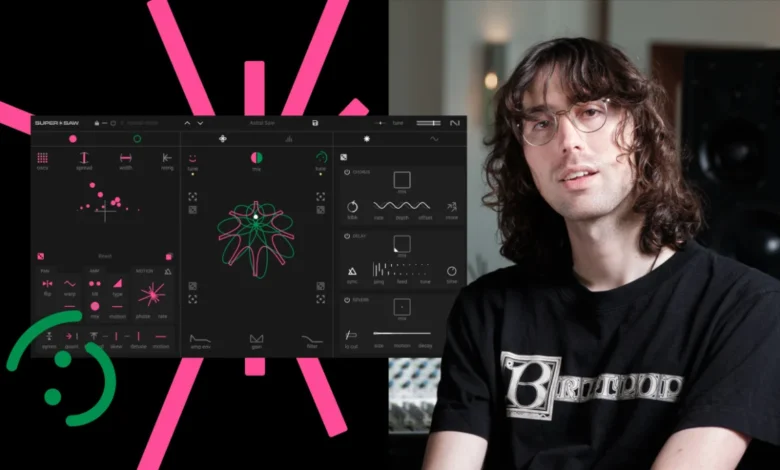
The landscape of electronic music production and modern sound design has long been defined by the unmistakable acoustic footprint of the stacked sawtooth wave. Hailing from the digital and virtual-analog hardware and software revolution of the late 1990s, the supersaw rapidly evolved into the foundational architectural block for global rave anthems, euphoric pop arrangements, and massive, wall-of-sound club productions. Expanding upon this enduring digital heritage, Native Instruments has officially announced the launch of Super*Saw, phonetically styled as SuperStarSaw. This cutting-edge software instrument was co-created alongside visionary producer, songwriter, and PC Music founder A. G. Cook.
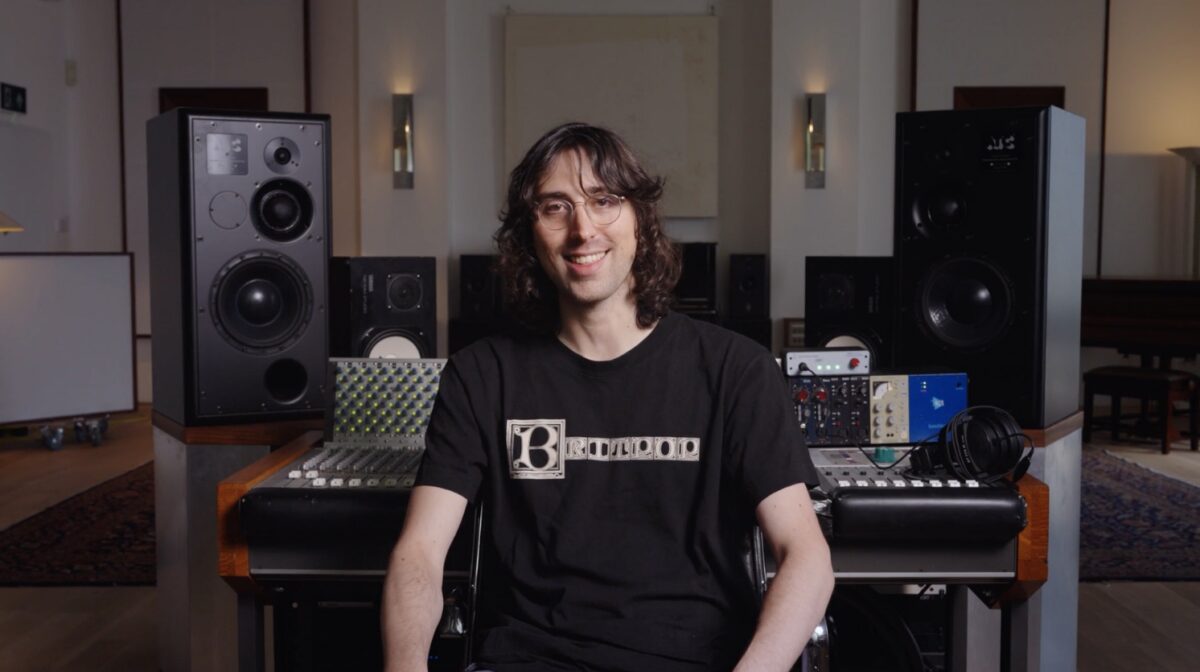
To mark the global commercial release of the instrument, Native Instruments hosted an exclusive production breakdown and press session with A. G. Cook at the historic Baltic Studios in London. During the showcase, Cook detailed his personal production philosophy, discussed the technical methodologies required to push contemporary digital instruments to their absolute operational limits, and demonstrated how Super*Saw seamlessly consolidates complex, multi-layered stacking workflows into a single, highly responsive, and expressive software interface.
The Evolution of the Supersaw: From 1990s Hardware to Modern Software
The historical trajectory of the supersaw waveform traces back to the emergence of affordable digital signal processing and virtual-analog synthesis in the closing years of the 20th century. Before this technological leap, stacking multiple oscillators simultaneously required vast arrays of analog hardware synthesizers, incurring massive financial costs, calibration challenges, and significant studio space. As digital workstations and virtual instruments gained processing power, sound designers gained the ability to chorus multiple detuned sawtooth oscillators within a single voice architecture.
This technical capability birthed the legendary "supersaw" sound, characterized by its thick, buzzing, and harmonically rich timbre. It quickly became the definitive signature of Eurodance, trance, and contemporary electronic dance music. Over the subsequent decades, producers continually sought ways to push this concept further, often resorting to intricate digital routing, extensive audio bus processing, and meticulous manual automation within Digital Audio Workstations (DAWs) to recreate the hyper-layered sonic walls popularized by avant-garde pop and hyperpop movements.
A. G. Cook and the Architecture of Hyper-Layered Sound
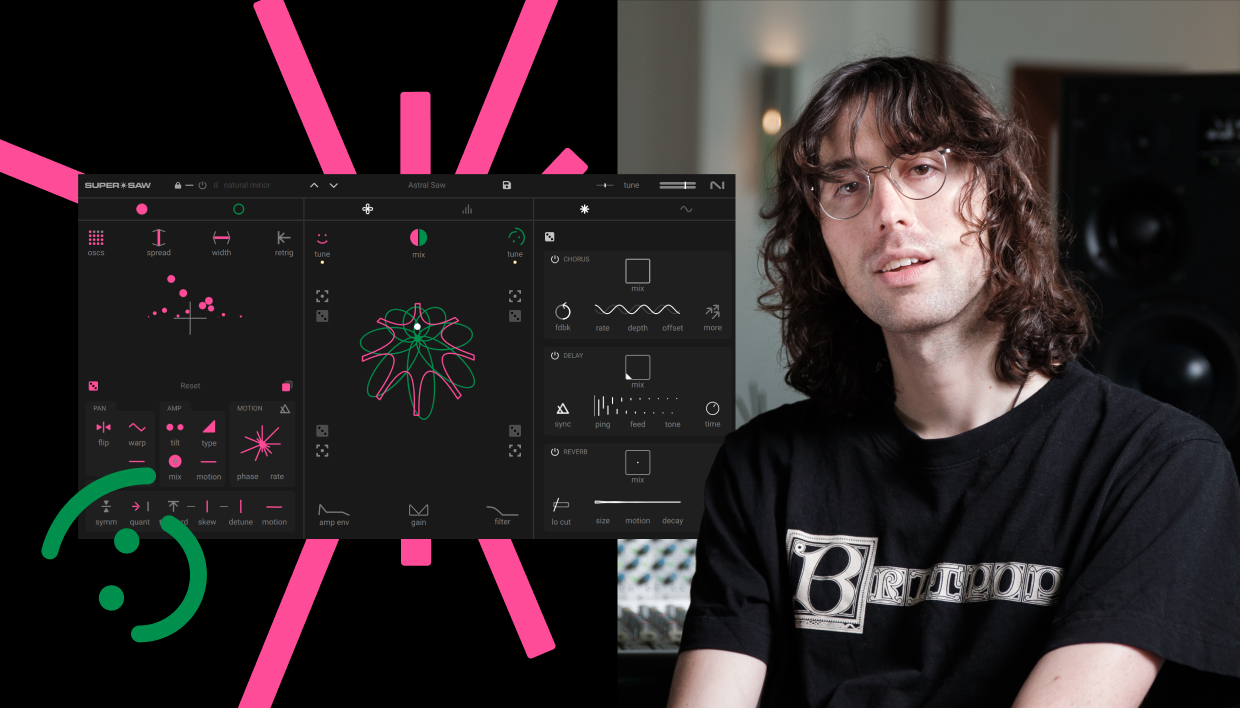
For A. G. Cook, whose decade-long career has fundamentally reshaped the boundaries of mainstream and underground electronic music, the creation of a signature software instrument represents the realization of a long-term professional goal. As the founder of the influential PC Music record label, Cook has spent the last ten years orchestrating a seismic shift in pop music aesthetics. His extensive collaborative catalog includes seminal production work with global pop superstar Charli XCX, acclaimed solo long-form projects such as 7G and Apple, and his comprehensive 2024 full-length release, Britpop.
Reflecting on the collaborative development process with Native Instruments, Cook noted the intellectual satisfaction of translating his personal workflow ideologies into a commercial tool available to the broader producer community. Throughout his discography, Cook has consistently experimented with the absolute extremes of audio frequency spectrums, frequently juxtaposing minimalist vocal arrangements with maximalist, distorted instrumental walls.
Tracks such as "Superstar" from his extensive solo releases perfectly encapsulate this philosophy, transitioning effortlessly from delicate, intimate piano ballads into towering, aggressively detuned supersaw structures. Similarly, on compositions found within his 7G collection—such as the track "Mad Max"—Cook pushes stacked sawtooth waves to such a high density that the fundamental harmonic structure of chords dissolves entirely. Instead of traditional musical intervals, the listener encounters a dense, monolithic block of frequency data that functions more akin to acoustic percussion than a traditional synth pad.
Solving the DAW Workflow Bottleneck
Prior to the engineering and release of Super*Saw, achieving the specific, evolving textures characteristic of Cook’s production style required arduous, time-consuming routing workarounds within standard DAWs. Producers aiming for these complex timbres were traditionally forced to duplicate track channels manually, establish multiple independent soft-synth instances, and carefully draw complex automation curves for fine-tuning, filter cutoff, and stereo width across numerous disparate plugins.
Cook himself frequently encountered these technical hurdles during past sessions. Referencing the creation of his track "Stargon," Cook highlighted the frustration of coordinating various third-party plugins with conflicting detune behaviors and modulation parameters. This tedious manual alignment often stripped the creative process of its spontaneity, turning composition into an exercise in micro-management and data entry rather than intuitive, real-time performance.
Super*Saw addresses these operational inefficiencies by streamlining advanced voice stacking into an optimized, dedicated interface. By restricting the synth architecture strictly to optimized sawtooth oscillators, the instrument encourages users to explore the pure, unadulterated creative potential of voice stacking without unnecessary menu-diving or multi-plugin synchronization issues.
Technical Specifications and Interface Design
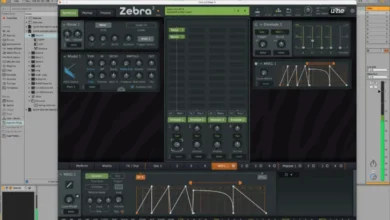
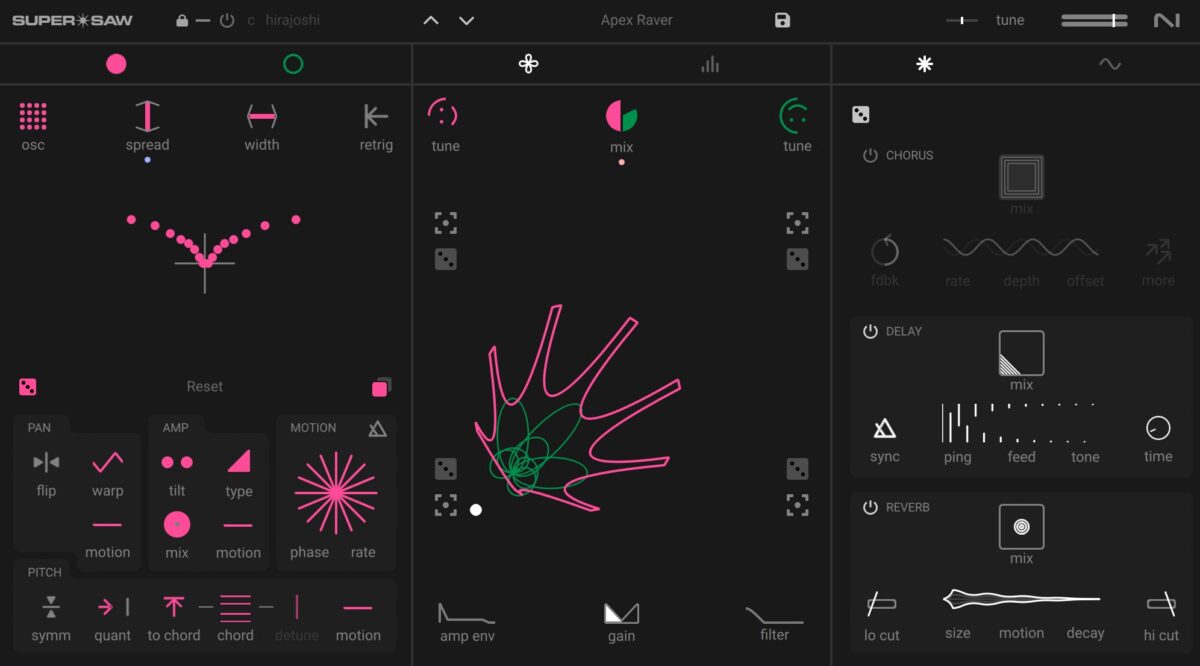
At the core of Super*Saw lies a sophisticated dual 8-voice sawtooth oscillator system, logically divided into two distinct, color-coded visual and operational layers: a vibrant pink layer and a striking green layer. This dual-engine architecture mirrors Cook’s personal approach to sound design, where contrasting layers fulfill specific compositional roles within a single patch.
"I had a strong sense that it would be two layers, these two groups, because that’s often how I think about building sounds," Cook explained during the London press unveiling. "It’s almost like having a comedic duo. One half could be going crazy and the other half could be anchoring it with a fundamental note. It then became obvious that pink and green would stack really well while feeling distinct, so you have these two vivid, contrasting colour worlds."
The user interface of Super*Saw emphasizes tactile, real-time interaction over static automation. Rather than relying on pre-programmed modulation lanes in a DAW timeline, performers utilize an integrated four-corner Morpher interface. This control surface allows artists to smoothly morph between varying chord voicings, detuning intensities, and modulation states dynamically during a live performance or recording pass.
Furthermore, the instrument features a unique star-shaped modulation control that can be freely mapped to critical synthesis parameters, including stereo panning, amplitude modulation, and pitch shifting. For rapid patch generation, the interface includes comprehensive randomization features, allowing users to independently or simultaneously shuffle parameters across the pink and green layers with a single click.
Industry Implications and Broader Market Impact
The release of Super*Saw arrives at a time of significant maturation within the software instrument market. As bedroom producers and professional mix engineers alike face increasing demands for rapid workflow turnaround times without sacrificing sonic originality, software developers have increasingly turned toward hyper-specialized, genre-defining instruments rather than monolithic, multi-engine workstations.
By narrowing its operational focus exclusively to the sawtooth wave and its infinite stacking possibilities, Native Instruments and A. G. Cook have positioned Super*Saw as a definitive tool for modern electronic music producers, film scorers, and contemporary pop architects. Industry analysts note that artist-led hardware and software collaborations—when executed with deep functional authenticity—frequently drive significant hardware and software adoption by bridging the gap between an artist’s signature commercial sound and the consumer market’s desire for professional-grade tools.
For Cook, the release of the instrument functions as a conceptual milestone, serving as a creative bridge between his foundational catalog and future sonic explorations. Describing the plugin during its launch, Cook characterized the instrument as a fitting epilogue to his recent body of work.
"This plugin is a sort of coda, epilogue, or final chapter to the albums that I’ve already released as A. G. Cook," he concluded. "Not just the Britpop pink-and-green color scheme, but also the echoes of 7G and Apple’s sonic world. It feels more exciting than just making a big sample pack of all those sounds, to think about boiling that stuff down into an instrument that can be used by other people in completely different ways."
Super*Saw is available now through the official Native Instruments digital storefront, fully integrated into the Komplete ecosystem, and ready for deployment across major digital audio workstations worldwide.