Matari Audio Unveils BUFFR Retrospective Audio and MIDI Capture Plugin for Professional Music Production

Matari Audio has announced the launch of BUFFR, a comprehensive retrospective capture tool designed to record audio, system output, and MIDI data continuously within a digital audio workstation environment. Currently available as a free public beta for macOS, Windows, and Linux, the software addresses a common challenge in music production: the loss of spontaneous musical ideas that occur when a primary recording transport is not engaged. By maintaining an active buffer of all incoming signals, BUFFR allows producers to "reach back in time" to retrieve performances, sound design sessions, or system-wide audio that would otherwise be lost.
Core Functionality and Technical Specifications
At its core, BUFFR functions as an "always-on" recorder that sits within a host application as a plugin. Unlike traditional recording methods that require the user to arm a track and press a record button, BUFFR operates autonomously once the DAW instance is active. The software is capable of retaining up to 120 minutes of high-fidelity history, representing a significant increase over many existing retrospective recording utilities that often limit buffers to a few minutes.
The plugin is architected to handle complex signal chains and high-density data. It supports up to 16 channels of audio simultaneously, making it suitable for capturing multi-mic setups or complex hardware synthesizer outputs. Furthermore, it features a dedicated system audio capture mode, allowing users to record sound directly from their operating system’s audio driver. This is particularly useful for sampling from web browsers, media players, or other standalone applications without the need for complex internal routing or third-party loopback drivers.
In addition to audio, BUFFR provides robust MIDI capture capabilities. It records data across all 16 MIDI channels, preserving every nuance of a performance. This includes standard note data and velocity, as well as more complex parameters such as Continuous Controllers (CC), pitch bend, channel pressure, polyphonic pressure, and System Exclusive (SysEx) messages. Notably, the plugin offers full support for MIDI Polyphonic Expression (MPE), ensuring that performances on modern controllers like the ROLI Seaboard or LinnStrument are captured with all their multidimensional articulations intact.
Global MIDI Integration and Workflow Enhancements
One of the most distinctive features of BUFFR is its Global MIDI mode. In a traditional DAW workflow, capturing MIDI requires a specific track to be armed and routed correctly. If a producer plays a melody on a MIDI keyboard while a different track is selected, that performance is typically not recorded. BUFFR bypasses this limitation by allowing users to open a hardware controller’s OS-level MIDI input directly within the plugin.
By placing BUFFR on a master channel or a dedicated utility bus, the plugin can monitor and record the hardware input regardless of which track is currently focused or armed in the DAW. This effectively creates a "safety net" for all keyboard and controller activity, ensuring that the pressure of "hitting the record button" does not interfere with the creative flow.
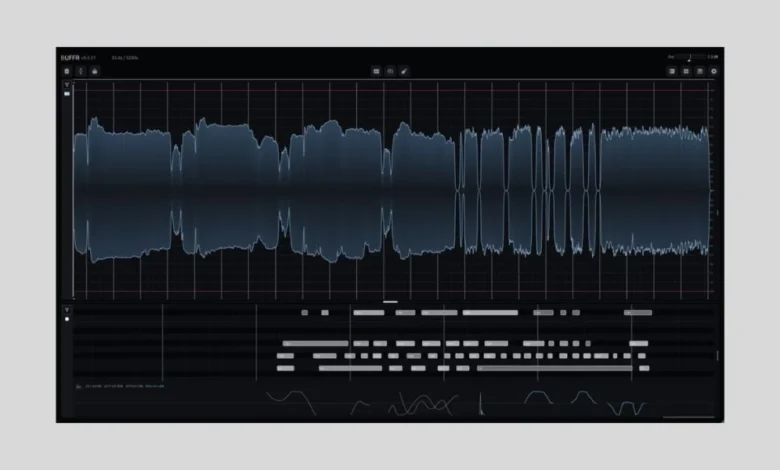
The user interface, while currently in a beta state, provides visual feedback for both audio waveforms and MIDI data. Users can navigate the 120-minute timeline to find specific segments of a session. Once a desired segment is identified, BUFFR utilizes an open drag-and-drop protocol developed by Matari Audio. This allows users to highlight a section of the buffer and drag it directly into their DAW’s arrangement window or a file manager. Audio exports default to 24-bit FLAC to balance fidelity with storage efficiency, though the software also supports WAV, MP3, AAC, Ogg/Opus, and AIFF formats. MIDI selections are exported as Standard MIDI Files (.mid).
Advanced Processing with Spectral Grab
Beyond simple recording and playback, BUFFR introduces a sophisticated sound design tool known as "Spectral Grab." This feature utilizes a spectrogram view that displays audio data across both time and frequency. Instead of selecting a simple temporal slice of audio, users can draw boxes or shapes within the spectrogram to isolate specific frequency ranges.
This allows for the extraction or removal of specific tonal elements from a recording. For example, a user could isolate a specific harmonic from a synthesizer lead or remove a low-end rumble from a field recording directly within the capture buffer. Once a spectral selection is made, BUFFR can reconstruct the audio using various processing algorithms, including Fast Fourier Transform (FFT), minimum-phase, or linear-phase processing. This level of integrated spectral editing is rarely found in retrospective recording tools and positions BUFFR as a powerful utility for sound designers and remixers.
Historical Context and Market Comparison
The concept of retrospective recording is not entirely new to the digital audio workstation market. DAWs like Ableton Live (Capture MIDI), FL Studio (Score Logger), and Logic Pro (Capture Recording) have implemented native versions of this technology over the last decade. However, these native features are often limited to MIDI data or have very short buffer windows for audio.
Third-party solutions have emerged to fill this gap, such as Bird’s Things Rewind and Rolling Sampler. BUFFR enters this competitive landscape by offering a significantly larger buffer (120 minutes) and more advanced features like MPE support and spectral editing. The inclusion of Linux support and the CLAP (CLever Audio Plug-in) format also signals a commitment to modern, open-standard audio development, catering to a growing segment of the production community that utilizes non-traditional operating systems.
Beta Phase Terms and Privacy Policy
Matari Audio has released BUFFR as a public beta to gather user feedback and refine the interface before a commercial launch. The beta version is free to download; however, the company has implemented a specific licensing structure during this phase. Each beta license is valid for 21 days from the moment of first use. As of late July 2024, the developer has not announced a final pricing model or a definitive end date for the beta program.
Regarding technical requirements, the plugin is available in VST3 and CLAP formats. The macOS version is currently unsigned, which may require users to manually grant permissions through the operating system’s security settings during installation. Matari Audio has emphasized a "local-first" approach to data privacy. All audio and MIDI capture, playback, and processing occur locally on the user’s machine. The software does not transmit captured audio or MIDI data to external servers; internet connectivity is only required for initial licensing, software updates, and support requests.
Industry Implications and User Reception
The introduction of BUFFR reflects a broader shift in music technology toward "non-destructive" and "non-linear" creative processes. By removing the technical barrier of manual recording, software like BUFFR allows artists to remain in a "jam" state for longer periods. This is particularly beneficial for modular synth enthusiasts, improvisational keyboardists, and sound designers who often find their best work occurs during unscripted experimentation.
Early feedback from the production community has highlighted the utility of the 120-minute buffer, noting that it covers the duration of most standard rehearsal or jam sessions. The ability to recover from a DAW crash or an accidental closure is also a significant point of interest, as BUFFR includes a recovery mechanism designed to preserve the buffer across host restarts.
However, some users have noted that the interface remains "rough around the edges," a common characteristic of early beta software. The challenge for Matari Audio moving forward will be to simplify the complex feature set—specifically the Spectral Grab and Global MIDI routing—to ensure that the plugin remains an intuitive "set-and-forget" utility rather than a complex tool that requires constant management.
Future Outlook
As the 21-day beta cycles progress, Matari Audio is expected to release updates addressing stability and user interface refinements. The eventual transition from a free beta to a paid product will be a critical juncture for the software. Whether the company opts for a perpetual license, a subscription model, or a "freemium" version with reduced buffer times remains to be seen.
The success of BUFFR could potentially encourage major DAW developers to expand their native retrospective recording capabilities. In the interim, BUFFR stands as one of the most feature-rich options for producers looking to ensure that no musical moment is lost to the void of unrecorded time. For professionals working in high-stakes environments or home-studio hobbyists prone to "red light fever," the software offers a robust insurance policy for the creative process.