KeyFlow Is an Animation Toolkit Built by an Animator for Animators That Offers 74+ Tools

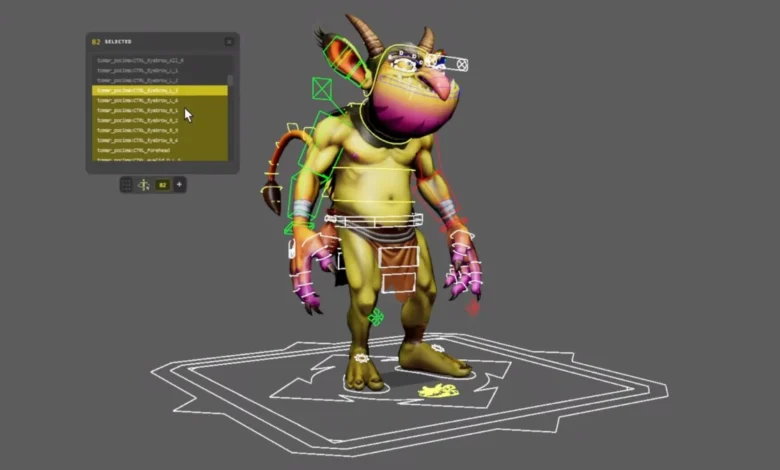
The landscape of professional 2D and 3D animation is currently undergoing a significant shift as specialized, independent software developers bridge the gap between complex industry-standard workflows and the need for high-speed, intuitive production environments. KeyFlow, a comprehensive animation toolkit developed by a working professional, has officially entered this space, offering a suite of 74 distinct tools designed to streamline the technical bottlenecks that frequently impede animators. By focusing on the granular needs of the creative process—specifically those related to timing, spacing, and interpolation—KeyFlow represents an attempt to systematize efficiency within the modern animation studio pipeline.
The Evolution of Animation Toolsets
Historically, animation software was defined by monolithic, all-encompassing programs such as Toon Boom Harmony, Adobe Animate, and Autodesk Maya. While these platforms offer vast capabilities, their complexity often necessitates a steep learning curve and reliance on time-consuming manual processes. Over the last decade, there has been a documented rise in the "scripting and plugin" economy, where third-party developers create modular extensions to automate repetitive tasks.
KeyFlow arrives at a juncture where independent artists and small-to-medium-sized studios are increasingly responsible for high-volume content delivery, such as motion graphics, character animation for streaming media, and social media advertising. According to industry reports from the Animation Guild, the demand for accelerated production cycles has increased by nearly 20% annually since 2020. This pressure has forced individual animators to seek out "quality-of-life" improvements that reduce the time spent on frame-by-frame adjustments, allowing for a greater focus on artistic intent rather than technical execution.
Chronology and Development Origins
The development of KeyFlow was born out of a practical necessity. Its creator, known in the industry as Fenix Animator, began the project as a personal research initiative aimed at solving recurring workflow inefficiencies. The timeline of its development reflects the standard trajectory of modern software tools:
- Early Conceptualization (2021): The initial scripts were written to address specific "pain points" encountered during long-form character animation projects, primarily focusing on easing and graph editor manipulation.
- Beta Iteration (2022): The tools were tested in a professional studio environment, where they were refined to accommodate varying project scales, ranging from short-form social media clips to more complex, layer-intensive character rigs.
- Public Release (2023-2024): The transition from an internal utility to a public product necessitated the creation of a stable user interface (UI) and a robust documentation system. The current iteration, featuring 74+ distinct tools, marks the culmination of this transition.
- Current Commercial Expansion: The software is now being marketed to a broader professional audience, with tiered licensing structures designed to accommodate individual freelancers and larger studio environments.
Technical Composition and Feature Set
The core philosophy of KeyFlow is the reduction of "mouse miles"—the cumulative distance an animator moves their cursor while performing repetitive tasks. By integrating 74+ tools into a singular interface, the toolkit addresses several critical areas of the animation pipeline.
Data-driven analysis of animation software usage indicates that roughly 40% of an animator’s time is spent on "non-creative" technical tasks: creating keys, adjusting interpolation, clearing handles, and managing hierarchy. KeyFlow attempts to reclaim this time. The tools are categorized into workflow-centric modules:
- Timing and Spacing Controllers: These tools allow for the rapid adjustment of ease-in and ease-out curves without the need for manual vertex manipulation in a graph editor.
- Rigging Utilities: These facilitate the quick connection of controllers to geometry, which is a traditionally tedious process in most standard animation suites.
- Automation Scripts: A suite of "one-click" actions that handle common cleanup tasks, such as removing redundant keyframes, resetting transforms, and managing complex layering systems.
- Batch Processing Tools: Designed for studio environments, these tools allow for the application of uniform changes across multiple layers or entire scenes, which is essential for maintaining consistency in long-form projects.
Market Positioning and Pricing Structures
The commercial strategy behind KeyFlow is reflective of the current trend toward tiered software-as-a-service (SaaS) and perpetual licensing models in the creative arts. Recognizing the diverse financial realities of the industry, the developer has implemented a three-tier pricing structure:
- Individual License ($79): Targeted at freelance animators and independent creators. This license provides full access to the toolkit, including future updates.
- Small Studio License ($499 for 10 seats): Designed for boutique studios or educational institutions. This tier accounts for the need for standardized workflows across multiple workstations.
- Enterprise License ($999 for 30 seats): Aimed at larger production houses, this tier ensures that entire departments can operate on a unified system, reducing the friction that occurs when animators move between different project files.
By providing a free trial version, the developer acknowledges the "software fatigue" prevalent in the creative community. Potential users are encouraged to view the toolkit in action through the developer’s official YouTube channel, which serves as a repository for technical demonstrations and tutorials.
Professional Implications and Studio Integration
The introduction of specialized toolkits like KeyFlow has significant implications for how studios structure their pipelines. For years, major studios have relied on proprietary, in-house tools developed by dedicated software engineering teams. However, smaller entities have often been left to fend for themselves with stock software.
The widespread adoption of third-party toolkits suggests a democratization of production quality. When a freelance artist can access the same level of automated precision as a large-scale studio, the barrier to entry for high-quality production is lowered. Furthermore, the reliance on such tools can lead to "standardized artistic expression," where the technical ease of specific motions—such as fluid easing or perfect spacing—becomes a hallmark of modern animation, effectively raising the baseline of what is considered "professional quality."
However, this reliance also introduces risks. The integration of third-party plugins into a workflow creates a dependency on the developer’s continued support. If a major software update (e.g., a new version of Maya or After Effects) occurs, the functionality of the toolkit depends on the developer’s ability to release timely patches. This is a common concern in the software community, and the professional community generally observes a "wait-and-see" period before integrating new plugins into large-scale, high-budget projects.
Industry Outlook
As the animation industry continues to integrate Artificial Intelligence and automated procedural generation, the role of human-centric tools becomes even more vital. KeyFlow represents a middle ground: it does not perform the animation for the artist, but rather removes the physical and temporal obstacles that prevent the artist from performing at their best.
The reaction from the animation community, observed through professional forums and social media, has been largely positive, particularly regarding the interface’s focus on user experience (UX). By stripping away unnecessary menus and placing the most essential tools within immediate reach, KeyFlow addresses a common complaint in modern software design: the cluttered interface.
For studios and independent animators alike, the decision to adopt KeyFlow will likely be based on a cost-benefit analysis of time saved versus the licensing cost. Given the current labor market in animation, where time is arguably the most valuable resource, the initial investment of $79 for a single seat appears to be a calculated gamble on efficiency. As the toolkit matures, its success will depend on its ability to remain compatible with evolving industry standards and its capacity to incorporate user feedback into future updates.
The ongoing development of the toolkit can be tracked via the developer’s presence on platforms like Gumroad, where documentation and version history are maintained. As of the current release, KeyFlow stands as a prominent example of how specialized knowledge—when translated into code—can fundamentally alter the output of an industry. Whether it becomes a staple of the professional animator’s desk remains to be seen, but its arrival confirms a broader trend: the future of animation is being written as much by the tools as it is by the artists who wield them.