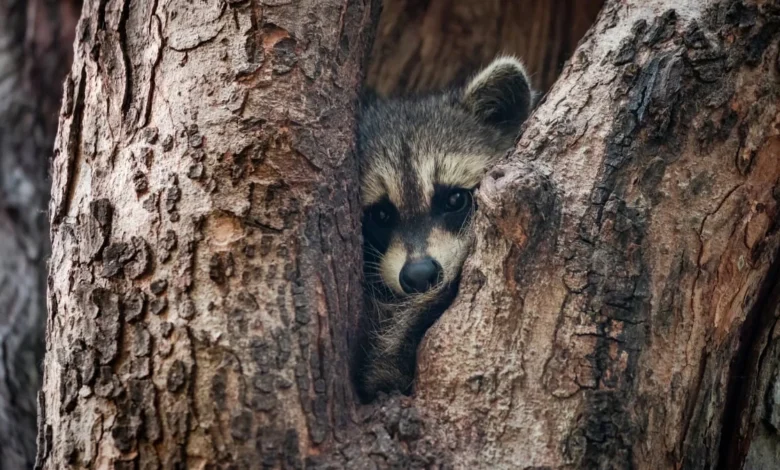
The journey of Jimothy began on July 13, 2026, when Seattle resident Kiana Hall encountered an extraordinary raccoon in the city’s Ballard neighborhood. What struck Hall, and subsequently millions online, was Jimothy’s distinct physique: a remarkably compact torso, a rounded back, and disproportionately long legs. Initially mistaking the creature for a cat due to its unusual gait, Hall’s subsequent video footage, capturing the raccoon’s masked face and peculiar silhouette, quickly propelled him into the digital spotlight. The clip, widely shared across social media, garnered millions of views within days, sparking an unprecedented wave of public fascination and creative interpretations. This rapid ascent from an obscure local sighting to a global internet phenomenon underscores the powerful and often unpredictable nature of viral content in the contemporary digital landscape.
The Genesis of a Digital Icon
Experts in wildlife biology and veterinary medicine have theorized that Jimothy’s unique appearance is likely attributable to a congenital spinal deformity, possibly resembling a form of short spine syndrome. This rare genetic condition results in a compressed spinal column, leading to a shortened body and neck while other limbs develop normally. Despite his distinctive build, videos of Jimothy consistently show him navigating his environment with remarkable dexterity, foraging for food, climbing structures, and generally exhibiting the independent behaviors characteristic of a healthy wild animal. This visual resilience, combined with his endearing and almost cartoonish proportions, made him an immediate subject of public affection and curiosity.
The viral spread of Jimothy’s image was amplified by the inherent human inclination to anthropomorphize animals, especially those with unique characteristics. His name, spontaneously given by Kiana Hall because "he simply looked like one," further cemented his individual identity in the public consciousness, moving him beyond a generic raccoon to a personality. Social media platforms, particularly X (formerly Twitter) and Instagram, served as accelerators for his fame, with users creating and sharing countless memes, fan art, and discussions dissecting his appearance and daily adventures. This collective engagement quickly established Jimothy as a cultural touchstone, demonstrating how quickly a localized event can become a global talking point in the age of instant digital communication.
A Rapid Ascent to Internet Stardom
Within days of his initial sighting, Jimothy’s distinctive form became a blank canvas for digital artists and meme creators. His unique silhouette inspired a diverse array of fan-made content, extending beyond simple images to encompass murals, tattoos, and a burgeoning market for merchandise. The simplicity and recognizability of his form allowed for easy replication and adaptation across various artistic styles and platforms. This phenomenon highlights the current trend of internet culture where unusual or heartwarming real-world events are quickly abstracted into digital archetypes, becoming symbols that resonate with a broad online audience. The rapid creation of dedicated fan pages, digital recreations, and even the speculation about his daily life transformed Jimothy from a mere animal into a beloved "beloved cryptid" in the collective internet imagination.
The immediate appeal of Jimothy also caught the attention of various brands and official entities, eager to participate in the viral conversation. Companies like LEGO Fortnite, Roku, and Figma were among the first to acknowledge Jimothy, creating digital homages that playfully incorporated his image into their brand’s aesthetic. While these initial responses were primarily illustrative, they signaled the beginning of Jimothy’s transition from a community-driven meme to a recognized cultural icon with potential commercial and interactive applications. This proactive engagement by established brands is a testament to the power of viral phenomena in modern marketing, offering a low-cost, high-impact way to connect with current cultural trends and engage with a digitally native audience.
From Seattle Streets to Azeroth: Official Game Integrations
The gaming industry, always quick to embrace popular culture, proved to be particularly fertile ground for Jimothy’s digital evolution. Initially, individual players and independent developers began crafting their own versions of the raccoon within existing game engines or as standalone experiences. However, the true scale of Jimothy’s impact on the gaming world was underscored when major studios began to officially acknowledge and integrate him.
The most prominent announcement came on July 24, just over a week after his initial viral spread, when the official World of Warcraft X account posted, “You asked, Jimothy answered. Coming soon to Azeroth.” This declaration from one of gaming’s most iconic and enduring franchises signaled a significant milestone in Jimothy’s digital journey. The integration of a real-world viral sensation into the fantastical realms of Azeroth demonstrates a strategic move by Blizzard to engage with contemporary internet culture and provide a lighthearted, community-driven addition to their expansive game world. Such an inclusion, whether as a non-player character, a companion pet, or even a quest giver, is likely to generate considerable excitement and further cement Jimothy’s legendary status within the gaming community.
Other major game developers also joined the chorus of tributes. Gameloft, known for its mobile titles, presented its own interpretation, showcasing Jimothy in a style fitting their diverse portfolio. The Old School RuneScape team, known for its commitment to community feedback, reimagined Jimothy as a low-polygon creature, seamlessly blending him into the game’s nostalgic aesthetic, making him appear as if he had always been a part of Gielinor’s wilderness. Similarly, Mouse: P.I. For Hire transported Jimothy to its 1930s-inspired Mouseburg, redrawing him in the distinctive black-and-white rubber-hose animation style, proving his adaptability across vastly different artistic directions.
Even games typically associated with more serious or intense themes found a way to incorporate Jimothy. Dead by Daylight, a horror survival game, gave him a macabre makeover, complete with glowing features and unsettling tentacles, showcasing the versatility of his meme status. The official Sims account, known for its life simulation, took a humorous approach, attempting to construct Jimothy using a human Sim model, resulting in a comically unsettling character that resembled a person in a raccoon costume, highlighting the creative constraints and possibilities within their game’s mechanics.
Perhaps one of the most inventive official interpretations came from Halo. Senior community manager John Junyszek ingeniously repurposed existing character models, bending a Spartan onto all fours and adjusting its proportions to mimic Jimothy’s distinctive silhouette. Subsequent images depicted this raccoon-like Spartan near Master Chief’s crashed escape pod, playfully integrating him into iconic scenes from Halo: Combat Evolved. Warner Bros. Games imagined his arrival in Gotham City, while the teams behind Among Us and Cult of the Lamb redesigned him to fit their unique visual styles, demonstrating a broad industry-wide embrace of the Jimothy phenomenon. These official tributes, while often existing only as conceptual artwork or social media posts, served to validate Jimothy’s cultural relevance and further amplify his reach within the global gaming community.
The Community’s Embrace: Fan-Made Experiences
While official developers were quick to render Jimothy in their game worlds, the grassroots community response demonstrated an even deeper level of engagement, moving beyond static images to interactive experiences. Fans and modders, empowered by accessible development tools and a shared enthusiasm, transformed Jimothy into playable characters and integral parts of their favorite games.
Artist and entrepreneur Chris Pirillo took this a step further by developing an entire browser-based game dedicated to Jimothy. This four-level, NES-style arcade game creatively borrowed elements from classics like Frogger and Donkey Kong, translating aspects of Jimothy’s real and imagined life into engaging challenges. Players guide Jimothy across bustling streets, raid garbage cans for food, evade persistent paparazzi, and climb ladders, immersing them directly in the whimsical narrative of his viral adventures. This fan-made game exemplifies the power of community creativity, transforming a viral meme into a tangible interactive experience.
The modding community, a cornerstone of many popular PC games, also embraced Jimothy with open arms. In Skyrim, one dedicated fan-made addition allowed players to encounter and interact with Jimothy as a unique NPC, seamlessly integrating him into the vast fantasy world of Tamriel. Stardew Valley modders created multiple versions, offering players the option to keep Jimothy as livestock on their farm or purchase him as a loyal companion from the in-game vendor, Marnie. These mods not only enhance the gameplay experience but also demonstrate the community’s desire to personalize their virtual worlds with elements from shared cultural phenomena. In Minecraft, a creator modified the existing raccoon model from the Naturalist add-on to precisely match Jimothy’s proportions, translating his shortened body and long legs into the game’s iconic blocky visual style, showcasing remarkable attention to detail within the constraints of the game’s aesthetics.
Perhaps the most elaborate fan-made interpretation came from the realm of tabletop role-playing games. The official Dungeons & Dragons team released a comprehensive Jimothy stat block, identifying him as a "Beloved Cryptid." This detailed entry provided Dungeon Masters with all the necessary information to incorporate Jimothy into their campaigns, complete with unique abilities inspired by his physical characteristics and the evolving lore surrounding him. His "Compact Frame" ability allows him to squeeze through gaps less than four inches wide, while "Hurl Garbage" enables him to attack enemies with trash, dealing both bludgeoning and poison damage. This level of detail transforms Jimothy into a fully realized character within the rich narrative framework of D&D, allowing players to befriend him, embark on quests with him, or even face him as an unexpectedly formidable opponent.
Broader Implications and Cultural Significance
Jimothy’s journey from a fleeting street sighting to a multi-platform digital icon carries several broader implications for internet culture, the gaming industry, and even wildlife awareness. His rapid virality underscores the increasingly blurred lines between the real and virtual worlds, where physical phenomena are almost instantly digitized, reinterpreted, and disseminated globally. This phenomenon highlights the power of collective storytelling and creative expression in the digital age, where a single video can inspire a global cascade of artistic and interactive content.
For the gaming industry, Jimothy represents a fascinating case study in community engagement and agile marketing. The swift response from both indie developers and major studios to integrate Jimothy demonstrates a keen awareness of popular culture and a willingness to leverage viral trends to connect with their audience. Such integrations, even if temporary or purely illustrative, generate significant social media buzz, foster a sense of community, and present a lighthearted, approachable side of often massive and complex game franchises. It also exemplifies how game development can be influenced by unexpected external events, leading to spontaneous and innovative content.
Furthermore, Jimothy’s story inadvertently raises awareness about wildlife, particularly animals with congenital conditions. While the focus has largely been on his unique appearance and digital interpretations, the underlying discussion about his potential short spine syndrome brings a rare genetic condition into mainstream discourse. Wildlife officials in Seattle have maintained a consistent message: Jimothy is a wild animal, and while fascinating, he should be observed from a respectful distance to ensure his well-being and natural behaviors are not disrupted. This serves as a crucial reminder that despite his digital celebrity, the real Jimothy continues to live a wild existence.
In conclusion, the trajectory of Jimothy the raccoon is a compelling narrative of how a unique individual can become a global phenomenon in the digital age. From his initial sighting in Seattle to his imminent appearance in the fantastical world of Azeroth, Jimothy has become a symbol of internet creativity, community spirit, and the ever-expanding intersection of real-world events and virtual entertainment. His compact frame and long legs have not only traversed Seattle streets but have also navigated the complex landscapes of internet fame and the intricate coding of countless digital worlds, proving that even the most unexpected characters can leave an indelible mark on global culture.