The rapid pace of modern computer graphics development means that major software releases frequently dominate industry headlines, leaving smaller updates, niche plugins, and specialized toolset revisions to slip beneath the radar. While flagship applications regularly command dedicated analysis, the broader ecosystem of visual effects (VFX), animation, game development, and architectural visualization relies heavily on iterative enhancements, utility plugins, and emerging artificial intelligence integrations. To capture this vital segment of the digital content creation landscape, a comprehensive retrospective of notable software updates from the second week of September 2026 highlights significant progress across real-time lighting, GPU rendering, character rigging, generative video models, and cloud-based 3D asset libraries.
Real-Time Lighting Evolution: HDR Light Studio Expands Blender Integration
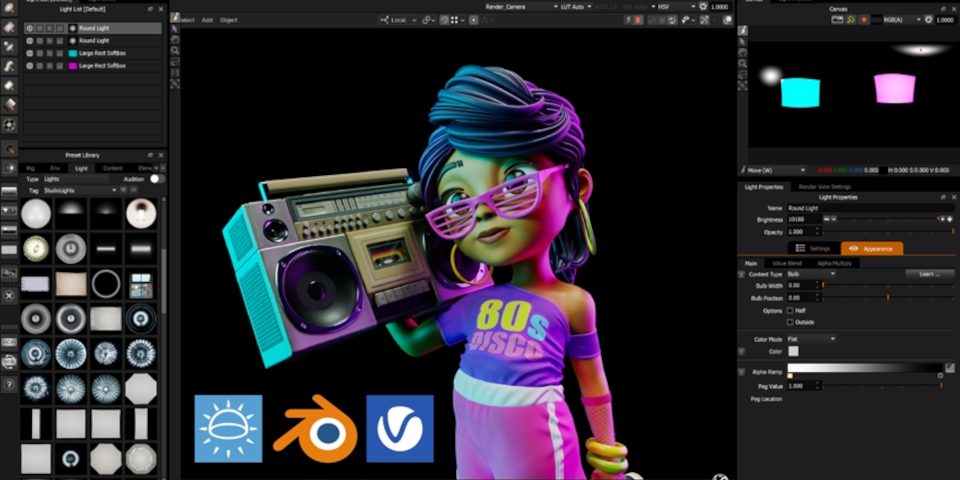
Lighting remains one of the most critical and time-consuming aspects of computer graphics, dictating mood, realism, and compositional clarity across visualization and motion design. Lightmap’s industry-standard real-time lighting tool, HDR Light Studio, has continually evolved to bridge the gap between complex 3D scenes and intuitive canvas-based light placement. During the week of September 13, 2026, Lightmap officially rolled out a strategic enhancement to its Blender integration, introducing native support for Chaos Group’s V-Ray renderer within the popular open-source 3D suite.
This development follows Chaos’s formal reintroduction of V-Ray for Blender in mid-2025, which re-established a robust bridge between Blender’s growing production footprint and industry-standard ray tracing architecture. By integrating HDR Light Studio directly into the Blender-V-Ray pipeline, digital artists can now construct, manipulate, and fine-tune complex high-dynamic-range lighting environments in real time while leveraging V-Ray’s advanced physically based rendering (PBR) engine for final output. This update streamlines look-development workflows for automotive visualization, product rendering, and architectural walkthroughs, eliminating the friction previously encountered when synchronizing external light maps with custom third-party render engines inside Blender.
Advancements in GPU Rendering: Maverick Render 2026.3
Rendering efficiency directly dictates studio profitability and creative iteration speeds. RandomControl, known for its uncompromising focus on physical accuracy and GPU acceleration, delivered its latest production update with Maverick Render 2026.3. Encompassing both Maverick Studio for high-end visualization and Maverick Indie for entertainment pipelines, this release focuses heavily on artificial intelligence-driven denoising and image scaling.

At the core of the 2026.3 update is full integration with NVIDIA’s OptiX 9.1 denoiser framework. More importantly, Maverick has incorporated the newly minted OptiX DEN2x model. This sophisticated algorithm merges traditional render denoising operations with simultaneous 2x image upscaling. According to benchmark metrics provided by RandomControl, running on hardware configurations as modest as an eight-year-old NVIDIA GeForce RTX 2080 GPU, the DEN2x model dramatically accelerates interactive viewport feedback and yields final-frame rendering speeds up to four times faster than previous workflows.
For independent artists and visualization studios operating on legacy hardware or constrained by tight production deadlines, the ability to render at lower resolutions and upscale cleanly without perceptible loss of fidelity represents a substantial economic and operational advantage. The integration underscores a broader industry trend where hardware constraints are increasingly mitigated by intelligent, machine-learning-powered software layers rather than brute-force hardware upgrades alone.
Open-Source Rigging Maturity: mGear 5.3.4 and 5.3.5
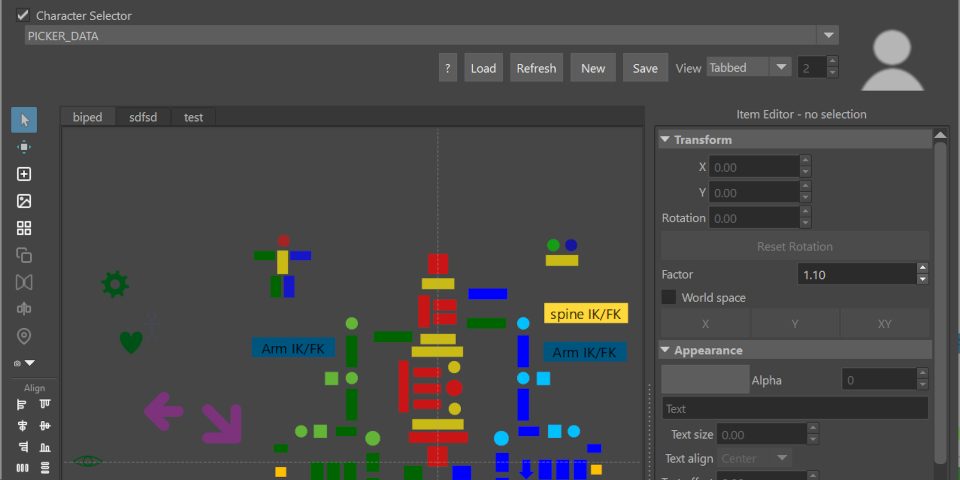
Character setup and animation rigging represent the structural backbone of character animation pipelines in VFX and game development. The mGear framework, a widely adopted open-source character rigging ecosystem for Autodesk Maya, released incremental yet transformative updates under versions 5.3.4 and 5.3.5. The centerpiece of this release cycle is the official deployment of Anim Picker 2.0, representing a complete, ground-up rewrite of the framework’s core animation selection and control management tool.
Anim Picker 2.0 addresses long-standing bottlenecks in animator workflow efficiency by introducing modern architectural features. The updated toolset transitions to scalable vector (SVG) graphics, ensuring crystal-clear controller interfaces across high-DPI and ultra-high-definition monitors. Furthermore, it incorporates interactive widgets, viewport pinning, conditional visibility states, advanced mirroring capabilities, and a flexible heads-up display (HUD) mode.
By modernizing how animators interact with complex underlying skeletal rigs in Maya, mGear continues to narrow the gap between commercial, proprietary studio rigging pipelines and accessible, community-driven open-source alternatives. Rigging supervisors and lead animators have welcomed the update for its reduction in interface latency and improved customization options during high-density crowd and hero-character shots.
Generative AI in Production: SwitchX 2.0 Redefines Video-to-Video VFX
Artificial intelligence continues to transition from experimental novelty to integrated production utility. Beeble’s video-to-video generative AI model, SwitchX, reached a major milestone with the release of SwitchX 2.0. Initially introduced earlier in the year, SwitchX occupies a specialized niche within visual effects: rather than generating entirely new footage from text prompts from scratch, it modifies pre-recorded live-action video while preserving the core spatial consistency and integrity of the primary subject.
SwitchX 2.0 significantly expands the technical boundaries of generative video modification. The updated model lifts previous output restrictions, allowing creators to generate up to 20 seconds of continuous video per batch at full 4K resolution and 10-bit color depth. This capability enables VFX artists to seamlessly alter scene lighting, swap background environments, modify costume textures, or adjust surface props on live-action plates with unprecedented fidelity.
Operating within Beeble’s cloud-based browser application ecosystem, SwitchX 2.0 interfaces directly with a suite of complementary AI production modules. These include the node-based AI compositor Canvas, dedicated 3D relighting tools, automated VFX pass generators, background removal algorithms, intelligent upscalers, and SDR-to-HDR conversion utilities.
Monetized through a credit-based subscription model—with Creator tiers priced at $19 per month for 540 credits and Professional tiers scaling to $75 per month for 2,400 credits—Beeble has positioned SwitchX 2.0 as a scalable enterprise solution. Industry analysts note that while generative video tools have faced skepticism regarding copyright and artifacting, targeted video-to-video manipulation tools that respect underlying camera tracking and subject geometry find much faster integration into professional compositing pipelines.
Intelligent 3D Assets: Chaos Cosmos Introduces AI Model Generation
Rounding out the week’s notable updates, Chaos expanded the utility of Chaos Cosmos, its centralized online 3D asset library, by introducing experimental AI-driven 3D model generation and advanced image-based search capabilities. Currently rolling out in early beta, the new AI system allows digital artists to generate fully realized 3D assets directly from single reference images.
To power this capability, Chaos has integrated prominent third-party open-source AI architectures, specifically Tencent’s HY 3D model—which is also slated for inclusion in upcoming iterations of Maxon’s Cinema 4D—and Microsoft’s Trellis.2 framework. During the beta phase, the AI 3D Model Generation feature is provided at no additional cost to subscribers across V-Ray, Corona, Vantage, and Envision ecosystems, bypassing standard Chaos Credit consumption metrics.
The integration of image-to-3D generation within Chaos Cosmos addresses a perennial pain point in architectural visualization and environmental art: the scarcity of highly specific props matching bespoke client reference materials. By allowing artists to feed visual references directly into the asset management interface and instantly receive usable 3D geometry with PBR materials attached, Chaos significantly compresses the asset acquisition and dressing pipeline.
Broader Industry Implications and Outlook
Taken collectively, the software updates from the week of September 13, 2026, illustrate a mature digital content creation market characterized by two parallel tracks of innovation. On one hand, foundational tools like HDR Light Studio, Maverick Render, and mGear continue to refine traditional deterministic pipelines, leveraging hardware-accelerated ray tracing, advanced denoising, and modernized UI architecture to maximize artist productivity. On the other hand, platforms like SwitchX and Chaos Cosmos demonstrate how machine learning and generative architectures are rapidly subsuming auxiliary tasks—ranging from video compositing adjustments to rapid asset creation.
As software developers push toward year-end roadmaps, the convergence of deterministic rendering physics and probabilistic AI assistance is no longer a futuristic projection but an active operational reality. For production studios and independent creators alike, mastering these hybrid workflows remains essential to maintaining competitiveness in an increasingly demanding media landscape.