Julian Winternheimer, Buffer’s resident data scientist, led the extensive two-year research initiative, sifting through an unprecedented 4.8 million LinkedIn posts disseminated via the Buffer platform. The findings for 2026 represent a notable deviation from the engagement patterns of 2025, when peak LinkedIn activity was predominantly confined to the 9-to-5 workday. In contrast, the latest data reveals a pronounced migration of high-engagement windows to late afternoon and evening slots, suggesting a fundamental change in how professionals consume and interact with industry-specific content.
The Evolving Landscape of Professional Engagement: A Chronological Shift
Historically, LinkedIn, often dubbed the "professional Facebook," saw its highest engagement during conventional business hours. The assumption was that professionals engaged with the platform during coffee breaks, lunch hours, or brief pauses between tasks. This hypothesis was largely supported by Buffer’s 2025 data, which indicated a sharp decline in activity post-5 p.m. However, the 2026 findings paint a different picture. The "peak windows" have demonstrably shifted later into the day, with late afternoon and evening hours now registering some of the strongest engagement numbers ever recorded on the platform. This suggests that while the audience for professional content remains robust, the timing of their interaction has adapted to evolving work-life dynamics.
This chronological shift is not entirely isolated. Winternheimer notes that this trend aligns with patterns observed on other major social platforms. For instance, Instagram and TikTok have long seen significant user engagement in the evening hours, as individuals unwind and consume digital content after their daily commitments. The convergence of LinkedIn’s engagement patterns with these platforms underscores a broader trend in digital consumption: the blurring of lines between professional and personal digital habits, particularly post-workday.
Deciphering the "Why": Contextual Factors Driving the Shift
Several contextual factors likely contribute to this significant shift in LinkedIn engagement. The global adoption of remote and hybrid work models, accelerated by recent societal changes, has fundamentally altered traditional workday structures. Professionals may no longer adhere to rigid office hours, allowing for more flexible engagement with platforms like LinkedIn throughout the day, and critically, after formal work concludes.
Moreover, the increasing prevalence of mobile devices in professional networking cannot be overstated. With smartphones and tablets, professionals can access LinkedIn content during commutes, while performing household tasks, or simply relaxing in the evening. This accessibility transforms LinkedIn from a desktop-centric, in-office tool to a ubiquitous mobile companion, enabling "professional scrolling" during previously untapped leisure hours. Industry reports consistently highlight the dominance of mobile access for social media, and LinkedIn is clearly no exception. The convenience of a quick scroll through industry news or thought leadership pieces from the comfort of one’s couch is a powerful driver of this evening engagement.
Another contributing factor could be the psychological aspect of post-work engagement. After a demanding workday, individuals might be more inclined to engage with content that offers professional development, career insights, or industry news in a more relaxed, reflective state. The pressure of immediate work tasks is lifted, allowing for deeper interaction with valuable content that can aid career growth or provide intellectual stimulation. This contrasts with the often-hurried consumption of content during brief breaks within the workday.
The Power of Engagement: LinkedIn’s Algorithmic Imperative
Buffer’s data unequivocally demonstrates that the timing of a post on LinkedIn significantly impacts its engagement levels. This is critical because engagement – defined by reactions, comments, and reposts – serves as a vital signal for LinkedIn’s sophisticated algorithm. The algorithm prioritizes content that generates early and sustained interaction, deeming it valuable and thus increasing its visibility to a broader audience. Therefore, higher engagement translates, directly or indirectly, to greater reach and impact.
While LinkedIn’s algorithm incorporates numerous factors to rank posts, engagement remains a foundational metric. A post that quickly garners reactions and comments signals to the algorithm that the content is relevant and resonates with its initial viewers. This positive feedback loop can then propel the post into more users’ feeds, expanding its reach exponentially. Understanding and leveraging these peak engagement windows is not merely about convenience; it’s about strategically aligning content delivery with algorithmic preferences to maximize visibility and audience interaction.
Detailed Data Analysis: Pinpointing Peak Engagement
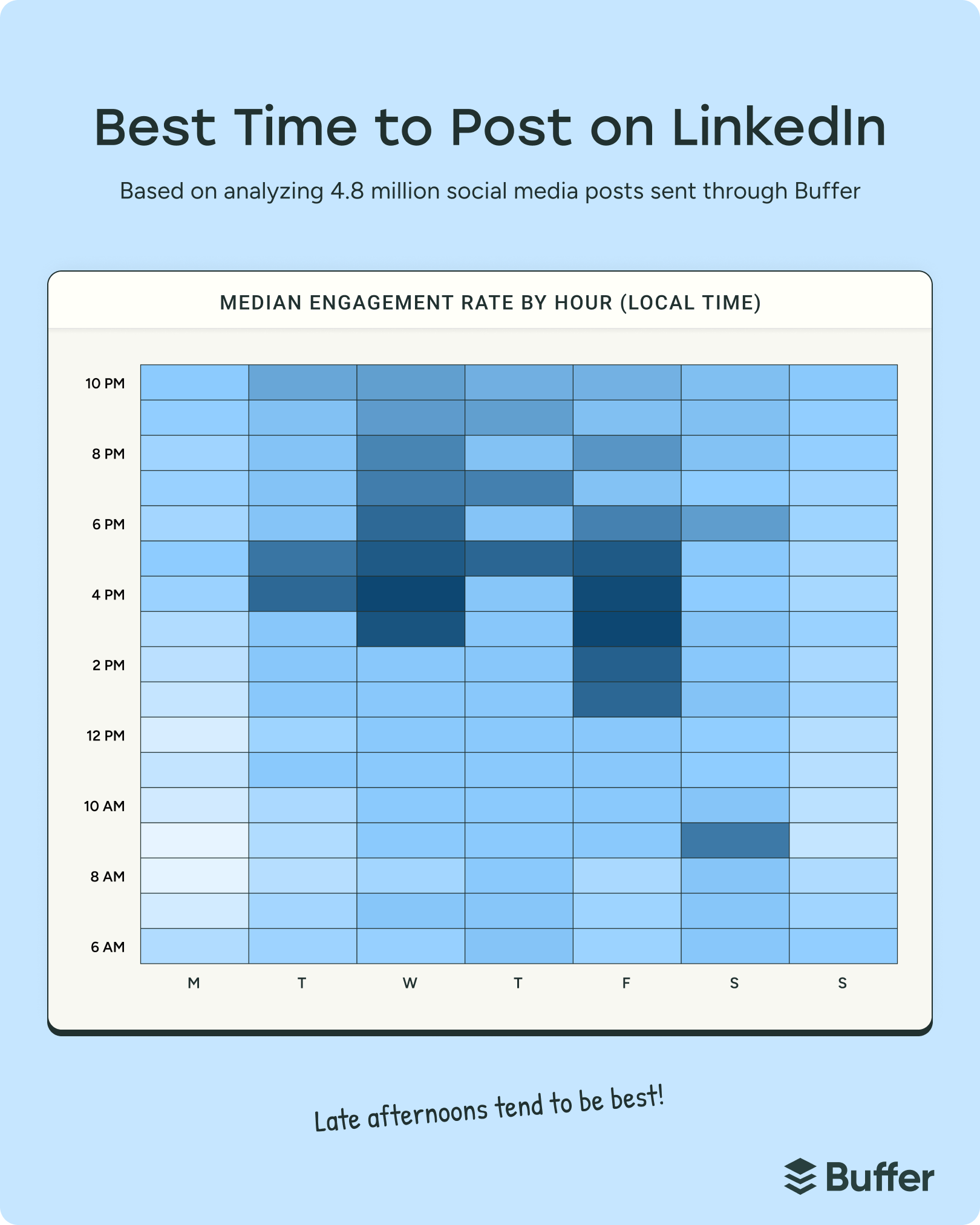
Buffer’s analysis provides granular insights into the best times to post on LinkedIn across the week, all normalized by local time zones for universal applicability. The overarching finding is that late afternoon and evening hours, specifically between 3 p.m. and 8 p.m. on weekdays, now constitute the prime engagement window.
-
Overall Peaks: The highest engagement across the week is observed at 4 p.m. on Wednesday and 3 p.m. and 4 p.m. on Friday. These slots represent critical opportunities for content creators.
-
Monday: Mondays generally exhibit lower engagement. However, the best times are surprisingly late: 10 p.m., 5 p.m., and 9 p.m. This suggests professionals are catching up or planning for the week ahead in the evening. Given Monday’s overall weaker performance, it might be advisable to reserve high-priority content for later in the week.
-
Tuesday: Similar to Monday, Tuesday shows slightly lower overall engagement. Peak times include 4 p.m., 5 p.m., and 10 p.m. While midday hours perform decently, they are no longer the dominant peaks seen in previous years.
-
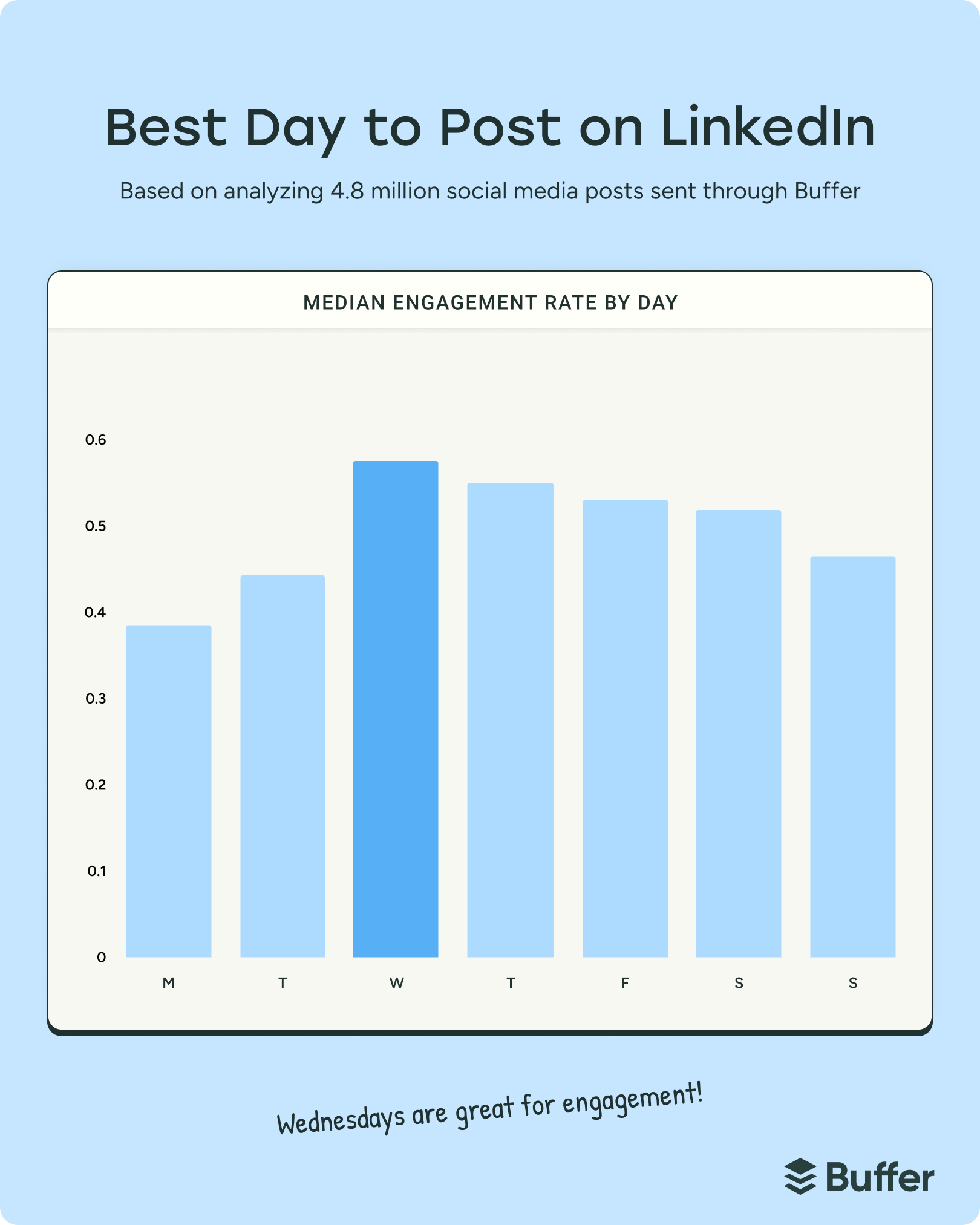
Wednesday: This is identified as the best day of the week for LinkedIn engagement. Peak times are concentrated in the afternoon: 4 p.m., 3 p.m., and 5 p.m. Content shared on Wednesday is most likely to achieve maximum visibility and interaction.
-
Thursday: Engagement remains strong on Thursday, with peak times at 5 p.m., 7 p.m., and 9 p.m. This extends the afternoon-to-evening trend, indicating sustained professional activity throughout the week.
-
Friday: Fridays are also strong performers, particularly as professionals begin to wind down their week. The best times are 3 p.m., 4 p.m., and 5 p.m. This window aligns with the anticipation of the weekend, where users might be catching up on feeds before logging off.
-
Weekends: Weekends generally see significantly lower engagement compared to weekdays. If posting on a Saturday is unavoidable, 9 a.m. is the best slot, followed by 6 p.m. and 10 p.m. For Sunday, 10 p.m. is the strongest, with 9 p.m. and 6 a.m. also showing some activity. However, for critical content, weekdays remain the superior choice.
Implications for Content Strategy and Marketing Professionals
These findings carry significant implications for anyone leveraging LinkedIn for professional growth, brand building, or lead generation. Marketers, HR professionals, sales teams, and individual thought leaders must adapt their content calendars to align with these new engagement patterns.
- Strategic Rescheduling: The most immediate action is to review and adjust existing posting schedules. Content previously earmarked for morning slots might be more effective when published in the late afternoon or evening. This requires a conscious shift from a "workday mentality" to a "post-workday engagement" mindset.
- Targeted Content for Evening Consumption: The type of content shared might also need to be reconsidered for evening audiences. While professional, educational content remains paramount, its presentation could be tailored for a more relaxed, reflective consumption style. Long-form articles, in-depth analyses, or thought-provoking discussions might resonate better when users have more time to engage meaningfully.
- Leveraging Midweek Momentum: Wednesday, followed by Thursday and Friday, stands out as the optimal period. High-value content, crucial announcements, or thought leadership pieces should be strategically placed within these days, particularly during the identified peak afternoon and evening windows.
- Rethinking Weekend Engagement: While weekend engagement is lower, it’s not entirely absent. For niche audiences or specific content types (e.g., motivational, personal branding stories), strategic weekend posting might still yield results, especially at the identified morning and late-evening slots. However, expectations for reach and engagement should be adjusted accordingly.
- Beyond Timing: Content Type and Frequency: The study also reiterates the importance of content format. Carousel (document) posts generate significantly higher engagement—up to 596% more than text-only posts. This highlights the visual and interactive preferences of the LinkedIn audience. Furthermore, a consistent posting frequency of 2 to 5 times per week is crucial. Buffer’s separate research indicates that this cadence yields substantially more impressions and engagement compared to posting only once a week, establishing a baseline for algorithmic recognition and distribution. Escalating to 6-10 posts per week further amplifies these gains, and 11+ posts per week offers dramatic increases in impressions and engagement.
Customizing Your Approach: The Imperative of Analytics
While Buffer’s aggregated data provides invaluable benchmarks, it is crucial to remember that every audience is unique. The "best time to post" is ultimately specific to your target demographic, industry, and the type of content you produce. Therefore, a data-driven strategy must include continuous experimentation and analysis of personal or brand analytics.
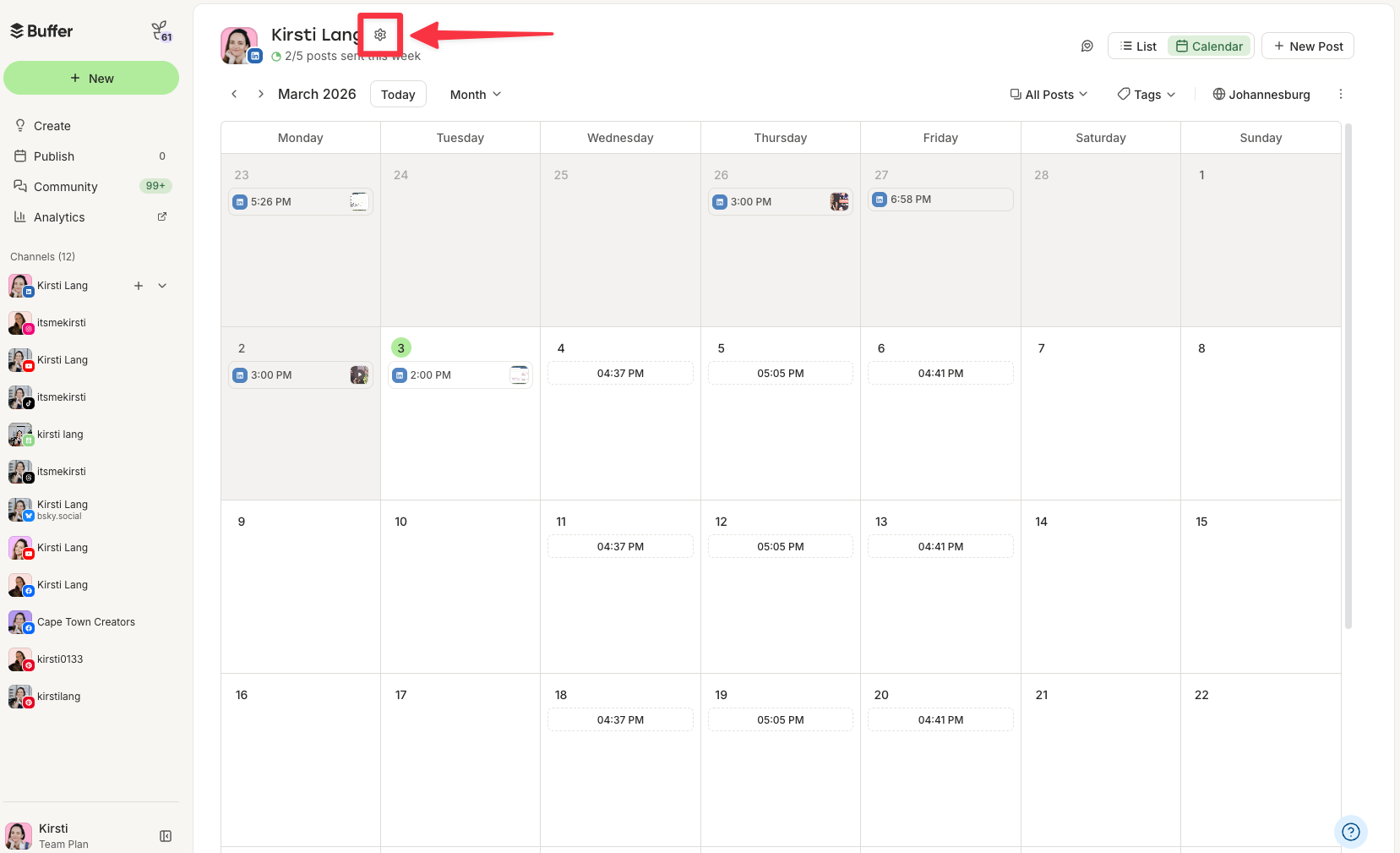
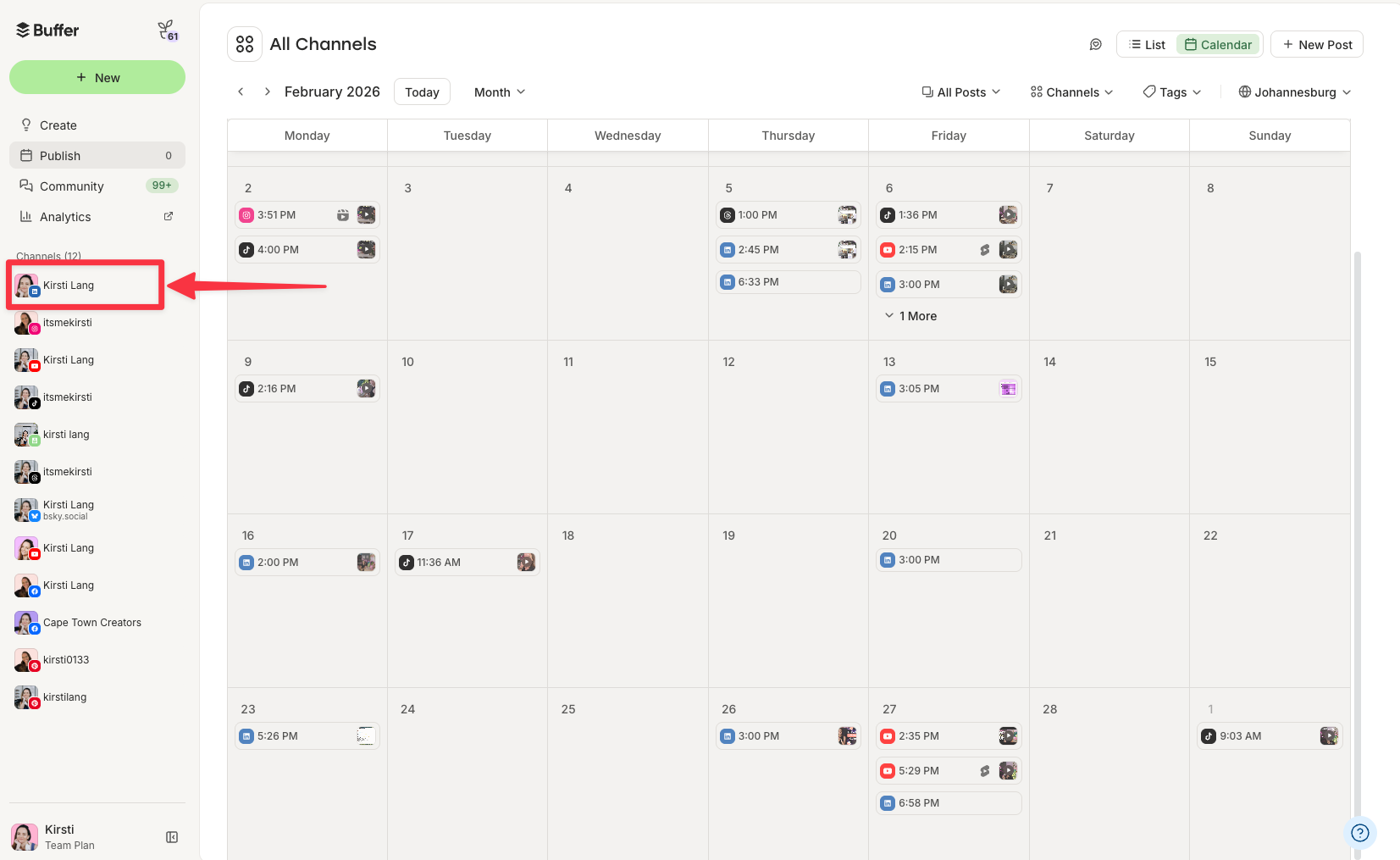
LinkedIn’s native analytics offer insights into top-performing posts, but they often lack precise timestamp data, making it challenging to correlate engagement directly with specific publishing times. This is where dedicated social media management tools like Buffer become indispensable. Buffer not only provides recommended posting times based on its extensive data but also allows users to schedule posts efficiently and then track their performance within its analytics suite. This closed-loop system empowers users to test different timings, monitor results, and iteratively refine their strategy to discover their unique "golden hours."
Expert Perspectives and Future Outlook
Leading social media strategists consistently emphasize the dynamic nature of platform algorithms and user behavior. The shift observed on LinkedIn is a testament to the evolving digital landscape, where work and personal lives are increasingly intertwined within online spaces. Experts generally advise a flexible, analytical approach, treating broad studies as a starting point rather than an absolute rule. The ability to quickly adapt to new trends, driven by robust data analysis, is a hallmark of effective digital marketing.
Looking ahead, it is plausible that these evening engagement trends on LinkedIn will continue to solidify. As remote work becomes more ingrained and mobile devices remain central to digital consumption, the traditional boundaries of professional interaction will likely remain fluid. Future studies may reveal further nuances, such as shifts based on specific industries or global regions, but the overarching narrative for 2026 is clear: professional audiences are engaging on their own terms, often after the workday concludes.
In conclusion, Buffer’s 2026 LinkedIn engagement study provides a critical update for anyone seeking to maximize their impact on the platform. The pronounced shift towards late afternoon and evening engagement necessitates a strategic recalibration of content calendars. By understanding these new patterns, leveraging powerful content formats, maintaining consistent frequency, and diligently analyzing their own audience data, professionals and brands can effectively navigate the evolving dynamics of LinkedIn and significantly amplify their presence in the professional digital sphere.