From Textbooks to TikTok: How Startup ScrollEd is Gamifying Education Through Vertical Feeds

For over a decade, contemporary society has engaged in a continuous lamentation over the digitization of the human mind. Cultural critics, educators, and psychologists have frequently pointed the finger at "doomscrolling"—the compulsive habit of endlessly consuming negative news feeds on social media—as the primary culprit behind eroding attention spans, declining reading comprehension, and an apparent collective inability to sit quietly with a traditional book or study for academic examinations. The prevailing narrative has long framed modern digital platforms as the natural adversaries of deep, focused learning.
However, a new wave of educational technology startups is beginning to challenge this foundational assumption. Rather than fighting an uphill battle to detach students from their smartphones, these innovators are asking a radical question: What if the problem is not the act of scrolling itself, but rather the empty, unrewarding nature of the content we consume while doing it? What if the addictive architecture of platforms like TikTok and Instagram Reels could be co-opted and repurposed to deliver rigorous academic material?
Enter ScrollEd, a Palo Alto-based startup that is currently competing in the prestigious TechCrunch Disrupt Startup Battlefield 200. Founded by student-entrepreneurs who intimately understand the daily friction between academic duty and digital distraction, ScrollEd is betting that if students refuse to open heavy, dry textbooks, the textbook must transform itself to meet them where they already are—inside a vertical, algorithmic scroll.
The Mechanics of Mindful Scrolling
The core innovation of ScrollEd lies in its proprietary application, which is designed to ingest virtually any text file—ranging from dense academic PDFs and heavy university textbooks to corporate compliance manuals—and instantly convert it into an interactive, multimedia feed.
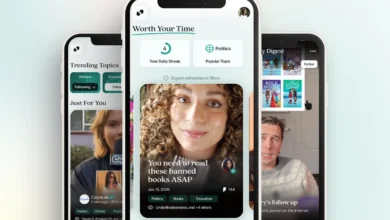
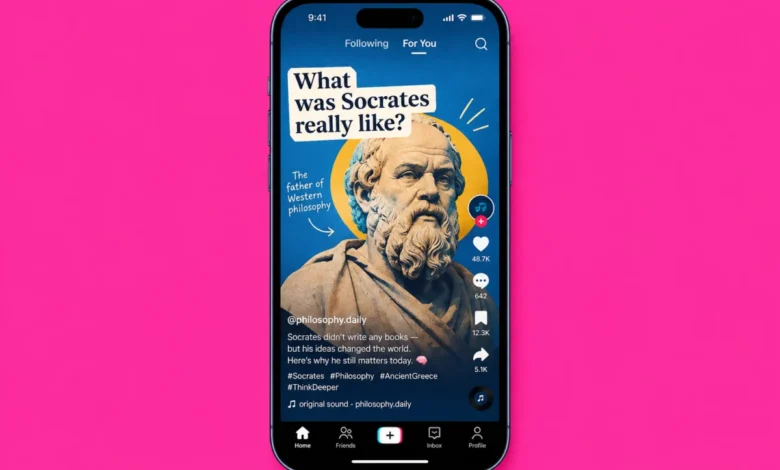
When a user opens the ScrollEd application, the learning experience mimics the familiar mechanics of short-form video platforms. Information is dynamically presented through a blend of artificial intelligence-generated video summaries, crisp audio explanations, concise text snippets, and interactive quizzes. The user interface relies entirely on intuitive touch gestures: swiping upward instantly surfaces a brand-new topic or sub-chapter, maintaining the dopamine-driven momentum characteristic of modern social media feeds.
Crucially, however, ScrollEd introduces a mechanism designed to combat superficial learning. While a vertical swipe advances the broader curriculum, swiping sideways allows the user to dive deeper into the specific nuance of the topic currently on screen. This horizontal pivot opens up expanded explanations, primary source references, and detailed case studies. Capping off each deep-dive session is an interactive quiz designed to reinforce retention and test comprehension before the user is permitted to move further down the rabbit hole.
This design philosophy directly targets what co-founder Utsav Gupta identifies as the fundamental bottleneck of modern digital media: the friction of transitioning from casual curiosity to deep academic engagement.
"The younger generation is increasingly going short-form, vertical feed only—especially the 18-year-olds we’ve spoken to—and this poses challenges for any kind of media that requires depth," Gupta explained in an interview. "We want to meet them where they are… We just have to be deliberate about how we use it and choose not to maximize engagement on the platform."
Gupta elaborated on the psychological architecture of the app, noting that conventional short-form videos typically leave users hanging. "A short video can make you curious; following that curiosity can mean searching for another explanation or leaving the app. We wanted going deeper to be as easy as moving to the next video."
Origins and Evolution of the Startup
The genesis of ScrollEd traces back to the personal frustrations of its founders. The company was bootstrapped earlier this year by Utsav Gupta and his wife, Rebecca Neff, after the couple experienced a shared sense of dissatisfaction following late-night sessions of mindless doomscrolling before sleep.
Both founders bring distinct, highly relevant technical backgrounds to the venture. Gupta is currently studying artificial intelligence and human purpose at Stanford University, positioning him at the intersection of machine learning capabilities and societal impact. Neff is pursuing a degree in computer science at the University of Pennsylvania, bringing rigorous software engineering expertise to the platform’s development.
Operating out of Palo Alto, the heart of the Silicon Valley technology ecosystem, the duo recognized an opening in the market that bridged EdTech and consumer social media. Rather than developing yet another traditional learning management system (LMS) or digital flashcard app, they sought to design a tool that treats attention not as a finite resource to be guarded, but as a dynamic energy to be redirected.
Target Markets and Commercial Strategy
ScrollEd has adopted a diversified go-to-market strategy that targets three distinct verticals: educational institutions, corporate training programs, and everyday consumers seeking a more intellectually stimulating alternative to traditional social media.
To monetize these offerings, the startup has deployed a freemium business model. Individual users can access a foundational consumer feed for free, while power users can upgrade to a paid "ScrollEd Pro" subscription for enhanced features and expanded content libraries. Simultaneously, the company relies on annual institutional licenses to drive B2B revenue.
Under the institutional model, high schools, universities, and corporate human resources departments pay to deliver their own customized educational materials, training modules, and compliance documents through the ScrollEd platform. In return, these organizations receive comprehensive backend analytics and reporting tools. These dashboards provide instructors and managers with granular data regarding student engagement, lesson completion rates, time-spent metrics, and knowledge-check performance.
Future Roadmap and TechCrunch Disrupt Debut
ScrollEd is leveraging the high-profile stage of TechCrunch Disrupt 200—held in downtown San Francisco—to officially launch its consumer business. For the founding team, the event represents a vital launching pad to test their thesis on a broader industry stage.
"We’re hoping to ‘disrupt’ social media and short form!" Gupta joked ahead of the conference.
Looking ahead over the coming months, ScrollEd’s operational roadmap is heavily focused on three primary objectives: executing a successful consumer rollout, aggressively expanding its proprietary lesson library, and refining its automated source-checking workflow to ensure the absolute accuracy of AI-generated educational content. Additionally, the startup is actively developing pilot programs with select educational institutions to test the software in live classrooms.
Over the longer term, ScrollEd’s engineering team is building foundational infrastructure designed to enable educators to accurately assess individual learners on a micro-level. By leveraging machine learning algorithms, the platform aims to eventually adapt its pacing, difficulty, and content delivery style dynamically to match the unique cognitive needs and learning speeds of each individual student.
Broader Implications for the Future of Education and Media
The emergence of startups like ScrollEd highlights a significant philosophical shift in how technologists and educators view the digital habits of Generation Z and Generation Alpha. For decades, the dominant pedagogical approach has been prohibitory: banning smartphones in classrooms, discouraging multi-tasking, and attempting to force digital natives back into the rigid structural paradigms of the 19th- and 20th-century print eras.
ScrollEd’s model suggests an alternative path: acceptance through adaptation. By speaking the native digital language of the vertical feed, platforms of this nature remove the psychological barriers that make traditional studying feel like a chore. However, this approach also introduces new questions and challenges for the educational community.
Critics and learning scientists may debate whether the rapid-fire nature of vertical feeds can truly cultivate the deep, sustained concentration required for complex critical thinking, or if it merely trades one form of cognitive fragmentation for another. Furthermore, the reliance on artificial intelligence to synthesize, summarize, and generate educational content raises critical questions regarding source fidelity, potential algorithmic bias, and the loss of nuance inherent in condensing complex academic theories into bite-sized social media formats.
Yet, as educational institutions struggle with declining engagement rates and the pervasive distraction of smartphones, the demand for innovative solutions has never been more acute. Whether ScrollEd succeeds in permanently altering how students study or merely carves out a lucrative niche in the crowded EdTech landscape, its core premise remains provocative: the addictive design patterns that captured the modern mind might also possess the power to rescue it.
Related posts: