Variety Entertainment and Technology Summit 2026: Navigating the Intersection of Artificial Intelligence, Fandom, and the Future of Media

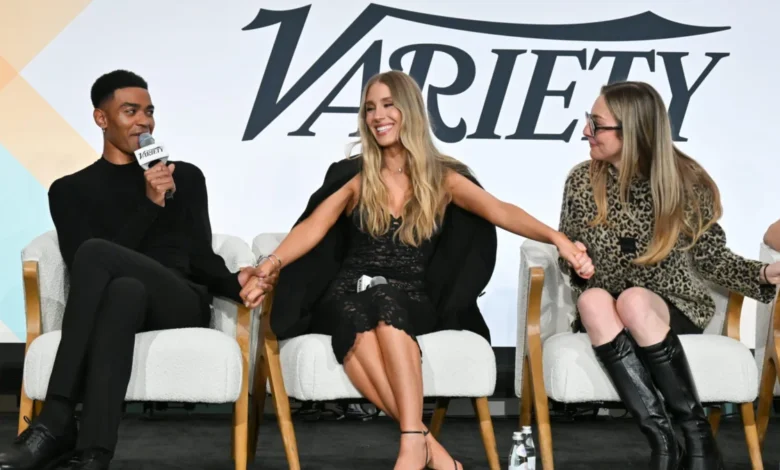
The 2026 Variety Entertainment & Technology Summit, presented by EY, convened at the Beverly Hills Four Seasons Hotel on Thursday, marking a pivotal moment for stakeholders in the film, television, and gaming sectors. As the media landscape undergoes a fundamental transformation driven by the proliferation of artificial intelligence, the fragmentation of traditional broadcast audiences, and the rising influence of the creator economy, the event served as a high-level forum for industry leaders to address the challenges and opportunities defining the next decade of entertainment.
The summit featured an expansive agenda of keynote addresses, panel discussions, and networking sessions involving representatives from major corporate players, including Blumhouse Atomic Monster, Sony, Warner Bros., Mattel, Reddit, and NBCUniversal. Discussions moved beyond the buzzwords of the current market, delving into the tactical application of technology, the necessity of authentic fan engagement, and the evolving economic models of content production.
Chronology of Industry Shifts: A Strategic Overview
The day was structured to reflect the urgency of current market pressures. The morning sessions prioritized the macro-economic landscape, focusing on how media executives are reconciling the decline of traditional linear viewership with the surge in digital-native content consumption.
By midday, the discourse shifted toward creative strategy. Notable speakers, including Nick Kroll and Bill Hader, provided candid insights into the current state of production. Kroll’s keynote emphasized the logistical and creative importance of maintaining Los Angeles as a production hub, while Hader addressed the growing friction between legacy performers and the integration of generative AI in high-profile projects like the upcoming Cat in the Hat film.
In the afternoon, the focus turned toward the "Creator Boardroom," where speakers from UPROXX Studios and Culture Genesis argued that the industry’s traditional gatekeeping models are increasingly incompatible with the current realities of mass-market influence. The summit concluded with forward-looking panels on the role of hospitality and experiential entertainment, highlighting how intellectual property (IP) is being extended into physical spaces to cultivate deeper, multi-generational loyalty.
Data-Driven Perspectives on Audience Resonance
A central theme of the summit was the necessity of data-backed storytelling. Nancy Hall, U.S. CEO at WPP Media, articulated a strategy for navigating the diverse formats of modern media, from short-form TikTok content to long-form cinematic experiences. Hall underscored that the "red thread" connecting these formats is interactivity. According to WPP internal metrics, content that encourages audience participation—allowing users to shape, share, and comment on the narrative—experiences a 40% higher rate of cultural penetration than passive, top-down messaging.
This sentiment was mirrored by Tom McKenna, Audible’s global head of media and business development. McKenna noted that the company’s recent rebranding strategy relies on integrating audio storytelling into the "everyday moments" of a consumer’s life. By utilizing unconventional advertising channels—such as projecting TikTok-native content onto the facades of Times Square buildings—Audible is attempting to break through the "sea of sameness" that defines current digital marketing.
The AI Paradox: Catalyst vs. Complication
Artificial intelligence remained the most contested topic of the summit. While panels acknowledged the technical potential of AI to accelerate post-production workflows and optimize distribution, speakers were quick to warn against the dangers of "AI slop"—the rapid, low-quality content generation that threatens to devalue creative labor.
Director James Wan of Blumhouse Atomic Monster provided a pragmatic assessment of this shift. Wan noted that the accessibility of high-end technology has democratized filmmaking, allowing YouTube creators to produce viral, high-production-value projects like Backrooms. However, the industry is still grappling with how to integrate these creators into the formal studio ecosystem.
The sentiment among many panelists was that AI should serve as a tool for "communal engagement" rather than a replacement for human creativity. As WPP’s Nancy Hall aptly summarized, brands must balance a dual mandate: "We have to ensure that humans desire us, but that machines recommend us."
Expanding the Flywheel: Experiential Entertainment and IP
The summit highlighted a significant pivot in how studios view their intellectual property. Paramount’s senior vice president of global experiences, Marie Marks, argued that the screen is no longer the terminus of a consumer’s relationship with a brand, but rather the beginning.
Paramount’s expansion of the Nickelodeon hotel brand serves as a case study in this strategy. With 1,000 rooms currently in operation and 2,000 in development, the company is leveraging the "flywheel effect," where immersive, in-person experiences reinforce the value of the underlying IP. Hallmark Media has adopted a similar approach, diversifying from a seasonal television staple into cruises and year-round lifestyle experiences. Natalia Premovic, chief consumer products officer at Mattel, noted that these experiences successfully bridge generational divides, citing an in-person Uno tournament in Los Angeles as an example of how physical play creates social bonds that traditional digital interaction cannot replicate.
The Evolution of the Creator Economy
The "Titans of Innovation" roundtable challenged the status quo of celebrity-brand partnerships. Sean Atkins, CEO of Dhar Mann Studios, critiqued the current marketing landscape as fundamentally flawed, noting that the industry continues to offer low-value, short-term contracts to creators who possess the same, if not greater, influence than traditional A-list celebrities.
This perspective was bolstered by Christina Kothari of Reddit, who described the success of the Resident Evil campaign. By pairing creators with in-depth, long-term communities on Reddit, the brand was able to generate content that was perceived as organic rather than transactional. The consensus among the panelists was clear: the era of "prescribed talking points" is ending, and the future belongs to brands that provide creators with the autonomy to build authentic community narratives.
Future Projections and Industry Implications
The summit provided a clear roadmap for the industry’s trajectory through 2027. Key implications include:
- Normalization of Hybrid Production: Studios are increasingly looking to bridge the gap between amateur-led digital content and high-budget studio production. The success of independent, mid-budget genre films like Obsession has proven that audiences are hungry for "originality and purity of story," a trend that producers must capitalize on without falling into the trap of formulaic replication.
- The Rise of Accountability in Advertising: As Amazon Prime Video and Disney Advertising executives noted, the television business is shifting toward extreme personalization and rigorous accountability. Advertisers are no longer satisfied with broad reach; they demand the precision of digital metrics within the high-impact environment of broadcast and streaming.
- HBCU Representation and Authentic Storytelling: The discussion surrounding the A Different World sequel on Netflix underscored a broader push for authentic representation. By filming on location at HBCUs in Atlanta, producers are aiming to move beyond superficial nods to culture and toward a more "truthful" depiction of the Black American experience.
As the industry looks toward the coming year, the overarching message of the summit was one of cautious optimism. The barriers to entry for creators are lower than ever, but the challenge for established studios remains the same: to foster deep, communal engagement in an increasingly fragmented digital landscape. Whether through the lens of AI-augmented production or the physical expansion of IP into experiential hotels and cruises, the future of the entertainment business will be defined by those who can successfully navigate the intersection of human-centric storytelling and data-driven strategy.
The event concluded with a call to action from industry veterans: as the media landscape shifts, the priority must remain the preservation of the "human element." Whether it is through the hiring of more diverse composers, the promotion of queer Black narratives, or simply the courage to fund projects that do not fit neatly into traditional award-season discourse, the industry’s longevity depends on its ability to evolve alongside its audience.