Goldenrod launches platform for film production incentives to streamline complex state rebate processes for global creators

The landscape of independent and studio-scale film production is undergoing a significant shift as Goldenrod, a newly minted financial technology platform, officially launches to simplify the often-opaque world of state-sponsored production incentives. By providing a digital infrastructure designed specifically for the intricacies of film and television finance, the platform aims to alleviate the administrative burden that has historically plagued producers. With an initial focus on Texas, Louisiana, and Kentucky, Goldenrod is positioning itself as an essential tool for filmmakers attempting to navigate the complex compliance requirements necessary to secure millions of dollars in state rebates.
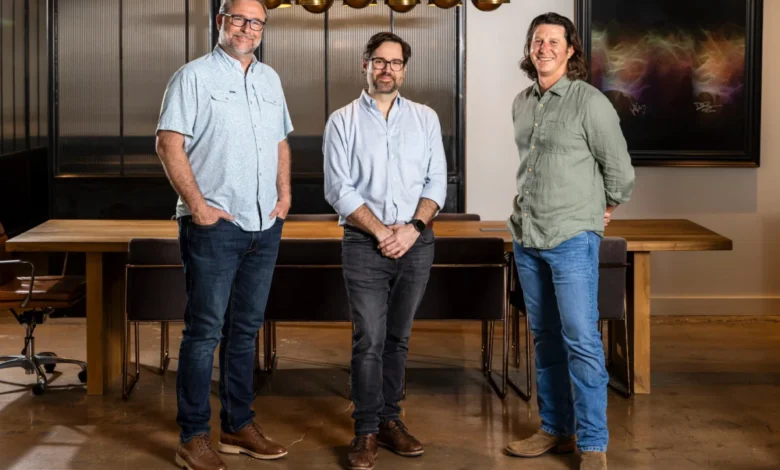
The platform is the result of a collaborative effort between industry veterans who have spent years working at the intersection of creative production and government policy. Its launch comes at a pivotal moment for the industry, particularly in Texas, which recently implemented a landmark $1.5 billion production fund. By offering both software-driven tracking and human-led consulting, Goldenrod seeks to bridge the gap between creative vision and the rigid, often punitive requirements of government financial programs.
The Genesis of a Financial Solution
The inception of Goldenrod was not born out of theoretical market analysis but rather from the firsthand frustrations of its founders. The team, which includes Ted Griffis and Brandon Thomas of the Austin-based post-production house TBD Post—known for their work on Markiplier’s Iron Lung, Netflix’s The Long Game, and the Emmy-winning documentary Fathom—identified a recurring failure point in film production: the loss of capital due to administrative errors.
Russell Wayne Groves, a veteran producer and founder of The Ranch Productions, serves as a co-founder of the platform. His perspective underscores the motivation behind the project. "I’ve spent years producing projects in Texas, watching real money slip away because incentives compliance is genuinely hard to get right, even when you’re trying," Groves noted. "The administrative load pulls you off-set, off the creative work, and if you miss something, you’re either leaving significant dollars on the table or facing disqualification entirely."
The comparison to consumer tax software is deliberate. Goldenrod operates as a centralized dashboard that tracks production spending against the specific regulatory requirements of the states in which a film is being shot. By automating compliance monitoring, the platform allows producers to maintain financial transparency for their investors while ensuring that every eligible dollar is captured during the final audit process.
Navigating the Texas Incentive Landscape
The timing of Goldenrod’s entry into the market is inextricably linked to the legislative evolution of the Texas film industry. Following the passage of a $1.5 billion state incentive fund that took effect in 2025, Texas has transitioned from a competitive regional player to a potential global hub for media production.
Unlike tax-credit systems in other jurisdictions, which often rely on secondary markets and can take years to realize, the Texas system is structured as a cash rebate. This distinction is crucial for independent productions that operate on thin margins and require liquidity to remain solvent during post-production. The Texas program offers a maximum 31% cash rebate, with a qualifying budget floor set at $250,000. This low threshold democratizes access, allowing smaller, independent filmmakers to compete for state resources alongside major studio projects.

However, the complexity of these programs remains a barrier to entry. "Incentives compliance" is not merely a bookkeeping exercise; it involves rigorous adherence to labor laws, local spending requirements, and specific vendor documentation. Goldenrod’s service acts as a guardrail, ensuring that from the moment of pre-production, the film’s spending structure is aligned with the state’s mandates.
Chronology of Development and Testing
The development of Goldenrod was accelerated by a period of quiet, real-world testing. During the 2026 SXSW festival, several films that premiered to critical acclaim were utilizing the platform’s tools in a private beta phase. This "field-testing" allowed the developers to refine the user interface and the backend logic of the incentive-tracking algorithms.
By observing how producers interacted with the platform during the high-pressure environment of a film premiere and subsequent distribution, the team was able to identify which financial metrics were most vital to both line producers and executive financiers. This phase confirmed the company’s hypothesis: there was an urgent, unmet need for a tool that could provide real-time visibility into the "rebate readiness" of a production.
Following this successful trial, the company officially opened its services to the Texas, Louisiana, and Kentucky markets. For producers operating outside of these states, Goldenrod has initiated a limited early-access program, allowing select projects to utilize the software as the company systematically expands its geographical footprint across the United States.
Beyond Software: The Consulting Component
One of the primary differentiators of Goldenrod is its dual-track approach. While the platform provides a digital dashboard, it is supported by a team of in-house experts who provide consulting services. This is essential, as incentives are often influenced by pre-production decisions that cannot be "fixed" after the fact.
For instance, the decision to film a specific sequence in one county versus another—or the choice to hire local crew members versus flying in talent—can have a direct impact on the final percentage of the rebate. Goldenrod’s consultants work with producers during the planning stages to model these outcomes. By adjusting schedules or locations before a single frame is shot, producers can maximize their potential return.
Once production is underway, the software monitors expenditure in real-time, flagging potential compliance issues before they become permanent record-keeping errors. By the time a production is wrapped, the platform has essentially curated the necessary documentation for the state government, significantly reducing the time required for final approval and disbursement of funds.
The Broader Economic Impact
The implications of such a platform extend beyond the immediate financial gains for individual production companies. By making it easier for producers to secure and manage incentives, Goldenrod acts as a catalyst for local economic development. When states offer incentives, they do so with the expectation that those funds will circulate through the local economy—hiring local caterers, renting local equipment, and utilizing local post-production facilities.
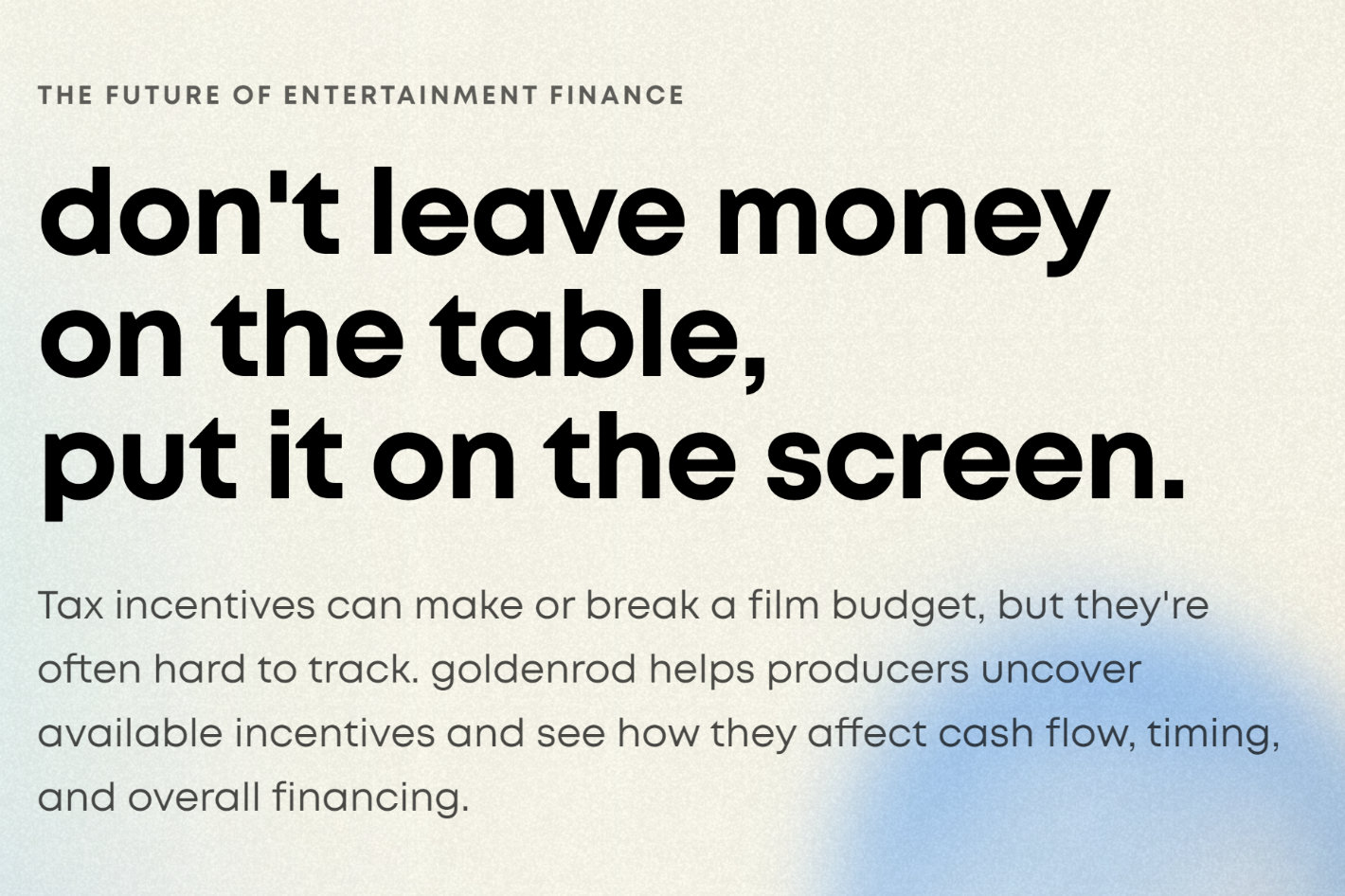
When producers fail to secure these incentives due to administrative errors, the local economy suffers alongside the production company. By ensuring that these funds are successfully captured and returned to the filmmakers, Goldenrod helps maintain the health of the broader production ecosystem.
Furthermore, the professionalization of incentive management could shift the way films are financed. If a producer can provide a high degree of confidence regarding the return of a 30% cash rebate, the cost of capital for that production often decreases. Investors are more likely to support projects that have robust, transparent, and technology-backed financial controls.
Industry Implications and Future Outlook
As the global competition for film production becomes more intense, states are increasingly using incentive programs as their primary tool for economic development. However, the success of these programs is often hampered by the difficulty of the application and reporting processes.
Goldenrod is entering a market where the "administrative burden" has historically been accepted as a "cost of doing business." By challenging this status quo, the company is positioning itself as a foundational layer in the modern film production tech stack. As the platform expands its coverage to include more U.S. markets, it will likely set a new standard for transparency and accountability in the film finance sector.
For the independent filmmaker, the promise of Goldenrod is a return to the creative core of the profession. By offloading the complexity of compliance to a specialized platform, directors and producers can shift their focus back to storytelling. For the studio, the promise is one of efficiency and predictability—two commodities that are often in short supply in the volatile world of entertainment.
As the industry continues to integrate sophisticated digital tools into every facet of the creative process—from virtual production stages to AI-assisted editing—the financial management of film projects was perhaps the last major frontier waiting to be modernized. With the launch of its platform, Goldenrod is providing that modernization, ensuring that the financial infrastructure of film production is as innovative as the films themselves.
Related posts: